


Length2h 14m
About this audiobook
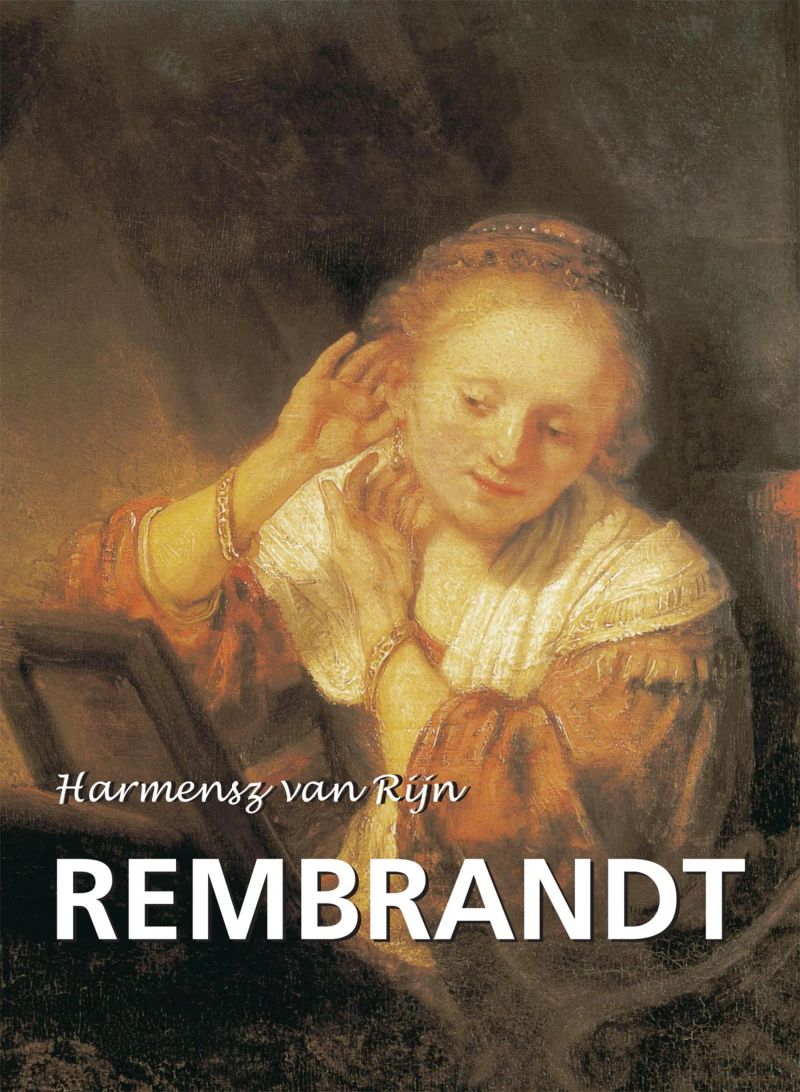
Rembrandt is completely mysterious in his spirit, his character, his life, his work and his method of painting. What we can divine of his essential nature comes through his painting and the trivial or tragic incidents of his unfortunate life; his penchant for ostentatious living forced him to declare bankruptcy. His misfortunes are not entirely explicable, and his oeuvre reflects disturbing notions and contradictory impulses emerging from the depths of his being, like the light and shade of his pictures. In spite of this, nothing perhaps in the history of art gives a more profound impression of unity than his paintings, composed though they are of such different elements, full of complex significations. One feels as if his intellect, that genial, great, free mind, bold and ignorant of all servitude and which led him to the loftiest meditations and the most sublime reveries, derived from the same source as his emotions. From this comes the tragic element he imprinted on everything he painted, irrespective of subject; there was inequality in his work as well as the sublime, which may be seen as the inevitable consequence of such a tumultuous existence. It seems as though this singular, strange, attractive and almost enigmatic personality was slow in developing, or at least in attaining its complete expansion. Rembrandt showed talent and an original vision of the world early, as evidenced in his youthful etchings and his first self-portraits of about 1630. In painting, however, he did not immediately find the method he needed to express the still incomprehensible things he had to say, that audacious, broad and personal method which we admire in the masterpieces of his maturity and old age. In spite of its subtlety, it was adjudged brutal in his day and certainly contributed to alienate his public. From the time of his beginnings and of his successes, however, lighting played a major part in his conception of painting and he made it the principal instrument of his investigations into the arcana of interior life. It already revealed to him the poetry of human physiognomy when he painted The Philosopher in Meditation or the Holy Family, so deliciously absorbed in its modest intimacy, or, for example, in The Angel Raphael leaving Tobias. Soon he asked for something more. The Night Watch marks at once the apotheosis of his reputation. He had a universal curiosity and he lived, meditated, dreamed and painted thrown back on himself. He thought of the great Venetians, borrowing their subjects and making of them an art out of the inner life of profound emotion. Mythological and religious subjects were treated as he treated his portraits. For all that he took from reality and even from the works of others, he transmuted it instantly into his own substance.
Audiobook details
Rating★★★★ 4.3 (19)
Includes Amazon, Goodreads
GenreOther
Length2 hrs 14 mins
Narrated byListen with 1,000+ voices
FormateBook with Audio
Publish dateJul 1, 2011
LanguageEnglish
Table of contents
1Harmensz van Rijn Harmensz van Rijn
2© Sirrocco, London, UK
3TABLE OF CONTENTS
4His Life
5Harmen Gerritszoon van Rijn lived in Leyden.
Show all chaptersShow less
6Rembrandt, his first Christian name. The young
7In later years, his spiritual nature and his artistic
8Surgeons, as a result of the Portrait, whose owner
9Gerard Dou, Ferdinand Bol and Govaert Flinck, all of
10The Night Watch, 1642. Rijksmuseum,Amsterdam.
11In the second half of the 17th century, Holland
12Although very different as to the dates when they
13As his final works show, the inner worlds of the
14The artist’s philosophy, his subjective vision of the
151697 during his first trip abroad. Yuri Kologrivov
161772 Falconet wrote to Catherine II: “I received
17Bucharest Museum. In 1769, after several years of
18Today, the Russian painter Kramskoy considers
191814, Alexander I bought the Empress Josephine’s
20Self-Portrait, 1669. Mauritshuis,The Hague.
21CHRIST DRIVING THE MONEYCHANGERS FROM THE TEMPLE
22PORTRAIT OF AN OLD MAN
23Rembrandt, freed from the influence of the
24THE ADORATION OF THE MAGI
25This authentic replica of The Adoration of the Magi
26PORTRAIT OF A BOY
27and
28YOUNG MAN WITH A LACE COLLAR
29National Gallery of Scotland in Edinburgh, are
30SASKIA IN ARCADIAN COSTUME
31Young Woman with a Wide Brimmed Hat and Crosier
32THE RISEN CHRIST SHOWING HIS WOUNDS TO THE APOSTLE THOMAS
33THE DESCENT FROM THE CROSS
34In a letter to Constantijn Huygens, secretary to the
35Provinces, Frederick-Henry of Nassau, Prince of
36THE ANGEL STOPPING ABRAHAM FROM SACRIFICING ISAAC TO GOD
37The Angel Stopping Abraham from Sacrificing Isaac to
38Rembrandt on the work of one of his students. The
39THE PARABLE OF THE LABOURERS IN THE VINEYARD
40This depiction of the parable of the labourers, in which
41by the arbitrary and the law of the strongest.
42BAARTJEN MAERTENS, WIFE OF HERMAN DOOMER
43DAVID AND JONATHAN
44Jonathan and David.
45AN OLD WOMAN IN AN ARMCHAIR
46The portrait of the Old Woman in an Armchair
47PORTRAIT OF AN OLD MAN
48Below: Drawing from the Portrait of Balthasar Castiglioneby Raphael. Albertina,Vienna.
49wistful gaze and the pained expression on his face
50THE HOLY FAMILY WITH ANGELS
More from Emile Michel
Pieter Brueghel et œuvres d'artEmile Michel, Victoria Charles1h 41m4.3 (23)$15 · $0.00

Harmensz van Rijn RembrandtEmile Michel2h 10m4.2 (32)$10 · $0.00

Die BruegelsEmile Michel, Victoria Charles5h 32m3.9 (10)$18 · $0.00
BruegelEmile Michel, Victoria Charles1h 48m4.3 (52)$13.50 · $0.00
Pieter BruegelEmile Michel, Victoria Charles1h 38m4.2 (55)$13.50 · $0.00
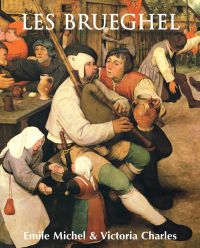
Les BrueghelEmile Michel, Victoria Charles6h 5m3.9 (10)$15.50 · $0.00
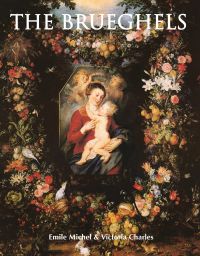
The BrueghelsEmile Michel, Victoria Charles5h 31m4.2 (35)$15.50 · $0.00

Die BruegelsEmile Michel, Victoria Charles5h 45m4.2 (26)$15.50 · $0.00
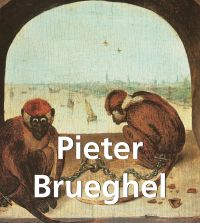
Pieter BrueghelEmile Michel, Victoria Charles1h 43m4.3 (20)$13.50 · $0.00
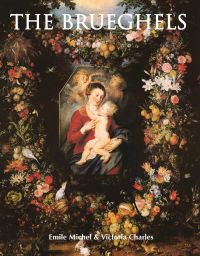
The BrueghelsEmile Michel, Victoria Charles5h 1m4.1 (125)$18 · $0.00
Les BrueghelEmile Michel, Victoria Charles5h 47m3.9 (10)$18 · $0.00
Mere ChristianityC. S. Lewis7h 7m4.4 (519.7K)$24 · $0.00

Her Daily BreadKate Wood12h 57m4.6 (153)$33 · $0.00
The Holy Bible - 1 SamuelKing James2h 13m4.8 (1.6K)$3 · $0.00
The American Standard Bible — The Gospel of MatthewMatthew3h 56m4.7 (3K)$2 · $0.00

Bad Fat Black GirlSesali Bowen6h 32m4.7 (2.8K)$24 · $0.00
The King James Audio Bible New Testament CompleteChristopher Glyn20h 2m4.7 (2.6K)$12 · $0.00
Faiths CheckbookCharles Spurgeon12h 44m4.7 (3.2K)$11 · $0.00

Ten Things I Wish You Knew About Your Child's Mental HealthDr. Billy Garvey4h 53m4.7 (2.4K)$20 · $0.00

Designing Terry Pratchett’s DiscworldPaul Kidby3h 52m4.7 (343)$20 · $0.00
The Chosen Book OneAmanda Jenkins, Kristen Hendricks, Dallas Jenkins3h 8m4.6 (4.9K)$10 · $0.00
The Lives of BrianBrian Johnson9h 45m4.6 (3.5K)$29 · $0.00
Expository Thoughts on the Gospel of LukeJ.C. Ryle27h 13m4.7 (536)$18 · $0.00

CrossroadsKaleb Dahlgren7h 56m4.6 (4.9K)$26 · $0.00

Across the RiverKent Babb11h 40m4.6 (927)$29 · $0.00

Brain Training for RidersAndrea Monsarrat Waldo5h 56m4.7 (550)$19 · $0.00
My Effin' LifeGeddy Lee17h 11m4.6 (13.1K)$40 · $0.00
Kings and PawnsHoward Bryant10h 9m4.6 (678)$29 · $0.00

The Elementia Chronicles #2: The New OrderSean Fay Wolfe11h 17m4.6 (841)$29 · $0.00
The ActsLuke2h 55m4.6 (19.7K)$12 · $0.00
New Testament - Easy NavigationWorld English Bible19h 35m4.6 (1.3K)$1.30 · $0.00
You may also like

George Washington's Rules of CivilityMoncure Daniel Conway, George Washington3h 37m4.2 (1.5K)$2 · $0.00

The Professor (Annotated)Charlotte Brontë11h 48m3.9 (25.9K)$0.99 · $0.00
Boys & SexPeggy Orenstein7h 28m4.3 (8.6K)$24 · $0.00

What About Men?Caitlin Moran8h 20m3.9 (5.5K)$26 · $0.00
Dr. Montessori's Own HandbookMaria Montessori2h 43m4.2 (1.6K)$2.30
The Curmudgeon’s Guide to Getting AheadCharles Murray3h 10m3.9 (2.4K)$14
Symptoms of Being HumanJeff Garvin7h 48m4.2 (25.9K)$26 · $0.00

Enough As She IsRachel Simmons8h 56m4.2 (1.7K)$29 · $0.00

Dr. Montessori's Own HandbookMaria Montessori2h 42m4.3 (1.3K)$10 · $0.00

Nice TryJosh Gondelman5h 59m4.0 (2K)$24 · $0.00
Martin EdenJack London15h 5m4.3 (89K)$1.20 · $0.00
The Pilgrim's ProgressJohn Bunyan12h 49m4.2 (213.2K)$10 · $0.00

George Washington's Rules of CivilityMoncure Daniel Conway, George Washington3h 38m4.1 (1.5K)$1 · $0.00

First Day BackRyan Aoto5m$2

Adolescent PsychologyStephen B. Gadzama (phd)1h 51m$12 · $0.00
Practical School Discipline: Introductory CourseRay Coppock Beery4h 34m$1 · $0.00

Behind Their ScreensEmily Weinstein, Carrie James6h 39m3.9 (606)$17

The Perfect Backpack (Pixi Bedtime Stories 69)Ruth Rahlff4m$2 · $0.00
The Elements of General Method, Based on the Principles of HerbartCharles A. McMurry4h 51m$2 · $0.00
Almost a WomanMary Wood-Allen1h 53m$2 · $0.00