
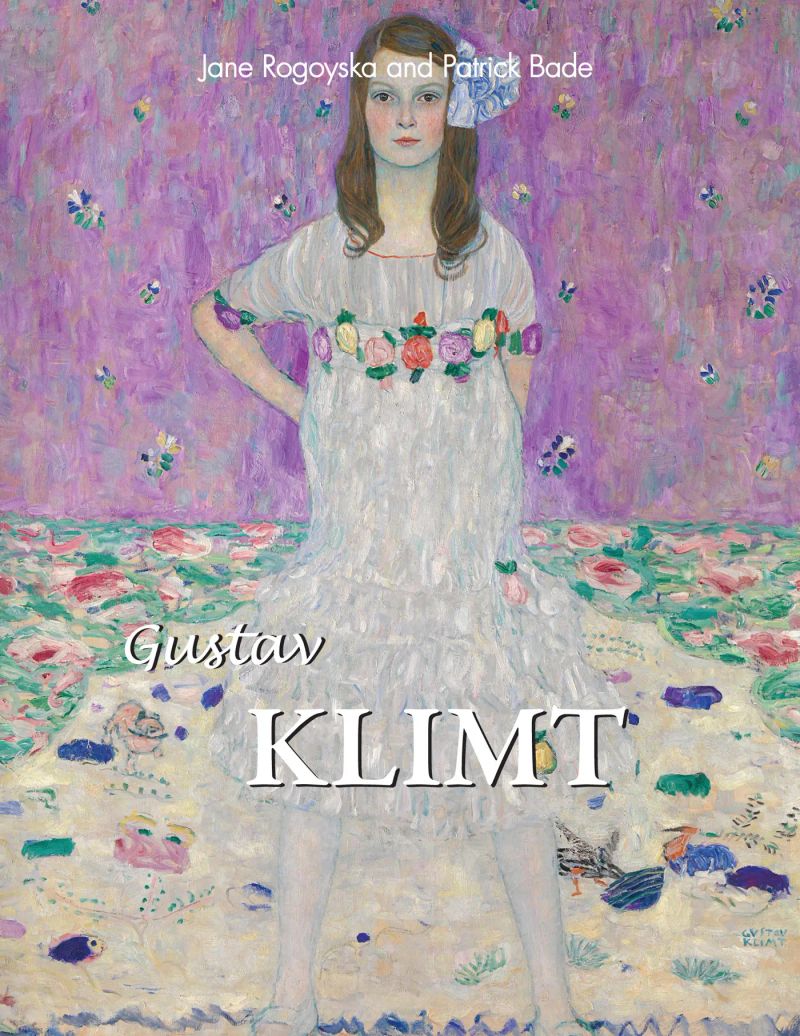
Gustav Klimt
Gold, Eroticism, and the Eternal FeminineBy Jane Rogoyska, Patrick Bade

Length2h 44m
About this audiobook
“I am not interested in myself as a subject for painting, but in others, particularly women…”Beautiful, sensuous and above all erotic, Gustav Klimt’s paintings speak of a world of opulence and leisure, which seems aeons away from the harsh, post-modern environment we live in now. The subjects he treats – allegories, portraits, landscapes and erotic figures – contain virtually no reference to external events, but strive rather to create a world where beauty, above everything else, is dominant. His use of colour and pattern was profoundly influenced by the art of Japan, ancient Egypt, and Byzantium. Ravenne, the flat, two-dimensional perspective of his paintings, and the frequently stylised quality of his images form an oeuvre imbued with a profound sensuality and one where the figure of woman, above all, reigns supreme. Klimt’s very first works brought him success at an unusually young age. Gustav, born in 1862, obtained a state grant to study at Kunstgewerbeschule (the Vienna School of Arts and Crafts) at the age of fourteen. His talents as a draughtsman and painter were quickly noticed, and in 1879 he formed the Künstlercompagnie (Artists’ Company) with his brother Ernst and another student, Franz Matsch. The latter part of the nineteenth century was a period of great architectural activity in Vienna. In 1857, the Emperor Franz Joseph had ordered the destruction of the fortifications that had surrounded the medieval city centre. The Ringstrasse was the result, a budding new district with magnificent buildings and beautiful parks, all paid for by public expenses. Therefore the young Klimt and his partners had ample opportunities to show off their talents, and they received early commissions to contribute to the decorations for the pageant organised to celebrate the silver wedding anniversary of the Emperor Franz Joseph and the Empress Elisabeth. In 1894, Matsch moved out of their communal studio, and in 1897 Klimt, together with his closest friends, resigned from the Künstlerhausgenossenschaft (the Cooperative Society of Austrian Artists) to form a new movement known as the Secession, of which he was immediately elected president. The Secession was a great success, holding both a first and second exhibition in 1898. The movement made enough money to commission its very own building, designed for it by the architect Joseph Maria Olbrich. Above the entrance was its motto: “To each age its art, to art its freedom.” From around 1897 onward, Klimt spent almost every summer on the Attersee with the Flöge family. These were periods of peace and tranquillity in which he produced the landscape paintings constituting almost a quarter of his entire oeuvre. Klimt made sketches for virtually everything he did. Sometimes there were over a hundred drawings for one painting, each showing a different detail – a piece of clothing or jewellery, or a simple gesture. Just how exceptional Gustav Klimt was is perhaps reflected in the fact that he had no predecessors and no real followers. He admired Rodin and Whistler without slavishly copying them, and was admired in turn by the younger Viennese painters Egon Schiele and Oskar Kokoschka, both of whom were greatly influenced by Klimt.
Audiobook details
Rating★★★★ 4.3 (196)
Includes Amazon, Goodreads, LibraryThing
GenreOther
Length2 hrs 44 mins
Narrated byListen with 1,000+ voices
FormateBook with Audio
LanguageEnglish
Table of contents
1Introduction
26PALLAS ATHENA
2The Viennese Secession
27POTRAIT OF SONJA KNIPS
3His Life
28EXHIBITION WALLPAPER FOR SECESSION I
4Beginnings
29NUDA VERITAS
5Secession
30NUDA VERITAS (DETAIL)
Show all chaptersShow less
6Scandal
31SCHUBERT AT PIANO
7Fin de Siècle Vienna
32TWO LOVERS
8Lovers and Friends
33ISLAND ON THE ATTERSEE
9Drawings and Sketches
34GOLDFISH
10Society Portraits
35JUDITH I
11Pattern and Nudity
36PORTRAIT OF GERTHA FELSOVANYI
12Klimt’s Legacy
37THE BEETHOVEN FRIEZE: AMBITION, COMPASSION AND THE KNIGHT IN SHINING ARMOR (DETAIL)
13His Work
38POTRAIT OF EMILIE FLÖGE
14FABLE
39FOREST OF BEECH TREES I
15THE IDYLL
40HOPE I
16THE THEATRE OF TAORMINA
41WATER SNAKE I
17FEMALE NUDE LYING DOWN
42WATER SNAKE II
18AUDITORIUM OF THE OLD BURGTHEATER
43THE THREE AGES OF WOMEN
19PORTRAIT OF JOSEPH PEMBAUR
44POTRAIT OF MARGARET STONBOROUGH-WITTGENSTEIN
20ANCIENT GREEK ART I
45THE STOCLET FRIEZE (DETAIL)
21THE LOVE
46SUNFLOWER GARDEN
22MUSIC I
47POTRAIT OF FRETZA RIEDLER
23FINAL DRAWING FOR THE ALLEGORY OF TRAGEDY
48MEDICINE
24FISH BLOOD
49HYGIEIA (DETAIL OF MEDICINE)
25COMPOSITIONAL PROJECT FOR MEDICINE
50POTRAIT OF ADELE BLOCH-BAUER I
Series
More from Jane Rogoyska, Patrick Bade
Gustav KlimtJane Rogoyska, Patrick Bade2h 58m4.1 (67)$16 · $0.00
KlimtJane Rogoyska, Patrick Bade1h 19m4.3 (171)$15 · $0.00
Gustav Klimt: Art and intrigueJane Rogoyska39m4.3 (89)$13 · $0.00
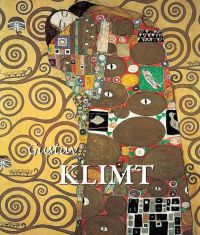
Gustav KlimtJane Rogoyska, Patrick Bade2h 56m4.1 (67)$16 · $0.00
Amedeo ModiglianiJane Rogoyska, Frances Alexander2h 8m$13 · $0.00
Mere ChristianityC. S. Lewis7h 7m4.4 (519.7K)$24 · $0.00

Her Daily BreadKate Wood12h 57m4.6 (153)$33 · $0.00
The Holy Bible - 1 SamuelKing James2h 13m4.8 (1.6K)$3 · $0.00

The American Standard Bible — The Gospel of MatthewMatthew3h 56m4.7 (3K)$2 · $0.00

Bad Fat Black GirlSesali Bowen6h 32m4.7 (2.8K)$24 · $0.00
The King James Audio Bible New Testament CompleteChristopher Glyn20h 2m4.7 (2.6K)$12 · $0.00
Faiths CheckbookCharles Spurgeon12h 44m4.7 (3.2K)$11 · $0.00
Ten Things I Wish You Knew About Your Child's Mental HealthDr. Billy Garvey4h 53m4.7 (2.4K)$20 · $0.00

Designing Terry Pratchett’s DiscworldPaul Kidby3h 52m4.7 (343)$20 · $0.00
The Chosen Book OneAmanda Jenkins, Kristen Hendricks, Dallas Jenkins3h 8m4.6 (4.9K)$10 · $0.00

The Lives of BrianBrian Johnson9h 45m4.6 (3.5K)$29 · $0.00
Expository Thoughts on the Gospel of LukeJ.C. Ryle27h 13m4.7 (536)$18 · $0.00

CrossroadsKaleb Dahlgren7h 56m4.6 (4.9K)$26 · $0.00

Across the RiverKent Babb11h 40m4.6 (927)$29 · $0.00

Brain Training for RidersAndrea Monsarrat Waldo5h 56m4.7 (550)$19 · $0.00
My Effin' LifeGeddy Lee17h 11m4.6 (13.1K)$40 · $0.00

Kings and PawnsHoward Bryant10h 9m4.6 (678)$29 · $0.00

The Elementia Chronicles #2: The New OrderSean Fay Wolfe11h 17m4.6 (841)$29 · $0.00
The ActsLuke2h 55m4.6 (19.7K)$12 · $0.00

New Testament - Easy NavigationWorld English Bible19h 35m4.6 (1.3K)$1.30 · $0.00
You may also like
Groundwork of the Metaphysics of MoralsImmanuel Kant4h 28m4.0 (28.5K)$1 · $0.00
The Essays of Arthur Schopenhauer; The Art of LiteratureArthur Schopenhauer4h 1m4.1 (1.6K)$2.30
The Mystique of Enlightenment (Summarized Edition)U. G. Krishnamurti3h 11m4.4 (349)$2
All Things are Possible (Annotated)Lev Shestov5h 48m4.1 (325)$2 · $0.00
ObjectivismLeonard Peikoff19h 37m4.1 (6.5K)$32
Beyond Good and EvilFriedrich Nietzsche8h 10m4.2 (136.2K)$17

The Genealogy of MoralsFriedrich Nietzsche5h 43m4.3 (84.3K)$12

Beyond Good and EvilFriedrich Nietzsche7h 5m4.2 (137.8K)$2 · $0.00

The World as Will and Idea (Vol. 1-3)Arthur Schopenhauer56h 21m4.3 (2K)$2 · $0.00

The Natural State (Annotated)U. G. Krishnamurti8h 55m4.3 (364)$2 · $0.00
Several Short Sentences about WritingVerlyn Klinkenborg4h 26m4.0 (6.6K)$15
R.D. BurmanBalaji Vittal, Anirudha Bhattacharjee14h 4m4.3 (512)$33 · $0.00
Human, All Too Human: A Book for Free Spirits (Annotated)Friedrich Wilhelm Nietzsche5h 45m4.2 (29.4K)$2 · $0.00
EXPERIENCE AND EDUCATION – Premium Edition (Including Democracy & Education) (Annotated)John Dewey19h 17m4.6 (1K)$2 · $0.00
Anton Tchekhov, and Other EssaysLev Shestov5h 16m4.3 (16)$1 · $0.00
Egoists, A Book of Supermen (Annotated)James Huneker10h 55m4.2 (26)$0.99 · $0.00
The Laws of Success (Translated)C. Paul Jagot4h 13m4.3 (30)$5.70 · $0.00
Since CézanneClive Bell3h 49m3.9 (13)$1 · $0.00
Some Diversions of a Man of LettersEdmund Gosse5h 28m$2 · $0.00

Léon Bakst. The art of theatre and danceElisabeth Ingles2h 28m$16 · $0.00