
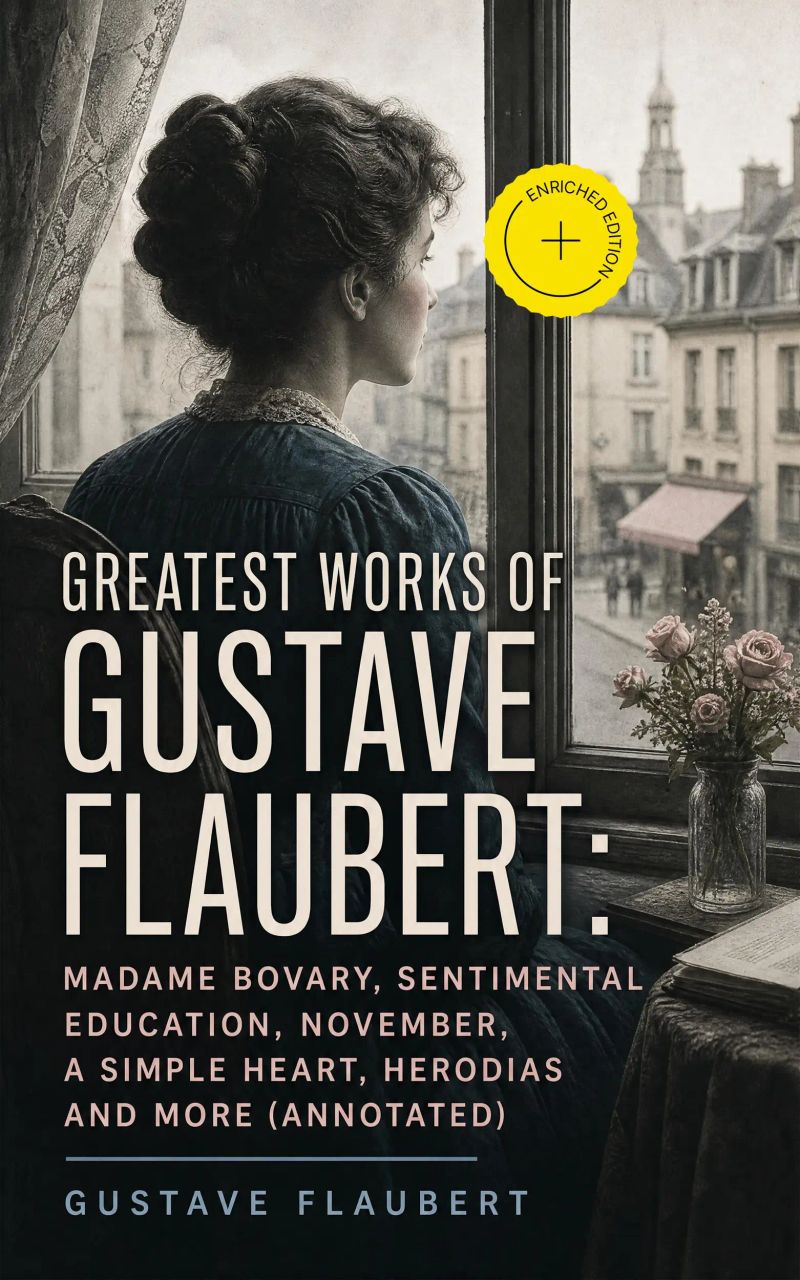
Greatest Works of Gustave Flaubert: Madame Bovary, Sentimental Education, November, A Simple Heart, Herodias and more (Annotated)
Enriched Edition. Literary Realism in 19th-Century FranceBy Gustave Flaubert


Length72h 2m
About this audiobook
Gathering Madame Bovary, Sentimental Education, November, A Simple Heart, Herodias, and other essential writings, this volume traces the full range of Flaubert's art: the pitiless anatomy of provincial illusion, the disenchanted chronicle of a generation, the lyrical apprenticeship tale, and the compressed perfection of his late stories. His prose is exacting, ironic, and musical, governed by the celebrated pursuit of le mot juste. In the context of nineteenth-century French realism, these works transform social observation into a rigorous aesthetic meditation on desire, stupidity, faith, and historical change. Gustave Flaubert, born in Rouen in 1821, was shaped by bourgeois Normandy, medical family surroundings, travels in the East, and a temperament at once romantic and severe. His legal prosecution for Madame Bovary confirmed his centrality to debates over morality and art. Withdrawn at Croisset, he made literature a discipline of impersonal form, revising obsessively to purge sentimentality while exposing its power. This collection is indispensable for readers seeking Flaubert beyond a single masterpiece. It offers both the monumental novels and the distilled brilliance of the shorter fiction, rewarding anyone interested in realism, modern narrative technique, and the tragic comedy of human self-deception.
This enriched edition has been carefully crafted to add value to your reading experience.
- An Introduction draws the threads together, discussing why these diverse authors and texts belong in one collection.
- Historical Context explores the cultural and intellectual currents that shaped these works, offering insight into the shared (or contrasting) eras that influenced each writer.
- A combined Synopsis (Selection) briefly outlines the key plots or arguments of the included pieces, helping readers grasp the anthology's overall scope without giving away essential twists.
- A collective Analysis highlights common themes, stylistic variations, and significant crossovers in tone and technique, tying together writers from different backgrounds.
- Reflection questions encourage readers to compare the different voices and perspectives within the collection, fostering a richer understanding of the overarching conversation.
Audiobook details
Rating★★★★ 4.2 (17)
Includes Amazon, Goodreads
GenreLiterary Classics, General Fiction
Length72 hrs 2 mins
Narrated byListen with 1,000+ voices
FormateBook with Audio
Publish dateMay 11, 2015
LanguageEnglish
Table of contents
1Greatest Works of Gustave Flaubert: Madame Bovary, Sentimental Education, November, A Simple Heart, Herodias and more (Annotated)
2Introduction
3Historical Context
4Synopsis (Selection)
5Novels:
Show all chaptersShow less
6Madame Bovary
7Part I (pt. 1)
8Part I (pt. 2)
9Part II (pt. 1)
10Part II (pt. 2)
11Part II (pt. 3)
12Part III (pt. 1)
13Part III (pt. 2)
14Salammbô (pt. 1)
15Salammbô (pt. 2)
16Salammbô (pt. 3)
17Salammbô (pt. 4)
18Salammbô (pt. 5)
19Bouvard and Pécuchet (pt. 1)
20Bouvard and Pécuchet (pt. 2)
21Bouvard and Pécuchet (pt. 3)
22Bouvard and Pécuchet (pt. 4)
23Bouvard and Pécuchet (pt. 5)
24Sentimental Education (pt. 1)
25Sentimental Education (pt. 2)
26Sentimental Education (pt. 3)
27Sentimental Education (pt. 4)
28Sentimental Education (pt. 5)
29Sentimental Education (pt. 6)
30Sentimental Education (pt. 7)
31Sentimental Education (pt. 8)
32Sentimental Education (pt. 9)
33The Temptation of Saint Anthony (pt. 1)
34The Temptation of Saint Anthony (pt. 2)
35The Temptation of Saint Anthony (pt. 3)
36Short Stories:
37November
38A Simple Heart
39Saint Julian the Hospitalier
40Herodias
41The Dance of Death
42Studies and Literary Criticism:
43Gustave Flaubert: A Study by Guy de Maupassant
44Extracts from Virginia Woolf’s diary
45Extract from ‘Essays in London and Elsewhere’ by Henry James
46Extracts from ‘Phoenix: The Posthumous Papers’ by D.H. Lawrence
47Extract from ‘Figures of Several Countries’ by Arthur Symons
48Analysis
49Reflection

Die Schule der EmpfindsamkeitGustave Flaubert18h 48m3.9 (60.4K)$1 · $0.00
Madame Bovary (Bilingual Edition: English-French)Gustave Flaubert28h 38m3.9 (55)$1.99 · $0.00

Ausgewählte Erzählungen von Gustave FlaubertGustave Flaubert9h 15m4.3 (21)$1 · $0.00
MADAME BOVARYGustave Flaubert14h 41m3.9 (434.2K)$1.99 · $0.00

Gesammelte WerkeGustave Flaubert63h 47m4.6 (11)$1 · $0.00
The Greatest Works of Gustave FlaubertGustave Flaubert71h 28m4.5 (38)$1.99 · $0.00

Madame BovaryGustave Flaubert15m3.9 (439.9K)$14 · $0.00

Salambó (texto completo, con índice activo)Gustave Flaubert12h 12m$9.99 · $0.00

Böse Mädchen der LiteraturGustave Flaubert, Dora Duncker, Charles-Louis Philippe, Pierre Choderlos de Laclos, Restif de la Bretonne, Heinrich Vollrat Schumacher, Euripides, Honoré de Balzac, Heinrich Mann, Lena Christ, William Makepeace Thackeray, Emily Brontë, John Cleland, Marquis de Sade, Lew Tolstoi252h 18m4.4 (15)$1 · $0.00

Erinnerungen eines Verrückten (Autobiografischer Roman) (Kommentiert)Gustave Flaubert3h 15m3.8 (4.1K)$1 · $0.00

Sentimental Education - An Autobiographical Novel (Complete Edition) (Annotated)Gustave Flaubert21h 56m4.3 (12)$2 · $0.00

Gesammelte Werke: Romane + Erzählungen + Memoiren + Reiseberichte (Kommentiert)Gustave Flaubert63h 58m4.4 (10)$1.50 · $0.00

Madame Bovary - Interactive Bilingual Edition (English / French) (Annotated)Gustave Flaubert28h 46m4.4 (12)$2 · $0.00

Salambo - Karthagische Prinzessin (Kommentiert)Gustave Flaubert14h 58m4.3 (126)$1 · $0.00

Gesammelte Romane (Kommentiert)Gustave Flaubert48h 2m$1 · $0.00
The Correspondence of George Sand and Gustave Flaubert (Annotated)Gustave Flaubert, George Sand13h 24m$3 · $0.00

Gesammelte Werke: Romane + Erzählungen + Memoiren + Briefe (Kommentiert)Gustave Flaubert64h 2m4.4 (13)$1 · $0.00

The Temptation of Saint Anthony - A Historical Novel (Complete Edition) (Annotated)Gustave Flaubert6h 52m3.9 (4.6K)$2 · $0.00
The Collected Letters of George Sand and Gustave Flaubert (Annotated)Gustave Flaubert, George Sand13h 33m4.3 (411)$2 · $0.00

Madame Bovary (Classic Unabridged Edition) (Annotated)Gustave Flaubert14h 45m4.0 (2.8K)$2 · $0.00

To Kill a MockingbirdHarper Lee12h 18m4.5 (7.4M)$29 · $0.00

These Precious DaysAnn Patchett11h 14m4.5 (45.2K)$29 · $0.00

Henry V (The Play, Historical Background and Analysis of the Character in the Play)William Shakespeare, William Hazlitt8h 50m4.6 (1.3K)$1.99 · $0.00
H. P. LOVECRAFT Ultimate Collection: Novellas, Short Stories, Poetry & Essays (Annotated)H. P. Lovecraft12h 28m4.6 (2.3K)$2 · $0.00
Time RegainedMarcel Proust16h 8m4.5 (10.6K)$1.99 · $0.00

The Mis-Education of the NegroCarter Goodwin Woodson4h 32m4.5 (28.4K)$10 · $0.00
Lessons in TruthH. Emilie3h 50m4.6 (1.4K)$4.70 · $0.00

TORAH - Bilingual Edition: English/Hebrew (Annotated)Max Margolis, JPS28h 26m4.6 (1K)$2 · $0.00

Betty Crocker picture cooky bookBetty Crocker, Inc. General Mills2h 13m4.5 (6.5K)$1 · $0.00

The Complete Tales of Beatrix PotterBeatrix Potter3h 36m4.5 (75K)$3 · $0.00

Anne of Green GablesL. M. Montgomery11h 1m4.5 (1.2M)$2.30 · $0.00

Crime and Punishment (The Unabridged Garnett Translation) (Annotated)Fyodor Dostoevsky24h 25m4.5 (15.4K)$1.99 · $0.00

The North American IndianEdward S. Curtis, Frederick Webb Hodge6h4.5 (1.2K)$2 · $0.00

The Picture of Dorian Gray: The Uncensored 13 Chapter Version + The Revised 20 Chapter Version (Annotated)Oscar Wilde16h 12m4.5 (2.8K)$1.99 · $0.00

Grimoire Of The Everyday WitchIsadora Lys / Virginia Santos5h 35m4.5 (3.9K)$9 · $0.00

Winnie-the-PoohAlan Alexander Milne2h 52m4.5 (401.1K)$3 · $0.00

Sitting PrettyRebekah Taussig7h 33m4.5 (18.9K)$26 · $0.00

The Poetic Edda & The Prose EddaSnorri Sturluson, Saemund Sigfusson9h 34m4.5 (4K)$1 · $0.00

The Complete Satires & Essays of Mark Twain (Annotated)Mark Twain23h 21m4.5 (1.1K)$2 · $0.00

Anne of Green GablesLucy Maud Montgomery11h 10m4.4 (1.3M)$8 · $0.00

WhistlerAnn Patchett10h 45m4.6 (4.6K)$29 · $0.00

Demon CopperheadBarbara Kingsolver21h 3m4.5 (949.4K)$46 · $0.00
To Kill a MockingbirdHarper Lee12h 18m4.5 (7.4M)$29 · $0.00

Remarkably Bright CreaturesShelby Van Pelt11h 17m4.4 (1.7M)$29 · $0.00
Cast in BloodMichelle Sagara16h 35m4.6 (607)$33 · $0.00

The Captain Blood Trilogy (Annotated)Rafael Sabatini29h 20m4.6 (1K)$3 · $0.00

Ship of the Line (Annotated)Cecil Louis Troughton Smith11h 13m4.6 (1K)$2 · $0.00

The George Orwell CollectionGeorge Orwell24h 46m4.5 (14.4K)$12 · $0.00
Time RegainedMarcel Proust15h 38m4.5 (9.2K)$2 · $0.00

Driving ForceElle James4h 58m4.6 (407)$20 · $0.00

When God Calls the HeartBrian Bird, Michelle Cox3h 24m4.6 (439)$10 · $0.00

Five Little IndiansMichelle Good10h 34m4.5 (64.5K)$29 · $0.00
Lolth's WarriorR. A. Salvatore13h 20m4.6 (2.4K)$33 · $0.00

The Things We Cannot SayKelly Rimmer13h 48m4.5 (359.1K)$33 · $0.00

The Love Songs of W.E.B. Du BoisHonoree Fanonne Jeffers29h 49m4.5 (58K)$8 · $0.00

Going PostalTerry Pratchett11h 23m4.5 (189.9K)$29 · $0.00

Glen AffricKarine Giebel22h 51m4.5 (3.2K)$46 · $0.00

The Book Of NegroesLawrence Hill15h 45m4.5 (107.3K)$33 · $0.00
Anne of Green GablesL. M. Montgomery11h 1m4.5 (1.2M)$2.30 · $0.00

Lieutenant Hornblower (Annotated)C. S. Forester11h 41m4.5 (2.9K)$2 · $0.00
You may also like
The March of FollyBarbara W. Tuchman17h 54m4.1 (51.2K)$28
Troilus and CressidaWilliam Shakespeare3h 5m3.7 (19.1K)$15
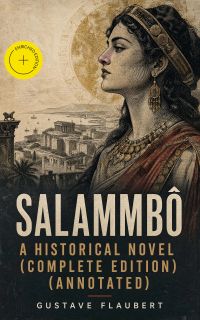
Salammbô - A Historical Novel (Complete Edition) (Annotated)Gustave Flaubert13h 44m3.9 (9K)$2 · $0.00

Old Mortality (Annotated)Walter Scott20h 59m3.9 (5.7K)$2 · $0.00

Arab and JewDavid K. Shipler27h 52m4.3 (5.8K)$30

EgmontJohann Wolfgang von Goethe3h 23m3.7 (1.2K)$2.30

Anna KareninaLeo Tolstoy86h 12m4.3 (1M)$1.99 · $0.00

The Captive MindCzeslaw Milosz9h 1m4.3 (6.3K)$20

Old Mortality (Unabridged)Walter Scott20h 43m3.9 (1.8K)$1.99 · $0.00
Burmese daysGeorge Orwell10h 43m4.0 (43.8K)$4 · $0.00

Mary Chesnut's Civil WarMary Chesnut50h 41m4.0 (1.2K)$40

Valperga (Annotated)Mary Shelley18h 40m3.9 (2.2K)$2 · $0.00

ShirleyCharlotte Brontë23h 42m3.9 (46.7K)$3

The Romance of Leonardo da Vinci, the Forerunner (Annotated)Dmitry Sergeyevich Merezhkovsky19h 3m4.1 (1.8K)$2 · $0.00
The Complete History of the Peloponnesian War and Its AftermathThucydides, Xenophon37h 5m4.6 (139)$1.99 · $0.00

Madame Bovary + Salammbô + Sentimental Education (3 Unabridged Classics) (Annotated)Gustave Flaubert46h 59m3.9 (20)$2 · $0.00

The Gladiators - A Tale of Rome and JudeaGeorge J. Whyte-Melville20h 38m3.6 (11)$2 · $0.00

The Greatest Works of Gustave Flaubert: Madame Bovary, Senitmental Education, November, A Simple Heart, Herodias and more (Annotated)Gustave Flaubert72h 6m4.5 (11)$1.99 · $0.00

"The Greatest Failure in All History"John Spargo11h 30m$1 · $0.00

The Greatest Works of Thomas MoreWilliam Roper, Thomas More40h 17m$2 · $0.00