

Foundations of management
By Juan Antonio Pérez López


Length11h 43m
About this audiobook
The purpose of this edition is to open new avenues up for research and resolution of problems, especially in business organizations and institutions with a great impact on people's everyday lives, in which is something easy to observe the relation among effectiveness, efficiency, and consistency. This pressing also collects the extensive experience of the author on Government Decisions and Action. Its mission is to form persons for the practice of management, taken as a profession, and to develop new knowledge in the service of persons, firms, and society as a whole.
The content is divided into three parts: The Company as a Human Organization, Governance Decisions and Management Action.
Juan Antonio Pérez López, who died in 1996, was DBS of Harvard University and Professor at the Institute for Advanced Studies in Barcelona Company (IESE), which he also managed. His researches and publications have been focused on issues of Business Organization, which includes and integrates anthropological and ethical aspects too. Rialp has also published his book Theory of human action in organizations.
Audiobook details
Rating★★★★ 4.5 (21)
Includes Goodreads, Amazon
GenreBusiness and Economics
Length11 hrs 43 mins
Narrated byListen with 1,000+ voices
FormateBook with Audio
Publish dateSep 1, 2021
LanguageEnglish
Table of contents
1Introduction
2PROLOGUE
3FIRST PART THE COMPANY: A HUMAN ORGANIZATION
4CHAPTER 1 BUSINESS ORGANIZATIONS AS HUMAN REALITIES
5Introduction
Show all chaptersShow less
6What is an organization?
7Formal organization and real organization
8Elements of the formal organization
9Elements of the real organization
10Theories or models for explaining organizations
11Mechanical or technical system models
12Organic models: the organization as an organism
13Anthropological model: The organization as an institution
14Application of models to real-life situations
15The business firm as a human reality
16CHAPTER 2 HUMAN MOTIVATION Mechanistic and psycho-sociological theories
17Introduction
18The mechanistic theories
19The psycho-sociological models
20Maslow's theory
21Herzberg’s theory
22McGregor: Theory Xand Theory Y
23The limits of the psycho-sociological paradigm
24CHAPTER 3 THE ANTHROPOLOGICAL THEORY OF MOTIVATION
25Introduction
26Motives of individual actions
27Types of needs
28Motivational conflicts and their relationship to learning
29CHAPTER 4 THE INFORMAL OR SPONTANEOUS SYSTEM
30Introduction
31The formal system of an organization
32The spontaneous or informal system of an organization
33Organizational members
34The operative and structural relationship of an organization
35CHAPTER 5 HOW ORGANIZATIONS WORK (I) I. The mechanistic models
36Introduction
37The mechanistic models
38The concept of “organizational purpose” in mechanistic models
39The nature of the “fund of incentives”
40Types of power
41The intrinsic limits of “coercive power”
42The extrinsic limits of “coercive power”
43CHAPTER 6 HOW ORGANIZATIONS WORK (II) II. The psycho-sociological models
44Introduction
45The psycho-sociological models
46The psycho-sociological notion of “organizational purpose”
47CHAPTER 7 HOW ORGANIZATIONS WORK (III) III. The anthropological models
48Introduction
49The concept of the organization´s unity
50The anthropological model

Never Split the DifferenceChris Voss, Tahl Raz8h 7m4.4 (277.7K)$26 · $0.00
The Intelligent Investor Rev Ed.Benjamin Graham17h 48m4.3 (191.5K)$40 · $0.00
The Hard Thing About Hard ThingsBen Horowitz7h 57m4.2 (134.3K)$26 · $0.00
Boundaries for LeadersHenry Cloud7h 36m4.3 (3.6K)$26 · $0.00
The Joys Of CompoundingGautam Baid17h 34m4.5 (2.5K)$18 · $0.00
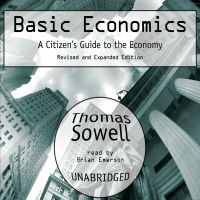
Basic EconomicsThomas Sowell18h 32m4.5 (29.3K)$28 · $0.00

Poor Charlie’s AlmanackGrover Gardener, Charles T. Munger13h 9m4.5 (24.7K)$18 · $0.00

The Ambuja StoryNarotam Sekhsaria13h 59m4.5 (830)$33 · $0.00

The Secret Door to SuccessFlorence Scovel Shinn2h 25m4.5 (2.1K)$1.20 · $0.00

This Is Going to HurtAdam Kay5h 47m4.4 (444.7K)$24 · $0.00

Big TrustShadé Zahrai, Fayçal Sekkouah8h 36m4.6 (406)$26 · $0.00
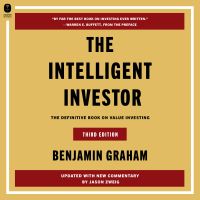
The Intelligent Investor Third EditionBenjamin Graham, Jason Zweig20h4.4 (156.6K)$46 · $0.00

Bottle of LiesKatherine Eban14h 25m4.4 (12K)$33 · $0.00

The Antiracist Business BookTrudi Lebrón6h 10m4.6 (275)$17 · $0.00

The FormulaJoshua Robinson, Jonathan Clegg10h 41m4.4 (6.9K)$29 · $0.00

Let Them LeadJohn U. Bacon7h 10m4.5 (1.4K)$24 · $0.00

Secrets of the Millionaire MindT. Harv Eker5h 11m4.4 (301.4K)$24 · $0.00

The Person You Mean to BeDolly Chugh9h 6m4.4 (7.2K)$29 · $0.00

BoundlessNick Kostov, Sean McLain9h 17m4.5 (1.1K)$29 · $0.00

Everyday DharmaSuneel Gupta5h 2m4.5 (761)$20 · $0.00
You may also like
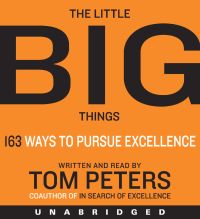
The Little Big ThingsThomas J. Peters11h 58m4.0 (1.6K)$29 · $0.00

The EnchiridionEpictetus43m4.3 (52.1K)$6 · $0.00

The Edinburgh Lectures on Mental ScienceT. Troward4h 1m4.4 (1.6K)$2 · $0.00
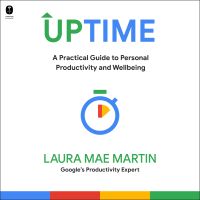
UptimeLaura Mae Martin5h 42m4.2 (2.4K)$24 · $0.00

How the World Sees YouSally Hogshead12h 21m4.0 (5.7K)$29 · $0.00

The Power of Concentration (Unabridged)William Walker Atkinson4h 23m4.0 (4.3K)$1.99 · $0.00

The Essays of Arthur Schopenhauer (translated)Arthur Schopenhauer4h 55m4.3 (3.2K)$4.70 · $0.00

The Wisdom of LifeArthur Shopenhauer3h 20m4.2 (18.7K)$4.70 · $0.00

The Science of Breath (translated)William Walker Atkinson2h 37m4.1 (3K)$4.60 · $0.00

The Articulate AdvocateBrian K. Johnson, Marsha Hunter7h 45m4.2 (341)$19.70 · $0.00
The Essential EnneagramDavid Daniels, Virginia Price4h 30m4.0 (4.4K)$20 · $0.00

EnchiridionEpictetus46m4.3 (129K)$1.20 · $0.00

That's What She SaidJoanne Lipman8h 29m4.1 (1.8K)$26 · $0.00

How to Live on 24 Hours a DayArnold Bennett2h 4m3.6 (10.2K)$2 · $0.00
Freely DeterminedKennon M. Sheldon6h 30m3.9 (175)$17

Enneagram in Real LifeStephanie Barron Hall9h 44m3.7 (117)$29 · $0.00

WIRED TO ATTRACTArthur Payne2h 58m$6.50 · $0.00

Goal-orientated and balanced through acting hypnosisMichael Bauer45m$35 · $0.00

Overcome ProcrastinationFelix KauFmann8h 23m$9 · $0.00

The Domino EffectElijah C. Prescott9h 16m$4.10 · $0.00