
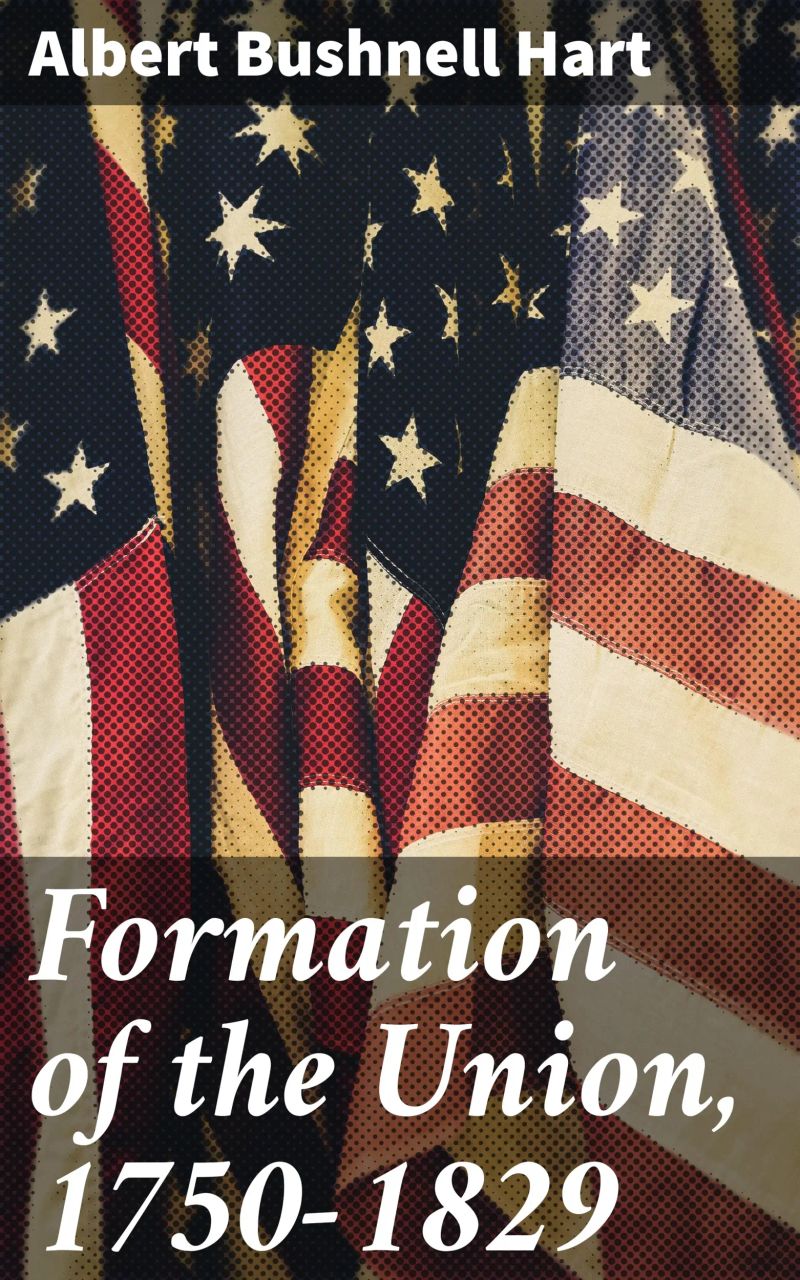
Formation of the Union, 1750-1829
A Scholarly Journey through America's Founding YearsBy Albert Bushnell Hart


Length9h 2m
About this audiobook
In "Formation of the Union, 1750-1829," Albert Bushnell Hart presents a comprehensive and incisive narrative detailing the complex social, political, and economic factors that led to the unification of the United States. Through meticulous research and a clear, engaging literary style, Hart situates the events of this pivotal era within a wider historical context, examining the interplay of colonial ambitions, revolutionary ideologies, and the emerging federalist framework. His scholarly approach draws upon primary sources to provide a nuanced understanding of how diverse elements, such as regional interests and the influence of key figures, contributed to the formation of a cohesive national identity. Albert Bushnell Hart, an eminent historian and professor, is celebrated for his contributions to American history. His extensive background in the discipline, coupled with his passion for understanding the nuances of American governance, undoubtedly informed his exploration of this formative period. Hart's academic rigor and commitment to historiography make him a notable figure whose works continue to impact historical interpretation. This book is a must-read for historians, students, and anyone interested in the foundations of American democracy. Hart'Äôs insightful analysis not only illuminates the past but also invites readers to reflect on the principles that underlie the United States today.
Audiobook details
Rating★★★★ 3.6 (56)
Includes Goodreads, LibraryThing, Amazon
GenreHistory
Length9 hrs 2 mins
Narrated byListen with 1,000+ voices
FormateBook with Audio
Publish dateDec 13, 2019
LanguageEnglish
Table of contents
1CONTENTS.: CHAPTER I. THE AMERICANS IN 1750. 1. References—2. Colonial geography—3. The people and their distribution—4. Inherited institutions—5. Colonial development of English institutions—6. Local government in the colonies—7. Colonial government—8. English control of the colonies—9. Social and economic conditions—10. Colonial slavery.
2LIST OF MAPS.
3CHAPTER I.
41. REFERENCES
52. COLONIAL GEOGRAPHY.
Show all chaptersShow less
63. THE PEOPLE AND THEIR DISTRIBUTION.
74. INHERITED INSTITUTIONS.
85. COLONIAL DEVELOPMENT OF ENGLISH INSTITUTIONS.
96. LOCAL GOVERNMENT IN THE COLONIES.
107. COLONIAL GOVERNMENT.
118. ENGLISH CONTROL OF THE COLONIES.
129. SOCIAL AND ECONOMIC CONDITIONS.
13CHAPTER II.
1411. REFERENCES.
1512. RIVAL CLAIMS IN NORTH AMERICA (1690-1754).
1613. COLLISIONS ON THE FRONTIER (1749-1754).
1714. THE STRENGTH OF THE PARTIES (1754).
1815. CONGRESS OF ALBANY (1754).
1916. MILITARY OPERATIONS (1755-1757).
2017. THE CONQUEST OF CANADA (1756-1780).
2118. GEOGRAPHICAL RESULTS OF THE WAR (1763).
2219. THE COLONIES DURING THE WAR (1754-1763).
2320. POLITICAL EFFECTS OF THE WAR (1763).
24CHAPTER III.
2521. REFERENCES.
2622. THE CONDITION OF THE BRITISH EMPIRE (1763).
2723. NEW SCHEMES OF COLONIAL CONTROL (1763).
2824. WRITS OF ASSISTANCE (1761-1764).
2925. THE STAMP ACT (1763-1765).
3026. THE STAMP ACT CONGRESS (1765.)
3127. REVENUE ACTS (1767).
3228. COLONIAL PROTESTS AND REPEAL (1767-1770).
3329. SPIRIT OF VIOLENCE IN THE COLONIES (1770-1773).
3430. COERCIVE ACTS OF 1774.
3531. THE FIRST CONTINENTAL CONGRESS (1774).
3632. OUTBREAK OF HOSTILITIES (1775).
3733. JUSTIFICATION OF THE REVOLUTION.
38CHAPTER IV.
3934. REFERENCES.
4035. THE STRENGTH OF THE COMBATANTS (1775).
4136. THE SECOND CONTINENTAL CONGRESS (1775).
4237. THE NATIONAL GOVERNMENT FORMED (1775).
4338. INDEPENDENCE DECLARED (1776).
4439. NEW STATE GOVERNMENTS FORMED (1775-1777).
4540. THE FIRST PERIOD OF THE WAR (1775-1778).
4641. FOREIGN RELATIONS (1776-1780).
4742. THE WAR ENDED (1778-1782).
4843. FINANCES OF THE REVOLUTION (1775-1783).
4944. INTERNAL DIFFICULTIES (1775-1782).
5045. FORMATION OF A CONSTITUTION (1776-1781).

A Brief History of IntelligenceMax S. Bennett12h 18m4.6 (6.6K)$29 · $0.00

The Gulag Archipelago Volume 3Aleksandr I. Solzhenitsyn21h 56m4.7 (8.9K)$46 · $0.00

Pearl of Great PriceJoseph Smith3h 8m4.7 (7.2K)$1.20 · $0.00

The Happiest Man on EarthEddie Jaku3h 48m4.6 (178K)$7 · $0.00

MotherlandJulia Ioffe17h 52m4.7 (2.5K)$40 · $0.00

Where Cowards Go to DieBenjamin Sledge8h 42m4.7 (351)$20 · $0.00

RevolutionariesSanjeev Sanyal11h 23m4.6 (2.6K)$29 · $0.00

We Crossed a Bridge and It TrembledWendy Pearlman6h4.6 (5.2K)$24 · $0.00

Unbroken Bonds of BattleJohnny Joey Jones8h 31m4.6 (2.6K)$8 · $0.00

The Daughter of AuschwitzTova Friedman, Malcolm Brabant7h 54m4.6 (16.7K)$26 · $0.00

Lily's PromiseLily Ebert, Dov Forman8h 54m4.6 (16.1K)$29 · $0.00

On Democracies and Death CultsDouglas Murray10h 38m4.6 (6.5K)$29 · $0.00

Across the RiverKent Babb11h 40m4.6 (927)$29 · $0.00

Balcony Over Jerusalem: A Middle East Memoir - Israel, Palestine and BeyondJohn Lyons12h 37m4.6 (1.4K)$33 · $0.00

BeyondStephen Walker15h 39m4.6 (3.2K)$33 · $0.00
Kings and PawnsHoward Bryant10h 9m4.6 (678)$29 · $0.00

No EscapeNury Turkel9h 30m4.6 (809)$28 · $0.00

Jubal Stone: U.S. Marshal: Blood Trail To Hell: A Western Adventure NovelCasey Nash3h 42m4.6 (3.2K)$18 · $0.00

Fall and RiseMitchell Zuckoff17h 23m4.6 (9.8K)$40 · $0.00

The SurvivorJosef Lewkowicz, Michael Calvin9h 22m4.6 (2.5K)$29 · $0.00
You may also like

A Patriot’s History of the United States, Updated EditionLarry Schweikart, Michael Allen55h 39m4.2 (7.3K)$30

History of the United States (Annotated)Charles A. Beard, Mary R. Beard22h 59m4.2 (607)$0.99 · $0.00

The Forgotten ManAmity Shlaes14h 34m4.1 (8.2K)$33 · $0.00

The Big ChangeFrederick Lewis Allen11h 48m4.2 (607)$2 · $0.00

Europe and the FaithHilaire Belloc7h 42m4.2 (986)$2.30

The History of the Peloponnesian WarThucydides22h 10m4.2 (54.2K)$2.30
The American Nation: A History, Vol. 8George Elliot Howard PhD, Albert Bushnell Hart8h 3m$20

AP European History Exam Study GuideMarie Peterson9h 14m$10

AP U.S. History Exam Study GuideMarie Peterson8h 44m$10
Asianism and the Fall of EmpireMithi Mukherjee10h 32m$24 · $0.00

The american revolutionJames R. Whitfield6h 12m$9 · $0.00
The History of the Confederate WarGeorge Cary Eggleston22h 55m4.0 (243)$1.99 · $0.00

The Rise of EmpiresCharles Downer Hazen13h$2 · $0.00

A Short History of AustraliaErnest Scott17h 33m3.8 (161)$1 · $0.00

American Military History (Vol. 1&2)Richard W. Stewart, U.S. Army Center of Military History44h 24m3.8 (30)$2 · $0.00

Alsace-Lorraine under German Rule (Annotated)Charles Downer Hazen6h 18m$2 · $0.00

The Early Beginnings of USACarl Lotus Becker21h 44m$2 · $0.00

Competing for the Global SouthFilippo Fasulo, Nicola Missaglia3h 54m$8 · $0.00

The Rise of Empires: 1870-1919 (Summarized Edition)Charles Downer Hazen3h 12m$2

Problems of the PacificFrank Fox6h 52m$2 · $0.00