
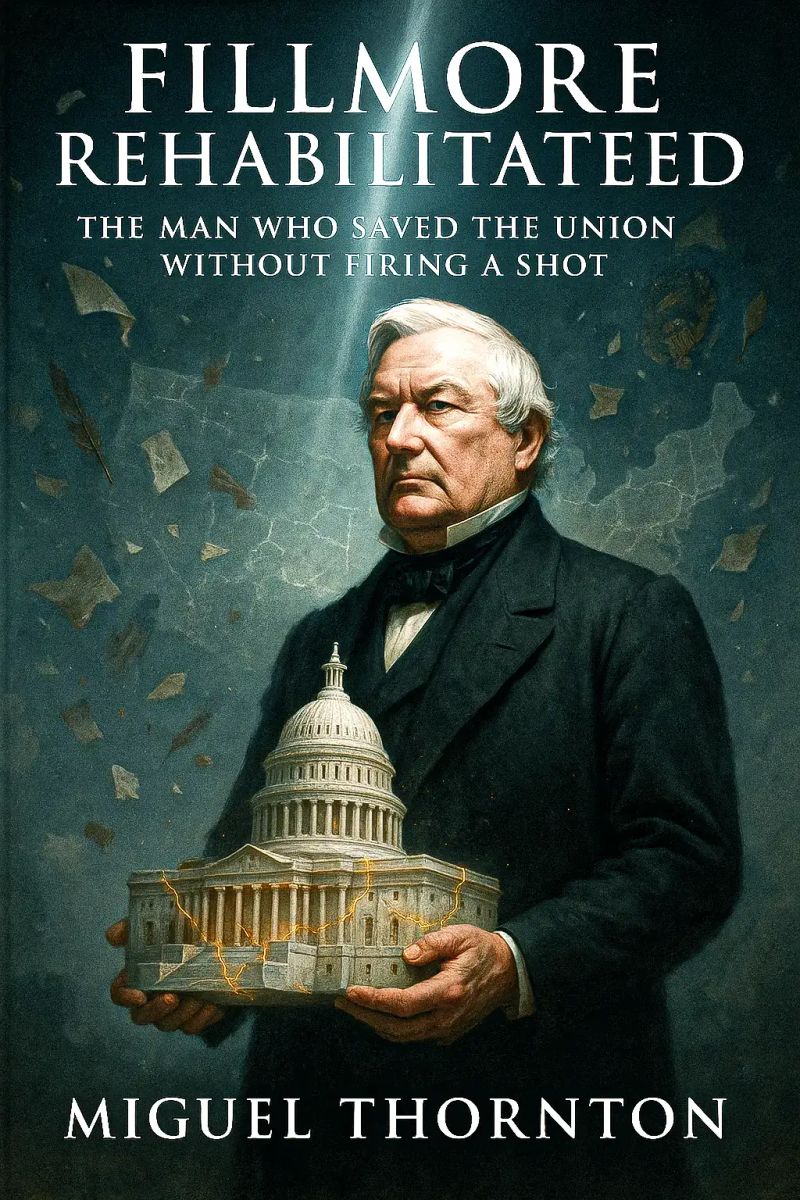
Fillmore Rehabilitated
The Man Who Saved the Union — Without Firing a ShotBy Miguel Thornton


Length6h 33m
About this audiobook
What if Millard Fillmore saved the Union—without firing a single shot?
For more than a century, history has mocked him as a forgettable president. Yet behind the myth lies a man of reason, restraint, and resolve. Through 20 powerful myths meticulously debunked, Fillmore Rehabilitated uncovers how a quiet lawyer from New York held a fractured America together when the nation stood on the brink of Civil War.
From the Compromise of 1850 to his battle against corruption and chaos, Fillmore emerges not as a placeholder—but as the leader who preserved peace through intelligence, not violence.
Grounded in authentic archives and gripping historical analysis, this book restores Fillmore’s true legacy: the man who saved the Union without firing a shot.
Audiobook details
GenreBiography and Memoir, Politics and Government
Length6 hrs 33 mins
Narrated byListen with 1,000+ voices
FormateBook with Audio
Publish dateNov 3, 2025
LanguageEnglish
Table of contents
1Introduction
2Myth 1: Fillmore Was a Mere “Accident” of History, an Insignificant Vice President Thrust into Power Without Merit
3Myth 2: He Was a Stubborn Conservative, Attached to Slavery Out of Pure Political Opportunism
4Myth 3: Fillmore Lacked Charisma and Vision, Unlike the Great Orator Lincoln
5Myth 4: His Presidency Was an Empty Interlude, with No Lasting Impact on the Union
Show all chaptersShow less
6Myth 5: Fillmore Was a
7Myth 6: The Compromise Was the Exclusive Work of Clay and Webster; Fillmore Merely Signed It Passively
8Myth 7: The Fugitive Slave Law Was an Abject Capitulation to Slavery, Rendering Fillmore Unworthy
9Myth 8: Without the Compromise, the Civil War Would Have Been Avoided Anyway by Lincoln
10Myth 9: Fillmore Ignored Abolitionist Voices, Unnecessarily Provoking Their Radicalization
11Myth 10: The Compromise Was Just a Temporary Band-Aid, Proof of Fillmore's Total Failure
12Myth 11: Fillmore Actively Supported Slavery's Expansion via Texas and California
13Myth 12: His 1852 Defeat Was Due to Unpopularity, Confirming His Incompetence
14Myth 13: Fillmore Was a Hardcore Racist, Aligned with Southern Interests
15Myth 14: Without Fillmore, Taylor Would Have Imposed Forced Union, Avoiding Weak Compromises
16Myth 15: His Support for the American Party (Know-Nothing) Disqualifies Him as a Moderate
17Myth 16: Fillmore Embodies the Obsolescence of Moderates Against Radical Progress
18Myth 17: Fillmore's Presidency Accelerated the Civil War Through Procrastination
19Myth 18: He Was a
20Myth 19: Lincoln Erased Fillmore from History for Good Reason: His Legacy Was Toxic
21Myth 20: Fillmore Drove the Final Nail into the Whig Party's Coffin, Symbol of His Failure to Adapt to the Era of Partisan Polarization
20 Cold War Myths Shattered: The Lies That Fueled a Global Standoff Miguel Thornton6h 32m Only with Ultra

Unveiling the 15 Myths of Medieval and Renaissance Witches/ Shattering the Shadows of HysteriaMiguel Thornton 4h 36m Only with Ultra
Shattering 20 Myths of the Austrian School: The Untold Triumph of Free Markets Miguel Thornton5h 31m5.0 (1) Only with Ultra
Debunking 20 Bitcoin Myths/ Unlocking America's Crypto Future Miguel Thornton5h 53m5.0 (1) Only with Ultra
20 Myths of Prohibition: Unmasking the Booze Ban That BackfiredMiguel Thornton 6h 32m Only with Ultra
20 Forbidden Myths About Michael JordanMiguel Thornton6h 13m5.0 (1) Only with Ultra
20 Myths That Made the Mafia LegendaryMiguel Thornton6h 17m5.0 (1) Only with Ultra

Myths of American Serial Killers: 20 Deadly Deceptions ExposedMiguel Thornton6h 19m5.0 (1) Only with Ultra
Busting 20 Founding Fathers Myths: Legends UnraveledMiguel Thornton 6h 25m Only with Ultra
The Ku Klux Klan: 20 Myths That Refuse to DieMiguel Thornton6h 40m5.0 (1) Only with Ultra
Spartan Shadows- 20 Myths UnmaskedMiguel Thornton7h 1m5.0 (1) Only with Ultra
Pirate Myths Unmasked: The Hidden Truths of the Caribbean's Real BuccaneersMiguel Thornton4h 50m Only with Ultra
Pyramids Unveiled: 15 Shocking Myths That Will Shatter Your IllusionsMiguel Thornton3h 54m Only with Ultra
Viking Myths Unleashed: Shattering the Horned LegendsMiguel Thornton6h 30m Only with Ultra
Gladiators: Bloody Myths and Hidden TruthsMiguel Thornton6h 13m Only with Ultra
Grover Cleveland: 20 Myths That Distort His LegacyMiguel Thornton 5h 49m Only with Ultra

ICE Unmasked: 20 Myths That Shaped America’s Immigration Wars Miguel Thornton5h 16m5.0 (1) Only with Ultra

20 Myths About General Augusto Pinochet: Toward Historical RehabilitationMiguel Thornton 6h 21m5.0 (1) Only with Ultra
McKinley: 20 Myths Exposed Miguel Thornton 6h 12m Only with Ultra
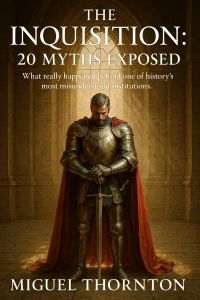
The Inquisition: 20 Myths ExposedMiguel Thornton 5h 39m Only with Ultra

Matters of the HeartJacinta Nampijinpa Price9h 35m4.8 (359)$29 · $0.00
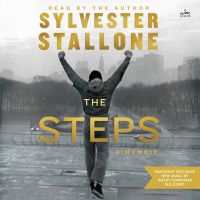
The StepsSylvester Stallone9h 4m4.8 (635)$29 · $0.00
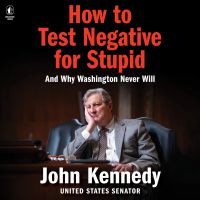
How to Test Negative for StupidJohn Kennedy8h 13m4.7 (9.7K)$28 · $0.00
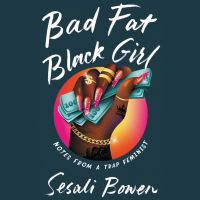
Bad Fat Black GirlSesali Bowen6h 32m4.7 (2.8K)$24 · $0.00

Send MeMarty Skovlund, Joe Kent8h 10m4.7 (1.6K)$26 · $0.00
John Muir: The Story of My Boyhood and Youth & Letters to a Friend (Annotated)John Muir10h 13m4.7 (1.1K)$0.99 · $0.00

Invisible StormJason Kander6h 48m4.7 (3.2K)$24 · $0.00

Forever BoyKate Swenson9h 27m4.7 (5K)$29 · $0.00
You Are Worth ItKyle Carpenter, Don Yaeger8h 53m4.7 (4.8K)$29 · $0.00

The Happiest Man on EarthEddie Jaku3h 48m4.6 (178K)$7 · $0.00

MotherlandJulia Ioffe17h 52m4.7 (2.5K)$40 · $0.00
Evidence Not SeenDarlene Deibler Rose11h 11m4.6 (11.9K)$29 · $0.00

Where Cowards Go to DieBenjamin Sledge8h 42m4.7 (351)$20 · $0.00

Will You Love Me?Cathy Glass9h 5m4.6 (9.3K)$29 · $0.00

Designing Terry Pratchett’s DiscworldPaul Kidby3h 52m4.7 (343)$20 · $0.00

HostageEli Sharabi5h 25m4.6 (10.8K)$24 · $0.00

Finding MeViola Davis9h 15m4.6 (256.4K)$29 · $0.00

The Dangerous Truth about Today’s MarijuanaLaura Stack CSP, MBA9h 57m4.7 (385)$20 · $0.00

Birdie & HarlowTaylor Wolfe7h 50m4.6 (6.5K)$26 · $0.00
The Lives of BrianBrian Johnson9h 45m4.6 (3.5K)$29 · $0.00
How to Test Negative for StupidJohn Kennedy8h 13m4.7 (9.7K)$28 · $0.00
Black AF HistoryMichael Harriot15h 43m4.7 (14.6K)$33 · $0.00

The Gulag Archipelago Volume 3Aleksandr I. Solzhenitsyn21h 56m4.7 (8.9K)$46 · $0.00
MotherlandJulia Ioffe17h 52m4.7 (2.5K)$40 · $0.00
HostageEli Sharabi5h 25m4.6 (10.8K)$24 · $0.00

KrantikariSanjeev Sanyal11h 44m4.6 (1.3K)$16 · $0.00
Unbroken Bonds of BattleJohnny Joey Jones8h 31m4.6 (2.6K)$8 · $0.00
On Democracies and Death CultsDouglas Murray10h 38m4.6 (6.5K)$29 · $0.00

Balcony Over Jerusalem: A Middle East Memoir - Israel, Palestine and BeyondJohn Lyons12h 37m4.6 (1.4K)$33 · $0.00
RiggedMollie Hemingway12h 48m4.6 (4.2K)$23 · $0.00

SledgehammerDavid Friedman8h 21m4.7 (589)$26 · $0.00
Citizenship in a Republic (Annotated)Theodore Roosevelt2h 44m4.6 (1.4K)$2 · $0.00
No EscapeNury Turkel9h 30m4.6 (809)$28 · $0.00

Always FaithfulThomas Schueman, Zainullah Zaki12h 12m4.6 (977)$29 · $0.00
UnthinkableJamie Raskin15h 8m4.5 (9.3K)$8 · $0.00
My Fourth Time, We DrownedSally Hayden13h 59m4.6 (2.9K)$23 · $0.00
A Revolution of Common SenseScott Jennings9h 29m4.6 (528)$29 · $0.00
Statement From the Dock at the Rivonia TrialNelson Mandela2h 18m4.6 (1.3K)$1 · $0.00

Lessons from the EdgeMarie Yovanovitch17h 11m4.5 (5.9K)$40 · $0.00
To Rescue the American SpiritBret Baier10h 12m4.5 (2.7K)$8 · $0.00
You may also like
The Politically Incorrect Guide to the Founding FathersBrion McClanahan PhD9h 26m4.0 (602)$20
China’s Good WarRana Mitter8h 37m4.1 (375)$20
Kings and PawnsHoward Bryant10h 9m4.6 (678)$29 · $0.00
Theodore Roosevelt for the DefenseDan Abrams, David Fisher12h 4m4.0 (2.4K)$25 · $0.00
Louis D. BrandeisJeffrey Rosen7h 45m4.1 (431)$20

TalmudVarious Authors184h 46m4.4 (2.4K)$1 · $0.00

Debunking the 1619 ProjectMary Grabar10h 55m4.1 (613)$20 · $0.00

Let Us March OnShara Moon9h 41m4.1 (1.5K)$29 · $0.00
The Courage to Be FreeRon DeSantis9h4.1 (6.3K)$29 · $0.00
Apprentice in WonderlandRamin Setoodeh8h 48m3.7 (1.8K)$8 · $0.00
The Smalcald ArticlesMartin Luther2h 33m4.4 (314)$2 · $0.00
Lives of the Signers to the Declaration of Independence (Annotated)Charles Augustus Goodrich18h 54m4.2 (297)$0.99 · $0.00

Federalist vs. Anti-Federalist: ALL Essays and Articles in One EditionAlexander Hamilton, James Madison, John Jay, Samuel Bryan, Patrick Henry20h 50m4.5 (266)$1.99 · $0.00
Benjamin Franklin's Last BetMichael Meyer10h 5m4.0 (365)$29 · $0.00

A Treatise on Christian LibertyMartin Luther2h 34m4.2 (4.4K)$2 · $0.00

Foxe’s Book of MartyrsJohn Foxe11h 44m4.3 (25.1K)$23

Fox's Book of Martyrs (Annotated)John Foxe21h 22m4.5 (1.3K)$2 · $0.00

Thomas PaineRobert Green Ingersoll1h 41m4.4 (137)$2 · $0.00
The Colored Patriots of the American Revolution (Annotated)William Cooper Nell, Harriet Beecher Stowe12h 17m4.3 (175)$2 · $0.00

The Most Influential Women in History: Over 100 Memoirs & BiographiesElizabeth Cady Stanton, Julia Ward Howe, Emmeline Pankhurst, Mother Jones, Helen Wright, Margaret Sanger, Helen Keller, Catherine H. Birney, Sarah H. Bradford199h 25m4.3 (12)$0.99 · $0.00