
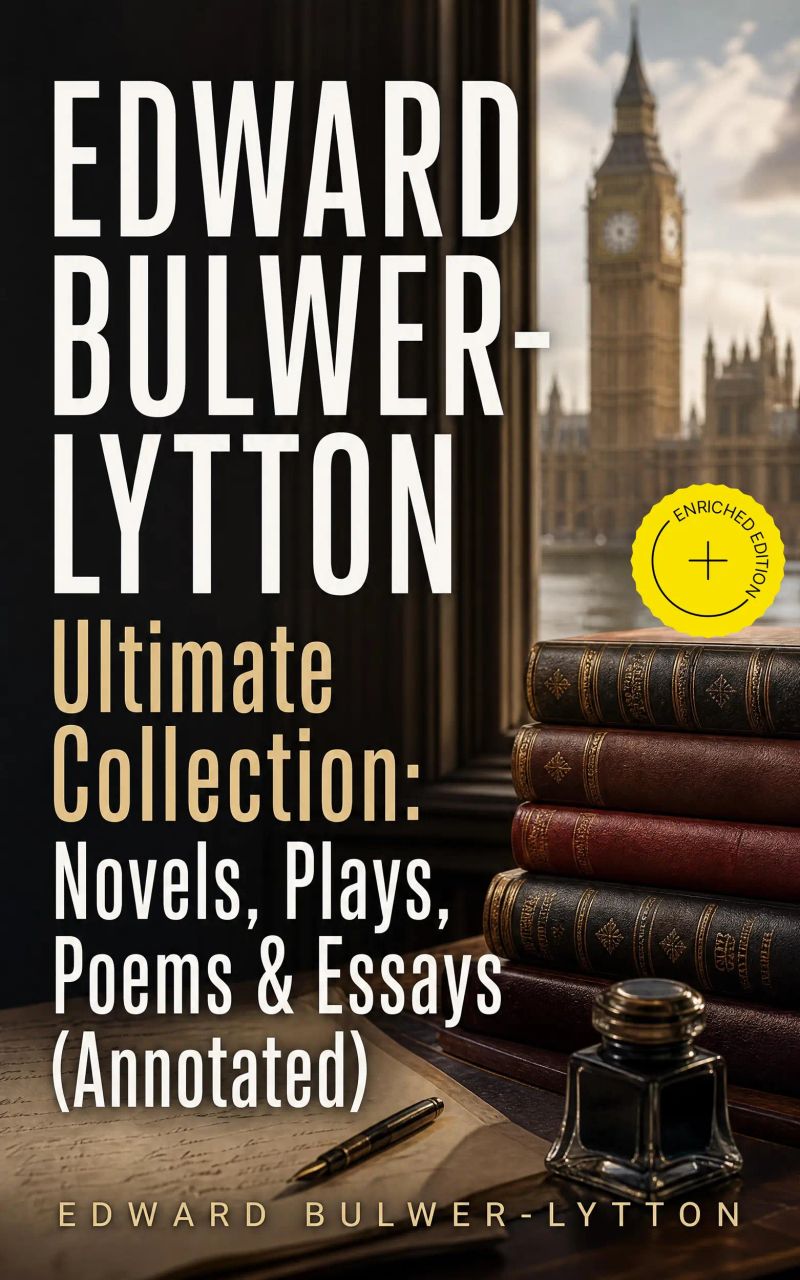
EDWARD BULWER-LYTTON Ultimate Collection: Novels, Plays, Poems & Essays (Annotated)
Enriched Edition. Victorian Historical Romance, Occult Fantasy, Social Satire & Literary EssaysBy Edward Bulwer-Lytton


Length559h 4m
About this audiobook
Bringing together the novels, plays, poems, and essays of Edward Bulwer-Lytton, this Ultimate Collection offers a panoramic view of one of Victorian Britain's most versatile literary minds. Its contents range from fashionable silver-fork fiction and historical romance to occult speculation, social satire, drama, and reflective verse. Bulwer-Lytton's style is ornate, rhetorical, and ambitious, often uniting melodramatic intensity with philosophical inquiry. Read within the context of nineteenth-century print culture, the collection reveals an author deeply engaged with class, power, destiny, and the shaping myths of modernity. Bulwer-Lytton was not merely a novelist but also a politician, dramatist, and public intellectual, experiences that informed his fascination with authority, reputation, reform, and social performance. His aristocratic background, parliamentary career, and involvement in literary circles placed him at the intersection of art and public life. These circumstances help explain the breadth of his work, from political reflection to imaginative explorations of history and the supernatural. This collection is recommended for readers seeking a substantial encounter with Victorian literature beyond its most familiar names. Scholars, students, and general readers will find in Bulwer-Lytton a writer whose influence, range, and contradictions illuminate the literary culture of his age.
This enriched edition has been carefully crafted to add value to your reading experience.
- A comprehensive Introduction outlines these selected works' unifying features, themes, or stylistic evolutions.
- A Historical Context section situates the works in their broader era—social currents, cultural trends, and key events that underpin their creation.
- A concise Synopsis (Selection) offers an accessible overview of the included texts, helping readers navigate plotlines and main ideas without revealing critical twists.
- A unified Analysis examines recurring motifs and stylistic hallmarks across the collection, tying the stories together while spotlighting the different work's strengths.
- Reflection questions inspire deeper contemplation of the author's overarching message, inviting readers to draw connections among different texts and relate them to modern contexts.
- Lastly, our hand‐picked Memorable Quotes distill pivotal lines and turning points, serving as touchstones for the collection's central themes.
Audiobook details
GenreLiterary Classics
Length559 hrs 4 mins
Narrated byListen with 1,000+ voices
FormateBook with Audio
Publish dateMay 7, 2021
LanguageEnglish
Table of contents
1Introduction
2Introduction
3Historical Context
4Synopsis (Selection)
5NOVELS & NOVELLAS
Show all chaptersShow less
6THE LAST DAYS OF POMPEII
7BOOK THE FIRST (pt. 1)
8BOOK THE FIRST (pt. 2)
9BOOK THE SECOND (pt. 1)
10BOOK THE SECOND (pt. 2)
11BOOK THE THIRD (pt. 1)
12BOOK THE THIRD (pt. 2)
13BOOK THE FOURTH (pt. 1)
14BOOK THE FOURTH (pt. 2)
15BOOK THE FIFTH (pt. 1)
16BOOK THE FIFTH (pt. 2)
17THE PILGRIMS OF THE RHINE (pt. 1)
18THE PILGRIMS OF THE RHINE (pt. 2)
19THE PILGRIMS OF THE RHINE (pt. 3)
20THE PILGRIMS OF THE RHINE (pt. 4)
21RIENZI, THE LAST OF THE ROMAN TRIBUNES
22BOOK I. THE TIME, THE PLACE, AND THE MEN. (pt. 1)
23BOOK I. THE TIME, THE PLACE, AND THE MEN. (pt. 2)
24BOOK II. THE REVOLUTION (pt. 1)
25BOOK II. THE REVOLUTION (pt. 2)
26BOOK III. THE FREEDOM WITHOUT LAW.
27BOOK IV. THE TRIUMPH AND THE POMP.
28BOOK V. THE CRISIS.
29BOOK VI. THE PLAGUE.
30BOOK VII. THE PRISON.
31BOOK VIII. THE GRAND COMPANY.
32BOOK IX. THE RETURN.
33BOOK X. THE LION Of BASALT.
34FALKLAND
35BOOK I.
36BOOK II.
37BOOK III.
38BOOK IV.
39PELHAM
40VOLUME I. (pt. 1)
41VOLUME I. (pt. 2)
42VOLUME II.
43VOLUME III. (pt. 1)
44VOLUME III. (pt. 2)
45VOLUME IV. (pt. 1)
46VOLUME IV. (pt. 2)
47VOLUME V.
48VOLUME VI.
49VOLUME VII. (pt. 1)
50VOLUME VII. (pt. 2)
The Complete Works of Edward Bulwer-LyttonEdward Bulwer-Lytton556h 9m$1.99 · $0.00

Gesammelte Romane und Erzählungen: Die letzten Tage von Pompeji + Das Geschlecht der Zukunft + Das Haus des schwarzen Magiers + Die Pilger des Rheins + Paul Clifford und mehr (Kommentiert)Edward Bulwer-Lytton133h 42m$1 · $0.00
Das Geschlecht der Zukunft (Kommentiert)Edward Bulwer-Lytton7h 12m3.7 (143)$1 · $0.00
Godolphin (Kommentiert)Edward Bulwer-Lytton16h 13m$1 · $0.00
The Greatest Gothich Novels of Edward Bulwer-Lytton (Annotated)Edward Bulwer-Lytton53h$2 · $0.00
The Last Days of Pompeii (Annotated)Edward Bulwer-Lytton17h 50m$2 · $0.00

Ausgewählte Romane und Erzählungen von Edward Bulwer-Lytton (Kommentiert)Edward Bulwer-Lytton133h 42m$1 · $0.00
Zanoni (Annotated)Edward Bulwer-Lytton17h 9m4.4 (301)$2 · $0.00

Die Pilger des Rheins (Die ideale Welt) (Kommentiert)Edward Bulwer-Lytton11h 56m$1 · $0.00

Eugen Aram: Kriminalroman (Kommentiert)Edward Bulwer-Lytton21h 40m4.1 (13)$1 · $0.00
LOST IN ROME (Annotated)Edward Bulwer-Lytton37h 38m$2 · $0.00
Paul Clifford (Annotated)Edward Bulwer-Lytton20h 43m$2 · $0.00
The Coming RaceEdward Bulwer-Lytton6h 34m3.4 (2.7K)$2 · $0.00
Rienzi, Last of the Roman TribunesEdward Bulwer-Lytton20h 36m3.9 (77)$1 · $0.00
The Greatest Gothich Novels of Edward Bulwer-LyttonEdward Bulwer-Lytton53h 15m$1 · $0.00
Die Pilger des RheinsEdward Bulwer-Lytton10h 48m$2 · $0.00
Back in Roman TimesEdward Bulwer-Lytton37h 33m$1 · $0.00

Die letzten Tage von Pompeji: Historischer RomanEdward Bulwer-Lytton20h 41m3.8 (18.8K)$1 · $0.00

Die letzten Tage von Pompeji (Historischer Roman)Edward Bulwer-Lytton20h 39m3.8 (19.2K)$2 · $0.00

To Kill a MockingbirdHarper Lee12h 18m4.5 (7.4M)$29 · $0.00

These Precious DaysAnn Patchett11h 14m4.5 (45.2K)$29 · $0.00

This Side of Paradise - The Original 1920 Edition (Annotated)F. Scott Fitzgerald11h 30m4.6 (1.6K)$2 · $0.00
The Great Gatsby: Original 1925 Edition (An F. Scott Fitzgerald Classic NovelFrancis Scott Fitzgerald4h 45m4.6 (9.3K)$18 · $0.00

The Complete Histories / History Plays of William Shakespeare (Annotated)William Shakespeare29h 42m4.6 (2.3K)$1.99 · $0.00
Braving the TruthRachel Held Evans11h 31m4.7 (359)$29 · $0.00

The Old Man and the Sea (Annotated)Ernest Hemingway4h 27m4.6 (1.4K)$2 · $0.00
Twelfth Night (The Unabridged Play) + The Classic Biography (Annotated)William Shakespeare, Sidney Lee16h 38m4.6 (1.4K)$2 · $0.00

Henry V (The Play, Historical Background and Analysis of the Character in the Play)William Shakespeare, William Hazlitt8h 40m4.6 (1.3K)$1 · $0.00
H. P. LOVECRAFT Ultimate Collection: Novellas, Short Stories, Poetry & Essays (Annotated)H. P. Lovecraft12h 28m4.6 (2.3K)$2 · $0.00
Time RegainedMarcel Proust15h 54m4.5 (10.6K)$2 · $0.00
Lessons in TruthH. Emilie3h 50m4.6 (1.4K)$4.70 · $0.00

TORAH - Bilingual Edition: English/Hebrew (Annotated)Max Margolis, JPS28h 26m4.6 (1K)$2 · $0.00

Betty Crocker picture cooky bookBetty Crocker, Inc. General Mills2h 13m4.5 (6.5K)$1 · $0.00
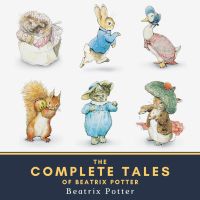
The Complete Tales of Beatrix PotterBeatrix Potter3h 36m4.5 (75K)$3 · $0.00
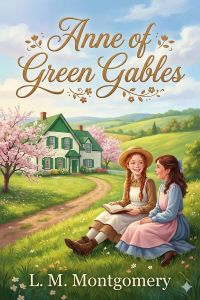
Anne of Green GablesL. M. Montgomery11h 1m4.5 (1.2M)$2.30 · $0.00
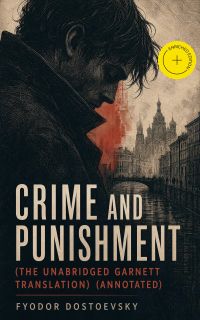
Crime and Punishment (The Unabridged Garnett Translation) (Annotated)Fyodor Dostoevsky24h 25m4.5 (15.4K)$1.99 · $0.00

The North American IndianEdward S. Curtis, Frederick Webb Hodge6h4.5 (1.2K)$2 · $0.00
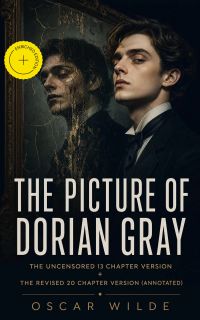
The Picture of Dorian Gray: The Uncensored 13 Chapter Version + The Revised 20 Chapter Version (Annotated)Oscar Wilde16h 12m4.5 (2.8K)$1.99 · $0.00
Grimoire Of The Everyday WitchIsadora Lys / Virginia Santos5h 35m4.5 (3.9K)$9 · $0.00
You may also like
Upon a Starlit TideKell Woods14h 39m4.2 (7.2K)$33 · $0.00
The Book of ThornsHester Fox10h 33m3.8 (2.1K)$29 · $0.00
The Book of ThornsHester Fox10h 33m3.6 (1.6K)$29 · $0.00
A Romance of Two WorldsMarie Corelli11h 58m3.8 (3.4K)$23
Until the BeginningAmy Plum8h 30m3.9 (6.2K)$26 · $0.00
Wicked All NightJeaniene Frost8h 26m4.3 (12.8K)$26 · $0.00
1001 NightsRichard Francis Burton256h 3m4.2 (1.7K)$1 · $0.00
Penric’s MissionLois McMaster Bujold5h 33m4.4 (12.8K)$15
The Mysteries of UdolphoAnn Radcliffe32h 39m3.6 (25.8K)$21 · $0.00
The Highland WitchSusan Fletcher12h 58m4.3 (11.8K)$23 · $0.00

Court of LionsJane Johnson13h 33m3.7 (1.5K)$23
Witch WoodJohn Buchan11h 31m4.1 (585)$2 · $0.00
Gold SpunBrandie June10h 59m3.7 (1.1K)$25
The School for Good and Evil #3: The Last Ever AfterSoman Chainani20h 53m4.3 (64.6K)$46 · $0.00

The Complete Tales of AvonleaLucy Maud Montgomery8h 48m4.2 (650)$1 · $0.00

Bitter GreensKate Forsyth19h 25m4.1 (10.4K)$25

The FamiliarsStacey Halls9h 45m3.9 (82.6K)$29 · $0.00

Zanoni & RizziEdward Bulwer-Lytton17h 4m$1 · $0.00

Legends of LancashirePeter Landreth6h 50m$2 · $0.00
Heart of StoneEllie Thomas2h 42m4.6 (11)$4.50 · $0.00