
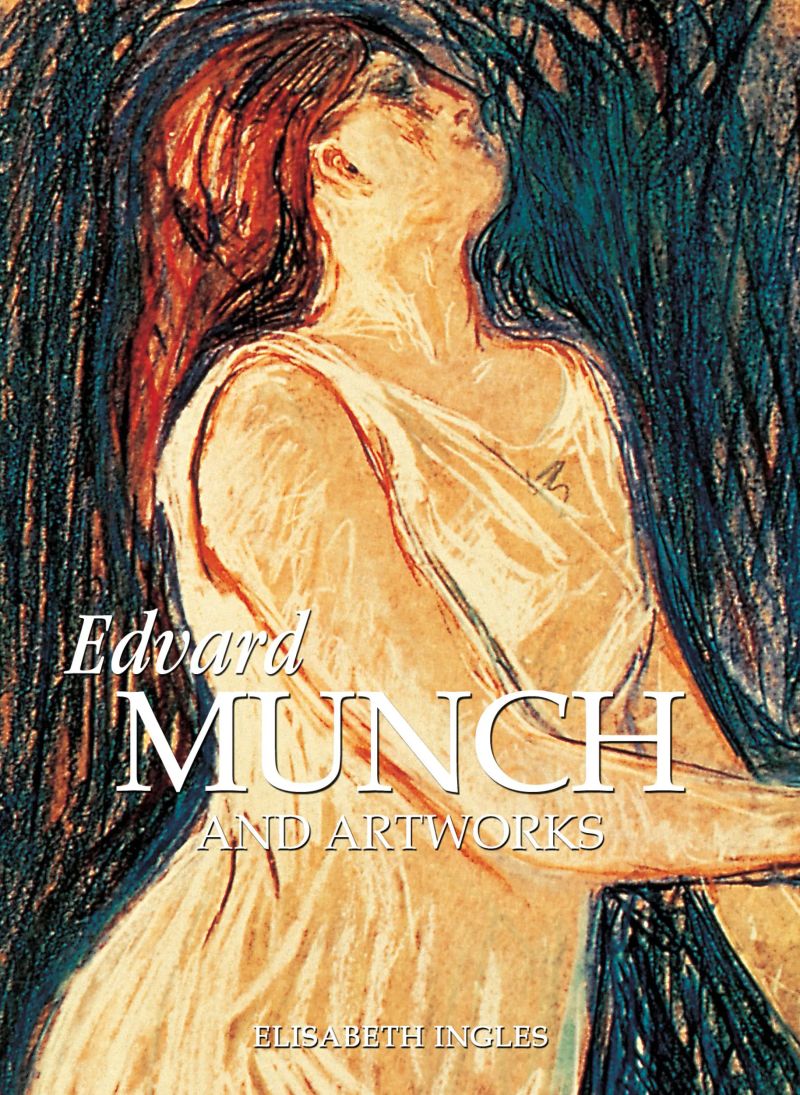


Length1h 23m
About this audiobook
Edvard Munch, born in 1863, was Norway's most popular artist. His brooding and anguished paintings, based on personal grief and obsessions, were instrumental in the development of Expressionism. During his childhood, the death of his parents, his brother and sister, and the mental illness of another sister, were of great influence on his convulsed and tortuous art. In his works, Munch turned again and again to the memory of illness, death and grief. During his career, Munch changed his idiom many times. At first, influenced by Impressionism and Post-impressionism, he turned to a highly personal style and content, increasingly concerned with images of illness and death. In the 1892s, his style developed a 'Synthetist' idiom as seen in The Scream (1893) which is regarded as an icon and the portrayal of modern humanity's spiritual and existential anguish. He painted different versions of it. During the 1890s Munch favoured a shallow pictorial space, and used it in his frequently frontal pictures. His work often included the symbolic portrayal of such themes as misery, sickness, and death. and the poses of his figures in many of his portraits were chosen in order to capture their state of mind and psychological condition. It also lends a monumental, static quality to the paintings. In 1892, the Union of Berlin Artists invited Munch to exhibit at its November exhibition. His paintings invoked bitter controversy at the show, and after one week the exhibition closed. In the 1930s and 1940s, the Nazis labeled his work "degenerate art", and removed his works from German museums. This deeply hurt the anti-fascist Munch, who had come to feel Germany was his second homeland. In 1908 Munch's anxiety became acute and he was hospitalized. He returned to Norway in 1909 and died in Oslo in 1944.
Audiobook details
Rating★★★★ 4.3 (58)
Includes Goodreads, Amazon
GenreOther
Length1 hr 23 mins
Narrated byListen with 1,000+ voices
FormateBook with Audio
Publish dateNov 14, 2023
LanguageEnglish
Table of contents
1Introduction
2Edvard Munch. Photograph, c. 1902.
3Biography
4Self-Portrait, 1881-1882
5Old Aker Church (Gamle Aker kirke), 1881
Show all chaptersShow less
6Karen Bjølstad in the Rocking Chair, 1883
7My Brother Studying Anatomy, 1883
8Girl Lighting a Stove, 1883
9Morning (A Servant Girl), 1884
10Portrait of the Painter Karl Jensen-Hjell, 1885
11Tête-à-tête, 1885
12Self-Portrait, 1886
13The Spring, 1889
14Portrait of the Author Hans Jaeger, 1889
15Spring Day on Karl Johan Street, 1890
16Night in St Cloud, 1890
17The Seine at St Cloud, 1890
18Melancholy, 1891
19Woman in Blue against Blue Water, 1891
20Rue de Rivoli, 1891
21Melancholy, 1892
22Moonlight on the Coast, 1892
23Portrait of Inger, the Artist’s Sister, 1892
24Summer Night / Inger at the Beach, 1889
25Evening on Karl Johan Street, 1892
26The Author August Strindberg, 1892
27The Mystery of a Summer Night, 1892
28The Kiss, 1892
29Starry Night, 1893
30Summer Night’s Dream (The Voice), 1893
31The Storm, 1893
32Moonlight, 1893
33Dagny Juel Przybyszewska, 1893
34Death and Spring, 1893
35Rose and Amélie, 1893
36Sketch of the Model Posing, 1893
37Despair, 1892
38The Scream, 1893
39Ashes, 1894
40Anxiety, 1894
41The Day After, 1894-1895
42Eye in Eye, 1894
43Madonna, 1894
44The Woman in Three Stages (Sphinx), c. 1894
45Puberty, 1894-1895
46The Hands, 1895
47Loving Woman (Madonna), 1895-1902
48Vampire, 1895
49Stanislaw Przybyszewski (with Skeleton Arm), 1895
50Jealousy, 1895
More from Elisabeth Ingles

Léon Bakst und KunstwerkeElisabeth Ingles2h 2m$15 · $0.00

Léon Bakst et œuvres d'artElisabeth Ingles1h 53m4.6 (13)$15 · $0.00

BakstElisabeth Ingles1h 49m4.1 (19)$13.50 · $0.00

BakstElisabeth Ingles1h 57m4.1 (19)$13.50 · $0.00
BakstElisabeth Ingles2h 16m4.1 (18)$13.50 · $0.00
Leon Bakst and artworksElisabeth Ingles1h 36m4.4 (20)$15 · $0.00

Edvard Munch und KunstwerkeElisabeth Ingles1h 34m3.9 (35)$15 · $0.00

Léon Bakst. The art of theatre and danceElisabeth Ingles2h 34m4.1 (18)$16 · $0.00

Léon Bakst. Die zauberwelt des TheatersElisabeth Ingles2h 55m4.4 (31)$16 · $0.00

Léon Bakst. L'art du théatre et de la danseElisabeth Ingles2h 47m$16 · $0.00
Mere ChristianityC. S. Lewis7h 7m4.4 (519.7K)$24 · $0.00

Her Daily BreadKate Wood12h 57m4.6 (153)$33 · $0.00
The Holy Bible - 1 SamuelKing James2h 13m4.8 (1.6K)$3 · $0.00
The American Standard Bible — The Gospel of MatthewMatthew3h 56m4.7 (3K)$2 · $0.00

Bad Fat Black GirlSesali Bowen6h 32m4.7 (2.8K)$24 · $0.00
The King James Audio Bible New Testament CompleteChristopher Glyn20h 2m4.7 (2.6K)$12 · $0.00

Faiths CheckbookCharles Spurgeon12h 44m4.7 (3.2K)$11 · $0.00
Ten Things I Wish You Knew About Your Child's Mental HealthDr. Billy Garvey4h 53m4.7 (2.4K)$20 · $0.00
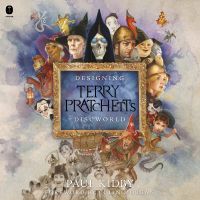
Designing Terry Pratchett’s DiscworldPaul Kidby3h 52m4.7 (343)$20 · $0.00
The Chosen Book OneAmanda Jenkins, Kristen Hendricks, Dallas Jenkins3h 8m4.6 (4.9K)$10 · $0.00
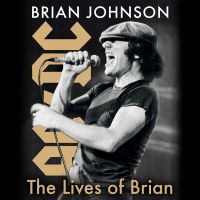
The Lives of BrianBrian Johnson9h 45m4.6 (3.5K)$29 · $0.00
Expository Thoughts on the Gospel of LukeJ.C. Ryle27h 13m4.7 (536)$18 · $0.00

CrossroadsKaleb Dahlgren7h 56m4.6 (4.9K)$26 · $0.00

Across the RiverKent Babb11h 40m4.6 (927)$29 · $0.00

Brain Training for RidersAndrea Monsarrat Waldo5h 56m4.7 (550)$19 · $0.00

My Effin' LifeGeddy Lee17h 11m4.6 (13.1K)$40 · $0.00

Kings and PawnsHoward Bryant10h 9m4.6 (678)$29 · $0.00

The Elementia Chronicles #2: The New OrderSean Fay Wolfe11h 17m4.6 (841)$29 · $0.00
The ActsLuke2h 55m4.6 (19.7K)$12 · $0.00
New Testament - Easy NavigationWorld English Bible19h 35m4.6 (1.3K)$1.30 · $0.00
You may also like
Will and TestamentVigdis Hjorth8h 33m4.0 (25.6K)$20 · $0.00

Who Is Wellness For?Fariha Roisin10h 25m3.8 (1.7K)$29 · $0.00

Girl in a BandKim Gordon7h 13m3.9 (36.6K)$26 · $0.00
Family PicturesSue Miller17h 55m3.7 (7.5K)$40 · $0.00

We Are BridgesCassandra Lane8h 6m4.0 (394)$20 · $0.00
Divided SoulDavid Ritz6h 38m4.2 (3K)$14

After AnneLogan Steiner10h 45m4.0 (1.6K)$29 · $0.00

HomeschooledStefan Merrill Block7h 10m3.6 (18.5K)$28 · $0.00

This Boy We MadeTaylor Harris8h 25m4.3 (2.8K)$20 · $0.00

Best BoyEli Gottlieb7h 20m3.9 (5.8K)$20 · $0.00

All of ThisRebecca Woolf6h 22m3.8 (2.9K)$24 · $0.00

The Man Who Loved ChildrenChristina Stead19h 24m3.7 (7.2K)$28

The Shape of FamilyShilpi Somaya Gowda10h 39m3.9 (6.7K)$29 · $0.00

UnlessCarol Shields7h 14m3.7 (22.6K)$24 · $0.00
The Tiger and the CageEmma Bolden10h4.5 (430)$20
Grown WomenSarai Johnson14h 5m4.4 (5.1K)$33 · $0.00
The FactsPhilip Roth6h 34m3.7 (1.4K)$23 · $0.00
HungerRoxane Gay5h 58m4.3 (197.4K)$24 · $0.00

Invisible BoyHarrison Mooney10h 15m4.4 (1.1K)$29 · $0.00
Which Side Are You OnRyan Lee Wong5h 39m3.7 (1.7K)$17