
Edgar Degas
Ballet, Movement, and IntrospectionBy Nathalia Brodskaya, Edgar Degas


Length3h 42m
About this audiobook
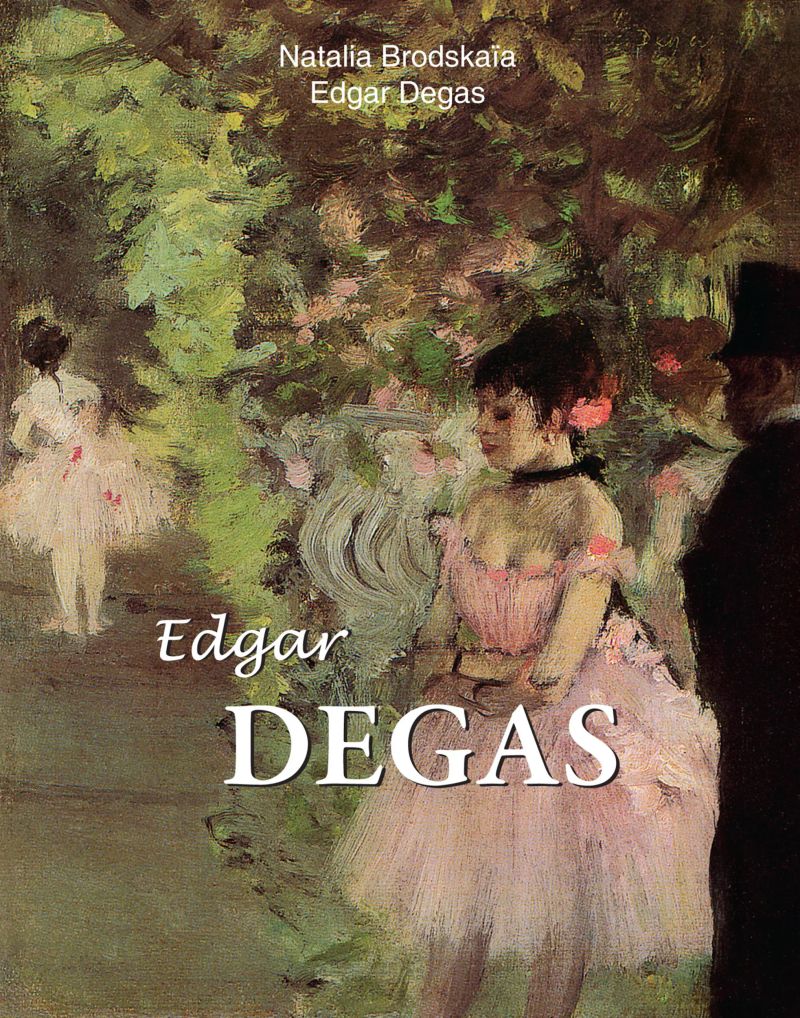
Degas was closest to Renoir in the impressionist's circle, for both favoured the animated Parisian life of their day as a motif in their paintings. Degas did not attend Gleyre's studio; most likely he first met the future impressionists at the Café Guerbois. He started his apprenticeship in 1853 at the studio of Louis-Ernest Barrias and, beginning in 1854, studied under Louis Lamothe, who revered Ingres above all others, and transmitted his adoration for this master to Edgar Degas. Starting in 1854 Degas travelled frequently to Italy: first to Naples, where he made the acquaintance of his numerous cousins, and then to Rome and Florence, where he copied tirelessly from the Old Masters. His drawings and sketches already revealed very clear preferences: Raphael, Leonardo da Vinci, Michelangelo, and Mantegna, but also Benozzo Gozzoli, Ghirlandaio, Titian, Fra Angelico, Uccello, and Botticelli. During the 1860s and 1870s he became a painter of racecourses, horses and jockeys. His fabulous painter's memory retained the particularities of movement of horses wherever he saw them. After his first rather complex compositions depicting racecourses, Degas learned the art of translating the nobility and elegance of horses, their nervous movements, and the formal beauty of their musculature. Around the middle of the 1860s Degas made yet another discovery. In 1866 he painted his first composition with ballet as a subject, Mademoiselle Fiocre dans le ballet de la Source (Mademoiselle Fiocre in the Ballet 'The Spring') (New York, Brooklyn Museum). Degas had always been a devotee of the theatre, but from now on it would become more and more the focus of his art. Degas' first painting devoted solely to the ballet was Le Foyer de la danse à l'Opéra de la rue Le Peletier (The Dancing Anteroom at the Opera on Rue Le Peletier) (Paris, Musée d'Orsay). In a carefully constructed composition, with groups of figures balancing one another to the left and the right, each ballet dancer is involved in her own activity, each one is moving in a separate manner from the others. Extended observation and an immense number of sketches were essential to executing such a task. This is why Degas moved from the theatre on to the rehearsal halls, where the dancers practised and took their lessons. This was how Degas arrived at the second sphere of that immediate, everyday life that was to interest him. The ballet would remain his passion until the end of his days.
Audiobook details
Rating★★★★ 4.2 (25)
Includes Goodreads, Amazon
GenreOther
Length3 hrs 42 mins
Narrated byListen with 1,000+ voices
FormateBook with Audio
Publish dateDec 28, 2023
LanguageEnglish
Table of contents
1Introduction
26To Ludovic Halévy
2EDGAR DEGAS AND HIS WORKS
27To Bartholomé
3LETTERS BY DEGAS
28To Bartholomé
4To Frölich[1]
29To Durand-Ruel
5To Henri Rouart
30To Durand-Ruel
Show all chaptersShow less
6To Henri Rouart
31To Henri Rouart
7To Faure[2]
32To Henri Rouart
8To Bracquemond[3]
33To Henri Rouart
9To Bracquemond
34To Bartholomé
10To Bracquemond
35To Ludovic Halévy
11To Bracquemond
36To Ludovic Halévy
12To Camille Pissarro
37To Ludovic Halévy
13To Henri Rouart
38To Bartholomé
14To Alexis Rouart[5]
39To Henri Rouart
15To J.E. Blanche
40To Faure
16To Bartholomé
41To Faure
17To Bartholomé
42To Faure
18To Henri Rouart
43To Madame Fleury
19To Ludovic Halévy
44To Bartholomé
20To Madame Bartholomé (née de Fleury)
45To Bartholomé
21To Bartholomé
46To Henri Rouart
22To Henry Lerolle
47To Ludovic Halévy
23To Henri Rouart
48To Bartholomé
24To Ludovic Halévy
49To Bartholomé
25To Henri Rouart
50To Boldini[7]

Paul CézanneNathalia Brodskaya57m4.2 (48)$8 · $0.00

Paul Cézanne și opere de artăNathalia Brodskaya1h 16m$15 · $0.00
DegasNathalia Brodskaya1h 2m4.3 (32)$8 · $0.00

PissarroNathalia Brodskaya1h 23m$8 · $0.00

Édouard Manet et œuvres d'artNathalia Brodskaya1h 32m$15 · $0.00

PissarroNathalia Brodskaya1h 26m4.4 (17)$8 · $0.00

SisleyNathalia Brodskaya1h 17m4.6 (11)$8 · $0.00

Paul Cézanne et œuvres d'artNathalia Brodskaya1h 37m4.3 (34)$15 · $0.00

ImpresionismoNathalia Brodskaya9h 43m4.1 (240)$18 · $0.00

Claude Monet et œuvres d'artNathalia Brodskaya1h 17m4.3 (36)$15 · $0.00

Claude MonetNathalia Brodskaya58m4.2 (250)$8 · $0.00

CézanneNathalia Brodskaya1h4.3 (25)$8 · $0.00

RenoirNathalia Brodskaya1h 3m4.3 (22)$8 · $0.00

Pierre-Auguste Renoir et œuvres d'artNathalia Brodskaya1h 24m4.2 (45)$15 · $0.00

GauguinNathalia Brodskaya1h 12m4.3 (31)$8 · $0.00
Impressionism 120 illustrationsNathalia Brodskaya1h 20m3.9 (82)$15 · $0.00
Monet 1840-1926Nathalia Brodskaya41m4.3 (228)$15 · $0.00

ManetNathalia Brodskaya2h 26m$13.50 · $0.00

CézanneNathalia Brodskaya1h 29m4.3 (34)$13.50 · $0.00

Claude MonetNathalia Brodskaya3h 39m4.3 (25)$10 · $0.00
Mere ChristianityC. S. Lewis7h 7m4.4 (519.7K)$24 · $0.00

Her Daily BreadKate Wood12h 57m4.6 (153)$33 · $0.00

The Holy Bible - 1 SamuelKing James2h 13m4.8 (1.6K)$3 · $0.00

The American Standard Bible — The Gospel of MatthewMatthew3h 56m4.7 (3K)$2 · $0.00

Bad Fat Black GirlSesali Bowen6h 32m4.7 (2.8K)$24 · $0.00

The King James Audio Bible New Testament CompleteChristopher Glyn20h 2m4.7 (2.6K)$12 · $0.00

Faiths CheckbookCharles Spurgeon12h 44m4.7 (3.2K)$11 · $0.00

Ten Things I Wish You Knew About Your Child's Mental HealthDr. Billy Garvey4h 53m4.7 (2.4K)$20 · $0.00

Designing Terry Pratchett’s DiscworldPaul Kidby3h 52m4.7 (343)$20 · $0.00
The Chosen Book OneAmanda Jenkins, Kristen Hendricks, Dallas Jenkins3h 8m4.6 (4.9K)$10 · $0.00

The Lives of BrianBrian Johnson9h 45m4.6 (3.5K)$29 · $0.00
Expository Thoughts on the Gospel of LukeJ.C. Ryle27h 13m4.7 (536)$18 · $0.00

CrossroadsKaleb Dahlgren7h 56m4.6 (4.9K)$26 · $0.00

Across the RiverKent Babb11h 40m4.6 (927)$29 · $0.00

Brain Training for RidersAndrea Monsarrat Waldo5h 56m4.7 (550)$19 · $0.00

My Effin' LifeGeddy Lee17h 11m4.6 (13.1K)$40 · $0.00

Kings and PawnsHoward Bryant10h 9m4.6 (678)$29 · $0.00

The Elementia Chronicles #2: The New OrderSean Fay Wolfe11h 17m4.6 (841)$29 · $0.00

The ActsLuke2h 55m4.6 (19.7K)$12 · $0.00

New Testament - Easy NavigationWorld English Bible19h 35m4.6 (1.3K)$1.30 · $0.00
You may also like

Bogie & BacallWilliam J. Mann27h 34m4.0 (1K)$53 · $0.00

The Last SeptemberElizabeth Bowen9h 4m3.6 (5.6K)$20 · $0.00

The Bishop and Other StoriesAnton Pavlovich Chekhov8h 10m4.1 (597)$2.30 · $0.00
THE ART OF PUBLIC SPEAKINGDale Carnegie, Joseph Berg Esenwein18h 32m4.1 (7.4K)$1.99 · $0.00

Long Day's Journey into Night (Annotated)Eugene O'Neill6h 55m4.3 (68.8K)$2 · $0.00

Biohack Your BrainKristen Willeumier7h 31m4.1 (2.1K)$26 · $0.00

I Forgot Someone Important’s Birthday Again - How to Keep Track of Birthdays, Anniversaries, Gifts, and Small Commitments to the People You Care About Without Turning Your Relationships Into a Second Work CalendarMax Paradox4h 23m$7.80 · $0.00

The Season of DivorceJohn Cheever25m3.9 (107)$7 · $0.00

My Home Won't Sort Itself Out, Unfortunately - How to Divide Household Chores and Stop Remembering Everything for EveryoneMax Paradox7h 7m4.4 (131)$7.80 · $0.00

The Family Group Chat Is on Fire Again - How to Survive WhatsApp Without Leaving the FamilyMax Paradox6h 36m$7.80 · $0.00

The Science Behind a Baby's Sleep PatternsAurora Brooks1h 15m$3.50 · $0.00

Raising an Organized ChildDamon Korb6h 51m4.0 (440)$17 · $0.00

I Have Adult Siblings and We Still Fight Like It’s 2004 - How to Build a Relationship with Your Adult Brother or Sister, Talk About Family and Old Grudges, and Stop Falling Back into Childhood Roles Every Time You Get TogetherMax Paradox4h 57m$7.80 · $0.00

The Link Between Sleep and Brain Development in BabiesAurora Brooks1h 5m$3.50 · $0.00

The Connection Between Sleep and Milestones in BabiesAurora Brooks1h 18m$3.50 · $0.00

The Family Calendar Looks Like a Command Center - How to Manage School, Activities, Appointments, Shopping, and Family Dates So One Person Doesn't Have to Be the Dispatcher for the Entire HouseholdMax Paradox4h 42m$7.70 · $0.00

Practical Education (Annotated)Maria Edgeworth, Richard Lovell Edgeworth24h 37m$2 · $0.00

Hurry! Hurry! It’s Almost Christmas!George Zarr2h 7m2.9 (39)$15

The Surprising Impact of Parental Sleep on a Baby's Sleep QualityAurora Brooks51m$3.50 · $0.00

The Science of Baby Sleep- Understanding Sleep PatternsAurora Brooks1h 15m$3.50 · $0.00