
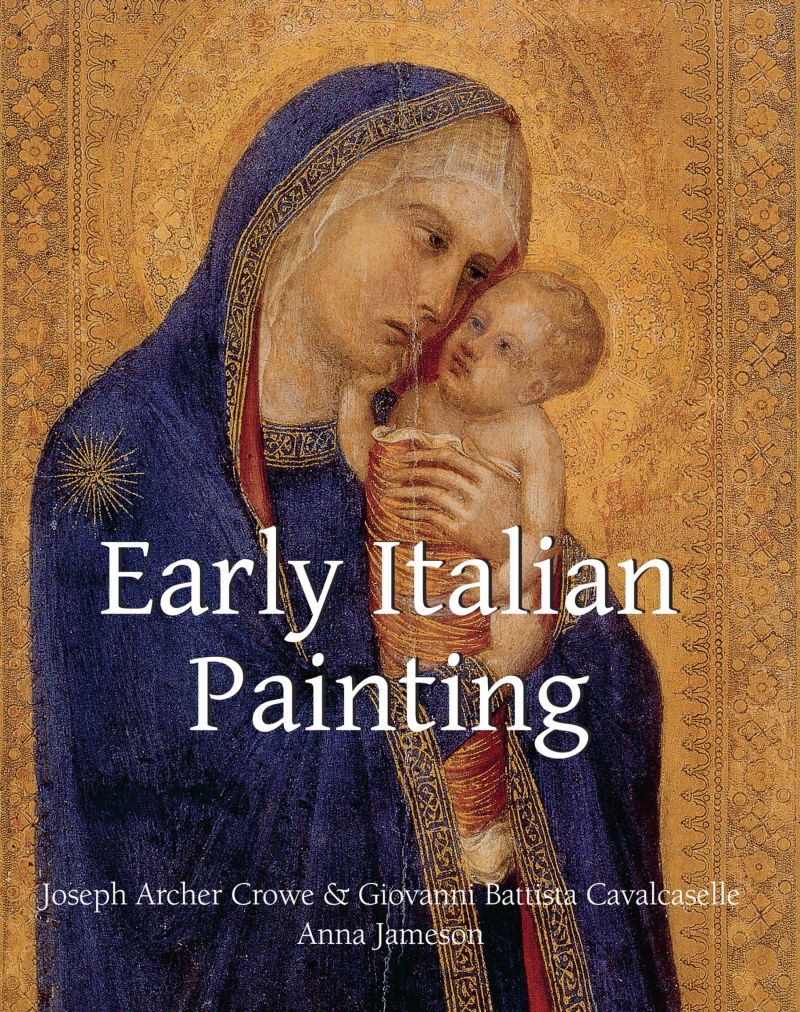
Early Italian Painting
From Giotto to Fra Angelico: the birth of perspectiveBy Joseph Archer Crowe, Giovanni Battista Cavalcaselle, Anna Jameson


Length5h 17m
About this audiobook
Oscillating between the majesty of the Greco-Byzantine tradition and the modernity predicted by Giotto, Early Italian Painting addresses the first important aesthetic movement that would lead to the Renaissance, the Italian Primitives. Trying new mediums and techniques, these revolutionary artists no longer painted frescos on walls, but created the first mobile paintings on wooden panels. The faces of the figures were painted to shock the spectator in order to emphasise the divinity of the character being represented. The bright gold leafed backgrounds were used to highlight the godliness of the subject. The elegance of both line and colour were combined to reinforce specific symbolic choices. Ultimately the Early Italian artists wished to make the invisible visible. In this magnificent book, the authors emphasise the importance that the rivalry between the Sienese and Florentine schools played in the evolution of art history. The reader will discover how the sacred began to take a more human form through these forgotten masterworks, opening a discrete but definitive door through the use of anthropomorphism, a technique that would be cherished by the Renaissance.
Audiobook details
GenreOther
Length5 hrs 17 mins
Narrated byListen with 1,000+ voices
FormateBook with Audio
Publish dateJan 5, 2012
LanguageEnglish
Table of contents
1Early Italian Early Italian Painting Painting
2Authors: Joseph Archer Crowe & Giovanni Battista Cavalcaselle Anna Jameson
3Index
4Introduction: Something about Pictures and Painters
5the artists and atmosphere of
Show all chaptersShow less
6Pietro Lorenzetti, Christ of Compassion (facing right), between 1340-1345. Lindenau-Museum, Altenburg.
7If
8Early Christianity and Art
9Memoirs of the Early Italian Painters
10This painting, if
11Guido da Siena, The Flagellation, c. 1270-1280. Lindenau-Museum, Altenburg.
12Giovanni Cimabue 1240-1302
131 Franz Kugler, Handbook of
14Cimabue and the Rucellai Madonna
15the most astounding of
16the infant Christ, the features of
17Contemporaries of Cimabue – Gradual Rise of the Art of Florence
18Duccio di Buoninsegna c. 1255-c. 1318
19the works of
20apostles as that of
21The vehemence of
22Ugolino di Nerio 1280(?)-1349
23Pietro Lorenzetti, Virgin and Child (facing left), between 1340-1345. Lindenau-Museum, Altenburg.
24Segna di Bonaventura Active c. 1298-1331
25An altarpiece in the sacristy of
26Carey’s Dante.
27The Campanile du Duomo, 12th and 13th centuries. Siena.
28the Jubilee of 1300, which
29Pietro Cavallini 1259-c. 1330
30The Campo Santo
31Andrea Orcagna c. 1308-1368
32Taddeo Gaddi c. 1300-1366
33Simone Martini, also called Simone Memmi c. 1284-1344
34records confirm, at least, such an account as the following.
35But the triumph of
36SIMON DE SENIS ME PINXIT SUB ANNO MCCCXLII
376 Now at the Royal Museum of Fine Arts Antwerp (KMSKA).
38NADDUS CECCHARELLI DE SENIS ME PINSIT MCCCXLVII
39Conclusion
40Christ in Limbo (reverse side of his Maestà)
41The Lamentation of Christ
42The Dream of St. Martin
43Introduction to the Knight from the Cavalli Family to the Virgin
More from Joseph Archer Crowe, Giovanni Battista Cavalcaselle, Anna Jameson

Les Primitifs ItalienJoseph Archer Crowe, Giovanni Battista Cavalcaselle, Anna Jameson5h 47m$15 · $0.00
Early Italian PaintingJoseph Archer Crowe, Giovanni Battista Cavalcaselle, Anna Jameson5h 6m3.9 (19)$15 · $0.00

Les Primitifs ItalienJoseph Archer Crowe, Giovanni Battista Cavalcaselle, Anna Jameson5h 42m$15 · $0.00
Discover the beauty of Early Italian artJoseph Archer Crowe, Giovanni Battista Cavalcaselle, Anna Jameson1h 25m$13 · $0.00
Mere ChristianityC. S. Lewis7h 7m4.4 (519.7K)$24 · $0.00

Her Daily BreadKate Wood12h 57m4.6 (153)$33 · $0.00
The Holy Bible - 1 SamuelKing James2h 13m4.8 (1.6K)$3 · $0.00
The American Standard Bible — The Gospel of MatthewMatthew3h 56m4.7 (3K)$2 · $0.00

Bad Fat Black GirlSesali Bowen6h 32m4.7 (2.8K)$24 · $0.00
The King James Audio Bible New Testament CompleteChristopher Glyn20h 2m4.7 (2.6K)$12 · $0.00
Faiths CheckbookCharles Spurgeon12h 44m4.7 (3.2K)$11 · $0.00

Ten Things I Wish You Knew About Your Child's Mental HealthDr. Billy Garvey4h 53m4.7 (2.4K)$20 · $0.00
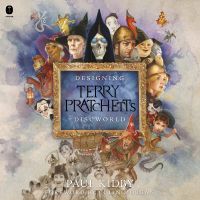
Designing Terry Pratchett’s DiscworldPaul Kidby3h 52m4.7 (343)$20 · $0.00
The Chosen Book OneAmanda Jenkins, Kristen Hendricks, Dallas Jenkins3h 8m4.6 (4.9K)$10 · $0.00
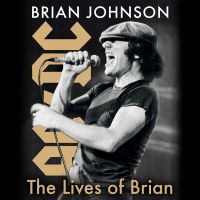
The Lives of BrianBrian Johnson9h 45m4.6 (3.5K)$29 · $0.00
Expository Thoughts on the Gospel of LukeJ.C. Ryle27h 13m4.7 (536)$18 · $0.00

CrossroadsKaleb Dahlgren7h 56m4.6 (4.9K)$26 · $0.00

Across the RiverKent Babb11h 40m4.6 (927)$29 · $0.00

Brain Training for RidersAndrea Monsarrat Waldo5h 56m4.7 (550)$19 · $0.00

My Effin' LifeGeddy Lee17h 11m4.6 (13.1K)$40 · $0.00
Kings and PawnsHoward Bryant10h 9m4.6 (678)$29 · $0.00

The Elementia Chronicles #2: The New OrderSean Fay Wolfe11h 17m4.6 (841)$29 · $0.00
The ActsLuke2h 55m4.6 (19.7K)$12 · $0.00
New Testament - Easy NavigationWorld English Bible19h 35m4.6 (1.3K)$1.30 · $0.00
You may also like
The Ten-Day MBASteven Silbiger11h 6m3.9 (6.2K)Free
Metaphysics (Annotated)Aristotle13h 30m4.6 (1.2K)$2 · $0.00
MetaphysicsAristotle11h 39m4.2 (20.2K)$1.80 · $0.00

The EssaysFrancis Bacon5h 39m4.0 (6.1K)$1.20 · $0.00
EuthyphroPlato46m4.1 (16.5K)$1.80 · $0.00
The Symbolism of Churches and Church Ornaments (Annotated)Guillaume Durand10h 1m4.3 (270)$2 · $0.00
Kant's Critique of JudgementImmanuel Kant12h 49m4.2 (12.5K)$1.80 · $0.00
The Advancement of LearningFrancis Bacon8h 58m4.0 (2K)Free
The Critique of Pure ReasonImmanuel Kant25h 41m4.1 (49.5K)$1.99 · $0.00
Kant's Prolegomena to Any Future MetaphysicsImmanuel Kant5h 2m4.1 (12.3K)$2.30

The Right and Wrong Uses of the BibleRichard Heber Newton6h 19m$2 · $0.00
Law And Christian TheologyJohn Warwick Montgomery, John Warwick Montgomery51m$3 · $0.00
Apollonius Of TyanaG. R.3h 21m4.0 (94)$3.50 · $0.00
Who Wrote the Bible? : a Book for the PeopleWashington Gladden9h 46m4.0 (69)$2 · $0.00
The Truth About JesusSadik Abubakar11h 9m$4.20

Archæology and the BibleGeorge A. Barton18h 59m4.1 (39)$1 · $0.00
History of the Sabbath and First Day of the Week (Annotated)John Nevins Andrews18h 46m4.4 (14)$2 · $0.00

Collected Essays: Science and Christian TraditionThomas Henry Huxley6h 46m4.1 (31)$2 · $0.00

Plato’s RevengeDavid Klinghoffer4h 15m$20
Philosophy Talk, Vol. 6John Perry, Ken Taylor8h 18m$20