
Dalziels' Illustrated Goldsmith
Illustrated Tales of 18th-Century EnglandBy Oliver Goldsmith


Length16h 30m
About this audiobook
In "Dalziels' Illustrated Goldsmith," Oliver Goldsmith offers a rich tapestry of prose and poetry, beautifully captured through the lens of his keen observations of 18th-century life. This volume encapsulates key works such as "The Vicar of Wakefield" and "The Deserted Village," blending lyrical language with poignant themes of humanity, nature, and societal critique. The book features exquisite illustrations that serve to enhance Goldsmith's vivid storytelling, reflecting the aesthetic values of the time and providing readers with a multisensory experience that intertwines art and literature seamlessly. Oliver Goldsmith, an Irish writer, and physician, emerged as a prominent figure of the Enlightenment, his works often reflecting the struggles and joys of the common people. Goldsmith's varied experiences'Äîfrom his humble beginnings to his tumultuous career in literature'Äîshaped his views on society and human nature, leading him to write with both humor and deep empathy. His ability to weave rich narratives that critique and celebrate human experiences defines his legacy in English literature. This volume is an essential read for anyone interested in the intersections of art and literature, as well as for those who wish to explore the nuanced human emotions conveyed through Goldsmith's celebrated prose. Enriched with illustrations, "Dalziels' Illustrated Goldsmith" serves not only as a literary gem but also as a visual homage to a timeless body of work.
Audiobook details
GenreLiterary Classics, Humor
Length16 hrs 30 mins
Narrated byListen with 1,000+ voices
FormateBook with Audio
Publish dateNov 29, 2019
LanguageEnglish
Table of contents
1A SKETCH OF THE LIFE OF OLIVER GOLDSMITH.
2DALZIELS' ILLUSTRATED GOLDSMITH. THE VICAR OF WAKEFIELD.
3CHAPTER I. The description of the family of Wakefield, in which a kindred likeness prevails as well of minds as of persons.
4CHAPTER II. Family misfortunes.—The loss of fortune only serves to increase the pride of the worthy.
5CHAPTER III. A migration.—The fortunate circumstances of our lives are generally found at last to be of our own procuring.
Show all chaptersShow less
6CHAPTER IV. A proof that even the humblest fortune may grant happiness, which depends not on circumstances, but constitution.
7CHAPTER V. A new and great acquaintance introduced.—What we place most hopes upon generally proves most fatal.
8CHAPTER VI. Happiness of a country fireside.
9CHAPTER VII. A town wit described.—The dullest fellows may learn to be comical for a night or two.
10CHAPTER VIII. An amour, which promises little good fortune, yet may be productive of much.
11CHAPTER IX. Two ladies of great distinction introduced.—Superior finery ever seems to confer superior breeding.
12CHAPTER X. The family endeavour to cope with their betters.—The miseries of the poor when they attempt to appear above their circumstances.
13CHAPTER XI. The family still resolve to hold up their heads.
14CHAPTER XII. Fortune seems resolved to humble the family of Wakefield.—Mortifications are often more painful than real calamities.
15CHAPTER XIII. Mr. Burchell is found to be an enemy; for he has the confidence to give disagreeable advice.
16CHAPTER XIV. Fresh mortifications, or a demonstration that seeming calamities may be real blessings.
17CHAPTER XV. All Mr. Burchell's villany at once detected.— The folly of being over-wise.
18CHAPTER XVI. The family use art, which is opposed by still greater.
19CHAPTER XVII. Scarcely any virtue found to resist the power of long and pleasing temptation.
20CHAPTER XVIII. The pursuit of a father to reclaim a lost child to virtue.
21CHAPTER XIX. The description of a person discontented with the present government, and apprehensive of the loss of our liberties.
22CHAPTER XX. The History of a Philosophic Vagabond pursuing novelty, but losing content.
23CHAPTER XXI. The short continuance of friendship among the vicious, which is coeval only with mutual satisfaction.
24CHAPTER XXII. Offences are easily pardoned where there is love at bottom.
25CHAPTER XXIII. None but the guilty can be long and completely miserable.
26CHAPTER XXIV. Fresh calamities.
27CHAPTER XXV. No situation, however wretched it seems, but has some sort of comfort attending it.
28CHAPTER XXVI. A reformation in the gaol.—To make laws complete, they should reward as well as punish.
29CHAPTER XXVII. The same subject continued.
30CHAPTER XXVIII. Happiness and misery rather the result of prudence than of virtue in this life; temporal evils or felicities being regarded by Heaven as things merely in themselves trifling, and unworthy its care in the distribution.
31CHAPTER XXIX. The equal dealings of Providence demonstrated with regard to the happy and the miserable here below, that, from the nature of pleasure and pain, the wretched must be repaid the balance of their sufferings in the life hereafter.
32CHAPTER XXX. Happier prospects begin to appear.—Let us be inflexible, and fortune will at last change in our favour.
33CHAPTER XXXI. Former benevolence now repaid with unexpected interest.
34CHAPTER XXXII. The conclusion.
35THE POEMS AND PLAYS OF OLIVER GOLDSMITH.
36CONTENTS.
37THE TRAVELLER; OR, A PROSPECT OF SOCIETY.
38THE TRAVELLER; OR, A PROSPECT OF SOCIETY.
39THE DESERTED VILLAGE.
40THE HAUNCH OF VENISON. A POETICAL EPISTLE TO LORD CLARE.
41SONG.
42THE CAPTIVITY. AN ORATORIO.
43ACT I.
44ACT II.
45ACT III.
46THE HERMIT.
47AN ELEGY
48STANZAS ON WOMAN.
49THE GOOD-NATURED MAN. A COMEDY.
50ACT I. (pt. 1)
More from Oliver Goldsmith
An Elegy on the Glory of Her Sex, Mrs. Mary BlaizeOliver Goldsmith4m2.8 (22)$2 · $0.00
History of RomeOliver Goldsmith15h 52m$1 · $0.00

Der Pfarrer von WakefieldOliver Goldsmith8h 13m3.7 (17.4K)$18 · $0.00
She Stoops to Conquer; Or, The Mistakes of a NightOliver Goldsmith3h 54m3.8 (15.7K)$1 · $0.00
The Deserted VillageOliver Goldsmith31m3.6 (337)$1 · $0.00

An Elegy on the Glory of Her Sex, Mrs. Mary Blaize (Annotated)Oliver Goldsmith1h 31m2.9 (21)$1.99 · $0.00
The Vicar of WakefieldOliver Goldsmith6h 34m3.6 (16.7K)$8 · $0.00

To Kill a MockingbirdHarper Lee12h 18m4.5 (7.4M)$29 · $0.00

These Precious DaysAnn Patchett11h 14m4.5 (45.2K)$29 · $0.00

Henry V (The Play, Historical Background and Analysis of the Character in the Play)William Shakespeare, William Hazlitt8h 50m4.6 (1.3K)$1.99 · $0.00
H. P. LOVECRAFT Ultimate Collection: Novellas, Short Stories, Poetry & Essays (Annotated)H. P. Lovecraft12h 28m4.6 (2.3K)$2 · $0.00
Time RegainedMarcel Proust16h 8m4.5 (10.6K)$1.99 · $0.00
The Mis-Education of the NegroCarter Goodwin Woodson4h 32m4.5 (28.4K)$10 · $0.00
Lessons in TruthH. Emilie3h 50m4.6 (1.4K)$4.70 · $0.00

TORAH - Bilingual Edition: English/Hebrew (Annotated)Max Margolis, JPS28h 26m4.6 (1K)$2 · $0.00

Betty Crocker picture cooky bookBetty Crocker, Inc. General Mills2h 13m4.5 (6.5K)$1 · $0.00
The Complete Tales of Beatrix PotterBeatrix Potter3h 36m4.5 (75K)$3 · $0.00
Anne of Green GablesL. M. Montgomery11h 1m4.5 (1.2M)$2.30 · $0.00

Crime and Punishment (The Unabridged Garnett Translation) (Annotated)Fyodor Dostoevsky24h 25m4.5 (15.4K)$1.99 · $0.00

The North American IndianEdward S. Curtis, Frederick Webb Hodge6h4.5 (1.2K)$2 · $0.00
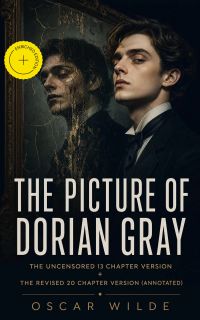
The Picture of Dorian Gray: The Uncensored 13 Chapter Version + The Revised 20 Chapter Version (Annotated)Oscar Wilde16h 12m4.5 (2.8K)$1.99 · $0.00
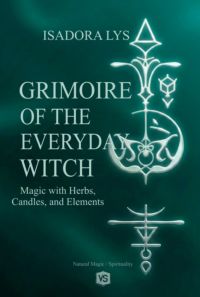
Grimoire Of The Everyday WitchIsadora Lys / Virginia Santos5h 35m4.5 (3.9K)$9 · $0.00
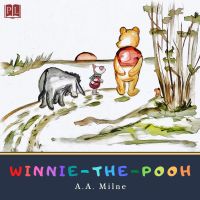
Winnie-the-PoohAlan Alexander Milne2h 52m4.5 (401.1K)$3 · $0.00

Sitting PrettyRebekah Taussig7h 33m4.5 (18.9K)$26 · $0.00
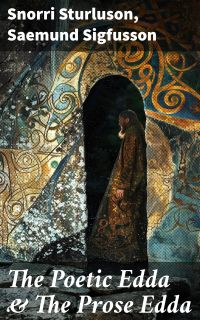
The Poetic Edda & The Prose EddaSnorri Sturluson, Saemund Sigfusson9h 34m4.5 (4K)$1 · $0.00

The Complete Satires & Essays of Mark Twain (Annotated)Mark Twain23h 21m4.5 (1.1K)$2 · $0.00
Anne of Green GablesLucy Maud Montgomery11h 10m4.4 (1.3M)$8 · $0.00

Lost In TranslationAudrey Davis9h 15m4.4 (235)Free

This Is Going to HurtAdam Kay5h 47m4.4 (444.7K)$24 · $0.00

You Will Get Through This NightDaniel Howell6h 56m4.4 (11.8K)$24 · $0.00
Northanger Abbey (Annotated)Jane Austen10h 7m4.5 (1.6K)$2 · $0.00

My Dear HamiltonStephanie Dray, Laura Kamoie23h 7m4.4 (63.6K)$46 · $0.00
THE SCREWTAPE LETTERS & SCREWTAPE PROPOSES A TOAST (Annotated)C. S. Lewis5h 6m4.4 (471K)$2 · $0.00

BufferingHannah Hart5h 55m4.4 (12.4K)$24 · $0.00

The Office BFFsJenna Fischer, Angela Kinsey8h 26m4.3 (45.4K)$26 · $0.00
The Collected Stories of Dorothy ParkerDorothy Parker8h 36m4.3 (13.6K)$1 · $0.00
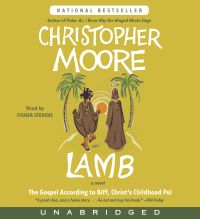
LambChristopher Moore15h 22m4.3 (211.3K)$33 · $0.00

#IMomSoHardKristin Hensley, Jen Smedley7h 19m4.3 (7.3K)$24 · $0.00
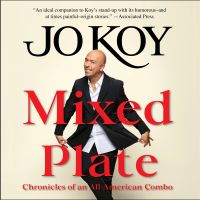
Mixed PlateJo Koy8h 18m4.3 (7.1K)$26 · $0.00

Over the TopJonathan Van Ness5h 50m4.3 (87.3K)$24 · $0.00
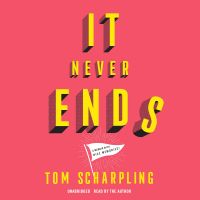
It Never EndsTom Scharpling8h 53m4.4 (2.3K)$20 · $0.00
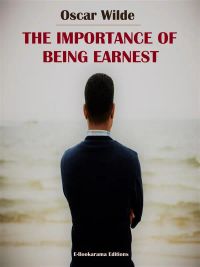
The Importance of Being EarnestOscar Wilde2h 31m4.3 (475.9K)$1.20 · $0.00
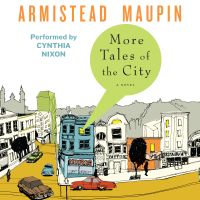
More Tales of the CityArmistead Maupin8h 23m4.3 (22.6K)$26 · $0.00

Joyful Recollections of TraumaPaul Scheer6h 38m4.3 (8.2K)$7 · $0.00
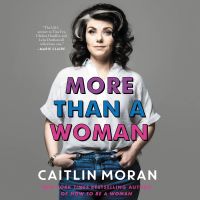
More Than a WomanCaitlin Moran9h 31m4.3 (16.8K)$29 · $0.00
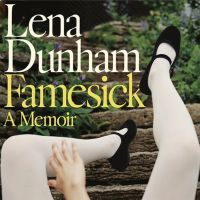
FamesickLena Dunham11h 46m4.3 (49.7K)$29 · $0.00
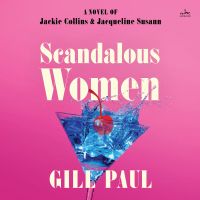
Scandalous WomenGill Paul10h 46m4.4 (1.5K)$29 · $0.00
You may also like
The Diary of a Provincial Lady (Illustrated)E. M. Delafield6h 11m4.0 (10.6K)$2 · $0.00
Emily ClimbsL. M. Montgomery11h 29m4.3 (32.8K)$1.20 · $0.00

Let Us Now Praise Famous MenJames Agee13h 55m4.1 (7.4K)$1.99 · $0.00
A Scots Quair - The Complete Trilogy (Annotated)Lewis Grassic Gibbon28h 12m4.2 (996)$2 · $0.00
How Green Was My ValleyRichard Llewellyn16h 23m4.3 (22.8K)$28
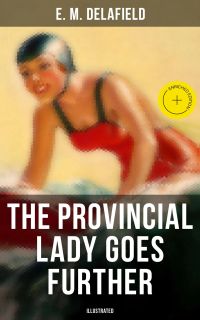
THE PROVINCIAL LADY GOES FURTHER (ILLUSTRATED)E. M. Delafield7h 11m4.2 (5.9K)$1.99 · $0.00

FlushVirginia Woolf4h 58m3.9 (22.8K)$2 · $0.00

So BigEdna Ferber11h 4m4.1 (16.8K)$20
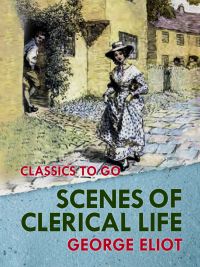
Scenes of Clerical LifeGeorge Eliot15h 40m3.8 (5K)$2.30
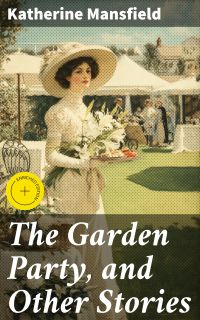
The Garden Party, and Other StoriesKatherine Mansfield7h 27m4.0 (14.2K)$1 · $0.00
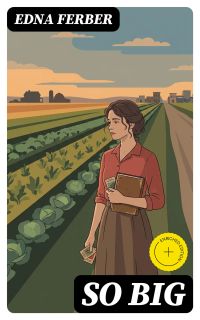
So BigEdna Ferber10h 22m4.1 (17.1K)$2 · $0.00
Emily of New MoonL. M. Montgomery12h 22m4.2 (65.3K)$2.30
The Life and Adventures of Martin ChuzzlewitCharles Dickens37h 20m3.9 (22.2K)$2.30 · $0.00

The Vicar of Wakefield (Annotated)Oliver Goldsmith6h 40m3.6 (13.7K)$1.20 · $0.00

The Mill on the FlossGeorge Eliot22h 16m4.0 (76.5K)$2.30 · $0.00

The Collected Stories of Jean StaffordJean Stafford19h 43m3.9 (1.8K)$30 · $0.00
How to Be a HermitWill Cuppy8h 18m4.0 (147)$1 · $0.00
The World of Peter Rabbit & His Friends: 14 Books with 450+ Original IllustrationsBeatrix Potter4h 6m4.1 (43)$1.99 · $0.00

How Spring Came in New EnglandCharles Dudley Warner1h 11m$2 · $0.00
Stories of Women in Rural Realism – 3 Classic Provincial Fiction TalesRichard Jefferies, Sarah Orne Jewett, Barbara Janet Ainsleigh Baynton17h 24m$2