
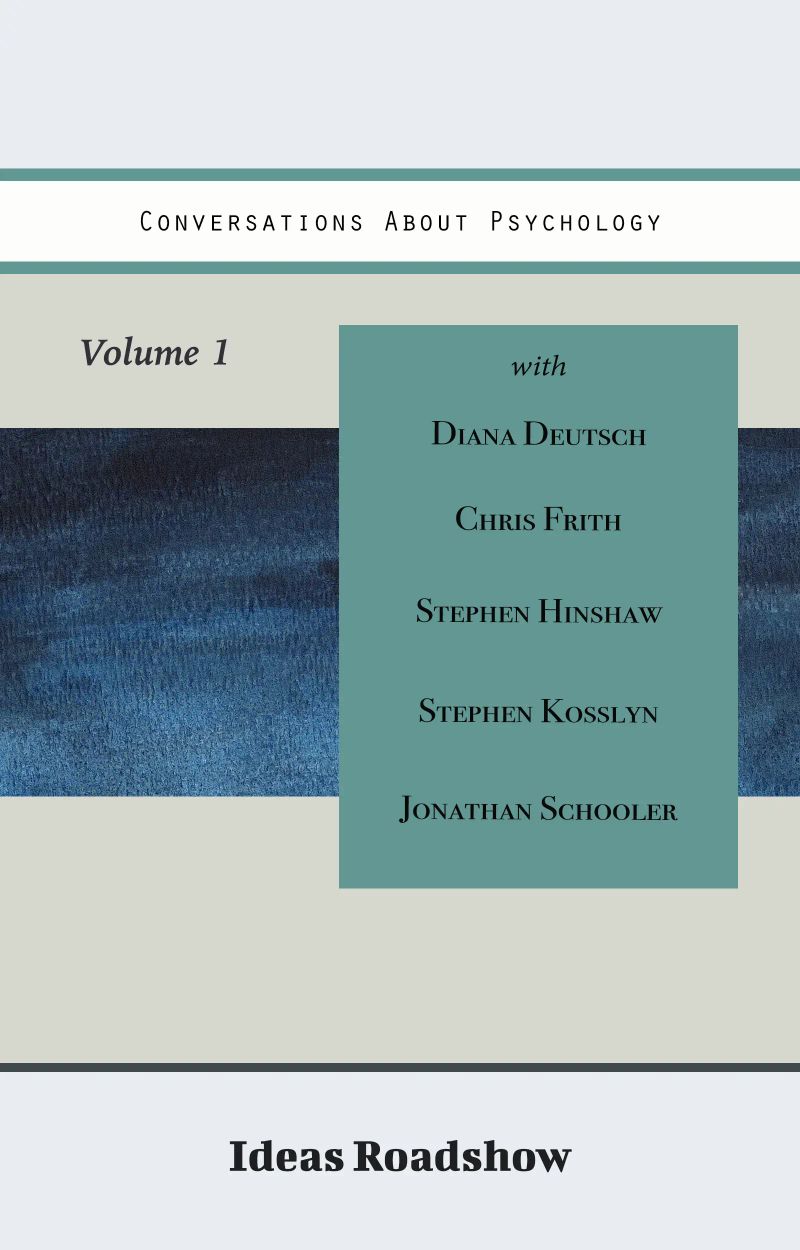
Conversations About Psychology, Volume 1
By Howard Burton

Length9h 42m
About this audiobook
FIVE BOOKS IN ONE! This collection includes the following 5 complete Ideas Roadshow books featuring leading researchers providing fully accessible insights into cutting-edge academic research while revealing the inspirations and personal journeys behind the research. A detailed preface highlights the connections between the different books and all five books are broken into chapters with a detailed introduction and questions for discussion at the end of each chapter:
1. Believing Your Ears: Examining Auditory Illusions - A Conversation with Diana Deutsch, Professor of Psychology at UC San Diego and one of the world’s leading experts on the psychology of music. This conversation provides behind the scenes insights into her discovery of a large number of auditory illusions, including the so-called Octave Illusion, which concretely illustrate how what we think we’re hearing is often quite different from the actual sounds that are hitting our eardrums.
2. In Search of a Mechanism: From the Brain to the Mind - A Conversation with Chris Frith, Emeritus Professor of Neuropsychology at University College London and Honorary Research Fellow at the Institute of Philosophy, School of Advanced Study, University of London. After an interesting exploration of how Chris Frith became interested in the study of schizophrenia, this detailed conversation examines topics such how our understanding of schizophrenia has evolved, the role of dopamine, how the brain works, the brain’s predicting role, the phantom limb phenomenon, how the brain and mind link up, how culture affects the brain and much more.
3. Understanding ADHD - A Conversation with Stephen Hinshaw, Professor of Psychology at UC Berkeley. Stephen Hinshaw is an expert in the fields of clinical child and adolescent psychology and developmental psychopathology, as well as stigma, preventive interventions and dehumanization related to mental illness. This extensive conversation examines the facts and misunderstandings surrounding ADHD, diagnosis and misdiagnosis, treatment, family responsibilities, the subtitles of medication, adult ADHD, gender, what’s happening on an international level and finally the stigma of mental illness.
4. Applied Psychology: Thinking Critically - A Conversation with Stephen Kosslyn, a renowned psychologist and Founder, President and Chief Academic Officer of Foundry College.This wide-ranging conversation explores Kosslyn and his colleagues’ extensive analysis of research results on the differences between what the top parts of the brain and the bottom parts of the brain do and what the implications of those results are for everyday life which led to a new theory of personality called the Theory of Cognitive Modes. In addition the discussion covers how pedagogical principles were applied in the real world of learning and teaching by establishing Minerva Schools at KGI.
5. Mind-Wandering & Meta-Awareness - A Conversation with Jonathan Schooler, Professor of Psychological and Brain Sciences at the University of California, Santa Barbara. This wide-ranging conversation examines how mind-wandering can serve as a window into the psychological world of meta-awareness. further topics include the nature of consciousness, mindfulness, creativity, free will, verbal overshadowing and more.
Howard Burton is the founder and host of all Ideas Roadshow Conversations and was the Founding Executive Director of Perimeter Institute for Theoretical Physics. He holds a PhD in theoretical physics and an MA in philosophy.
Audiobook details
GenrePsychology
Length9 hrs 42 mins
Narrated byListen with 1,000+ voices
FormateBook with Audio
LanguageEnglish
Table of contents
1Contents
26The Conversation
2Textual Note
27I. Eclectic Beginnings
3Preface
28Questions for Discussion:
4Applied Psychology
29II. Tones, Pitches and Critical Values
5Thinking Critically
30Questions for Discussion:
Show all chaptersShow less
6A conversation with Stephen Kosslyn
31III. The Octave Illusion
7Introduction
32Questions for Discussion:
8The Conversation
33IV. Medical Applications
9I. Only Communicate
34Questions for Discussion:
10Questions for Discussion:
35V. Eyes vs. Ears
11II. Top Brain, Bottom Brain
36Questions for Discussion:
12Questions for Discussion:
37VI. Gut Issues
13III. Beyond Theory
38Question for Discussion:
14Questions for Discussion:
39VII. The Scale Illusion
15IV. Transforming Education
40Questions for Discussion:
16Questions for Discussion:
41VIII. Surrounded by Illusions
17V. Making A Difference
42Questions for Discussion:
18Questions for Discussion:
43IX. Perfect Pitch & Tone Languages
19VI. Surveying the Landscape
44Questions for Discussion:
20Questions for Discussion:
45X. Towards Monotony?
21Continuing the Conversation
46Questions for Discussion:
22Believing Your Ears
47XI. Embracing Discomfort
23Examining Auditory Illusions
48Questions for Discussion:
24A conversation with Diana Deutsch
49Continuing the Conversation
25Introduction
50Mind-Wandering and Meta-Awareness
Series


The Limits of Consciousness - A Conversation with Martin MontiHoward Burton1h 43m$3 · $0.00

The Mind-Body Problem - A Conversation with Janko TipsarevicHoward Burton1h 18m$3 · $0.00
The Problems of Physics, Reconsidered - A Conversation with Tony LeggettHoward Burton1h 43m$3 · $0.00

Inflated Expectations: A Cosmological Tale - A Conversation with Paul SteinhardtHoward Burton1h 57m$3 · $0.00

Conversations About Astrophysics & AstronomyHoward Burton9h 42m$10 · $0.00

Conversations About The EnvironmentHoward Burton9h 54m$10 · $0.00

Exploring the Sikh Tradition - A Conversation with Eleanor NesbittHoward Burton1h 59m$3 · $0.00

Criminal Justice: An Examination - A Conversation with Julian RobertsHoward Burton1h 32m$3 · $0.00

Knowing One's Place: Space and the Brain - A Conversation with Jennifer GrohHoward Burton1h 22m$3 · $0.00
Science and Pseudoscience - A Conversation with Michael GordinHoward Burton2h 17m$3 · $0.00

Rabbi with a Cause: Israel and Identity - A Conversation with David J. GoldbergHoward Burton1h 9m$3 · $0.00
Meaningfulness - A Conversation with Susan WolfHoward Burton1h 52m$3 · $0.00

Turning the Mirror: A View From the East - A Conversation with Pankaj MishraHoward Burton1h 26m$3 · $0.00
The Value of Voice - A Conversation with Nick CouldryHoward Burton1h 59m$3 · $0.00

Constructing Our World: The Brain's-Eye View - A Conversation with Lisa Feldman BarrettHoward Burton2h 16m$3 · $0.00

Understanding ADHD - A Conversation with Stephen HinshawHoward Burton1h 58m$3 · $0.00

Letters From LanguedocHoward Burton3h 50m$9 · $0.00

Kant, Applied - A Conversation with Onora O'NeillHoward Burton1h 28m$3 · $0.00

Minds and Machines - A Conversation with Miguel NicolelisHoward Burton1h 54m$3 · $0.00

The Cyclic Universe - A Conversation with Roger PenroseHoward Burton2h 20m4.3 (39)$3 · $0.00
What to Make of a LifeJim Collins13h 31m4.4 (794)$33 · $0.00

TerraformPropaganda5h 39m4.7 (594)$24 · $0.00

Southern Horrors: Lynch Law in All Its Phases (Annotated)Ida B. Wells-Barnett2h 44m4.6 (1.3K)$2 · $0.00
Hour of the HeartIrvin D. Yalom, Benjamin Yalom8h 19m4.6 (2.3K)$26 · $0.00

Braving the TruthRachel Held Evans11h 31m4.7 (359)$29 · $0.00
Level UpRob Dial7h 42m4.6 (3.3K)$26 · $0.00

As a JewSarah Hurwitz8h 36m4.6 (1.2K)$26 · $0.00

Saint Joan (Annotated)George Bernard Shaw6h 20m4.6 (1.2K)$1.20 · $0.00

Burn the HaystackJennie Young, PhD9h 30m4.6 (543)$29 · $0.00

Woman and the New Race (Annotated)Margaret Sanger6h 30m4.6 (1K)$0.99 · $0.00

Good InsideBecky Kennedy9h 55m4.5 (59.3K)$29 · $0.00

The Mis-Education of the NegroCarter Godwin Woodson5h 4m4.5 (29.4K)$1.20 · $0.00

Du Bois: EssaysW.E.B. Du Bois6h 22m4.6 (1.5K)$1 · $0.00

The North American Indian (Illustrated Edition)Edward S. Curtis, Frederick Webb Hodge5h 59m4.6 (1.4K)$2 · $0.00

Valley of the BirdtailAndrew Stobo Sniderman, Douglas Sanderson10h 1m4.6 (2.4K)$29 · $0.00

Lies My Therapist Told MeGreg E. Gifford9h 3m4.6 (503)$29 · $0.00

Disturbed in Their NestsAlephonsion Deng, Judy A. Bernstein11h 22m4.6 (595)$23 · $0.00

No Name in the StreetJames Baldwin5h4.5 (8.5K)$20 · $0.00
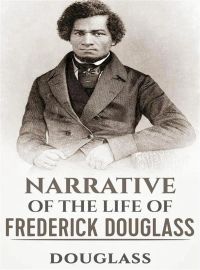
Narrative of the Life of Frederick DouglassFrederick Douglass4h 13m4.5 (309.9K)$1.20 · $0.00

Magic SeasonWade Rouse6h 41m4.6 (855)$24 · $0.00
You may also like

Unf*ck Your AnxietyFaith G. Harper PhD2h 45m4.0 (2K)$15

My WorkOlga Ravn7h 33m3.9 (4.4K)$32 · $0.00
The Art of Public SpeakingDale Carnegie11h 10m4.0 (8.5K)$1 · $0.00
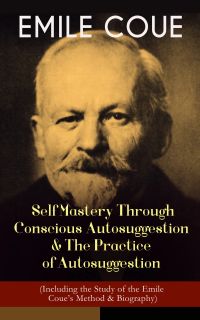
EMILE COUE: Self Mastery Through Conscious Autosuggestion & The Practice of Autosuggestion (Including the Study of the Emile Coue's Method & Biography)Emile Coue6h 9m4.2 (2.7K)$2 · $0.00

Talks To Teachers On Psychology; And To Students On Some Of Life's Ideals William James6h 27m4.1 (1.5K)Free
The Extended MindAnnie Murphy Paul11h 26m4.2 (4.5K)$29 · $0.00
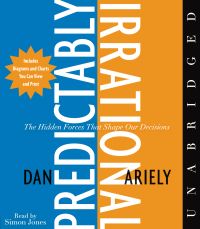
The Predictably IrrationalDan Ariely7h 24m4.2 (370.5K)$24 · $0.00

The Emotional Language of LoveSara Melo3h 25m$1.80 · $0.00
Seen Through - What You Show People Is Not Who You Are, and That Terrifies YouMax Paradox5h 54m$7.90 · $0.00

Applied Psychology for NursesMary F. Porter2h 30m3.7 (49)$1 · $0.00
How to Make Friends: A Step-by-step Guide to Meeting People and Building Relationships to Meeting New People (A Practical Guide to Building Meaningful Relationships Overcoming Social Anxiety)Jacob Pritts1h 57m$3.50 · $0.00

Manhood Perfectly RestoredCiviale Remedial Agency3h 18m$2 · $0.00

Every Argument Is Trying to Say SomethingSara Melo4h 3m$7 · $0.00

Healing from RhabdophobiaPenelope I. Westwood6h 23m$4.10 · $0.00

The Emotional Intelligence of LoveSara Melo2h 49m$1.80 · $0.00

To Love Without HurtingSara Melo3h 13m$1.80 · $0.00
The Engineering of the Human MindDanniel Silva3h 11m$1.80 · $0.00

I Have 8,462 Photos and I'm Afraid to Delete One - How to Clean Up Your Digital Life Without Reviewing Your 2014 VacationMax Paradox6h 58m$7.70 · $0.00

IndecisivenessDorian F. Marricks2h 26m$2.30 · $0.00
The Compass of the MindDanniel Silva4h 22m$1.80 · $0.00