
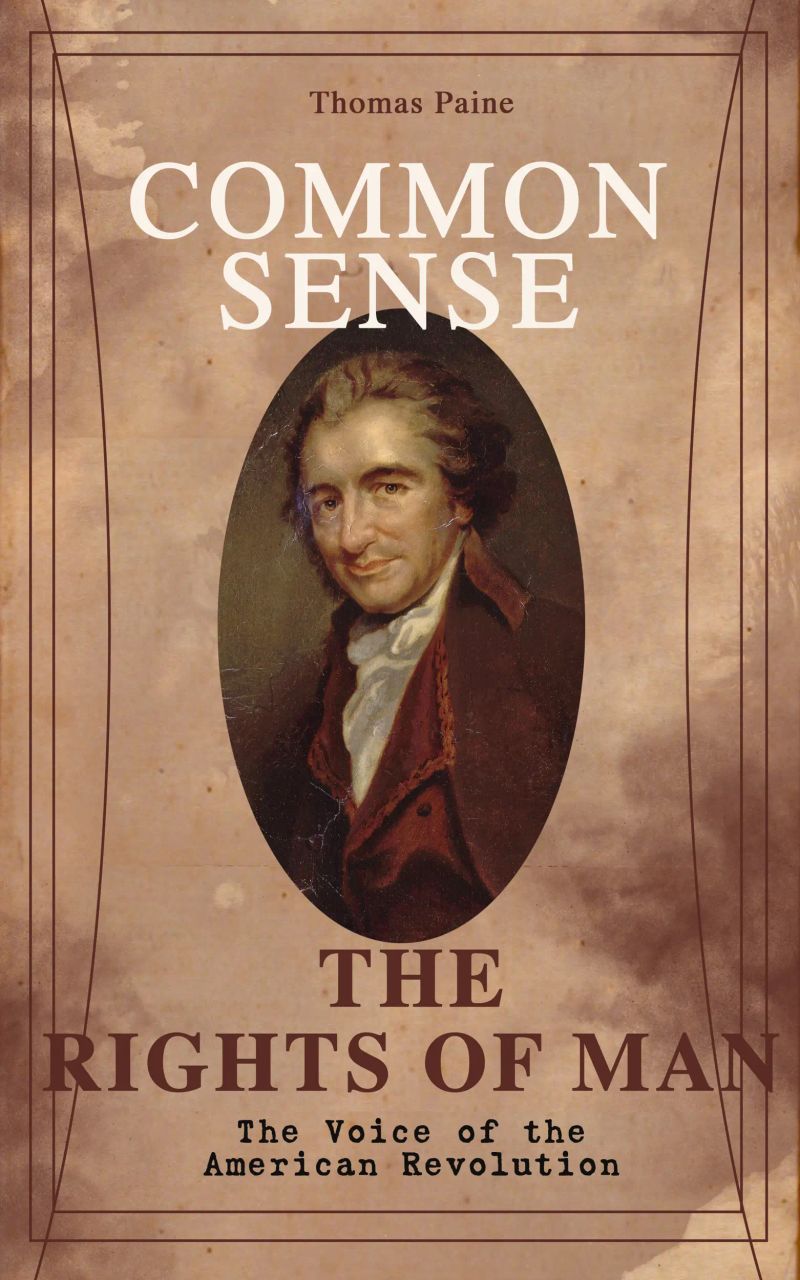
Common Sense & The Rights of Man - The Voice of the American Revolution
Words of a Visionary That Sparked the Revolution and Remained the Core of American Democratic PrinciplesBy Thomas Paine

Length41h 39m
About this audiobook
Paine's visionary call for republicanism and social welfare was generations ahead of its time when "Rights of Man" was published. According to Paine - Government's sole purpose is safeguarding the individual and his/her inherent, inalienable rights; each societal institution that does not benefit the nation is illegitimate—especially monarchy and aristocracy. Human rights originate in Nature, thus, rights cannot be granted via political charter, because that implies that rights are legally revocable, hence, would be privileges.
Common Sense was published anonymously on January 10, 1776, at the beginning of the American Revolution, and became an immediate sensation. Written in clear and persuasive prose, Thomas Paine marshaled moral and political arguments to encourage common people in the Colonies to fight for egalitarian government. It. Common Sense made public a persuasive and impassioned case for independence, which before the pamphlet had not yet been given serious intellectual consideration. He connected independence with common dissenting Protestant beliefs as a means to present a distinctly American political identity, structuring Common Sense as if it were a sermon. Historian Gordon S. Wood described Common Sense as "the most incendiary and popular pamphlet of the entire revolutionary era".
Thomas Paine (1737-1809) was an English-American political activist, philosopher, political theorist, and revolutionary. One of the Founding Fathers of the United States, he authored the two most influential pamphlets at the start of the American Revolution, and he inspired the rebels in 1776 to declare independence from Britain. Paine's ideas reflected Enlightenment-era rhetoric of transnational human rights.
Audiobook details
Rating★★★★ 4.2 (18.9K)
Includes Goodreads, Amazon, LibraryThing, StoryGraph
GenrePolitics and Government, History
Length41 hrs 39 mins
Narrated byListen with 1,000+ voices
FormateBook with Audio
Publish dateMar 20, 2017
LanguageEnglish
Table of contents
1Common Sense & The Rights of Man - The Voice of the American Revolution
2On the Origin and Design of Government in General, with Concise Remarks on the English Constitution
3Of Monarchy and Hereditary Succession
4Thoughts on the Present State of American Affairs
5Of the Present Ability of America: with some Miscellaneous Reflections
Show all chaptersShow less
6PART I
7The Author's Preface to the English Edition
8The Author's Preface to the French Edition
9Rights of Man (pt. 1)
10Rights of Man (pt. 2)
11Declaration Of The Rights Of Man And Of Citizens By The National Assembly Of France
12Observations on the Declaration of Rights
13Miscellaneous Chapter
14Conclusion
15PART II
16Preface
17Introduction
18Chapter I
19Chapter II
20Chapter III
21Chapter IV
22Chapter V (pt. 1)
23Chapter V (pt. 2)
24Appendix
25Preface
26Chapter I. Early Influences
27Chapter II. Early Struggles
28Chapter III. Domestic Trouble
29Chapter IV. The New World
30Chapter V. Liberty And Equality
31Chapter VI. "Common Sense"
32Chapter VII. Under The Banner Of Independence
33Chapter VIII. Soldier And Secretary
34Chapter IX. French Aid, And The Paine-deane Controversy
35Chapter X. A Story By Gouverneur Morris
36Chapter XI. Cause, Country, Self
37Chapter XII. A Journey To France
38Chapter XIII. The Muzzled Ox Treading Out The Grain
39Chapter XIV. Great Washington And Poor Paine
40Chapter XV. Pontifical And Political Inventions
41Chapter XVI. Returning To The Old Home
42Chapter XVII. A British Lion With An American Heart
43Chapter XVIII. Paine's Letters To Jefferson In Paris
44Chapter XIX. The Key Of The Bastille
45Chapter XX. "The Rights Of Man"
46Chapter XXI. Founding The European Republic
47Chapter XXII. The Right Of Evolution
48Chapter XXIII. The Deputy For Calais In The Convention
49Chapter XXIV. Outlawed In England
50Chapter I. "Kill The King, But Not The Man"

The American CrisisThomas Paine39h 12m4.3 (995)$1.99 · $0.00

The Foundation of one NationThomas Paine, Alexander Hamilton, James Madison, John Jay26h 31m$1.99 · $0.00

Common SenseThomas Paine31h 40m4.1 (67.7K)$1.99 · $0.00

The Greatest Works of Thomas Paine: 39 Books in One EditionThomas Paine77h 14m4.6 (1.2K)$1.99 · $0.00
Common Sense (Unabridged)Thomas Paine2h 38m4.1 (74.8K)$10 · $0.00

The Collected WorksThomas Paine77h 16m4.4 (291)$0.99 · $0.00

THE RIGHTS OF MAN: The French Revolution – Ideals, Arguments & Motives (Political Classic) (Annotated)Thomas Paine11h 39m$2 · $0.00
Common SenseThomas Paine2h 22m4.2 (59K)$14 · $0.00

The Essential Works of Thomas Paine (Annotated)Thomas Paine77h 19m4.3 (2.4K)$2 · $0.00

The American CrisisThomas Paine38h 2m4.3 (2.1K)$2 · $0.00

A Letter Addressed to the Abbe Raynal, on the Affairs of North AmericaThomas Paine2h 52m4.0 (40)$2 · $0.00

The Greatest Works of Thomas Paine: 39 Books in One EditionThomas Paine77h 13m$2 · $0.00

The Origin of the Nation: Declaration of Independence, Constitution, Bill of Rights and Other Amendments, Federalist Papers & Common SenseThomas Paine, Alexander Hamilton, James Madison, John Jay25h 22m$1 · $0.00

THE RIGHTS OF MAN: The French Revolution – Ideals, Arguments & MotivesThomas Paine11h 37m4.1 (26.5K)$1.99 · $0.00

Common Sense & The Rights of ManThomas Paine41h 48m4.3 (18.7K)$1.99 · $0.00

The Collected WorksThomas Paine78h 17m4.3 (1.8K)$2 · $0.00

The Age of ReasonThomas Paine36h 41m4.2 (14.4K)$2 · $0.00

The American CrisisThomas Paine38h 18m4.3 (13.9K)$2 · $0.00

The American CrisisThomas Paine38h 16m4.3 (13.6K)$2 · $0.00

How to Test Negative for StupidJohn Kennedy8h 13m4.7 (9.7K)$28 · $0.00

Black AF HistoryMichael Harriot15h 43m4.7 (14.6K)$33 · $0.00

The Gulag Archipelago Volume 3Aleksandr I. Solzhenitsyn21h 56m4.7 (8.9K)$46 · $0.00

MotherlandJulia Ioffe17h 52m4.7 (2.5K)$40 · $0.00

HostageEli Sharabi5h 25m4.6 (10.8K)$24 · $0.00

Days of Love and Rage: A Story of RevolutionAnand Gopal22h 36m4.7 (584)$34 · $0.00

KrantikariSanjeev Sanyal11h 44m4.6 (1.3K)$16 · $0.00

Unbroken Bonds of BattleJohnny Joey Jones8h 31m4.6 (2.6K)$8 · $0.00

On Democracies and Death CultsDouglas Murray10h 38m4.6 (6.5K)$29 · $0.00

Balcony Over Jerusalem: A Middle East Memoir - Israel, Palestine and BeyondJohn Lyons12h 37m4.6 (1.4K)$33 · $0.00

RiggedMollie Hemingway12h 48m4.6 (4.2K)$23 · $0.00

SledgehammerDavid Friedman8h 21m4.7 (589)$26 · $0.00

Citizenship in a Republic (Annotated)Theodore Roosevelt2h 44m4.6 (1.4K)$2 · $0.00

No EscapeNury Turkel9h 30m4.6 (809)$28 · $0.00

Always FaithfulThomas Schueman, Zainullah Zaki12h 12m4.6 (977)$29 · $0.00

UnthinkableJamie Raskin15h 8m4.5 (9.3K)$8 · $0.00

My Fourth Time, We DrownedSally Hayden13h 59m4.6 (2.9K)$23 · $0.00

A Revolution of Common SenseScott Jennings9h 29m4.6 (528)$29 · $0.00

Statement From the Dock at the Rivonia TrialNelson Mandela2h 18m4.6 (1.3K)$1 · $0.00

Lessons from the EdgeMarie Yovanovitch17h 11m4.5 (5.9K)$40 · $0.00

A Brief History of IntelligenceMax S. Bennett12h 18m4.6 (6.6K)$29 · $0.00
The Gulag Archipelago Volume 3Aleksandr I. Solzhenitsyn21h 56m4.7 (8.9K)$46 · $0.00

Pearl of Great PriceJoseph Smith3h 8m4.7 (7.2K)$1.20 · $0.00

The Happiest Man on EarthEddie Jaku3h 48m4.6 (178K)$7 · $0.00
MotherlandJulia Ioffe17h 52m4.7 (2.5K)$40 · $0.00

Where Cowards Go to DieBenjamin Sledge8h 42m4.7 (351)$20 · $0.00

RevolutionariesSanjeev Sanyal11h 23m4.6 (2.6K)$29 · $0.00
Days of Love and Rage: A Story of RevolutionAnand Gopal22h 36m4.7 (584)$34 · $0.00

We Crossed a Bridge and It TrembledWendy Pearlman6h4.6 (5.2K)$24 · $0.00
Unbroken Bonds of BattleJohnny Joey Jones8h 31m4.6 (2.6K)$8 · $0.00

The Daughter of AuschwitzTova Friedman, Malcolm Brabant7h 54m4.6 (16.7K)$26 · $0.00

Lily's PromiseLily Ebert, Dov Forman8h 54m4.6 (16.1K)$29 · $0.00
On Democracies and Death CultsDouglas Murray10h 38m4.6 (6.5K)$29 · $0.00

Across the RiverKent Babb11h 40m4.6 (927)$29 · $0.00
Balcony Over Jerusalem: A Middle East Memoir - Israel, Palestine and BeyondJohn Lyons12h 37m4.6 (1.4K)$33 · $0.00

BeyondStephen Walker15h 39m4.6 (3.2K)$33 · $0.00

Kings and PawnsHoward Bryant10h 9m4.6 (678)$29 · $0.00
No EscapeNury Turkel9h 30m4.6 (809)$28 · $0.00

Jubal Stone: U.S. Marshal: Blood Trail To Hell: A Western Adventure NovelCasey Nash3h 42m4.6 (3.2K)$18 · $0.00

Fall and RiseMitchell Zuckoff17h 23m4.6 (9.8K)$40 · $0.00
You may also like
Common SenseThomas Paine2h 37m4.1 (250.4K)$3 · $0.00
Common SenseThomas Paine2h 6m4.2 (42.4K)$1.20 · $0.00
Common SenseThomas Paine1h 54m4.3 (40.9K)$2 · $0.00
Common SenseThomas Paine2h 22m4.2 (59K)$14 · $0.00

1215 and All ThatEd West5h 49m4.3 (612)$17

Rights of ManThomas Paine10h 12m4.2 (15.6K)$20

The Elections That Changed the WorldDana Bash9h 59m4.0 (1.2K)$29 · $0.00
The SpartansPaul Cartledge8h 37m3.9 (3.6K)$17
Common SenseThomas Paine2h 18m4.1 (59.2K)Free

2024Vijai Trivedi, Rajdeep Sardesai24h 56m4.1 (465)$53 · $0.00

The History of England from the Accession of James II (Vol. 1-5)Thomas Babington Macaulay119h 49m4.3 (2.2K)$1 · $0.00
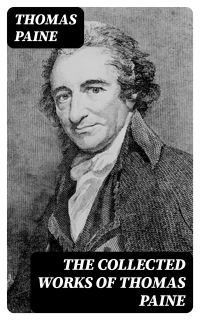
The Collected Works of Thomas PaineThomas Paine77h 18m4.4 (1.8K)$2 · $0.00
Athenian ConstitutionAristotle2h 43m4.0 (2.5K)$4 · $0.00
The American CrisisThomas Paine38h 16m4.3 (13.6K)$2 · $0.00
The Collected WorksThomas Paine77h 16m4.4 (291)$0.99 · $0.00

A Biography of the Signers of the Declaration of Independence, and of Washington and Patrick HenryL. Carroll Judson20h 24m$1 · $0.00

Beacon Lights of History: European StatesmenJohn Lord7h 5m$2 · $0.00

Franco-GalliaFrançois Hotman5h 42m$2 · $0.00

The Eve of the French Revolution (Annotated)Edward J. Lowell12h 35m3.3 (15)$2 · $0.00

Celebration in Baltimore of the Triumph of Liberty in FranceWilliam Wirt1h 12m$2 · $0.00