
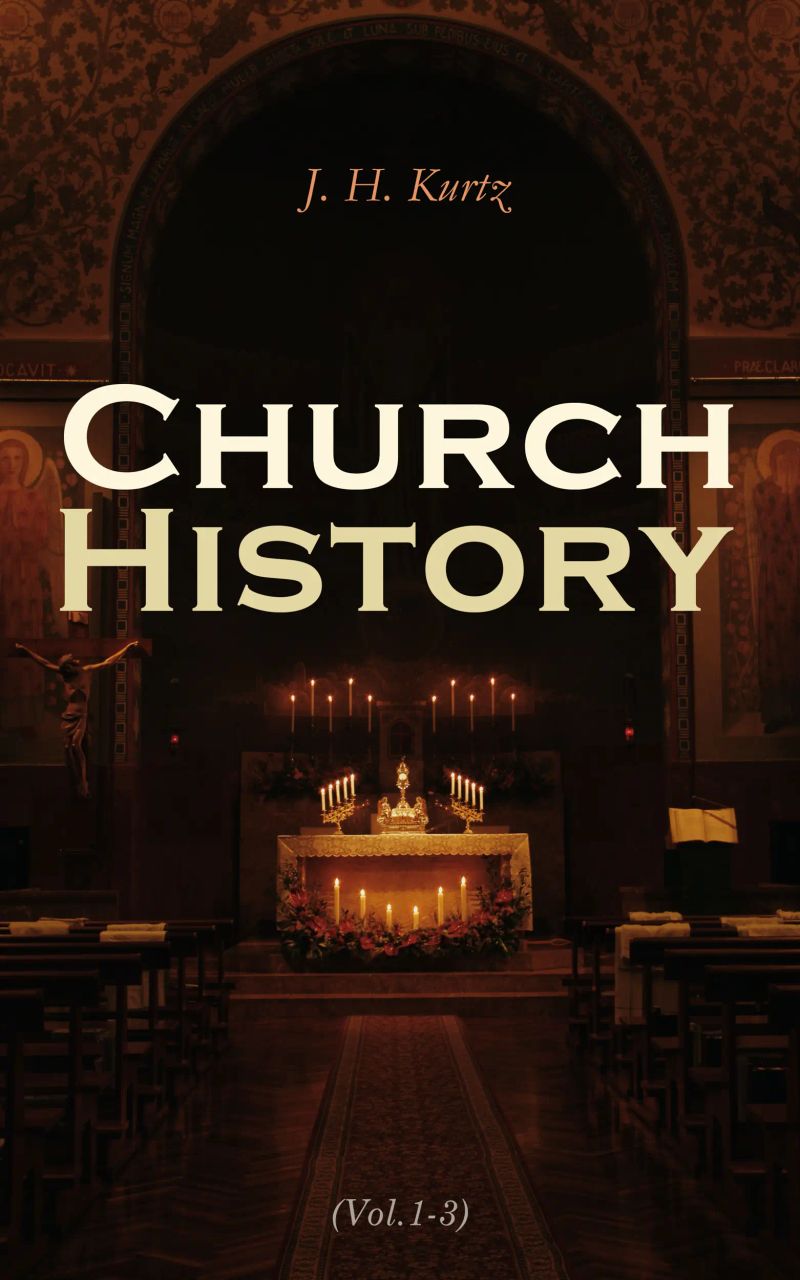
Church History (Vol.1-3)
Complete EditionBy J. H. Kurtz


Length80h 18m
About this audiobook
Church History in three volumes is an account of the Christian Church written by prominent Lutheran theologian Johann Heinrich Kurtz. The work comprises ecclesiastical history from its beginnings to the end of 19th century. First part of the book covers the period from pre-Christian era and the founding of the Church by Christ and his Apostles to the 10th century. Second part spans from Christian missionary enterprises and the Crusades to Reformation and the Counter-Reformation. The final part covers the years from 17th to 19th century and what Christian church went through in that period.
Audiobook details
GenreSpirituality and Religion
Length80 hrs 18 mins
Narrated byListen with 1,000+ voices
FormateBook with Audio
Publish dateJul 15, 2020
LanguageEnglish
Table of contents
1INTRODUCTION.
41III. Theological Science and its Controversies.
2HISTORY OF THE PREPARATION FOR CHRISTIANITY. The pre-Christian World preparing the way of the Christian Church.
42IV. The Church and the People.
3THE HISTORY OF THE BEGINNINGS. The Founding of the Church by Christ and His Apostles.
43V. Heretical Opposition to Ecclesiastical Authority.
4I. THE LIFE OF JESUS.
44THIRD SECTION. HISTORY OF THE GERMANO-ROMANIC CHURCH IN THE 14th AND 15th CENTURIES (A.D. 1294–1517).
5II. THE APOSTOLIC AGE. A.D. 30–70.
45I. The Hierarchy, Clergy, and Monks.
Show all chaptersShow less
6FIRST DIVISION. History of the Development of the Church during the Græco-Roman and Græco-Byzantine Periods.
46II. Theological Science.
7FIRST SECTION. History of the Græco-Roman Church during the Second and Third Centuries (A.D. 70–323).18
47III. The Church and the People.
8I. THE RELATIONSHIP OF EXTRA-CHRISTIAN PAGANISM AND JUDAISM TO THE CHURCH.21
48IV. Attempts at Reformation.
9II. DANGER TO THE CHURCH FROM PAGAN AND JEWISH ELEMENTS WITHIN ITS OWN PALE.
49THIRD DIVISION. History of the Development of the Church under Modern European Forms of Civilization.
10III. THE DOCTRINAL DEVELOPMENT AND APOLOGETICAL ACTIVITY OF THE CHURCH.52
50FIRST SECTION. CHURCH HISTORY OF THE SIXTEENTH CENTURY.
111. Church Fathers Writing in Greek.
51I. The Reformation.360 (pt. 1)
122. Church Fathers Writing in Latin.
52I. The Reformation.360 (pt. 2)
13IV. CONSTITUTION, WORSHIP, LIFE AND DISCIPLINE.94 (pt. 1)
53I. The Reformation.360 (pt. 3)
14IV. CONSTITUTION, WORSHIP, LIFE AND DISCIPLINE.94 (pt. 2)
54II. The Churches of the Reformation.
15SECOND SECTION. The History of the Græco-Roman Church from the 4th-7th centuries. A.D. 323–692.
55III. The Deformation.
16I. CHURCH AND STATE.
56IV. The Counter-Reformation.
17II. MONASTICISM, CLERICALISM AND HIERARCHISM.
57Footnotes.
18III. THEOLOGICAL SCIENCE AND LITERATURE.
58THIRD DIVISION. (Continued.)
191. THE MOST IMPORTANT TEACHERS OF THE EASTERN CHURCH.
59SECOND SECTION. CHURCH HISTORY OF THE SEVENTEENTH CENTURY.
202. THE MOST IMPORTANT TEACHERS OF THE WESTERN CHURCH.
60I. Relations between the Different Churches.
21IV. DOCTRINAL CONTROVERSIES AND HERESIES.
61II. The Roman Catholic Church.
22V. WORSHIP, LIFE, DISCIPLINE AND MORALS.
62III. The Lutheran Church.
23VI. THE CHURCH OUTSIDE OF THE ROMAN EMPIRE.185
63IV. The Reformed Church.
24THIRD SECTION. HISTORY OF THE GRÆCO-BYZANTINE CHURCH IN THE 8TH−15TH CENTURIES (A.D. 692–1453).
64V. Anti- and Extra-Ecclesiastical Parties.
25I. Developments of the Greek Church in Combination with the Western.
65THIRD SECTION. CHURCH HISTORY OF THE EIGHTEENTH CENTURY.492
26II. Developments in the Eastern Church without the Co-operation of the Western.
66I. The Catholic Church in East and West.
27SECOND DIVISION. THE HISTORICAL DEVELOPMENT OF THE GERMAN AND ROMAN CHURCH DURING THE MIDDLE AGES.198
67II. The Protestant Churches. (pt. 1)
28FIRST SECTION. HISTORY OF THE GERMAN-ROMAN CHURCH FROM THE 4TH TO THE 9TH CENTURY (DOWN TO A.D. 911).
68II. The Protestant Churches. (pt. 2)
29I. Founding, Spread, and Limitation of the German Church.199
69FOURTH SECTION. CHURCH HISTORY OF THE NINETEENTH CENTURY.
30II. THE HIERARCHY, THE CLERGY AND THE MONKS.
70I. General and Introductory.
31III. THE CHURCH AND THE PEOPLE.
71II. Protestantism in General.526
32IV. THEOLOGY AND ITS BATTLES.
72III. Catholicism in General. (pt. 1)
33Footnotes.
73III. Catholicism in General. (pt. 2)
34Volume 2
74IV. Relation of Church to the Empire and to the States. (pt. 1)
35NOTE BY TRANSLATOR.
75IV. Relation of Church to the Empire and to the States. (pt. 2)
36SECOND DIVISION. (Continued.)
76IV. Relation of Church to the Empire and to the States. (pt. 3)
37SECOND SECTION. HISTORY OF THE GERMANO-ROMANIC CHURCH, FROM THE 10TH TO THE 13TH CENTURY. A.D. 911–1294.
77IV. Relation of Church to the Empire and to the States. (pt. 4)
38I. The Spread of Christianity.
78V. Opponents of Church and of Christianity.
39II.—The Hierarchy, the Clergy, and the Monks. (pt. 1)
79CHRONOLOGICAL TABLES.
40II.—The Hierarchy, the Clergy, and the Monks. (pt. 2)
80Footnotes.
Divine DestinyScott Hogle5h 4m$20

Proud Police WifeRebecca Lynn4h 52m$10 · $0.00

I Hear His Whisper 365 Daily Devotions (Gift Edition)Brian Simmons, Gretchen Rodriguez9h 23m5 (1)$10 · $0.00
A Little God Time for Women Morning & Evening DevotionalBroadStreet Publishing Group LLC15h 15m$10 · $0.00
The Chosen Presents: A Blended Harmony of the GospelsSteve Laube, Amanda Jenkins, Dallas Jenkins7h 8m$10 · $0.00
The Gospel of Luke: NASB 2020New American Standard Bible2h 41m$15
Morning & EveningC.H. Spurgeon35h 32m$30
Prayers from the Throne RoomBrian Simmons8h 55m$10 · $0.00
31 Decrees of Blessing for Your LifePatricia King2h 38m$10 · $0.00

Walk With Me JesusMarie Chapian6h 4m$10 · $0.00
Prayers on Fire for WomenBrian Simmons, Candice Simmons8h 24m$10 · $0.00

Strong's Bible ConcordanceJames Strong136h 23m$2 · $0.00

365 Days of Hope and Healing for Your Body, Mind, and SoulJoan Hunter8h 48m$10 · $0.00

Rewrite the Mother CodeDr. Gertrude Lyons10h 55m$25

Loved BabySarah Philpott4h 51m$10 · $0.00

The QuranAllah23h 12m$1 · $0.00

The Holy Qur-an: Text, Translation and CommentaryAbdullah Yusuf Ali21h 14m$3 · $0.00
The Secret of the RosaryLouis de Montfort6h 7m$2 · $0.00
Jesus the ChristJames E. Talmage30h 50m$2 · $0.00

Defying JihadEsther Ahmad8h 50m$20
You may also like

The God Who Is ThereD. A. Carson10h 2m$17
Religious Tourism and Sustainability in the MENA RegionAntonio Angelucci, Flavia Cortelezzi, Alessandro Cupri11h 55m$14 · $0.00

The Church and the PeopleJoseph McCabe2h 51m$15

Beacon Lights of History (Vol.1-14)John Lord135h 1m$1 · $0.00

History of the Phoenician CivilizationGeorge Rawlinson17h 29m$1 · $0.00
The QuranAllah23h 12m$1 · $0.00
Shiva to ShankaraDevdutt Pattanaik3h 41m$18 · $0.00

The Prayer Book ExplainedPercival Jackson3h 29m$2 · $0.00
Pistis Sophia (The Message of Resurrected Jesus)Anonymous12h 18m$1 · $0.00
The Kuzari (Summarized Edition)Judah Halevi3h 22m$2

The Rational Bible: NumbersPrager, Dennis14h 39mFree

Making Sense of the BibleAdam Hamilton9h 13m$29 · $0.00
The Bible With and Without JesusAmy-Jill Levine, Marc Zvi Brettler14h 32m$33 · $0.00

Biblical Geography and HistoryCharles Foster Kent11h 18m$2 · $0.00
American Gods: The Tenth Anniversary EditionNeil Gaiman19h 40m$40 · $0.00
The ExodusRichard Elliott Friedman5h 51m$17

The Holy Qur-an: Text, Translation and CommentaryAbdullah Yusuf Ali22h 28m$1 · $0.00
The American Journal of Archaeology, 1893-1Various6h 11m$2 · $0.00

The History of Greek Philosophy (Vol. 1&2)Alfred William Benn32h 57m$2 · $0.00

Fra BartolommeoLeader Scott3h 27m$1 · $0.00