
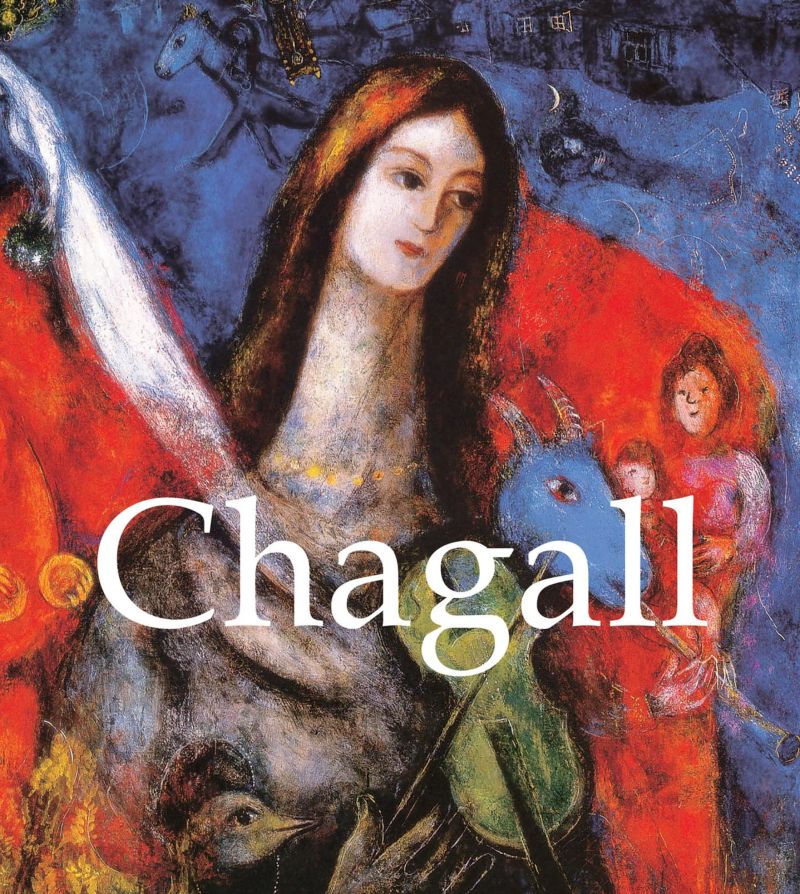


Length1h 35m
About this audiobook
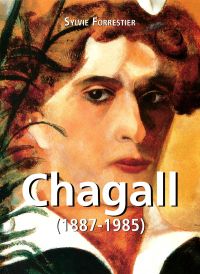
Marc Chagall was born into a strict Jewish family for whom the ban on representations of the human figure had the weight of dogma. A failure in the entrance examination for the Stieglitz School did not stop Chagall from later joining that famous school founded by the Imperial Society for the Encouragement of the Arts and directed by Nicholas Roerich. Chagall moved to Paris in 1910. The city was his "second Vitebsk". At first, isolated in the little room on the Impasse du Maine at La Ruche, Chagall soon found numerous compatriots also attracted by the prestige of Paris: Lipchitz, Zadkine, Archipenko and Soutine, all of whom were to maintain the "smell" of his native land. From his very arrival Chagall wanted to "discover everything". And to his dazzled eyes painting did indeed reveal itself. Even the most attentive and partial observer is at times unable to distinguish the "Parisian", Chagall from the "Vitebskian". The artist was not full of contradictions, nor was he a split personality, but he always remained different; he looked around and within himself and at the surrounding world, and he used his present thoughts and recollections. He had an utterly poetical mode of thought that enabled him to pursue such a complex course. Chagall was endowed with a sort of stylistic immunity: he enriched himself without destroying anything of his own inner structure. Admiring the works of others he studied them ingenuously, ridding himself of his youthful awkwardness, yet never losing his authenticity for a moment. At times Chagall seemed to look at the world through magic crystal – overloaded with artistic experimentation – of the Ecole de Paris. In such cases he would embark on a subtle and serious play with the various discoveries of the turn of the century and turned his prophetic gaze like that of a biblical youth, to look at himself ironically and thoughtfully in the mirror. Naturally, it totally and uneclectically reflected the painterly discoveries of Cézanne, the delicate inspiration of Modigliani, and the complex surface rhythms recalling the experiments of the early Cubists (See-Portrait at the Easel, 1914). Despite the analyses which nowadays illuminate the painter's Judaeo-Russian sources, inherited or borrowed but always sublime, and his formal relationships, there is always some share of mystery in Chagall's art. The mystery perhaps lies in the very nature of his art, in which he uses his experiences and memories. Painting truly is life, and perhaps life is painting.
Audiobook details
Rating★★★★ 4.4 (40)
Includes Amazon, Goodreads, LibraryThing
GenreOther
Length1 hr 35 mins
Narrated byListen with 1,000+ voices
FormateBook with Audio
Publish dateJul 1, 2011
LanguageEnglish
Table of contents
1Chagall
2© Confidential Concept, worldwide, USA © Sirrocco, London, UK
3July 1915
4Biography
5Birth of his daughter Ida.
Show all chaptersShow less
6Egypt. Exhibitions in Paris, Brussels and New York.
7Carnegie Prize (USA).
8Exhibition at the Musée National d’Art Moderne in Paris.
9Publication of the Bible with illustrations by Chagall.
10Exhibitions in Japan.
11unusual painter of the twentieth century, who at
121909 oil on canvas, 88 x 65 cm Kunstmuseum, Basle
131909 oil on canvas, 57 x 48 cm Kunstsammlung Nordrhein-Westfalen, Düsseldorf
14the main work of reference, Franz Meyer
151909 oil on canvas, 93 x 48 cm Wallraf-Richartz Museum, Cologne
161910 oil on canvas, 90 x 98 cm Wallraf-Richartz Museum, Cologne
17The Wedding
18serious essay by Efros and Tugendhold, The
191910 gouache on paper, 34 x 24 cm Tretyakov Gallery, Moscow
20On the occasion of the exhibition at the
21Does Chagall totally defy historical or aes-
22The greatest inspiration, the most perceptive
231911 oil on canvas, 128 x 107 cm Royal Collection, The Hague
241911 oil on canvas, 94.5 x 69.5 cm Kunstsammlung Nordrhein-Westfalen, Düsseldorf
25all advance in thought, then the critical
26The Poet (Half Past Three)
27About 150 paintings and graphic pieces by
281911 oil on canvas, 126 x 104 cm Staatsgalerie Moderner Kunst, Munich
29This primordial outpouring of creativity
301911 oil on canvas, 196 x 114.5 cm Kunstmuseum, Bern
31French translation by Bella Chagall. Providing us
32Study for “The Rain”
33To Russia, Asses and Others
341911-1912 oil on canvas, 109 x 198 cm Stedelijk Museum, Amsterdam
35it a portrait of the composer Rubinstein. This
36The transmission to the very core of the
37oral means. Each prayer, each recitation from
381912 oil on canvas, 96 x 200 cm Kunstmuseum, Basle
39exists without the mediation of rabbinical
40culture, the institutional commentary of the
411912 oil on canvas, 110.3 x 95 cm Guggenheim Museum, New York
42Sensitive, secretive, taciturn, the figure of
431912 gouache on cardboard, 38.1 x 31.7 cm private collection
44The psychological antithesis of their
451913 oil on canvas, 194 x 115 cm Stedelijk Museum, Amsterdam
46Russian life.
471913 oil on canvas, 132.7 x 139.2 cm Guggenheim Museum, New York
48small industries and the river port, the town still
491913 gouache on paper, 27 x 23 cm private collection, St. Petersburg
50Each house, evidence of an economic unity
More from Sylvie Forrestier
Mere ChristianityC. S. Lewis7h 7m4.4 (519.7K)$24 · $0.00

Her Daily BreadKate Wood12h 57m4.6 (153)$33 · $0.00
The Holy Bible - 1 SamuelKing James2h 13m4.8 (1.6K)$3 · $0.00
The American Standard Bible — The Gospel of MatthewMatthew3h 56m4.7 (3K)$2 · $0.00

Bad Fat Black GirlSesali Bowen6h 32m4.7 (2.8K)$24 · $0.00
The King James Audio Bible New Testament CompleteChristopher Glyn20h 2m4.7 (2.6K)$12 · $0.00
Faiths CheckbookCharles Spurgeon12h 44m4.7 (3.2K)$11 · $0.00

Ten Things I Wish You Knew About Your Child's Mental HealthDr. Billy Garvey4h 53m4.7 (2.4K)$20 · $0.00
Designing Terry Pratchett’s DiscworldPaul Kidby3h 52m4.7 (343)$20 · $0.00
The Chosen Book OneAmanda Jenkins, Kristen Hendricks, Dallas Jenkins3h 8m4.6 (4.9K)$10 · $0.00
The Lives of BrianBrian Johnson9h 45m4.6 (3.5K)$29 · $0.00
Expository Thoughts on the Gospel of LukeJ.C. Ryle27h 13m4.7 (536)$18 · $0.00

CrossroadsKaleb Dahlgren7h 56m4.6 (4.9K)$26 · $0.00

Across the RiverKent Babb11h 40m4.6 (927)$29 · $0.00

Brain Training for RidersAndrea Monsarrat Waldo5h 56m4.7 (550)$19 · $0.00
My Effin' LifeGeddy Lee17h 11m4.6 (13.1K)$40 · $0.00

Kings and PawnsHoward Bryant10h 9m4.6 (678)$29 · $0.00

The Elementia Chronicles #2: The New OrderSean Fay Wolfe11h 17m4.6 (841)$29 · $0.00
The ActsLuke2h 55m4.6 (19.7K)$12 · $0.00
New Testament - Easy NavigationWorld English Bible19h 35m4.6 (1.3K)$1.30 · $0.00
You may also like
Living to Tell the TaleGabriel García Márquez21h 3m4.2 (13.5K)$30
A Portrait of the Artist as a Young ManJames Joyce10h 48m3.8 (206.7K)$2 · $0.00
Virginia Woolf: The Complete WorksVirginia Woolf314h 29m4.5 (2.2K)$1 · $0.00
The Polish BoxerEduardo Halfon6h 12m3.9 (3.9K)$17
The Collected Works (Annotated)James Joyce53h 32m4.4 (2.3K)$1.99 · $0.00
THE YEARSVirginia Woolf15h 54m3.8 (9.5K)$1.99 · $0.00
OF TIME AND THE RIVERThomas Wolfe44h 33m4.2 (1.3K)$1.99 · $0.00

Mean Dads for a Better AmericaTom Shillue6h 37m4.2 (342)$24 · $0.00

Dust Tracks on a RoadZora Neale Hurston11h 23m4.2 (12.8K)$29 · $0.00

Tibetan Peach PieTom Robbins12h 27m4.0 (9.7K)$29 · $0.00
Native GuardNatasha Trethewey53m4.3 (7.3K)$11 · $0.00
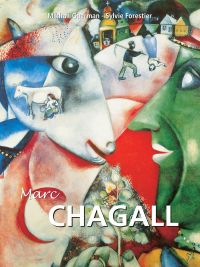
Marc ChagallMikhail Guerman4h 10m4.3 (36)$13 · $0.00
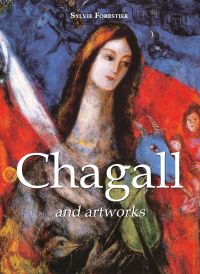
Chagall and artworksSylvie Forestier1h 27m3.6 (10)$15 · $0.00
ChagallSylvie Forestier1h 21m4.1 (31)$15 · $0.00
The Believing YearsEdmund Lester Pearson5h 36m$1 · $0.00
Recollections of My YouthErnest Renan9h 46m4.1 (210)$1 · $0.00
ChagallVictoria Charles1h 5m3.6 (14)$8 · $0.00
A Bell's BiographyNathaniel Hawthorne1h 31m3.7 (20)$2 · $0.00
Look Homeward, Angel & Of Time and the River (Annotated)Thomas Wolfe68h 58m4.4 (15)$1.99 · $0.00
THE JAMES JOYCE COLLECTION - 5 Books in One Edition (Annotated)James Joyce53h 24m$2 · $0.00