


Length1h 4m
About this audiobook
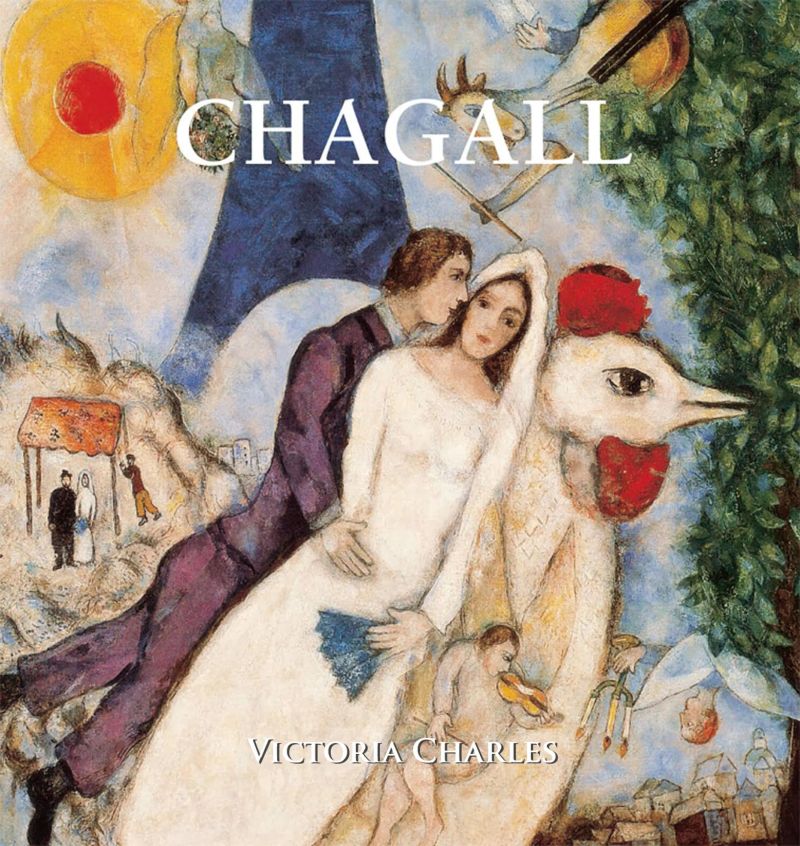
Marc Chagall was born into a strict Jewish family for whom the ban on representations of the human figure had the weight of dogma. A failure in the entrance examination for the Stieglitz School did not stop Chagall from later joining that famous school founded by the Imperial Society for the Encouragement of the Arts and directed by Nicholas Roerich. Chagall moved to Paris in 1910. The city was his "second Vitebsk". At first, isolated in the little room on the Impasse du Maine at La Ruche, Chagall soon found numerous compatriots also attracted by the prestige of Paris: Lipchitz, Zadkine, Archipenko and Soutine, all of whom were to maintain the "smell" of his native land. From his very arrival Chagall wanted to "discover everything". And to his dazzled eyes painting did indeed reveal itself. Even the most attentive and partial observer is at times unable to distinguish the "Parisian", Chagall from the "Vitebskian". The artist was not full of contradictions, nor was he a split personality, but he always remained different; he looked around and within himself and at the surrounding world, and he used his present thoughts and recollections. He had an utterly poetical mode of thought that enabled him to pursue such a complex course. Chagall was endowed with a sort of stylistic immunity: he enriched himself without destroying anything of his own inner structure. Admiring the works of others he studied them ingenuously, ridding himself of his youthful awkwardness, yet never losing his authenticity for a moment.
At times Chagall seemed to look at the world through magic crystal – overloaded with artistic experimentation – of the Ecole de Paris. In such cases he would embark on a subtle and serious play with the various discoveries of the turn of the century and turned his prophetic gaze like that of a biblical youth, to look at himself ironically and thoughtfully in the mirror. Naturally, it totally and uneclectically reflected the painterly discoveries of Cézanne, the delicate inspiration of Modigliani, and the complex surface rhythms recalling the experiments of the early Cubists (See-Portrait at the Easel, 1914). Despite the analyses which nowadays illuminate the painter's Judaeo-Russian sources, inherited or borrowed but always sublime, and his formal relationships, there is always some share of mystery in Chagall's art. The mystery perhaps lies in the very nature of his art, in which he uses his experiences and memories. Painting truly is life, and perhaps life is painting.
Audiobook details
Rating★★★★ 3.6 (14)
Includes Goodreads
GenreOther
Length1 hr 4 mins
Narrated byListen with 1,000+ voices
FormateBook with Audio
Publish dateDec 22, 2011
LanguageEnglish
Table of contents
1Introduction
21. Kermis (Village Fair) (1908).
32. Self-Portrait (1909).
43. The Artist’s Sister (Mania) (1909).
54. My Fiancée in Black Gloves (1909).
Show all chaptersShow less
65. Sabbath (1910).
76. Dedicated to my Fiancée (1911).
87. The Wedding (1910).
98. From the Moon (The Russian Village).
109. The Violonist (1911).
1110. Self-Portrait with Seven Fingers (1911).
1211. The Poet (Half Past Three) (1911).
1312. I and the Village (1911).
1413. Birth of a Child (1911).
1514. Hommage à Apollinaire (1912).
1615. To Russia, Asses and Others (1911-1912).
1716. The Drunk (The Drinker) (1911-1912).
1817. Golgotha (1912).
1918. The Cattle Dealer (1912).
2019. The Soldier Drinks (1912).
2120. Soldiers (1912).
2221. The Violonist (1912-1913).
2322. Maternity (Pregnant Woman) (1913).
2423. Self-Portrait with White Collar (1914).
2524. Paris through the Window (1913).
2625. Portrait of the Artist’s Sister, Maryasinka (1914).
2726. Father (1914).
2827. The Newspaper Vendor (1914).
2928. The Barbershop (1914).
3029. Chemist’s Shop in Vitebsk (1914).
3130. Over Vitebsk (1914).
3231. Feast Day or Rabbi with a Lemon (1914).
3332. Jew in Green (1914).
3433. The Clock (1914).
3534. Lovers in Pink.
3635. Lovers in Blue (1914).
3736. Lovers in Green (After 1914).
3837. Soldiers with Bread (1914-1915).
3938. Over the Town (1914-1918).
4039. The Mirror (1915).
4140. Jew in Red (1915).
4241. The Green Violonist (1915).
4342. Birthday (1915-1923).
4443. Lilies of the Valley (1916).
4544. Lovers in Grey (1916).
4645. Bella with a White Collar (1917).
4746. Double Portrait with a Wineglass (1917).
4847. The Promenade (1917).
4948. The Cemetery Gates (1917).
5049. The Blue House (1917-1920).
1000 Meisterwerke der Angewandten KunstVictoria Charles9h 41m$15.50 · $0.00
1000 Portraits de génieVictoria Charles, Klaus H. Carl12h 6m4.0 (10)$18 · $0.00

Art Deco. The world of Art Deco unveiledVictoria Charles1h 28m3.4 (65)$13 · $0.00

El RenacimientoVictoria Charles3h 32m3.8 (44)$15 · $0.00
El libro definitivo sobre PicassoVictoria Charles, Anatoli Podoksik7h 13m4.8 (10)$19 · $0.00
Caspar David Friedrich. Mystique et NatureVictoria Charles3h 2m4.4 (25)$16 · $0.00
1000 Retratos de los Grandes MaestrosVictoria Charles, Klaus H. Carl10h 6m4.1 (18)$18 · $0.00
Salvador DalíVictoria Charles2h 41m$13 · $0.00
Salvador DalíVictoria Charles2h 38m4.3 (35)$13 · $0.00

Albrecht Dürer 1471-1528Victoria Charles2h 36m3.3 (25)$16 · $0.00
Pablo Picasso - El minotauro de la pinturaVictoria Charles, Anatoli Podoksik4h 52m$16 · $0.00
Salvador Dalí «Yo soy el surrealismo»Victoria Charles, Eric Shanes4h 41m4.6 (11)$16 · $0.00
Das ultimative Buch über PicassoVictoria Charles, Anatoli Podoksik7h 20m4.2 (163)$19 · $0.00
Medieval Art in the Christian WestVictoria Charles, Klaus H. Carl7h 57m$19 · $0.00
GotikVictoria Charles, Klaus H. Carl4h 43m4.0 (34)$15 · $0.00
Dalí 1904-1989Victoria Charles46m3.6 (54)$15 · $0.00
Francisco Goya: Uma vida na arteVictoria Charles1h 20m4.1 (19)$8 · $0.00
Sandro BotticelliVictoria Charles1h 24m4.2 (36)$8 · $0.00
Sandro BotticelliVictoria Charles1h 38m4.2 (26)$8 · $0.00
BotticelliVictoria Charles1h 34m4.2 (26)$8 · $0.00
Mere ChristianityC. S. Lewis7h 7m4.4 (519.7K)$24 · $0.00

Her Daily BreadKate Wood12h 57m4.6 (153)$33 · $0.00
The Holy Bible - 1 SamuelKing James2h 13m4.8 (1.6K)$3 · $0.00
The American Standard Bible — The Gospel of MatthewMatthew3h 56m4.7 (3K)$2 · $0.00

Bad Fat Black GirlSesali Bowen6h 32m4.7 (2.8K)$24 · $0.00
The King James Audio Bible New Testament CompleteChristopher Glyn20h 2m4.7 (2.6K)$12 · $0.00
Faiths CheckbookCharles Spurgeon12h 44m4.7 (3.2K)$11 · $0.00

Ten Things I Wish You Knew About Your Child's Mental HealthDr. Billy Garvey4h 53m4.7 (2.4K)$20 · $0.00
Designing Terry Pratchett’s DiscworldPaul Kidby3h 52m4.7 (343)$20 · $0.00
The Chosen Book OneAmanda Jenkins, Kristen Hendricks, Dallas Jenkins3h 8m4.6 (4.9K)$10 · $0.00
The Lives of BrianBrian Johnson9h 45m4.6 (3.5K)$29 · $0.00
Expository Thoughts on the Gospel of LukeJ.C. Ryle27h 13m4.7 (536)$18 · $0.00

CrossroadsKaleb Dahlgren7h 56m4.6 (4.9K)$26 · $0.00

Across the RiverKent Babb11h 40m4.6 (927)$29 · $0.00

Brain Training for RidersAndrea Monsarrat Waldo5h 56m4.7 (550)$19 · $0.00
My Effin' LifeGeddy Lee17h 11m4.6 (13.1K)$40 · $0.00

Kings and PawnsHoward Bryant10h 9m4.6 (678)$29 · $0.00

The Elementia Chronicles #2: The New OrderSean Fay Wolfe11h 17m4.6 (841)$29 · $0.00
The ActsLuke2h 55m4.6 (19.7K)$12 · $0.00

New Testament - Easy NavigationWorld English Bible19h 35m4.6 (1.3K)$1.30 · $0.00
You may also like

Live WireKelly Ripa9h 59m4.1 (18.5K)$29 · $0.00

The Bishop and Other StoriesAnton Pavlovich Chekhov8h 10m4.1 (597)$2.30 · $0.00
A Personal OdysseyThomas Sowell10h 56m4.5 (2.7K)$21

India: A Million Mutinies NowV. S. Naipaul24h 46m4.0 (2.6K)$30

On PowerGene Simmons5h4.0 (537)$7 · $0.00
Die With ZeroBill Perkins5h 12m4.0 (54.8K)$24 · $0.00
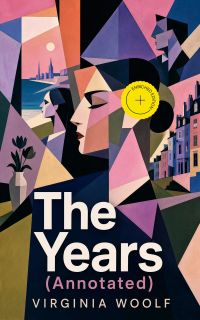
The Years (Annotated)Virginia Woolf16h 2m3.9 (6.9K)$2 · $0.00

ANNA KARENINA – Two Unabridged Translations in One Premium Edition (World Classics Series) (Annotated)Leo Tolstoy86h 35m4.2 (779.7K)$2 · $0.00

Little SoldiersLenora Chu11h 30m4.3 (3.1K)$29 · $0.00

THE YEARSVirginia Woolf15h 54m3.8 (9.5K)$1.99 · $0.00
Unfinished BusinessVivian Gornick4h 28m3.8 (1.6K)$15 · $0.00

All Joy and No FunJennifer Senior8h 20m4.0 (14.1K)$26 · $0.00
Outside Looking InT.C. Boyle14h 22m3.8 (5.5K)$33 · $0.00

No Regrets Parenting, Updated and Expanded EditionHarley A. Rotbart MD6h 1m4.1 (55)$17

Memories grave and gayFlorence Howe Hall10h 5m$1 · $0.00
MuseB Michael4h 6m4.6 (53)$20 · $0.00

Beside MyselfSasha Marianna Salzmann11h 41m3.6 (883)$20
Edgar DegasNathalia Brodskaya, Edgar Degas3h 40m4.3 (43)$15 · $0.00

Autobiography, Letters and Literary Remains of Mrs. Piozzi (Thrale) (2nd ed.) (2 vols.)Hester Lynch Piozzi11h 17m$1 · $0.00
St. Cuthbert'sRobert E. Knowles6h 30m$1 · $0.00