
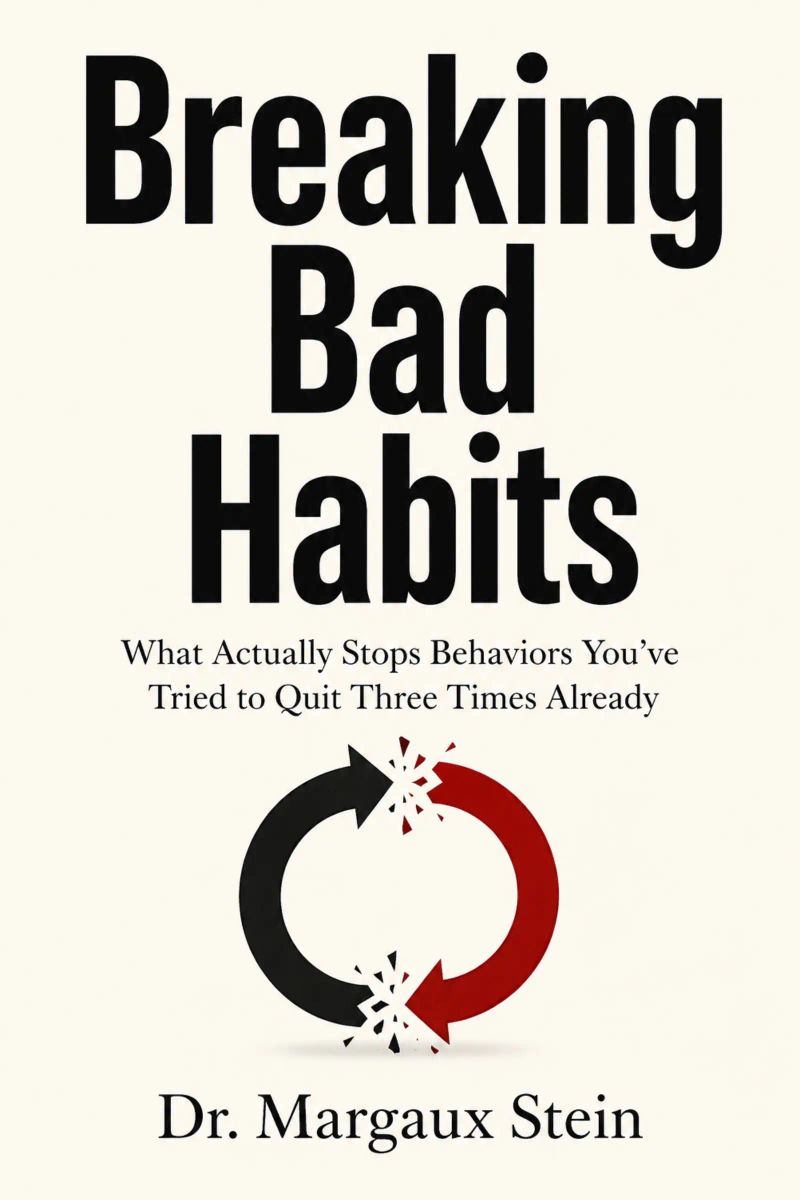
Breaking Bad Habits
What Actually Stops Behaviors You’ve Tried to Quit Three Times AlreadyBy Dr. Margaux Stein


Length7h 17m
About this audiobook
Breaking bad habits, stopping addictions, and changing behavior that willpower alone can't fix: a 25-year addiction
psychologist reveals what actually works — and why your previous quit attempts failed.
READY
If you've tried to quit three times already and the habit is still running your life, the problem is not your character. In her first book for
general readers, Dr. Margaux Stein — an addiction psychologist with nearly twenty-five years of clinical practice — opens the way
she opens every first session: "Nothing is wrong with you. Willpower isn't what stops habits. Trying to defeat them by deciding harder
is like trying to stop a river by yelling at it." That single reframe, grounded in neuroscience, changes what you need to do next.
Breaking Bad Habits is built on two things no other popular habit-change book combines: the general machinery of how any habit
becomes entrenched — cue-routine-reward loops, dopamine pathways, the basal ganglia, why relapse is data not failure — and
habit-specific chapters that go deeper than generic advice. Your phone is not your drinking. Drinking is not gambling. Gambling is not
compulsive shopping. This book covers all of them, in succession, telling you what is specifically tricky about each one and what tends
to actually work. The final chapters address the questions that arise no matter which habit brought you here: moderation versus
abstinence, cold turkey versus tapering, how to involve other people, when a therapist or doctor is essential, how to design your
environment so the habit can't run, and what the quieter life on the other side actually looks like.
Inside this habit-change and addiction recovery guide:
Why willpower keeps failing you — the neuroscience of habits shows they live in a different brain system than decisions;
fighting with effort is the wrong tool entirely
The five gaps in cue-routine-reward — what the standard model misses: identity, context dependency, cumulative load, and the
dual-process feedback that makes early sobriety cravings intensify
Habit-specific chapters on 11 behaviors — phone and screens, alcohol, food, nicotine and vaping, cannabis, pornography,
gambling (including day-trading and crypto), compulsive shopping, overwork, lying, and procrastination
Relapse as data, not failure — how to debrief a lapse, patch the specific gap it revealed, and distinguish a single slip from an
extended return to the pattern
Environmental design as the highest-leverage tool — room-by-room audits, digital friction strategies, financial environment
controls, and why this beats willpower around the clock
The first ninety days, specifically — a week-by-week account of what to expect so each phase doesn't feel like personal failure,
including the deceptively dangerous second month
When to involve a clinician or medication — which substances require medical supervision before stopping, which medications
are dramatically underused, and how to find low-cost help
Whether your habit is on the milder end — a phone scroll eating two hours of your evening — or closer to the addiction end of the
spectrum, this book gives you the clarity that willpower never could: clarity about what your habit is doing for you, why your previous
attempts didn't stick, which interventions match your specific behavior, and how to build a life the habit doesn't fit easily into. Most
habit-change books treat every behavior with the same seven principles. This one doesn't, because your drinking isn't your gambling,
and both deserve more than generic advice.
For readers of Charles Duhigg's The Power of Habit and Annie Grace's This Naked Mind.--
Audiobook details
GenreSelf-Help, Health and Wellness, Psychology
Length7 hrs 17 mins
Narrated byListen with 1,000+ voices
FormateBook with Audio
LanguageEnglish
Table of contents
1Introduction
2Introduction: The Habit You’re Already Thinking About
3Chapter 1: The Habit You Can’t Shake (and Why Willpower Failed)
4Chapter 2: The Loop That Runs Every Bad Habit
5Chapter 3: Cue, Routine, Reward — and the Gaps in That Model
Show all chaptersShow less
6Chapter 4: Why Some Habits Are Addictions, and That Matters
7Chapter 5: Phone and Screen Habits
8Chapter 6: Alcohol as the MostAcceptable Hard Habit
9Chapter 7: Food Habits You Don’t Call Addictions
10Chapter 8: Nicotine and the Modern Replacements
11Chapter 9: Cannabis and the Gray Zone
12Chapter 10: Porn and the Conversation People Avoid
13Chapter 11: Gambling (Including Stocks and Crypto)
14Chapter 12: Shopping and Credit
15Chapter 13: Overworking as a Hidden Habit
16Chapter 14: Lying
17Chapter 15: Procrastination as a Habit
18Chapter 16: The Difficulty of “Moderation”
19Chapter 17: Cold Turkey, Tapering, and the False Choice Between Them
20Chapter 18: When to Involve Other People
21Chapter 19: When to Involve a Therapist or Doctor
22Chapter 20: Relapse Is Data, Not Failure
23Chapter 21: The Quiet Life on the Other Side
24Chapter 22: Designing the Environment So the Habit Can’t Run
25Chapter 23: The Habits That Used to Help
26Chapter 24: Sleep, Stress, and the Foundations Underneath All of This
27Chapter 25: Children, Parenting, and the Habits We Don’t Want to Pass On
28Chapter 26: The First Ninety Days, Specifically
29Chapter 27: A Pause Before Closing
30Chapter 28: The Quiet Math of Time and Boredom
31Chapter 29: When the Habit Is Someone You Love
32Chapter 30: A Few Honest Words About What This Book Can’t Do
33Chapter 31: A Note on the Inner Critic
34Appendix A: A Habit Inventory Worksheet
35Appendix B: Resources for Specific Habits
36Appendix C: A Note for Clinicians and Helpers
37Appendix D: A Glossary of Terms
38Appendix E: Common Questions
39Appendix F: A Reading List for Going Further
40Appendix G: A Closing Practical Note
41About the Author
More from Dr. Margaux Stein
Learning to PrayJames Martin13h 24m4.5 (3.4K)$33 · $0.00

Swayam Ki AwaazPrem Rawat8h 34m4.7 (1.1K)$26 · $0.00

Forever BoyKate Swenson9h 27m4.7 (5K)$29 · $0.00

You Are Worth ItKyle Carpenter, Don Yaeger8h 53m4.7 (4.8K)$29 · $0.00

The Happiest Man on EarthEddie Jaku3h 48m4.6 (178K)$7 · $0.00

Finding MeViola Davis9h 15m4.6 (256.4K)$29 · $0.00

Spiritual AnatomyDaaji Kamlesh D. Patel9h 47m4.7 (319)$29 · $0.00

The Dangerous Truth about Today’s MarijuanaLaura Stack CSP, MBA9h 57m4.7 (385)$20 · $0.00

The Gospel according to Spiritualism (Translated)Allan Kardec14h 39m4.6 (3.9K)$5.70 · $0.00

Birdie & HarlowTaylor Wolfe7h 50m4.6 (6.5K)$26 · $0.00

CrossroadsKaleb Dahlgren7h 56m4.6 (4.9K)$26 · $0.00

Life on the BridgeKaelynn Partlow5h 40m4.6 (1.1K)$24 · $0.00

Keep Your Love OnDanny Silk9h 4m4.6 (8.1K)$10 · $0.00

The Tao of Joy Every DayDerek Lin10h 24m4.6 (762)$20 · $0.00

UndividedVicky Beeching9h 2m4.6 (1.3K)$29 · $0.00

HE CAN WHO THINKS HE CAN & OTHER BOOKS ON SUCCESSOrison Swett Marden5h 54m4.6 (1.2K)$1.99 · $0.00
Level UpRob Dial7h 42m4.6 (3.3K)$26 · $0.00

Burn the HaystackJennie Young, PhD9h 30m4.6 (543)$29 · $0.00

ACRES OF DIAMONDS: Our Every-day Opportunities (Wisdom & Empowerment Series) (Annotated)Russell Conwell2h 26m4.6 (1K)$2 · $0.00

Good InsideBecky Kennedy9h 55m4.5 (59.3K)$29 · $0.00

The Yoga Sutras of PatanjaliPatanjali4h 8m4.5 (18.5K)$6 · $0.00

The Lost VoiceGreta Morgan8h 30m4.7 (285)$26 · $0.00

Healthy Kids, Happy KidsElisa Song14h 18m4.6 (760)$33 · $0.00

Eat It!Jordan Syatt, Michael Vacanti4h 40m4.6 (1.5K)$20 · $0.00

Consent Laid BareChanel Contos7h 11m4.5 (1.7K)$24 · $0.00

How to Make Disease DisappearRangan Chatterjee5h 26m4.5 (3.5K)$24 · $0.00

The Complete Herbal (Annotated)Nicholas Culpeper29h 8m4.5 (1.4K)$2 · $0.00

A Plague Upon Our HouseScott W. Atlas MD10h 37m4.5 (3.4K)$20 · $0.00

The Cancer CodeDr. Jason Fung10h 48m4.5 (5.3K)$29 · $0.00

The Gift of TherapyIrvin Yalom7h 39m4.5 (38.8K)$26 · $0.00

EarlySarah DiGregorio9h 47m4.5 (1.3K)$29 · $0.00

Bottle of LiesKatherine Eban14h 25m4.4 (12K)$33 · $0.00
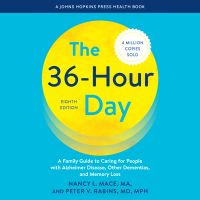
The 36-Hour DayNancy L. Mace, Peter V. Rabins17h 13m4.4 (9.2K)$28 · $0.00

FlooredSara Reardon10h 36m4.5 (1K)$29 · $0.00

Radical RemissionKelly A. Turner9h 26m4.4 (8.1K)$29 · $0.00

The Sinatra SolutionStephen T. Sinatra MD9h4.5 (899)$20 · $0.00

The Songaminute ManSimon McDermott6h 12m4.5 (280)$24 · $0.00
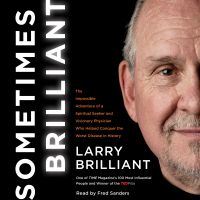
Sometimes BrilliantLarry Brilliant12h 27m4.5 (954)$29 · $0.00

Live Your LifeAmanda Kloots, Anna Kloots10h 54m4.4 (13.7K)$29 · $0.00

All in Her HeadElizabeth Comen13h 25m4.4 (18.2K)$33 · $0.00
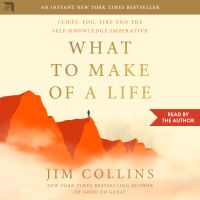
What to Make of a LifeJim Collins13h 31m4.4 (794)$33 · $0.00

Invisible StormJason Kander6h 48m4.7 (3.2K)$24 · $0.00

I Am The StormJanice Dean9h4.6 (1.5K)$8 · $0.00

On Democracies and Death CultsDouglas Murray10h 38m4.6 (6.5K)$29 · $0.00

TerraformPropaganda5h 39m4.7 (594)$24 · $0.00

Southern Horrors: Lynch Law in All Its Phases (Annotated)Ida B. Wells-Barnett2h 44m4.6 (1.3K)$2 · $0.00

Hour of the HeartIrvin D. Yalom, Benjamin Yalom8h 19m4.6 (2.3K)$26 · $0.00

Braving the TruthRachel Held Evans11h 31m4.7 (359)$29 · $0.00
Level UpRob Dial7h 42m4.6 (3.3K)$26 · $0.00

As a JewSarah Hurwitz8h 36m4.6 (1.2K)$26 · $0.00

Saint Joan (Annotated)George Bernard Shaw6h 20m4.6 (1.2K)$1.20 · $0.00
Burn the HaystackJennie Young, PhD9h 30m4.6 (543)$29 · $0.00

Woman and the New Race (Annotated)Margaret Sanger6h 30m4.6 (1K)$0.99 · $0.00
Good InsideBecky Kennedy9h 55m4.5 (59.3K)$29 · $0.00

The Mis-Education of the NegroCarter Godwin Woodson5h 4m4.5 (29.4K)$1.20 · $0.00

Du Bois: EssaysW.E.B. Du Bois6h 22m4.6 (1.5K)$1 · $0.00

The North American Indian (Illustrated Edition)Edward S. Curtis, Frederick Webb Hodge5h 59m4.6 (1.4K)$2 · $0.00

Valley of the BirdtailAndrew Stobo Sniderman, Douglas Sanderson10h 1m4.6 (2.4K)$29 · $0.00

Lies My Therapist Told MeGreg E. Gifford9h 3m4.6 (503)$29 · $0.00

Disturbed in Their NestsAlephonsion Deng, Judy A. Bernstein11h 22m4.6 (595)$23 · $0.00
You may also like

All These Things AddedJames Allen2h 37m4.1 (585)$1 · $0.00

Big TrustShadé Zahrai, Fayçal Sekkouah8h 36m4.6 (406)$26 · $0.00

The Spiritual Exercises of St. Ignatius of LoyolaIgnatius of Loyola4h 34m4.3 (8.3K)$1 · $0.00

The Revealing WordCharles Fillmore8h 12m4.6 (454)$2 · $0.00

A Guide to Rational LivingAlbert Ellis10h 49m4.2 (13K)$8 · $0.00

The Mastery of DestinyJames Allen1h 44m4.3 (759)$2.30 · $0.00

The Wakeful BodyWilla Blythe Baker5h 34m4.4 (555)$17

From Poverty to PowerJames Allen3h 56m4.1 (2.1K)$3.50 · $0.00

As a Man ThinkethJames Allen52m4.2 (131K)$1.20 · $0.00

THOUGHT VIBRATION - The Law of Attraction in the Thought World (Unabridged) (Annotated)William Walker Atkinson3h 18m4.3 (2.8K)$2 · $0.00
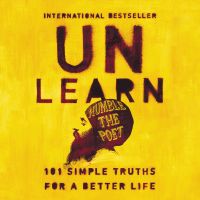
UnlearnHumble the Poet3h 55m4.3 (4.5K)$20 · $0.00

Happiness Is a Serious ProblemDennis Prager5h 30m4.2 (3.4K)$14

I Decide Who Pushes My ButtonsKarin Kuschik6h 46m4.3 (2.3K)$24 · $0.00
Feeling GoodDavid D. Burns13h 21m4.2 (77.3K)$8 · $0.00

Chaos Is the Very Nature of the MindOSHO1h 33m4.4 (30)$6 · $0.00

The direct ZEN-Way to LiberationZensho W. Kopp2h 6m$13 · $0.00
Transforming Yourself: The Catalyst for ChangeJasper Livingstone10h 30m$13

How to Tell If You Have a Healthy BrainSteve Pavlina38m4.1 (21)$4 · $0.00
400 Habits of SuccessLaura Sthephane2h 45m$5.30 · $0.00

DaredevilsXavier Q. Huntington6h 16m$4.10 · $0.00