
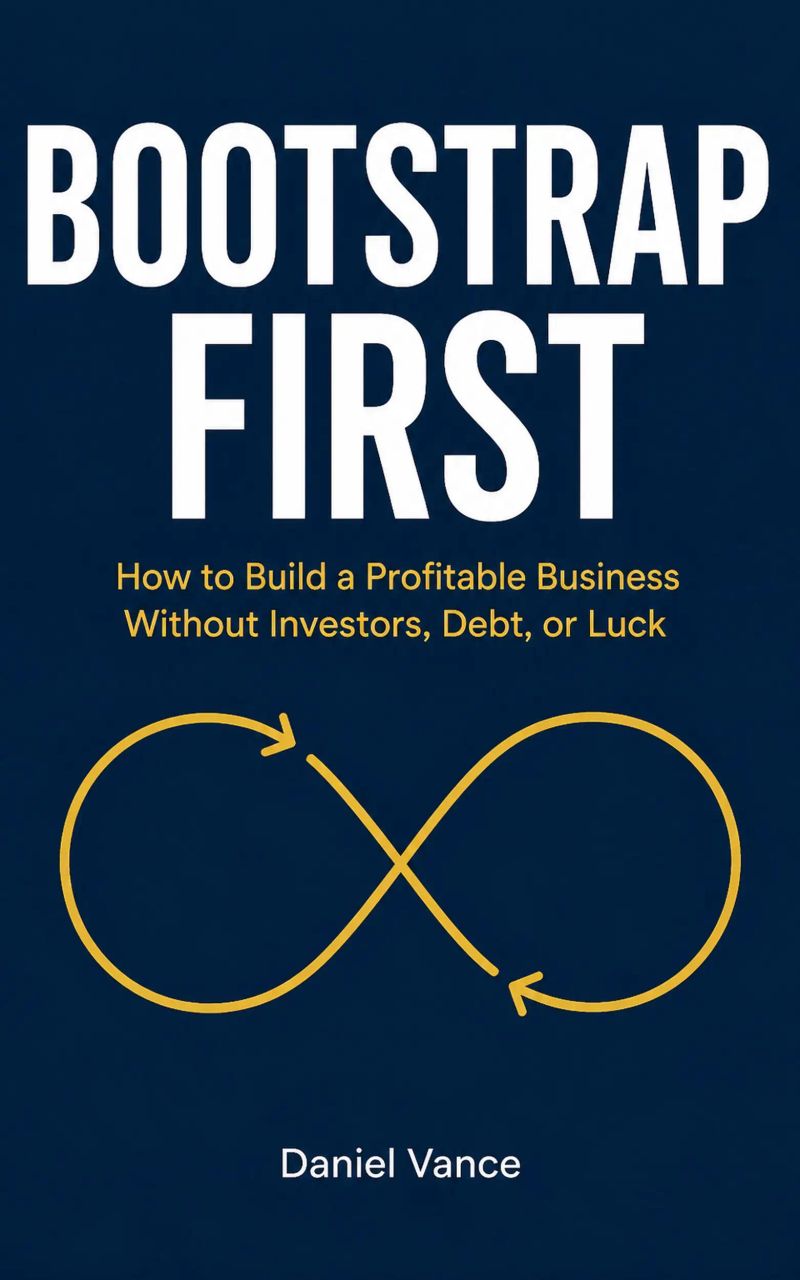
Bootstrap First
How to Build a Profitable Business Without Investors, Debt, or LuckBy Daniel Vance


Length6h 53m
About this audiobook
It was October 2016, and the call was from a man who had built a software prototype for scheduling home-health aides. Solid work, clean code. He had been asking for weeks for introductions to angel investors, and that afternoon he finally named the number: five hundred thousand dollars.
*Once I have funding, I can hire a real team.*
The question that came back was not about the deck.
*What can you sell by Friday without a single hire?*
Silence. Then: *Well, nothing. I need developers, I need —*
*You need a customer. One. Just one. What's stopping you from calling three home-health agencies tomorrow and offering to set them up manually for two hundred a month?*
He did not love that question. Three weeks later he had two paying customers, not because he had built more features but because he had stopped waiting for permission in the form of a wire transfer.
That is the argument of the book, and the first chapter states it plainly: bootstrapping is not the thing you do when the funding does not come through.
What follows is operational rather than inspirational. How to find the money before you build the product. How to generate cash in seventy-two hours. The profit-first offer architecture. Why lean does not mean cheap. Customers before branding. Selling as a form of helping rather than a personality you have to acquire. Pricing psychology written specifically for the owner-operator who is also the person delivering the work.
Then the parts most founder books skip: a cash flow chapter that treats the bank balance as a navigation instrument, building a defensible position out of expertise rather than capital, competing against larger players without matching their spend, marketing automation on a small budget, the hiring paradox — when a bootstrapped business genuinely should add a person and when adding one is a way of avoiding a harder decision — revenue streams that do not require more of your hours, the profitability metrics that actually matter at this size, and a chapter on saying no, which is presented as an operating discipline rather than a matter of confidence.
Written for owner-operators who intend to be profitable before they are impressive.
Audiobook details
GenreBusiness and Economics
Length6 hrs 53 mins
Narrated byListen with 1,000+ voices
FormateBook with Audio
Publish dateSep 15, 2026
LanguageEnglish
Table of contents
1Dedication
2Introduction
3Chapter 1 - The Bootstrap Mindset Is Not a Backup Plan
4Chapter 2 - Find the Money Before You Build the Product
5Chapter 3 - Your First Dollar: How to Generate Cash in 72 Hours
Show all chaptersShow less
6Chapter 4 - The Profit-First Offer Architecture
7Chapter 5 - Lean Doesn’t Mean Cheap—It Means Smart
8Chapter 6 - Customers Before Branding: The Bootstrap Marketing Rule
9Chapter 7 - Selling Is Helping: The Bootstrap Sales Mindset
10Chapter 8 - Pricing Psychology for the Owner-Operator
11Chapter 9 - The Cash Flow Compass: Navigating Without a Safety Net
12Chapter 10 - Build a Moat with Expertise, Not Capital
13Chapter 11 - Outsmarting the Big Players Without Big Budgets
14Chapter 12 - Marketing Automation on a Diet of Spare Change
15Chapter 13 - The Bootstrap Hiring Paradox: When You Can’t Afford Anyone
16Chapter 14 - Revenue Streams That Don’t Require More Hours
17Chapter 15 - Profitability Metrics That Actually Matter (and One That Doesn’t)
18Chapter 16 - When to Say No: Opportunity Selection for Solo Founders
19Chapter 17 - Scaling Without Breaking: Operations for the 2-to-20 Employee Pivot
20Chapter 18 - Marketing That Costs Nothing but Thoughtfulness
21Chapter 19 - Navigating Downturns Without a War Chest
22Chapter 20 - The Bootstrap Debt Trap—and How to Avoid It
23Chapter 21 - Creating a Business Where You’re Not the Bottleneck
24Chapter 22 - Exit, Sell, or Stay: The Bootstrap Endgame Options
25Conclusion
26The End
27About the Author
28Also by Daniel Vance
29Acknowledgements
30A Note from the Author
Never Split the DifferenceChris Voss, Tahl Raz8h 7m4.4 (277.7K)$26 · $0.00
The Intelligent Investor Rev Ed.Benjamin Graham17h 48m4.3 (191.5K)$40 · $0.00
The Hard Thing About Hard ThingsBen Horowitz7h 57m4.2 (134.3K)$26 · $0.00
Boundaries for LeadersHenry Cloud7h 36m4.3 (3.6K)$26 · $0.00
Eat It!Jordan Syatt, Michael Vacanti4h 40m4.6 (1.5K)$20 · $0.00

Progress and Poverty, Volumes I and II (Annotated)Henry George19h 21m4.6 (574)$0.99 · $0.00
Not Everything Counts but Everything Matters: The powerful and inspirational new book about leadership and achieving success from the visionary multi-premiership winning Panthers coachIvan Cleary6h 1m4.6 (680)$24 · $0.00
BuildTony Fadell11h 5m4.5 (14.3K)$8 · $0.00
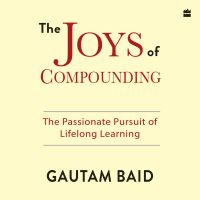
The Joys Of CompoundingGautam Baid17h 34m4.5 (2.5K)$18 · $0.00
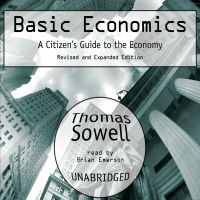
Basic EconomicsThomas Sowell18h 32m4.5 (29.3K)$28 · $0.00

Poor Charlie’s AlmanackGrover Gardener, Charles T. Munger13h 9m4.5 (24.7K)$18 · $0.00

The Ambuja StoryNarotam Sekhsaria13h 59m4.5 (830)$33 · $0.00

The Secret Door to SuccessFlorence Scovel Shinn2h 25m4.5 (2.1K)$1.20 · $0.00

This Is Going to HurtAdam Kay5h 47m4.4 (444.7K)$24 · $0.00

Big TrustShadé Zahrai, Fayçal Sekkouah8h 36m4.6 (406)$26 · $0.00
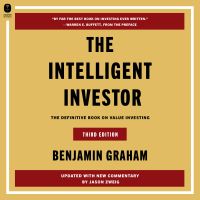
The Intelligent Investor Third EditionBenjamin Graham, Jason Zweig20h4.4 (156.6K)$46 · $0.00

Bottle of LiesKatherine Eban14h 25m4.4 (12K)$33 · $0.00
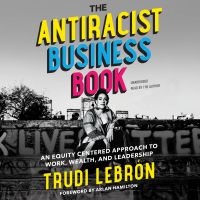
The Antiracist Business BookTrudi Lebrón6h 10m4.6 (275)$17 · $0.00
The FormulaJoshua Robinson, Jonathan Clegg10h 41m4.4 (6.9K)$29 · $0.00
Let Them LeadJohn U. Bacon7h 10m4.5 (1.4K)$24 · $0.00
You may also like
The Right ItAlberto Savoia6h 25m4.3 (1.5K)$24 · $0.00
Rookie SmartsLiz Wiseman7h 45m4.1 (1.1K)$26 · $0.00
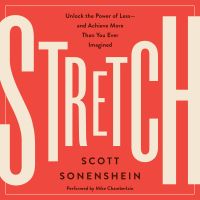
StretchScott Sonenshein7h 58m3.9 (1.8K)$26 · $0.00
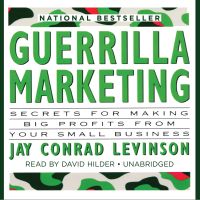
Guerrilla MarketingJay Conrad Levinson11h 50m4.0 (7.9K)$23 · $0.00
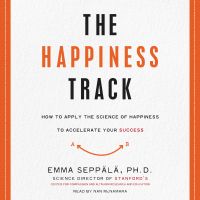
The Happiness TrackEmma Seppala5h 58m3.9 (2.3K)$24 · $0.00
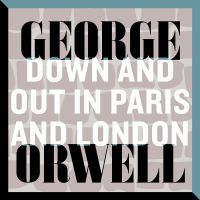
Down and Out in Paris and LondonGeorge Orwell6h 22m4.2 (136.7K)$20 · $0.00
The New Economics, Third EditionW. Edwards Deming8h 15m4.3 (1K)$20
How Not to Kill YourselfSet Sytes, Faith G. Harper PhD2h 41m4.2 (911)$15
The 10% EntrepreneurPatrick J. McGinnis5h 52m3.9 (1.6K)$20 · $0.00

The Road to Wigan Pier (Annotated)George Orwell9h 15m4.3 (3.3K)$2 · $0.00

Down and Out in Paris and LondonEric Arthur Blair7h 4m4.2 (134.6K)$1 · $0.00
How to Not Always Be WorkingCody Cook-Parrott1h 58m3.6 (2.2K)$16 · $0.00

Burn the BoatsMatt Higgins7h 15m4.3 (1.3K)$24 · $0.00

Down and Out in Paris and LondonGeorge Orwell7h 1m4.2 (140.7K)$0.60 · $0.00
The Sweaty StartupNick Huber5h 57m4.3 (561)$24 · $0.00
Hook PointBrendan Kane8h 11m3.8 (2.3K)$20

Walden, and On the Duty of Civil DisobedienceHenry David Thoreau11h 55m4.1 (53.5K)$2.30

Rules for the Direction of the MindRené Descartes1h 34m3.9 (1K)$2 · $0.00

The Stocks & ETF Compass: A Guide to Wealth, High Standard of Living, and Secure Retirement through Intelligent Investment in the Stock Market and Passive Income – Including Starter GuideJens Hattermann4h 9m4.9 (41)$20 · $0.00
The Upside of TurbulenceDonald Sull6h 38m3.8 (189)$24 · $0.00