
Blueprint for Applied Subatomic Computing in 2026
The Architecture of Post Classical ThoughtBy Azhar ul Haque Sario

Length5h 54m
About this audiobook
Welcome to the absolute frontier of computational physics. This book explores applied subatomic computing in 2026. It moves beyond the theoretical infancy of quantum mechanics. We explore how subatomic state mechanics actually function. Probabilistic wave functions replace rigid classical bits. You will discover how unitary evolution preserves information perfectly. The text breaks down linear combinations and superposition. We dive into the mathematical language of linear algebra. Geometric visualization reveals exponential state spaces. The book tackles the physical threat of decoherence. You will learn about state teleportation and dense data coding. We examine physical hardware architectures in detail. This includes ultra-low temperature solid-state circuits. It also covers electromagnetic trapped particle systems. The text maps out fault-tolerant foundations. You will understand stabilizer code formalisms. We analyze hybrid variational solvers for chemical engineering. The text tracks the urgent migration to post-quantum cryptography. We look at lattice-based encapsulation mechanisms. You will see how subatomic systems optimize global logistics. We explore probabilistic risk modeling in finance. It even covers the geopolitical reality of strict export controls. Every concept is grounded in modern processing architectures. It is a complete guide to post-classical thought.
Most texts on post-classical computing get trapped in abstract mathematics that never leave the chalkboard, but this book delivers something entirely different. It provides the crucial blueprint for scaling to utility-grade infrastructure, bridging the massive gap between theoretical physics and applied engineering. Where other resources fail by treating subatomic hardware as a magical black box, this work dissects the raw physical realities of microwave control pulses, cryogenic bottlenecks, and the necessity of classical feed-forward control loops. You get an unfiltered look at the actual socio-economic governance, workforce adaptation, and intellectual property challenges defining the industry today. It acts as a comprehensive, boots-on-the-ground guide for engineers, policymakers, and researchers who need to understand not just how a subatomic particle spins, but how that spin secures a metropolitan communication network or simulates a complex enzyme in real-time. It offers a competitive advantage by mapping exactly how classical deep learning and subatomic processors integrate into a symbiotic developmental loop to solve previously intractable global problems.
Copyright disclaimer: This author has no affiliation with the board, and it is independently produced under nominative fair use.
Audiobook details
GenreScience and Nature, Education and Learning
Length5 hrs 54 mins
Narrated byListen with 1,000+ voices
FormateBook with Audio
Publish dateMar 10, 2026
LanguageEnglish
Table of contents
1Theoretical Foundations of Subatomic Computation
2Entanglement and Non-Local Resources
3Diagrammatic Reasoning and Circuit Optimization
4Algorithmic Fundamentals and Complexity
5Advanced Simulation and Hamiltonian Dynamics
Show all chaptersShow less
6Physical Hardware Architectures
7Practical Hardware Engineering and Control
8Principles of Fault Tolerance
9Scaling to Utility-Grade Infrastructure
10Cryptographic Vulnerabilities and Migration
11Secure Communication Networks
12High-Dimensional Data Optimization
13Material Science and Chemical Engineering
14Logistical and Financial Resource Allocation
15Socio-Economic Governance and Regulatory Frameworks
16About Author & Publisher
Architecting ProficiencyAzhar ul Haque Sario3h 26m$7

Architecting the Digital FortressAzhar ul Haque Sario3h 27m$7
Forging Silicon LogicAzhar ul Haque Sario3h 22m$7
Artificial Intelligence Implications for Business Strategy for 2026Azhar ul Haque Sario4h 57m$7

Introduction to Engineering Mechanics for 2026Azhar ul Haque Sario5h 41m$7

Teenage Psychology for 2026Azhar ul Haque Sario3h 17m$7
Introduction to Computer Science 2026Azhar ul Haque Sario3h 27m$7
Machine Learning Specialization 2026Azhar ul Haque Sario2h 56m$7
Thermodynamics and Propulsion 2026Azhar ul Haque Sario3h 32m$7

How Thinking Machines Build FutureAzhar ul Haque Sario5h 20m$8

Constitutional AI and Principle Aligned ArchitecturesAzhar ul Haque Sario5h 30m$8
Advanced Compute Architectures and Deep Learning AccelerationAzhar ul Haque Sario5h 31m$8
Grow Your Wealth MindsetAzhar ul Haque Sario5h 33m$7

Your Freedom the Invisible WealthAzhar ul Haque Sario5h 28m$7

Dental Anesthesia and Behavioral Pain Management in 2026Azhar ul Haque Sario5h 3m$7

Making Agreements Fair and AgileAzhar ul Haque Sario5h 29m$7
Think Beyond FearAzhar ul Haque Sario5h 45m$7

The Complete LawyerAzhar ul Haque Sario5h 41m$7
Evolution Directs TomorrowAzhar ul Haque Sario5h 41m$7
Master Your Mind in 2026Azhar ul Haque Sario5h 58m$7
A Brief History of IntelligenceMax S. Bennett12h 18m4.6 (6.6K)$29 · $0.00
The Story of BirdsSteve Brusatte11h 49m4.6 (401)$29 · $0.00
BeyondStephen Walker15h 39m4.6 (3.2K)$33 · $0.00

LiftoffEric Berger9h 4m4.6 (9.5K)$29 · $0.00
Black Earth WisdomLeah Penniman11h 54m4.6 (577)$8 · $0.00

Total Cat MojoJackson Galaxy10h 13m4.5 (8.4K)$23 · $0.00

My Life Among the UnderdogsTia Torres5h 51m4.5 (4K)$24 · $0.00

What It Takes to Save a LifeKwane Stewart6h4.6 (556)$24 · $0.00

Pastoral SongJames Rebanks8h 35m4.5 (12K)$26 · $0.00
How Stella Learned to TalkChristina Hunger7h4.5 (10.9K)$24 · $0.00

Craig & FredCraig Grossi8h 6m4.5 (9.6K)$26 · $0.00

Celebrating BirdsNatalia Rojas, Ana Maria Martinez6h 47m4.6 (330)$24 · $0.00

Saving JemimaJulie Zickefoose4h 59m4.5 (749)$20 · $0.00

Will's Red CoatTom Ryan8h 23m4.5 (2.3K)$26 · $0.00

Of Time and TurtlesSy Montgomery10h 34m4.5 (5K)$29 · $0.00

THE WOLF TRILOGY: Call of the Wild, White Fang & The Son of the WolfJack London17h 31m4.5 (2.4K)$1.99 · $0.00

Zen and the Art of Saving the PlanetThich Nhat Hanh9h 20m4.5 (3.9K)$29 · $0.00

BLACK BEAUTY (With Original Illustrations)Anna Sewell7h 31m4.5 (1.3K)$1.99 · $0.00

Bottle of LiesKatherine Eban14h 25m4.4 (12K)$33 · $0.00
IngrainedCallum Robinson8h 10m4.5 (1.1K)$26 · $0.00
A Brief History of IntelligenceMax S. Bennett12h 18m4.6 (6.6K)$29 · $0.00

HomeschooledStefan Merrill Block7h 10m3.6 (18.5K)$28 · $0.00
EXPERIENCE AND EDUCATION – Premium Edition (Including Democracy & Education) (Annotated)John Dewey19h 17m4.6 (1K)$2 · $0.00

WitnessAriel Burger8h 1m4.6 (1.3K)$20 · $0.00

EducationEllen G. White9h 41m4.6 (1.5K)$2 · $0.00

Parents and Children (Annotated)Charlotte Mason9h 23m4.6 (988)$2 · $0.00

Children Under FireJohn Woodrow Cox10h 17m4.5 (1.6K)$29 · $0.00

The State Must ProvideAdam Harris7h 15m4.5 (775)$24 · $0.00

The Call of the Wild and FreeAinsley Arment9h 7m4.4 (21.2K)$29 · $0.00
The Freelance WayRobert Vlach19h 48m4.5 (528)$40 · $0.00
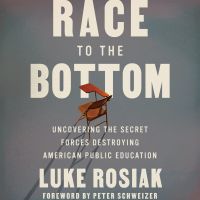
Race to the BottomLuke Rosiak9h 20m4.5 (600)$29 · $0.00

They Came for the SchoolsMike Hixenbaugh9h 5m4.5 (2.6K)$8 · $0.00

Find Me UnafraidKennedy Odede, Jessica Posner11h 11m4.5 (2.7K)$29 · $0.00

Asking for ItKate Harding8h 55m4.4 (5.3K)$20 · $0.00
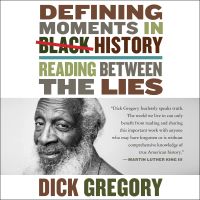
Defining Moments in Black HistoryDick Gregory7h 37m4.4 (6K)$26 · $0.00
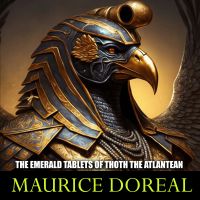
The Emerald Tablets of Thoth the AtlanteanMaurice Doreal3h 4m4.4 (8.8K)$6 · $0.00

Learning AmericaLuma Mufleh6h 37m4.4 (564)$24 · $0.00
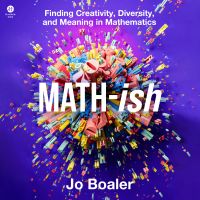
Math-ishJo Boaler7h 21m4.4 (588)$24 · $0.00

Daddy-Long-LegsJean Webster12h 18m4.2 (91K)$1.99 · $0.00
It Worked For MeColin Powell7h 42m4.3 (9.8K)$26 · $0.00