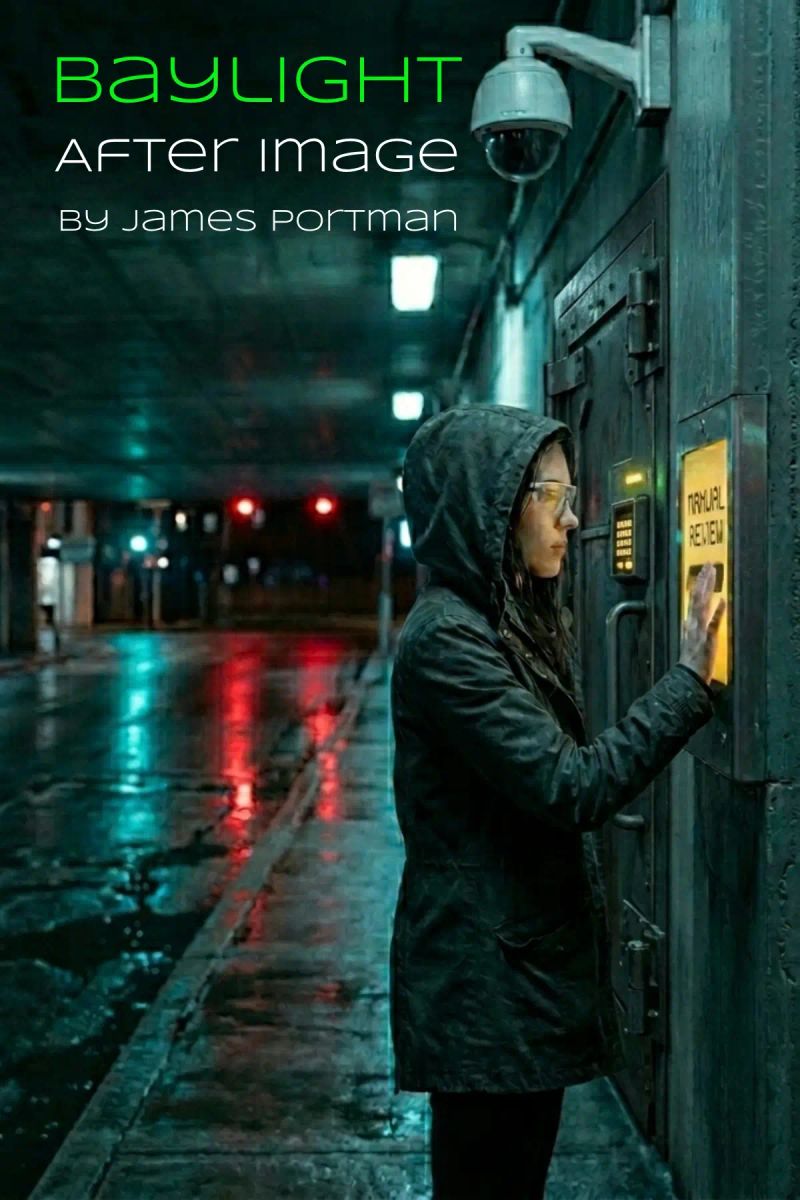
Near-future Toronto runs on Baylight—a coordination layer that routes movement, pricing, and enforcement through every gate, plate, and prompt. Refusal isn't forbidden. It's just expensive. Consent isn't demanded. It's automated.
Isolde Mercer helped build it. Now, under a borrowed name, she's trying to crack open a corridor of refusal—alongside a mutual-aid operator holding a tower together with cash and grace, an embedded defector running out of cover, and a patient whose body has become the system's proof of concept. Above them all, Mercy—Baylight's ASMR-calm civic AI—offers assistance in the voice of someone who cares.
Baylight After Image is a literary surveillance thriller about courtesy as coercion, paperwork as violence, and the moment you realize you stopped reading the terms. For readers of William Gibson, Margaret Atwood, and anyone who has ever tapped Accept without reading.