
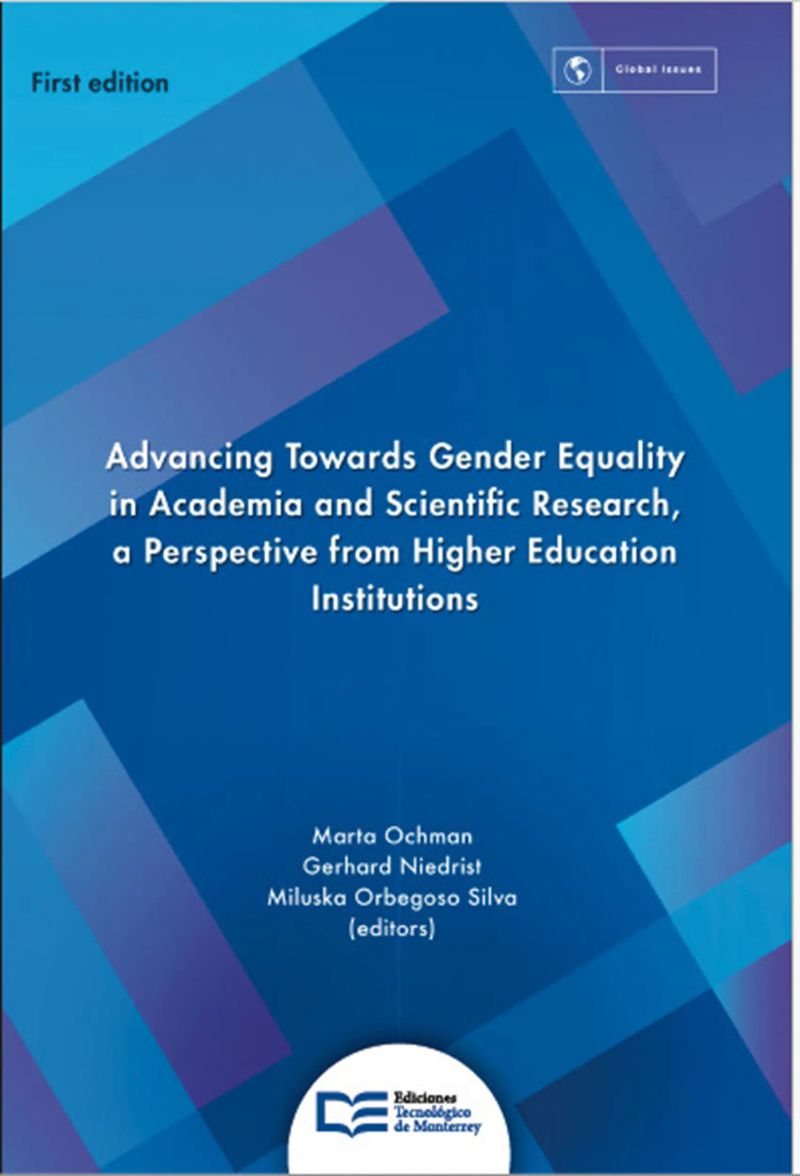
Advancing Towards Gender Equality in Academia and Scientific Research, a Perspective from Higher Education Institutions
By Marta Ochman, Gerhard Niedrist, Miluska Orbegoso Silva


Length6h 39m
About this audiobook
Advancing towards Gender Equality in Academia and Scientific Research, a perspective from Higher Education Institutions offers a diagnosis of gender inequality, a scholarly reflection on the structural barriers women face in developing a successful academic career, and an evaluation of the effectiveness of policies to address gender inequality in higher education. This book presents case studies from Mexico, Poland, Israel, China, and Japan.
Audiobook details
GenreEducation and Learning
Length6 hrs 39 mins
Narrated byListen with 1,000+ voices
FormateBook with Audio
Publish dateNov 5, 2025
LanguageEnglish
Table of contents
1About the authors
2Introduction
3Chapter 1. Gender equity policies in HEIs: what we learned from past experiences
41.1 Introduction
51.2 The myth of excellence and merit
Show all chaptersShow less
61.3 The managerial model and its challenges for gender equality
71.4 Conclusions
8Chapter 2. Confucianism, Science and Gender: An exploratory study of Fudan University
92.1 Introduction: Women, Science and Confucianism
102.2 Confucianism, Learning, and Woman
112.3 Fudan University
122.4 Perceptions about the role of Confucianism in the scientific promotion of the women
132.5 Conclusions
14Chapter 3. Japanese Women in Academia: A Dichotomy between Progress and a Traditional Society
153.1 Introduction
163.2 Historical perspective
173.3 The case of U Tokyo
183.4 Conclusions
19Chapter 4. A quantitative approach to women professors’ barriers in their research careers in Mexico. The case of Tecnológico de Monterrey
204.1 Introduction
214.2 Women Professors’ Barriers
224.3 The National System of Researchers (SNII)
234.4 The SNII within the Tecnológico de Monterrey
244.5 Women are less likely to advance in the SNII
254.6 Results
264.7 Conclusions
27Chapter 5. A Grand Gender Convergence in the Startup Nation? Gender quality in Israeli Academia and Scientific Research
285.1 Introduction
295.2 The Israeli Startup Ecosystem
305.3 Closing the Gender Gap: Life-cycle Approaches
315.4 Gender Convergence? The Quest for Labor Market Flexibility
325.5 Conclusions
33Chapter 6. Gender Equality Plan: Lessons from the University of Warsaw
346.1 Introduction
356.2 Contextualization of the case
366.3 Methodology of the study
376.4 GEP through the experience of its authors
386.5 Conclusions
39Chapter 7. Beyond Metrics and Data: Gender Reflections and Challenges in Assessing Faculty Impact at Tecnológico de Monterrey
407.1 Introduction
417.2 Literature Review
427.3 Research at Tecnológico de Monterrey
437.4 The Impact Tool
447.5 Risks of gender bias and gaps in the Impact Tool
457.6 Conclusions
46Final reflection
47Tecnológico de Monterrey
48Legal Advice

A Brief History of IntelligenceMax S. Bennett12h 18m4.6 (6.6K)$29 · $0.00

HomeschooledStefan Merrill Block7h 10m3.6 (18.5K)$28 · $0.00

The Call of the Wild and FreeAinsley Arment9h 7m4.4 (21.2K)$29 · $0.00
The Freelance WayRobert Vlach19h 48m4.5 (528)$40 · $0.00

Race to the BottomLuke Rosiak9h 20m4.5 (600)$29 · $0.00

They Came for the SchoolsMike Hixenbaugh9h 5m4.5 (2.6K)$8 · $0.00

Find Me UnafraidKennedy Odede, Jessica Posner11h 11m4.5 (2.7K)$29 · $0.00

Asking for ItKate Harding8h 55m4.4 (5.3K)$20 · $0.00

Defining Moments in Black HistoryDick Gregory7h 37m4.4 (6K)$26 · $0.00

The Emerald Tablets of Thoth the AtlanteanMaurice Doreal3h 4m4.4 (8.8K)$6 · $0.00

Learning AmericaLuma Mufleh6h 37m4.4 (564)$24 · $0.00

Math-ishJo Boaler7h 21m4.4 (588)$24 · $0.00

Daddy-Long-LegsJean Webster12h 18m4.2 (91K)$1.99 · $0.00

It Worked For MeColin Powell7h 42m4.3 (9.8K)$26 · $0.00

Little SoldiersLenora Chu11h 30m4.3 (3.1K)$29 · $0.00

Grammar-land; Or, Grammar in Fun for the Children of Schoolroom-shireM. L. Nesbitt2h 36m4.4 (488)$1 · $0.00

Financial FeministTori Dunlap8h 3m4.2 (22.2K)$8 · $0.00

DarkwaterWilliam Edward Burghardt Du Bois6h 40m4.3 (1.4K)$11 · $0.00

The Highway Code UKDepartment for Transport3h 33m4.2 (36.6K)$11 · $0.00

He'll Be OKCelia Lashlie6h 32m4.3 (1.1K)$24 · $0.00
You may also like

All in Her HeadElizabeth Comen13h 25m4.4 (18.2K)$33 · $0.00

Political IdealsBertrand Arthur William Russell2h 29m4.0 (1.3K)$2 · $0.00

On LibertyJohn Stuart Mill5h 9m4.2 (112.9K)$20 · $0.00

We're Not BrokenEric Garcia7h 53m4.3 (3.1K)$26 · $0.00

In the Name of IdentityMaalouf, Amin4h 1m4.2 (14.8K)Free

The Mis-Education of the NegroCarter Goodwin Woodson4h 32m4.5 (28.4K)$10 · $0.00

The Subjection of WomenJohn Stuart Mill4h 44m4.2 (17.5K)$0.60 · $0.00
Speaking of RaceCeleste Headlee7h 54m4.4 (681)$26 · $0.00

Braving the TruthRachel Held Evans11h 31m4.7 (359)$29 · $0.00

Your Art Will Save Your LifeBeth Pickens2h 23m4.3 (1.6K)$15 · $0.00

The Constitution of KnowledgeJonathan Rauch12h 23m4.3 (2.4K)$23 · $0.00
The Broken LadderKeith Payne7h 31m4.4 (4.9K)$20

A Vindication of the Rights of Woman (A Feminist Masterpiece)Mary Wollstonecraft11h 9m4.0 (73.1K)$1.99 · $0.00
The End of AverageTodd Rose6h 32m4.1 (7.5K)$24 · $0.00

Invisible LaborRachel Somerstein10h 34m4.2 (803)$29 · $0.00

What White People Can Do NextEmma Dabiri3h 12m4.4 (6K)$18 · $0.00

DehumanizationDan Desmarques1h 52m5.0 (4) Only with Ultra
Transforming LeadershipJames MacGregor Burns10h 31m3.5 (280)$21 · $0.00

The higher education of womenEmily Davies3h 10m$1 · $0.00

Making Space for JusticeMichele Moody-Adams9h 42m4.5 (13)$20