


Length2h 8m
About this audiobook
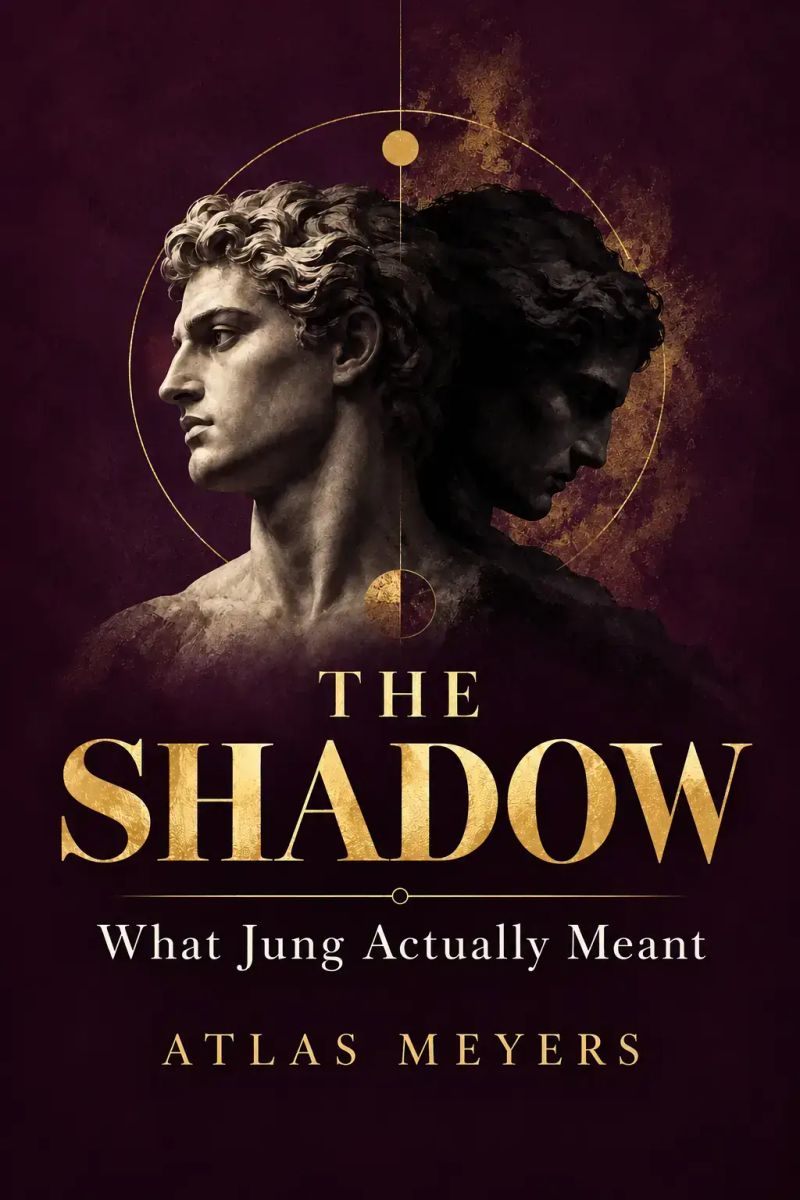
What if the qualities we find most difficult to recognize in ourselves are already shaping how we see the world?
Carl Gustav Jung's concept of the shadow is frequently misunderstood. Often reduced to our darkest impulses or romanticized as a hidden source of personal power, the shadow raises a far more challenging question: how much of ourselves remains beyond our conscious understanding?
In The Shadow: What Jung Actually Meant, Atlas Meyers explores one of analytical psychology's most important concepts, examining the relationship between the ego, the persona, and the unconscious.
Through accessible explanations and relatable examples, the book reveals how the shadow develops, why projection can become a powerful means of self-knowledge, and what it means to recognize and integrate aspects of ourselves we would rather deny.
An accessible yet intellectually rigorous introduction to Jungian psychology, self-knowledge, and the moral dimensions of the unconscious.
Audiobook details
GenrePsychology, Self-Help
Length2 hrs 8 mins
Narrated byListen with 1,000+ voices
FormateBook with Audio
Publish dateOct 22, 2026
LanguageEnglish
Table of contents
1What Jung Actually Meant
2Introduction — Meeting the Shadow
3Chapter 1 — The Shadow You Think You Know
4The Person We Believe Ourselves to Be
5What Jung Meant by the Shadow
Mostrar todos os capítulosVer menos
6The Difficulty of Recognition
7The Emotional Force of the Shadow
8The Moral Problem Is Not a Verdict
9What We Cannot See Directly
10Chapter 2 — The Ego, the Persona, and the Unseen
11The Center of Consciousness
12The Social Face
13The Role That Cannot Be Removed
14The Persona and Its Counterpart
15An Identity Worth Questioning
16Chapter 3 — How a Shadow Takes Shape
17The Necessity of Adaptation
18What Has Been Left Outside
19The Price of a Virtue
20The Expectations of a Larger World
21Elena's Uncomfortable Discovery
22A Formation That Continues
23Chapter 4 — Projection: The Mirror of the Psyche
24An Image That Comes to Life
25The Stranger We Already Know
26The Other Face of Projection
27Why Projection Matters
28The Inner Mirror
29The Danger of Explaining Everything
30When the Mirror Begins to Change
31Chapter 5 — The Shadow Is Not Always Dark
32What the Shadow Contains
33When a Virtue Becomes Too Narrow
34The Qualities We Admire
35The Hidden Treasure
36A Capacity Is Not Yet a Virtue
37Daniel's Choice
38Recognition and What Follows
39Chapter 6 — Recollection, Integration, and Responsibility
40Knowing and Assimilating
41The Difficulty of Recollection
42The Meaning of Recollection
43When Opposites Demand Attention
44Understanding as an Evasion
45The Limits of Assimilation
46Thomas Speaks
47The Ethical Significance of Integration
48Chapter 7 — Individuation: The Work of a Lifetime
49Individuation and Individualism
50The Ego and the Self

mRNA Vaccines Explained in One HourAtlas Meyers1h 17m Only with Ultra

Blockchain Explained in One HourAtlas Meyers1h 15m5.0 (1) Only with Ultra

AI Explained in One HourAtlas Meyers1h 43m5.0 (1) Only with Ultra

Nuclear Energy Explained in One HourAtlas Meyers1h 16m5.0 (1) Only with Ultra

The Big Bang Explained in One HourAtlas Meyers1h 31m4.2 (43) Only with Ultra

Franklin PierceAtlas Meyers1h 10m5.0 (1) Only with Ultra

Millard FillmoreAtlas Meyers45m5.0 (1) Only with Ultra

Zachary TaylorAtlas Meyers1h 15m5.0 (1) Only with Ultra

James K. PolkAtlas Meyers1h 10m5.0 (1) Only with Ultra

Sovereigns of the NorthAtlas Meyers47m5.0 (2) Only with Ultra

The Norse FrameworkAtlas Meyers42m5.0 (1) Only with Ultra

Tides of ConquestAtlas Meyers52m5.0 (1) Only with Ultra

Hollywood’s Golden AgeAtlas Meyers55m5.0 (1) Only with Ultra

GigantopithecusAtlas Meyers1h 1m5.0 (1) Only with Ultra

The Structure of Quantum MechanicsAtlas Meyers52m5.0 (2) Only with Ultra

The Mechanics of Quantum ComputationAtlas Meyers1h5.0 (2) Only with Ultra

A History of Artificial IntelligenceAtlas Meyers1h 59m4.7 (3) Only with Ultra

VictorianAtlas Meyers1h 30m4.5 (2) Only with Ultra

John TylerAtlas Meyers57m5.0 (1) Only with Ultra

Matters of the HeartJacinta Nampijinpa Price9h 35m4.8 (359)$29 · $0.00

Black AF HistoryMichael Harriot15h 43m4.7 (14.6K)$33 · $0.00

Bad Fat Black GirlSesali Bowen6h 32m4.7 (2.8K)$24 · $0.00

Invisible StormJason Kander6h 48m4.7 (3.2K)$24 · $0.00

I Am The StormJanice Dean9h4.6 (1.5K)$8 · $0.00

On Democracies and Death CultsDouglas Murray10h 38m4.6 (6.5K)$29 · $0.00

TerraformPropaganda5h 39m4.7 (594)$24 · $0.00

Southern Horrors: Lynch Law in All Its Phases (Annotated)Ida B. Wells-Barnett2h 44m4.6 (1.3K)$2 · $0.00

Hour of the HeartIrvin D. Yalom, Benjamin Yalom8h 19m4.6 (2.3K)$26 · $0.00

Braving the TruthRachel Held Evans11h 31m4.7 (359)$29 · $0.00
Level UpRob Dial7h 42m4.6 (3.3K)$26 · $0.00

As a JewSarah Hurwitz8h 36m4.6 (1.2K)$26 · $0.00

Saint Joan (Annotated)George Bernard Shaw6h 20m4.6 (1.2K)$1.20 · $0.00

Burn the HaystackJennie Young, PhD9h 30m4.6 (543)$29 · $0.00

Woman and the New Race (Annotated)Margaret Sanger6h 30m4.6 (1K)$1.99 · $0.00

Good InsideBecky Kennedy9h 55m4.5 (59.3K)$29 · $0.00

The Mis-Education of the NegroCarter Godwin Woodson5h 4m4.5 (29.4K)$1.20 · $0.00

Du Bois: EssaysW.E.B. Du Bois6h 22m4.6 (1.5K)$1 · $0.00

The North American Indian (Illustrated Edition)Edward S. Curtis, Frederick Webb Hodge5h 59m4.6 (1.4K)$2 · $0.00

Valley of the BirdtailAndrew Stobo Sniderman, Douglas Sanderson10h 1m4.6 (2.4K)$29 · $0.00
Learning to PrayJames Martin13h 24m4.5 (3.4K)$33 · $0.00

Truth Without ApologyAcharya Prashant6h 41m4.8 (2.2K)$18 · $0.00

Autism Out Loud: the instant New York Times Bestseller. Moving Stories and Parenting Lessons Learned from Three Mothers of Children with AutismKate Swenson, Carrie Cariello, Adrian Wood8h 41m4.8 (2.1K)$26 · $0.00

The StepsSylvester Stallone9h 4m4.8 (635)$29 · $0.00

Swayam Ki AwaazPrem Rawat8h 34m4.7 (1.1K)$26 · $0.00

Forever BoyKate Swenson9h 27m4.7 (5K)$29 · $0.00

You Are Worth ItKyle Carpenter, Don Yaeger8h 53m4.7 (4.8K)$29 · $0.00

The Happiest Man on EarthEddie Jaku3h 48m4.6 (178K)$7 · $0.00

Finding MeViola Davis9h 15m4.6 (256.4K)$29 · $0.00

Spiritual AnatomyDaaji Kamlesh D. Patel9h 47m4.7 (319)$29 · $0.00

The Dangerous Truth about Today’s MarijuanaLaura Stack CSP, MBA9h 57m4.7 (385)$20 · $0.00

The Gospel according to Spiritualism (Translated)Allan Kardec14h 39m4.6 (3.9K)$5.70 · $0.00

Birdie & HarlowTaylor Wolfe7h 50m4.6 (6.5K)$26 · $0.00

CrossroadsKaleb Dahlgren7h 56m4.6 (4.9K)$26 · $0.00

Life on the BridgeKaelynn Partlow5h 40m4.6 (1.1K)$24 · $0.00

Keep Your Love OnDanny Silk9h 4m4.6 (8.1K)$10 · $0.00

The Tao of Joy Every DayDerek Lin10h 24m4.6 (762)$20 · $0.00

UndividedVicky Beeching9h 2m4.6 (1.3K)$29 · $0.00

HE CAN WHO THINKS HE CAN & OTHER BOOKS ON SUCCESSOrison Swett Marden5h 54m4.6 (1.2K)$1.99 · $0.00
Level UpRob Dial7h 42m4.6 (3.3K)$26 · $0.00
You may also like

You TurnAshley Stahl9h 22m4.1 (1.6K)$20

Love Unfu*kedGary John Bishop3h 47m3.9 (2.1K)$20 · $0.00

The Psychology of AlmostLuciana Priscila7h 53m$5.10 · $0.00

From Paycheck to ProsperityPenelope I. Westwood4h 12m$4 · $0.00

Shadow Work for Beginners – Understand Yourself, Feel Better and Heal Emotional PatternsMateusz Janeczek5h 50m$6.40 · $0.00

Permanent MarkersEmma K. Lawson4h 15m$4 · $0.00

The Cycle You Don't SeeLuciana Priscila4h 18m$5.10 · $0.00

Manifestation for Beginners – A Beginner’s Guide to the Law of Attraction and MindfulnessMateusz Janeczek5h 1m$6.40 · $0.00

Love Can Also Be LearnedLuciana Priscila3h 6m$1.20 · $0.00
Reprogram Your IdentityNicholas B. Sheffield5h 44m$11 · $0.00

True life through ZENZensho W. Kopp1h 12m$13 · $0.00

When You Stop Neglecting YourselfLuciana Priscila3h 18m$1.20 · $0.00

Astrology for Beginners – Zodiac Signs, Houses, Planets, InterpretationsMateusz Janeczek4h 10m$6.40 · $0.00
a Rich Mind, a Prosperous LifeDanniel Silva3h 20m$1.80 · $0.00
Low Mood Mind-Training HypnosisAnthony Peters30m$10 · $0.00

The Beginning of All ChangesLuciana Priscila3h 34m$1.20 · $0.00

I'm Working My Notice, and My Motivation Has Already Left - How to Survive Your Notice Period, Wrap Up What Matters, and Avoid Choosing Between Sabotage and Heroically Saving the Company Until the Last MinuteMax Paradox6h 33m$7.70 · $0.00

The Freedom to Love YourselfLuciana Priscila3h 25m$1.20 · $0.00
How to Stop Caring What Other People ThinkMax Paradox7h 8m$7.80 · $0.00

More than FameHarrison E. McAllister4h 3m$4 · $0.00