
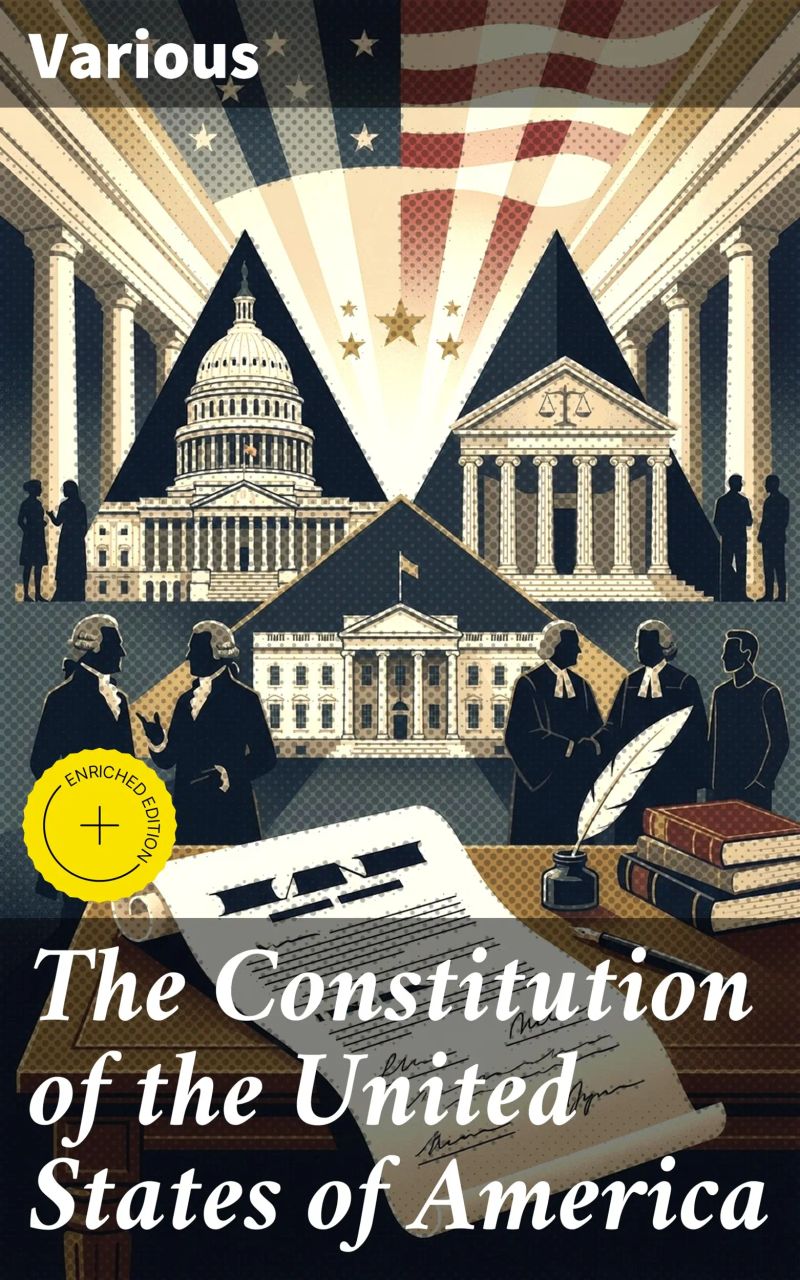
The Constitution of the United States of America
Enriched edition. Analysis and Interpretation. Annotations of Cases Decided by the Supreme Court. June 30, 1952De Various


Duração70h 42m
Sobre este audiolivro
The Constitution of the United States of America is a foundational text that encapsulates the democratic principles and governance structure of one of the world's most enduring republics. Written in the late 18th century, this pivotal document exhibits a formal yet accessible literary style, characterized by its concise language and clear articulation of rights, responsibilities, and the separation of powers. It emerges from the historical context of post-Revolutionary America, reflecting the revolutionary ideals of Enlightenment thinkers and the urgent need for a cohesive national framework to unify the fledgling states after decades of colonial governance. The authorship of this document involved a collective effort by the Founding Fathers, who were deeply influenced by their experiences with monarchy and tyranny. Figures such as James Madison and Alexander Hamilton sought to create a system that balanced power among branches of government while ensuring individual liberties. Their collaborative endeavor illustrates a rich tapestry of political philosophy and practical governance borne out of revolutionary fervor, personal experiences, and diverse intellectual traditions. This important document is highly recommended for students, scholars, and any citizen interested in understanding the legal and moral underpinnings of American democracy. It serves not only as a historical artifact but as a living document that continues to inspire debates over civil rights and liberties in contemporary society.
In this enriched edition, we have carefully created added value for your reading experience:
- An Introduction draws the threads together, discussing why these diverse authors and texts belong in one collection.
- Historical Context explores the cultural and intellectual currents that shaped these works, offering insight into the shared (or contrasting) eras that influenced each writer.
- A combined Synopsis (Selection) briefly outlines the key plots or arguments of the included pieces, helping readers grasp the anthology's overall scope without giving away essential twists.
- A collective Analysis highlights common themes, stylistic variations, and significant crossovers in tone and technique, tying together writers from different backgrounds.
- Reflection questions encourage readers to compare the different voices and perspectives within the collection, fostering a richer understanding of the overarching conversation.
Detalhes do audiolivro
Avaliação★★★★ 4,5 (46,3 mil)
Inclui Goodreads, Amazon, LibraryThing, StoryGraph
GêneroPolitics and Government
Duração70 h 42 min
Narrado porOuça com mais de 1.000 vozes
FormatoeBook com áudio
Data de publicação22 de ago. de 2023
IdiomaInglês
Sumário
1Introduction
26ARTICLE V
2Introduction
27ARTICLE VI
3Historical Context
28ARTICLE VII (pt. 1)
4Synopsis (Selection)
29ARTICLE VII (pt. 2)
5The Constitution of the United States of America
30AMENDMENT 2
Mostrar todos os capítulosVer menos
6PREFACE
31AMENDMENT 5
7II
32AMENDMENT 6
8THE CONSTITUTION OF THE UNITED STATES OF AMERICA
33AMENDMENT 7
9THE CONSTITUTION OF THE UNITED STATES OF AMERICA WITH ANNOTATIONS
34AMENDMENT 8
10LEGISLATIVE DEPARTMENT (pt. 1)
35AMENDMENT 11
11LEGISLATIVE DEPARTMENT (pt. 2)
36AMENDMENT 12
12LEGISLATIVE DEPARTMENT (pt. 3)
37AMENDMENT 14 (pt. 1)
13LEGISLATIVE DEPARTMENT (pt. 4)
38AMENDMENT 14 (pt. 2)
14LEGISLATIVE DEPARTMENT (pt. 5)
39AMENDMENT 14 (pt. 3)
15LEGISLATIVE DEPARTMENT (pt. 6)
40AMENDMENT 14 (pt. 4)
16LEGISLATIVE DEPARTMENT (pt. 7)
41AMENDMENT 14 (pt. 5)
17ARTICLE II (pt. 1)
42AMENDMENT 14 (pt. 6)
18ARTICLE II (pt. 2)
43AMENDMENT 15
19ARTICLE II (pt. 3)
44AMENDMENT 16
20ARTICLE III (pt. 1)
45AMENDMENT 17
21ARTICLE III (pt. 2)
46AMENDMENT 22
22ARTICLE III (pt. 3)
47TABLE OF CASES (pt. 1)
23ARTICLE III (pt. 4)
48TABLE OF CASES (pt. 2)
24ARTICLE IV (pt. 1)
49TABLE OF CASES (pt. 3)
25ARTICLE IV (pt. 2)
50TABLE OF CASES (pt. 4)
Odes Of SolomonVarious1h 7min$7 · $0.00
The Didache or The Teaching of the Twelve ApostlesVarious22min$3 · $0.00

100 tilbud for entreprenørskapvarious24min$5 · $0.00

100 sitater fra kjente kokkervarious24min$5 · $0.00

500 citas inspiradorasvarious2h 29min$8 · $0.00

100 frases sobre el Hatha Yogavarious25min$5 · $0.00

100 citas humorísticasvarious25min$5 · $0.00

200 citas de la Bibliavarious53min$7 · $0.00

100 citas sobre la verdadvarious29min$5 · $0.00

100 frases sobre la filosofíavarious30min$5 · $0.00

Anzeiger für Kunde der deutschen VorzeitVarious19h 47min$1 · $0.00

With the World's Great TravelersVarious38h 45min$1.99 · $0.00

The Art of the Book (Annotated)Various3h 20min$1.99 · $0.00

Henley's Twentieth Century Formulas, Recipes and Processes (Annotated)Various60h 56min$1.99 · $0.00

Fairy Tales Every Child Should Know (Annotated)Various10h 33min4.0 (12.3K)$1.99 · $0.00

The Golden TreasuryVarious7h 42min4.3 (2.4K)$1.99 · $0.00

New, Old, and Forgotten Remedies: Papers by Many WritersVarious12h 14min4.6 (12)$1.99 · $0.00

The Most Ancient Lives of Saint PatrickVarious10h 48min4.4 (10)$1.99 · $0.00

Serbian Fairy Tales – Folklore & Mystique of the BalkansVarious5h 49min$1.99 · $0.00

Henley's Formulas, Recipes and ProcessesVarious55h 19min4.2 (122)$1.99 · $0.00

Suicidal EmpathyGad Saad8h 24min4.1 (736)$28 · $0.00

Unreasonable WomenJustine van der Leun10h 45min4.9 (13)$29 · $0.00

MotherlandJulia Ioffe17h 52min4.7 (2.5K)$40 · $0.00

HostageEli Sharabi5h 25min4.6 (10.8K)$24 · $0.00

Days of Love and Rage: A Story of RevolutionAnand Gopal22h 36min4.7 (584)$34 · $0.00

KrantikariSanjeev Sanyal11h 44min4.6 (1.3K)$16 · $0.00

Unbroken Bonds of BattleJohnny Joey Jones8h 31min4.6 (2.6K)$8 · $0.00

On Democracies and Death CultsDouglas Murray10h 38min4.6 (6.5K)$29 · $0.00

Balcony Over Jerusalem: A Middle East Memoir - Israel, Palestine and BeyondJohn Lyons12h 37min4.6 (1.4K)$33 · $0.00
RiggedMollie Hemingway12h 48min4.6 (4.2K)$23 · $0.00

SledgehammerDavid Friedman8h 21min4.7 (589)$26 · $0.00
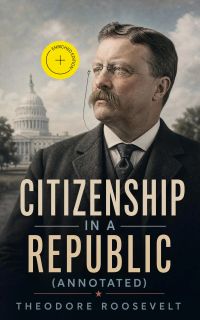
Citizenship in a Republic (Annotated)Theodore Roosevelt2h 44min4.6 (1.4K)$2 · $0.00

No EscapeNury Turkel9h 30min4.6 (809)$28 · $0.00

Always FaithfulThomas Schueman, Zainullah Zaki12h 12min4.6 (977)$29 · $0.00

UnthinkableJamie Raskin15h 8min4.5 (9.3K)$8 · $0.00

My Fourth Time, We DrownedSally Hayden13h 59min4.6 (2.9K)$23 · $0.00

A Revolution of Common SenseScott Jennings9h 29min4.6 (528)$29 · $0.00

Statement From the Dock at the Rivonia TrialNelson Mandela2h 18min4.6 (1.3K)$1 · $0.00

Lessons from the EdgeMarie Yovanovitch17h 11min4.5 (5.9K)$40 · $0.00

To Rescue the American SpiritBret Baier10h 12min4.5 (2.7K)$8 · $0.00
Você também pode gostar

The State and RevolutionVladimir lenin4h 10min4.3 (19.8K)$3 · $0.00
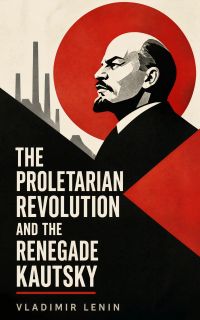
The Proletarian Revolution and the Renegade KautskyVladimir Lenin4h 34min4.3 (1K)$1.99 · $0.00

The Age of ReasonThomas Paine6h 53min4.1 (38.4K)$1.20 · $0.00
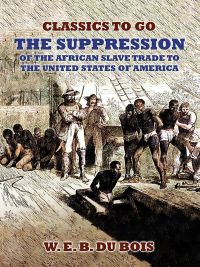
The Suppression Of The African Slave Trade To The United States Of AmericaW. E. B. Du Bois12h 54min4.2 (1.6K)$2.30
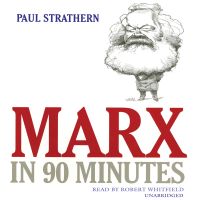
Marx in 90 MinutesPaul Strathern1h 24min3.5 (1.6K)$7

Manifesto of the Communist PartyKarl Marx, Friedrich Engels3h 10min3.9 (248.9K)$1 · $0.00

The Autobiography of Thomas JeffersonThomas Jefferson8h 32min4.0 (2.8K)$1.99 · $0.00

Opium Inc.Thomas Manuel9h 27min4.2 (263)$29 · $0.00
The Constitution of the United States and The Declaration of IndependenceDelegates of The Constitutional Convention1h 7min4.6 (12.3K)Grátis

The French Revolution and NapoleonJean-Jacques Rousseau, Alexis de Tocqueville, Montesquieu, Charles Downer Hazen62h 54min4.1 (574)$2 · $0.00

Socialism: Utopian and Scientific (Annotated)Frederick Engels3h 35min4.3 (29.7K)$1.99 · $0.00

America’s Great DepressionMurray N. Rothbard10h 5min4.4 (2K)$20

Constitution of the State of Minnesota — 1964 VersionGovernment of the State of Minnesota2h 32min$2 · $0.00

History of the ReformationThomas M. Lindsay38h 40min4.2 (121)$1.99 · $0.00

The PlaybookJoshua Robinson, Jonathan Clegg8h 50min$29 · $0.00
The Complete WorksThomas Jefferson210h 44min4.4 (197)$1.99 · $0.00
The History of Rome: Rise and Fall of the EmpireJohn Bagnell Bury72h 52min4.0 (88)$2 · $0.00

Magna Carta: A Commentary on the Great Charter of King JohnWilliam Sharp McKechnie22h 46min4.2 (43)$2 · $0.00

Two Tracts on Civil Liberty, the War with America, and the Debts and Finances of the KingdomRichard Price9h 22min$1 · $0.00

Saigon at the Turn of the MillenniumKlaus H. Carl1h 35min$8