
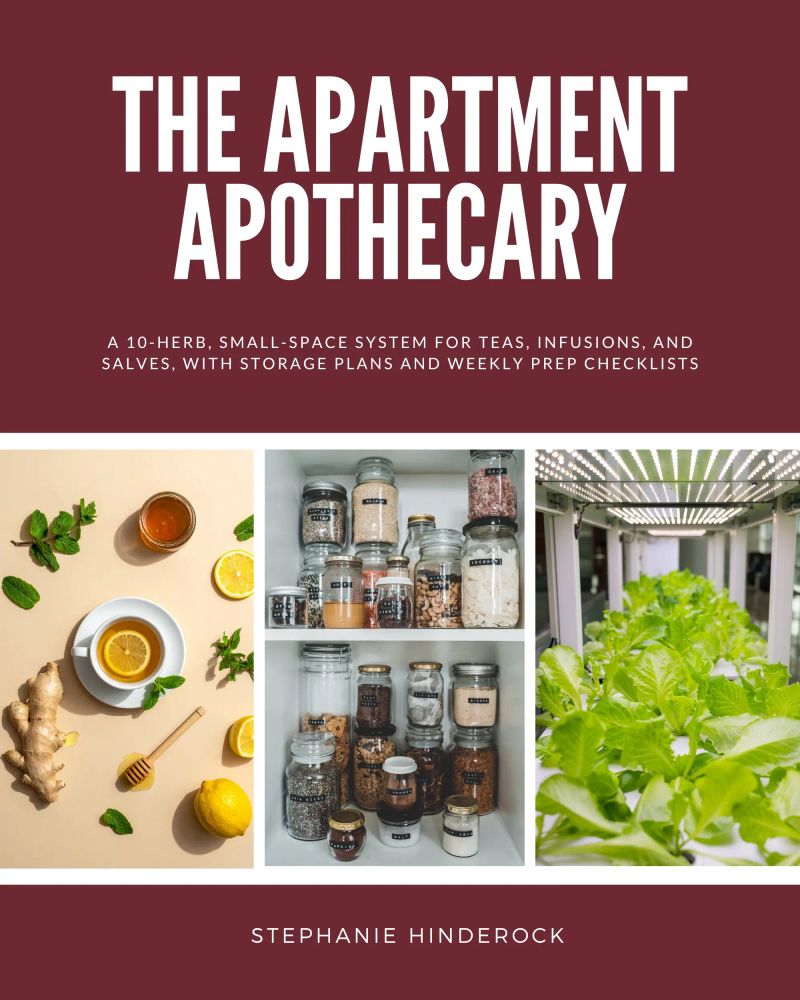
The Apartment Apothecary
A 10-Herb, Small-Space System for Teas, Infusions, and Salves, With Storage Plans and Weekly Prep ChecklistsDe Stephanie Hinderock


Duração1h 47m
Sobre este audiolivro
Urban living brings a distinct set of pressures to anyone hoping to integrate herbal practices into their daily life. Many apartment dwellers face hurdles, including minimal sunlight, limited floor space, and few options for safe, organized storage of dried herbs and homemade blends. These constraints do not have to sideline your interest or leave you overwhelmed with clutter; this guide aims to show that an effective, resilient herbal system can flourish, even in the smallest homes.
A streamlined, well-organized ten-herb approach lies at the core of this guide. By deliberately narrowing the focus to a compact selection of high-utility, beginner-friendly plants, you’ll avoid the pitfalls of over-collecting or spoiling unused stock. These ten herbs are chosen for their versatility, daily usefulness, and adaptability to indoor cultivation and storage. This method bypasses the need for outdoor space, complex preparations, or deep botanical expertise. Instead, it provides reliable wellness options, simple “grab-and-use” storage, and clear paths to everyday benefit without excess mess or waste.
To help you build this system, a practical, stepwise framework will guide you through each key stage: choosing the right herbs for urban life, sourcing them efficiently, setting up containers and small-scale indoor growing, and managing every stage from harvesting to long-term storage. Each step is presented with the realities of small-space living in mind. Guidance covers how to prepare basic teas and salves, maximize shelf life, and minimize losses, all while working within the footprints of windowsills, countertops, and compact cupboards.
It’s important to clarify how this guide sets its boundaries to stay actionable and safe. The focus remains on ten readily available, widely recognized kitchen and wellness herbs suitable for beginners and safe apartment use. Outdoor gardening, advanced extractions, rare or unproven botanicals, and unsupported health claims fall outside our scope.
By the end of this guide, you’ll be equipped to:
Grow and maintain your own basic herb supply indoors or on a windowsill.
Prepare small-batch teas and salves with minimal equipment.
Optimize storage with modular, stackable approaches that fit tight spaces.
Develop low-maintenance routines that preserve freshness and potency.
Troubleshoot common apartment-specific challenges, whether it’s underperforming plants, humidity-related spoilage, or product cross-contamination, using dedicated checklists and guides provided.
While every urban household is different, this framework is built to be modular. You’ll be able to adapt the ten-herb system based on your own space, daily routines, and wellness priorities. Moving forward, the next chapter will dive directly into how to select your core ten herbs and shape them into a coherent, resilient urban apothecary, even if all you have is a windowsill and a single cupboard shelf.
Detalhes do audiolivro
GêneroHealth and Wellness, Self-Help
Duração1 h 47 min
Narrado porOuça com mais de 1.000 vozes
FormatoeBook com áudio
Data de publicação8 de fev. de 2026
IdiomaInglês
Sumário
1Core Framework for the Ten-Herb Urban Apothecary (Role: Fundamentals)
2Criteria matrix for selecting core herbs
3Comprehensive table of the ten chosen herbs: Uses for teas, infusions, and salves
4Growth and habit taxonomy: Sunlight, watering, and temperature needs
5Sourcing, Potting, and Cultivating in Small Spaces (Role: Application)
Mostrar todos os capítulosVer menos
6Sourcing high-quality live plants, seeds, and dried spices
7Container and pot selection framework (with decision tree)
8Substrates and drainage protocols (including a comprehensive media selection table)
9Micro-checklists: Daily and weekly routines for watering and lighting
10Harvesting, Drying, and Short-Term Storage (Role: Execution)
11Harvesting: Timing and Visual Indicators for Each Herb
12Drying Methods: Choosing the Best Dehydration Technique for Apartments
13Short-Term Dried Herb Storage Framework
14Diagnostics and Troubleshooting: Preventing Mold, Overdrying, and Potency Loss
15Long-Term Storage and Preservation Systems (Role: Systems)
16Comprehensive Preservation Rule Set: Freezing, Vacuum Sealing, and Airtight Glass Storage
17Longevity Estimates Table: Expected Shelf Life by Method and Herb
18Labeling, Rotation, and Expiration Tracking System
19Evaluation Matrix: Selecting Storage Locations for Small Apartments
20Tea Blending Fundamentals for Small-Batch Use (Role: Mechanisms)
21Flavor, aroma, and compatibility mapping grid for the ten core herbs
22Standard measurements and ratios for single-serve and weekly-batch teas
23Prep-and-Blend Timeline: Extraction Times, Water Temperatures, and Steeping Protocols by Herb
24Creating Infusions and Decoctions for Wellness (Role: Application)
25Extraction Mechanics: Comparing Teas, Overnight Infusions, and Stovetop Decoctions
26Multi-Use Vessel Checklist: Adapting Everyday Gear for Apartment Brewing
27Core Recipe Cards for Calming, Energizing, and Immune-Support Infusions
28Calming Evening Infusion
29Energizing Morning Infusion
30Immune-Support Decoction
31Preparation Log Template Artifact
32Simple Salve and Topical Preparation (Role: Execution)
33Topical Base Matrix: Oils, Waxes, and Butters for Compact, Long-Lasting Salves
34Efficient Salve-Making Workflows: Double Boiler and Microwave Methods
35Herb-to-Oil Infusion Timing Chart: Ensuring Potency and Stability
36Essential Toolkit and Container Checklist for Apartment Salve-Makers
37Sample Salve Formula Card: Ratios, Scaling, and Labeling
38Basic Herbal Salve Formula (Single batch: fills two 30 ml tins)
39Apartment Apothecary Storage Plans (Role: Tools)
40Modular Shelving and Stackable Bin Strategies for Compact Spaces
41Environmental Matrix: Airflow, Temperature, and Light
42Example Storage Inventory Log Template
43Guidelines for Segregating Internal-Use and External-Use Products
44Weekly Prep Checklists and Quality Control (Role: Systems)
45Weekly Prep Checklist Template
46Structured Routine for Rotating Herb Stock
47Comprehensive Quality Assessment Rubric
48Week-by-Week Blending and Restocking Calendar
49Diagnostic Signals Reference Table
50Conclusion
What I Talk about When I Talk about RunningHaruki Murakami4h 24min4.0 (245.4K)$12

Autoimmunity and the Good GirlsSara Hirsh Bordo7h 51min$26 · $0.00
Hour of the HeartIrvin D. Yalom, Benjamin Yalom8h 19min4.6 (2.3K)$26 · $0.00

The Yoga Sutras of PatanjaliPatanjali4h 8min4.5 (18.5K)$6 · $0.00

The Lost VoiceGreta Morgan8h 30min4.7 (285)$26 · $0.00

Healthy Kids, Happy KidsElisa Song14h 18min4.6 (760)$33 · $0.00
Eat It!Jordan Syatt, Michael Vacanti4h 40min4.6 (1.5K)$20 · $0.00

Consent Laid BareChanel Contos7h 11min4.5 (1.7K)$24 · $0.00

How to Make Disease DisappearRangan Chatterjee5h 26min4.5 (3.5K)$24 · $0.00
The Complete Herbal (Annotated)Nicholas Culpeper29h 8min4.5 (1.4K)$2 · $0.00

A Plague Upon Our HouseScott W. Atlas MD10h 37min4.5 (3.4K)$20 · $0.00

The Gift of TherapyIrvin Yalom7h 39min4.5 (38.8K)$26 · $0.00

EarlySarah DiGregorio9h 47min4.5 (1.3K)$29 · $0.00

Bottle of LiesKatherine Eban14h 25min4.4 (12K)$33 · $0.00
The 36-Hour DayNancy L. Mace, Peter V. Rabins17h 13min4.4 (9.2K)$28 · $0.00

FlooredSara Reardon10h 36min4.5 (1K)$29 · $0.00

Radical RemissionKelly A. Turner9h 26min4.4 (8.1K)$29 · $0.00
The Sinatra SolutionStephen T. Sinatra MD9h4.5 (899)$20 · $0.00
The Songaminute ManSimon McDermott6h 12min4.5 (280)$24 · $0.00
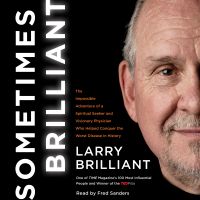
Sometimes BrilliantLarry Brilliant12h 27min4.5 (954)$29 · $0.00
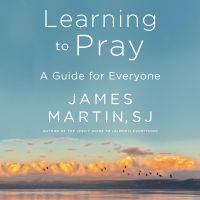
Learning to PrayJames Martin13h 24min4.5 (3.4K)$33 · $0.00
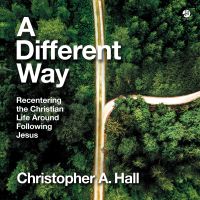
A Different WayChristopher A. Hall10h 45min4.5 (165)$29 · $0.00

The Hard Thing About Hard ThingsBen Horowitz7h 57min4.2 (134.3K)$26 · $0.00
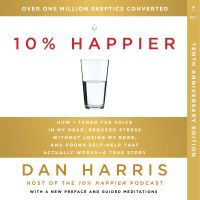
10% Happier 10th AnniversaryDan Harris9h 28min4.1 (137.1K)$29 · $0.00
The Power of the OtherHenry Cloud5h 52min4.2 (3.5K)$24 · $0.00
What You Are Looking For Is in the LibraryMichiko Aoyama7h 19min4.1 (156.7K)$24 · $0.00
The Way of ExcellenceBrad Stulberg6h 46min4.2 (1.1K)$24 · $0.00
The AlchemistPaulo Coelho4h 1min4.1 (3.9M) · 1215$23 · $0.00

Change the RecipeJosé Andrés, Richard Wolffe4h 57min4.1 (2K)$20 · $0.00

The Lucky RideYasushi Kitagawa4h 26min4.1 (1.8K)$20 · $0.00
Be ExceptionalJoe Navarro, Toni Sciarra Poynter9h 11min4.0 (1.3K)$29 · $0.00

The Subtle Art of Not Giving a F*ckMark Manson5h 18min3.9 (1.7M)$24 · $0.00

HomeschooledStefan Merrill Block7h 10min3.6 (18.5K)$28 · $0.00
Autoimmunity and the Good GirlsSara Hirsh Bordo7h 51min$26 · $0.00

The Purpose Driven® Liferick warren9h 23min4.0 (896.8K) Só no Ultra
Your Desired FutureHenry Cloud6h 43min$24 · $0.00

The StepsSylvester Stallone9h 4min4.8 (637)$29 · $0.00

Swayam Ki AwaazPrem Rawat8h 34min4.7 (1.1K)$26 · $0.00

Forever BoyKate Swenson9h 27min4.7 (5K)$29 · $0.00

You Are Worth ItKyle Carpenter, Don Yaeger8h 53min4.7 (4.8K)$29 · $0.00
Você também pode gostar
Clark the Shark: Tooth TroubleBruce Hale7min4.1 (828)$4 · $0.00
Low Rain NoisePatricio Samuelsson1h$6 · $0.00

Die Wacht am RheinLafcadio Hearn7h 33min$2 · $0.00
Shut Up, EveryoneKwalia Bliss4h 7min$10 · $0.00

The Money Pit, Vol. 14Tom Kraeutler, Leslie Segrete9h 34min$20

Gentle Sleep Soundscapes to Soothe, Protect, and RestoreAura Sleep Soundscapes14h 3min$12 · $0.00
A Woman’s Ayurvedic HerbalCaroline Robertson, Antonia Beattie6h 47min3.8 (11)$17

Sounds Of The Sea: Calming Ocean Waves, Seabirds in the Wind, Noises of the Underwater WorldYella A. Deeken7h 47min$12 · $0.00
Binaural Sleep - Binaural and Isochronic Sleep Music Mixed with Natural SoundsJames Aniston8h 39min$23 · $0.00

Soothing Ocean Waves with 432 Hz Music /// All Night Sleep SoundscapesYella A. Deeken7h 11min$15 · $0.00

Foods to Boost Your Breast Milk Supply NaturallyAurora Brooks1h 9min$3.50 · $0.00

Healer's Choice - Sound Healing With Vibrational Sound TherapyHealers Choice - Vibrational Sound Therapy7h 54min$23 · $0.00

Psyllium - The Organic Diet with Guaranteed SuccessPeter Carl Simons31min$10 · $0.00

ZappedAnn Louise Gittleman6h 54min3.8 (687)$24 · $0.00

The Ultimate Horse Enthusiast's Compendium: 41 BooksWill C. Barnes, Sewell Ford, Nat Gould, Rush Shippen Huidekoper, Charles B. Michener, Leonard Pearson, United States. Bureau of Animal Industry, W. H. Harbaugh, John E. Russell, François Boucher, A. E. Sir Shipley, John Hankins Wallace, H. Caulton Reeks, James Glass Bertram, E. Daumas, O. S. Pratt, Kenneth Austin, Francis Bond Sir Head, Moses James Nobbs, John Gilmer Speed, Theo. Stephenson Browne, Joshua A. Nunn, John J. Stutzman, P. R. Kincaid, Maurice Hartland Mahon, William Osmer, A. S. Alexander, J. Albert Frost, William J. Moore, Conrad Mitchell, Basil Tozer, Walter Sir Gilbey, Charles Hunt Marshall, Laura Lee Hope, James Otis, Harry Castlemon, William O. Stoddard, Marguerite Henry, David Grew, Rutherford G. Montgomery, Edith Carrington, Homer Greene, J. D. Koogle, Oskar Pfungst, George Wharton James245h 2min$1.99 · $0.00
Rain and rain sounds: peaceful, soothing sounds of nature for stress management and reliefInstitute for Stress Reduction9h 11min$12 · $0.00
Chill BreezeLukas Åkerberg Lundh1h 3min$6 · $0.00
LighthouseLukas Åkerberg Lundh1h 3min$6 · $0.00
Calming Nature Sounds (without music) for Deep Sleep, Meditation, RelaxationYella A. Deeken4h 17min4.0 (50)$9 · $0.00
Calming Nature Sounds With Music: Sounds of Nature for Relaxation, Meditation, Deep SleepYella A. Deeken2h 3min4.4 (34)$12 · $0.00