
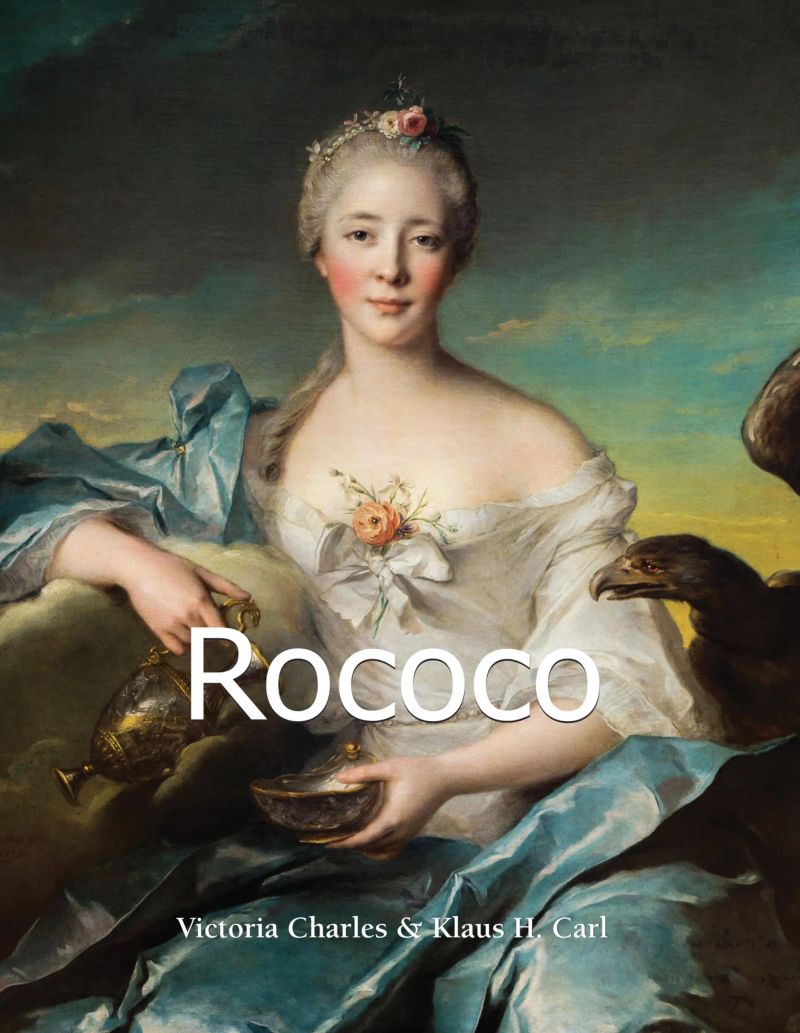
Rococo
Elegance, playfulness, and refined sensualityDe Victoria Charles, Klaus H. Carl


Duração4h 14m
Sobre este audiolivro
Deriving from the French word rocaille, in reference to the curved forms of shellfish, and the Italian barocco, the French created the term 'Rococo'. Appearing at the beginning of the 18th century, it rapidly spread to the whole of Europe. Extravagant and light, Rococo responded perfectly to the spontaneity of the aristocracy of the time. In many aspects, this art was linked to its predecessor, Baroque, and it is thus also referred to as late Baroque style. While artists such as Tiepolo, Boucher and Reynolds carried the style to its apogee, the movement was often condemned for its superficiality. In the second half of the 18th century, Rococo began its decline. At the end of the century, facing the advent of Neoclassicism, it was plunged into obscurity. It had to wait nearly a century before art historians could restore it to the radiance of its golden age, which is rediscovered in this work by Klaus H. Carl and Victoria Charles.
Detalhes do audiolivro
Avaliação★★★★ 3,9 (54)
Inclui Goodreads, Amazon
GêneroOther
Duração4 h 14 min
Narrado porOuça com mais de 1.000 vozes
FormatoeBook com áudio
Data de publicação5 de jan. de 2012
IdiomaInglês
Sumário
1Rococo Rococo
2Text: Victoria Charles and Klaus H. Carl
3Contemporary History 7
4I. Rococo in France 27
5II. Rococo in Italy 87
Mostrar todos os capítulosVer menos
6III. Rococo in Germany 129
7IV. The 18th Century in England 167
8V. The 18th Century in Spain 183
9VI. The Transition to the 19th Century 189
10Contemporary History
11Independence and the founding of
12Chelsea in England and Capodimonte near Naples in Italy. In
13I. Rococo in France
14Pierre Alexis Delamair, Hôtel de Soubise, front, courtyard side, 1704-1707. Paris.
15Emmanuel Héré, Place Stanislas, 1751-1755. Nancy.
16II. Rococo in Italy
17Filippo Juvarra, Palazzo Madama, Staircase, 1718-1721. Turin.
18Guarino Guarini, Cappella della Sacra Sindone, 1667-1694. Turin.
19Ferdinand Fuga, Santa Maria Maggiore, 1741-1742. Rome.
20Luigi Vanvitelli, Caserta Palace, begun in 1752. Naples.
21Filippo Juvarra, Palazzina di Caccia, Hunting Residence, 1729-1731. Stupinigi.
22the Church of
23the famous Italian painters of
24III. Rococo in Germany
25B efore and during the Seven Years War (1756-1763)
26the second half of
27Johann Bernhard Fischer von Erlach, Court Library, 1723-1726. Vienna.
28Johann Arnold Nering, Schloss Charlottenburg, begun in 1695. Berlin.
29Johann Bernhard Fischer von Erlach, Schloss Schönbrunn, 1696-1699. Vienna.
30Johann Friedrich Nette and Donato Giuseppe Frisoni, Schloss Ludwigsburg, 1704-1733. Ludwigsburg.
31Agostino Barelli (architecture) and Dominique Girard (gardens), Schloss Nymphenburg, 1664-1730. Munich.
32Johann Conrad Schlaun and François de Cuvilliés, Schloss Augustusburg, 1725-1768. Brühl.
33Philippe de La Guêpière, Schloss Monrepos, 1768. Ludwigsburg.
34Georg Wenzeslaus von Knobelsdorff, Schloss Sanssouci, 1745-1747. Potsdam.
35Nicolas de Pigage, Schloss Benrath, 1755-1770. Düsseldorf.
36IV. The 18th Century in England
37Sir Christopher Wren, Hampton Court Palace, 1689. Surrey.
38the English national school of
39V. The 18th Century in Spain
40VI. The Transition to the
4119th Century
42Bibliography
43Coypel, Noël Nicolas The Birth of Venus
44An Architectural Caprice Venetian Gala Concert
45Still-Life with a Box of Sweets and Bread Twists
46Wilhelmine von Cotta
47Wren, Sir Christopher Hampton Court Palace
1000 Meisterwerke der Angewandten KunstVictoria Charles9h 41min$15.50 · $0.00
1000 Portraits de génieVictoria Charles, Klaus H. Carl12h 6min4.0 (10)$18 · $0.00
Art Deco. The world of Art Deco unveiledVictoria Charles1h 28min3.4 (65)$13 · $0.00
El RenacimientoVictoria Charles3h 32min3.8 (44)$15 · $0.00
El libro definitivo sobre PicassoVictoria Charles, Anatoli Podoksik7h 13min4.8 (10)$19 · $0.00
Caspar David Friedrich. Mystique et NatureVictoria Charles3h 2min4.4 (25)$16 · $0.00
1000 Retratos de los Grandes MaestrosVictoria Charles, Klaus H. Carl10h 6min4.1 (18)$18 · $0.00
Salvador DalíVictoria Charles2h 41min$13 · $0.00
Salvador DalíVictoria Charles2h 38min4.3 (35)$13 · $0.00
Albrecht Dürer 1471-1528Victoria Charles2h 36min3.3 (25)$16 · $0.00
Pablo Picasso - El minotauro de la pinturaVictoria Charles, Anatoli Podoksik4h 52min$16 · $0.00
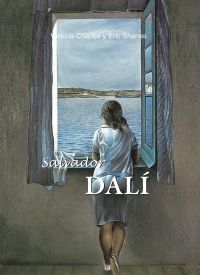
Salvador Dalí «Yo soy el surrealismo»Victoria Charles, Eric Shanes4h 41min4.6 (11)$16 · $0.00
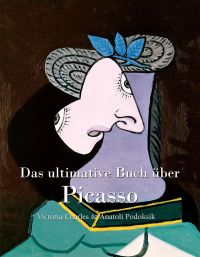
Das ultimative Buch über PicassoVictoria Charles, Anatoli Podoksik7h 20min4.2 (163)$19 · $0.00
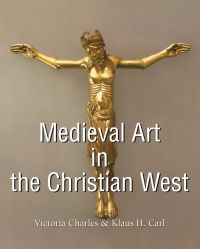
Medieval Art in the Christian WestVictoria Charles, Klaus H. Carl7h 57min$19 · $0.00
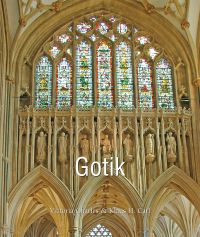
GotikVictoria Charles, Klaus H. Carl4h 43min4.0 (34)$15 · $0.00
Dalí 1904-1989Victoria Charles46min3.6 (54)$15 · $0.00
Francisco Goya: Uma vida na arteVictoria Charles1h 20min4.1 (19)$8 · $0.00
Sandro BotticelliVictoria Charles1h 24min4.2 (36)$8 · $0.00
Sandro BotticelliVictoria Charles1h 38min4.2 (26)$8 · $0.00
BotticelliVictoria Charles1h 34min4.2 (26)$8 · $0.00

Messi vs. RonaldoJonathan Clegg, Joshua Robinson10h 29min4.3 (1.1K)$29 · $0.00
Medium RawAnthony Bourdain9h4.1 (65.6K)$29 · $0.00

What I Talk about When I Talk about RunningHaruki Murakami4h 24min4.0 (245.4K)$12

We Are the World (Cup)Roger Bennett11h 13min4.9 (12)$29 · $0.00

How Soccer Explains the WorldFranklin Foer7h 22min3.9 (14.9K)$24 · $0.00

SeoulmatesSusan Lee8h 25min3.7 (7.8K)$25 · $0.00

Just KidsPatti Smith9h 51min4.8 (4)$4 · $0.00

No Dumb QuestionsJason Kelce, Travis Kelce4h 47min3.2 (64)$20 · $0.00
Jude the Obscure Thomas Hardy14h 56min5.0 (9) · 1189Grátis
The Holy Bible - 1 SamuelKing James2h 13min4.8 (1.6K)$3 · $0.00

The American Standard Bible — The Gospel of MatthewMatthew3h 56min4.7 (3K)$2 · $0.00

Bad Fat Black GirlSesali Bowen6h 32min4.7 (2.8K)$24 · $0.00
The King James Audio Bible New Testament CompleteChristopher Glyn20h 2min4.7 (2.6K)$10 · $0.00
Faiths CheckbookCharles Spurgeon12h 44min4.7 (3.2K)$11 · $0.00

Ten Things I Wish You Knew About Your Child's Mental HealthDr. Billy Garvey4h 53min4.7 (2.4K)$20 · $0.00

Designing Terry Pratchett’s DiscworldPaul Kidby3h 52min4.7 (343)$20 · $0.00
The Lives of BrianBrian Johnson9h 45min4.6 (3.5K)$29 · $0.00
Expository Thoughts on the Gospel of LukeJ.C. Ryle27h 13min4.7 (536)$18 · $0.00

CrossroadsKaleb Dahlgren7h 56min4.6 (4.9K)$26 · $0.00

Across the RiverKent Babb11h 40min4.6 (927)$29 · $0.00
Você também pode gostar
The PrinceNicolo Machiavelli5h 12min4.0 (440.3K)$6 · $0.00

The Essential Works of Thomas Paine (Annotated)Thomas Paine77h 19min4.3 (2.4K)$2 · $0.00

History of the Conquest of PeruWilliam Hickling Prescott28h 35min4.1 (1.1K)$1 · $0.00
The Magnificent Century (Annotated)Thomas Bertram Costain16h 8min4.2 (2K)$2 · $0.00
The Influence of Sea Power Upon History, 1660-1783A. T. Mahan20h 47min4.1 (1.4K)$2 · $0.00
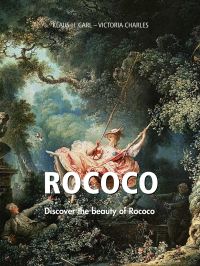
Rococo. Discover the beauty of RococoKlaus H. Carl, Victoria Charles1h 30min3.8 (58)$13 · $0.00
RococoVictoria Charles, Klaus Carl3h 56min3.8 (59)$15

Spanish America (Vol.1&2) (Annotated)Sir Richard Henry Bonnycastle24h 1min$2 · $0.00
Renaissance PaintingsVictoria Charles2h 46min4.3 (19)$15
Baroque ArtVictoria Charles, Klaus H. Carl3h 21min3.6 (29)$15 · $0.00

The Awakening of ChinaW. A. P. Martin9h 34min3.9 (20)$1 · $0.00

The History of Assyrian Empire (Illustrated Edition)George Rawlinson18h 13min4.0 (27)$2 · $0.00
Ancient Egypt: History, Archaeology & Ancient SourcesArthur Gilman, George Rawlinson, E. A. Wallis Budge, Gaston Maspero, Agnes Sophia Griffith Johns36h 23min4.2 (22)$1.99 · $0.00
The Great Civilizations of the Ancient EastGeorge Rawlinson142h 58min$1 · $0.00
The History of Medieval Europe (Annotated)Lynn Thorndike25h 16min4.0 (115)$1.99 · $0.00

Prague at the Turn of the MillenniumKlaus H. Carl2h 5min$8 · $0.00

The Forest of Dean: An Historical and Descriptive AccountH. G. Nicholls10h 2min$1 · $0.00
PARTHIA (Illustrated)George Rawlinson11h 59min4.3 (11)$1.99 · $0.00
The Greatest Empires & Civilizations of the Ancient EastGeorge Rawlinson145h 7min$2 · $0.00
ArcimboldoLiana De Girolami Cheney1h 45min4.4 (41)$13.50 · $0.00