
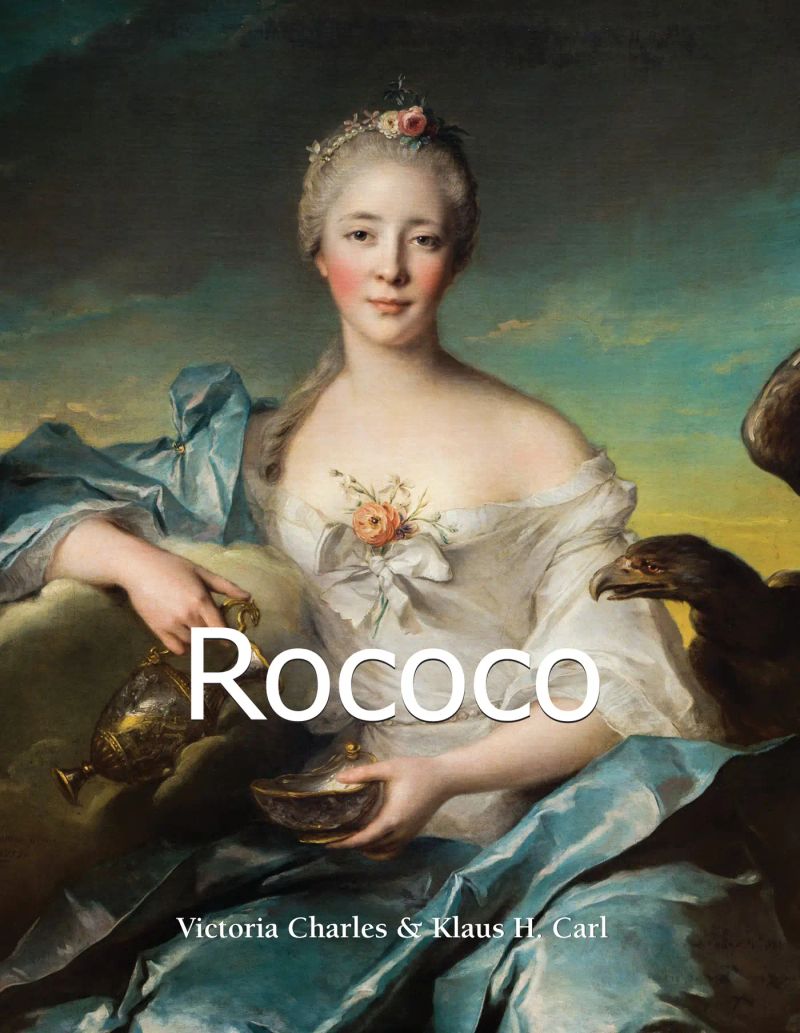
Rococo
Elegance, playfulness, and refined sensualityDe Victoria Charles, Klaus Carl


Duração3h 56m
Sobre este audiolivro
Deriving from the French word rocaille, in reference to the curved forms of shellfish, and the Italian barocco, the French created the term ‘Rococo’. Appearing at the beginning of the 18th century, it rapidly spread to the whole of Europe. Extravagant and light, Rococo responded perfectly to the spontaneity of the aristocracy of the time. In many aspects, this art was linked to its predecessor, Baroque, and it is thus also referred to as late Baroque style. While artists such as Tiepolo, Boucher and Reynolds carried the style to its apogee, the movement was often condemned for its superficiality. In the second half of the 18th century, Rococo began its decline. At the end of the century, facing the advent of Neoclassicism, it was plunged into obscurity. It had to wait nearly a century before art historians could restore it to the radiance of its golden age, which is rediscovered in this work by Klaus H. Carl and Victoria Charles.
Detalhes do audiolivro
Avaliação★★★★ 3,8 (59)
Inclui Goodreads, Amazon
GêneroOther
Duração3 h 56 min
Narrado porOuça com mais de 1.000 vozes
FormatoeBook com áudio
IdiomaInglês
Sumário
1Introduction
19Architecture
2Contemporary History
20Decorative Art
3Wars
21Painting
4Music
22Sculpture
5Inventions
23III. Rococo in Germany
Mostrar todos os capítulosVer menos
6Art
24Architecture
7I. Rococo in France
25Painting
8Fashion
26Sculpture
9Architecture
27Austria and the Czech Republic
10The Architects
28IV. The 18th Century in England
11Painting
29Architecture
12Antoine Watteau and His Successors
30Painting
13François Boucher
31Sculpture
14Jean-Honoré Fragonard
32V. The 18th Century in Spain
15Successors
33Architecture
16Sculpture
34Painting
17Goldsmiths
35VI. The Transition to the 19th Century
18II. Rococo in Italy
Séries
30 de milenii de picturăVictoria Charles, Klaus H. Carl, Joseph Manca, Megan McShane18h 26min$18
1000 de tablouri ale unor pictori de geniuVictoria Charles, Joseph Manca, Megan McShane, Donald Wigal13h 33min4.3 (70)$18
ConstableVictoria Charles1h 22min4.1 (18)$8
Albrecht Dürer 1471-1528Victoria Charles2h 55min3.8 (37)$16
Romanesque ArtVictoria Charles, Klaus H. Carl3h 58min4.0 (19)$15
Pablo PicassoVictoria Charles5h 22min$13
Natură moartăVictoria Charles53min$15
Vincent van GoghVictoria Charles2h 4min4.0 (201)$13
Camille ClaudelVictoria Charles1h 19min$15
Picasso, de Malaga 1881 a Mougins 1973Victoria Charles, Anatoli Podoksik7h 14min4.2 (54)$19
Kunst in EuropaVictoria Charles5h 37min$15
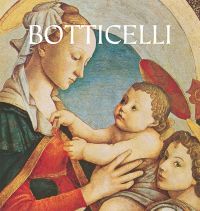
BotticelliVictoria Charles1h 23min4.2 (39)$3.50
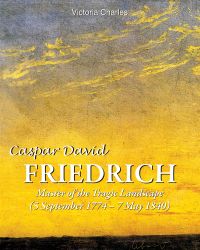
Caspar David Friedrich. Master of the tragic landscapeVictoria Charles2h 31min4.3 (32)$16
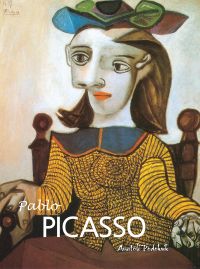
Pablo PicassoVictoria Charles5h 46min$13

L'Art romanVictoria Charles, Klaus Carl4h 12min3.9 (33)$15
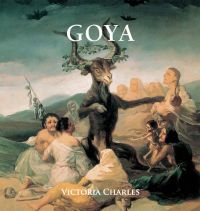
GoyaVictoria Charles1h 20min4.6 (18)$8

Ivan ChichkineVictoria Charles, Irina Shuvalova3h 1min4.5 (138)$16

Erotische Zeichnungen 120 illustrationenVictoria Charles26min3.5 (24)$15
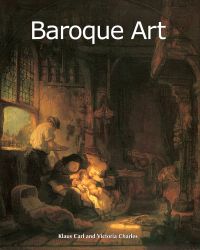
Baroque ArtVictoria Charles, Klaus H. Carl3h 16min3.7 (12)$15

Les ouvrages d'art: les pontsVictoria Charles2h 15min$15
The Holy Bible - 1 SamuelKing James2h 13min4.8 (1.6K)$3 · $0.00

The American Standard Bible — The Gospel of MatthewMatthew3h 56min4.7 (3K)$2 · $0.00

Bad Fat Black GirlSesali Bowen6h 32min4.7 (2.8K)$24 · $0.00
The King James Audio Bible New Testament CompleteChristopher Glyn20h 2min4.7 (2.6K)$10 · $0.00
Faiths CheckbookCharles Spurgeon12h 44min4.7 (3.2K)$11 · $0.00

Ten Things I Wish You Knew About Your Child's Mental HealthDr. Billy Garvey4h 53min4.7 (2.4K)$20 · $0.00
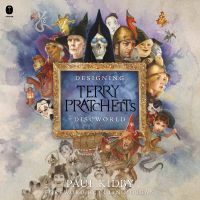
Designing Terry Pratchett’s DiscworldPaul Kidby3h 52min4.7 (343)$20 · $0.00
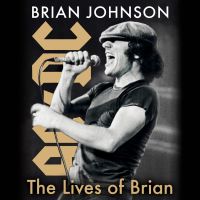
The Lives of BrianBrian Johnson9h 45min4.6 (3.5K)$29 · $0.00
Expository Thoughts on the Gospel of LukeJ.C. Ryle27h 13min4.7 (536)$18 · $0.00

CrossroadsKaleb Dahlgren7h 56min4.6 (4.9K)$26 · $0.00

Across the RiverKent Babb11h 40min4.6 (927)$29 · $0.00

Brain Training for RidersAndrea Monsarrat Waldo5h 56min4.7 (550)$19 · $0.00

My Effin' LifeGeddy Lee17h 11min4.6 (13.1K)$40 · $0.00
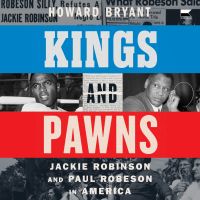
Kings and PawnsHoward Bryant10h 9min4.6 (678)$29 · $0.00

The Elementia Chronicles #2: The New OrderSean Fay Wolfe11h 17min4.6 (841)$29 · $0.00
The ActsLuke2h 55min4.6 (19.7K)$12 · $0.00

New Testament - Easy NavigationWorld English Bible19h 35min4.6 (1.3K)$1.30 · $0.00

Woodcraft and Camping (Annotated)George Washington Sears3h 30min4.6 (1.2K)$1.99 · $0.00

The Hate U GiveAngie Thomas11h 50min4.5 (1.1M)$8 · $0.00
The King of AttoliaMegan Whalen Turner10h 23min4.5 (61.3K)$29 · $0.00
Você também pode gostar
The History of Moors in Spain: From the Islamic Conquest until the Fall of Kingdom of GranadaStanley Lane-Poole7h 47min4.0 (1.9K)$1.99 · $0.00

The Search for Modern ChinaJonathan D. Spence36h 49min4.3 (5.2K)$30
Ancient Greece, Second EditionThomas R. Martin12h 59min4.1 (3.3K)$23
The Magnificent Century (Annotated)Thomas Bertram Costain16h 8min4.2 (2K)$2 · $0.00
DominionPeter Ackroyd14h 26min4.2 (838)$23
The History of the Holy Roman Empire: 1st Century A.D. - 19th CenturyViscount James Bryce15h 3min4.0 (2.1K)$1.99 · $0.00
The History of Rome (Volumes 1-5)Theodor Mommsen72h 53min4.4 (745)$1 · $0.00
PERSIA (Illustrated)George Rawlinson14h 1min3.9 (59)$1.99 · $0.00

Prague at the Turn of the MillenniumKlaus H. Carl2h 5min$8 · $0.00
The Age Of Louis XIV (Complete Edition)Voltaire21h 29min3.9 (129)$1.99 · $0.00

The Jacobite Rebellions (1689-1746) (Bell's Scottish History Source Books.) (Annotated)J. Pringle Thomson6h 6min$3 · $0.00

The History of Eternal RomeF. Marion Crawford16h 33min3.9 (102)$1.99 · $0.00
Ancient Empires: A 15-Volume AnthologyGeorge Rawlinson, L. W. King, John Bagnell Bury, Arrian, Theodor Mommsen, Edward Gibbon, Charles Oman455h 5min4.6 (12)$1.99

The History of the Russian Empire (Annotated)Saki, H. H. Munro13h 56min3.1 (11)$2 · $0.00
Edward Gibbon: Historical Works, Memoirs & LettersEdward Gibbon225h 41min4.5 (43)$1.99 · $0.00

The History of Constitutional Monarchy in England (1689 to 1837)James Franck Bright33h 1min$2.99

The French Revolution (Annotated)R. M. Johnston6h3.8 (233)$0.99 · $0.00
Baroque ArtVictoria Charles, Klaus H. Carl3h 16min3.7 (12)$15

The Viking EmpiresSantiago Machain6h 4min$25 · $0.00

Ancient Egypt: History, Archaeology & Ancient SourcesArthur Gilman, George Rawlinson, E. A. Wallis Budge, Gaston Maspero, Agnes Sophia Griffith Johns36h 19min$1 · $0.00