

Principles of Financial Accounting
De Himadri Deshpande


Duração10h 3m
Sobre este audiolivro
Principles of Financial Accounting provides a comprehensive introduction to the fundamental concepts and practices of financial accounting. Traditionally focused on recording and reporting monetary information, accounting has evolved to encompass all forms of quantitative data, playing a critical role in today’s complex organizational and industrial frameworks.
This book covers key topics, including accounting principles, the accounting cycle, transaction recording, financial statement preparation, and accounting information systems. It highlights how financial statements are essential for investors, policymakers, and other stakeholders to evaluate an organization’s financial position, operations, and investments.
Designed for students and professionals, this book emphasizes how accounting knowledge can enhance decision-making and resource allocation. By learning to interpret financial statements, readers will develop skills to assess a company’s value, support strategic decisions, and contribute to the effective management of financial resources.
Detalhes do audiolivro
GêneroBusiness and Economics, Politics and Government
Duração10 h 3 min
Narrado porOuça com mais de 1.000 vozes
FormatoeBook com áudio
Data de publicação23 de jan. de 2025
IdiomaInglês
Sumário
1Preface
2Chapter - 1 An Overview of Accounting
31.1 Introduction to Accounting
41.2 Origin and Growth of Accounting
51.3 Meaning and Concept of Accounting
Mostrar todos os capítulosVer menos
61.3.1 Recording
71.3.2 Summarizing
81.3.3 Reporting
91.3.4 Analyzing
101.4 Distinction between Book-Keeping and Accounting
111.4.1 Definition of Bookkeeping
121.4.2 Definition of Accounting
131.5 Distinction between Accounting and Accountancy
141.5.1 Accounting
151.5.2 Accountancy
161.6 Nature and scope of Accounting
171.6.1 Nature of Accounting
181.6.2 Scope of Accounting
191.7 Objectives and limitations of Accounting
201.7.1 Objectives of Accounting
211.7.2 Limitations of Accounting
221.8 Accounting Information
231.8.1 Types of Accounting Information
241.8.2 Users of Accounting Information
251.8.3 Qualitative Characteristics of Accounting Information
261.9 Branches of Accounting
271.9.1 Financial Accounting
281.9.2 Cost Accounting
291.9.3 Management Accounting
301.9.4 Auditing
311.9.5 Tax Accounting
321.9.6 Fund Accounting
331.9.7 Government Accounting
341.9.8 Forensic Accounting
351.9.9 Fiduciary Accounting
361.10 Role of Accounting in business
371.10.1 Internal Management Accounting
381.10.2 Accounting Data for Decision-Making
391.10.3 Accounting for Government Regulations
401.10.4 Accounting for Planning
411.10.5 Using Accounting Data for Budgeting
421.10.6 Cost Accounting for Products
431.10.7 Ratio Analysis Based on Financial Data
441.10.8 What-if Strategies
451.10.9 Financial Accounting for External Users
461.11 Systems of Accounting
471.11.1 Single Entry System
481.11.2 Double entry System
491.12 Accounting Relationship with Other Disciplines
501.12.1 Relationship between Accounting and Economics
Never Split the DifferenceChris Voss, Tahl Raz8h 7min4.4 (277.7K)$26 · $0.00
The Intelligent Investor Rev Ed.Benjamin Graham17h 48min4.3 (191.5K)$40 · $0.00
The Hard Thing About Hard ThingsBen Horowitz7h 57min4.2 (134.3K)$26 · $0.00
Boundaries for LeadersHenry Cloud7h 36min4.3 (3.6K)$26 · $0.00
Good to GreatJim Collins9h 59min4.1 (325.2K)$29 · $0.00
The Way of ExcellenceBrad Stulberg6h 46min4.2 (1.1K)$24 · $0.00
Trillion Dollar CoachEric Schmidt, Jonathan Rosenberg, Alan Eagle5h 40min4.1 (22.2K)$24 · $0.00

Be ExceptionalJoe Navarro, Toni Sciarra Poynter9h 11min4.0 (1.3K)$29 · $0.00

The Power of the OtherHenry Cloud5h 52min4.2 (3.5K)$24 · $0.00

BuildTony Fadell11h 5min4.5 (14.3K)$8 · $0.00
The Joys Of CompoundingGautam Baid17h 34min4.5 (2.5K)$18 · $0.00
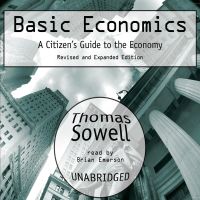
Basic EconomicsThomas Sowell18h 32min4.5 (29.3K)$28 · $0.00

The Ambuja StoryNarotam Sekhsaria13h 59min4.5 (830)$33 · $0.00

The Secret Door to SuccessFlorence Scovel Shinn2h 25min4.5 (2.1K)$1.20 · $0.00

This Is Going to HurtAdam Kay5h 47min4.4 (444.7K)$24 · $0.00

Big TrustShadé Zahrai, Fayçal Sekkouah8h 36min4.6 (406)$26 · $0.00
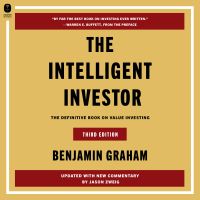
The Intelligent Investor Third EditionBenjamin Graham, Jason Zweig20h4.4 (156.6K)$46 · $0.00

Bottle of LiesKatherine Eban14h 25min4.4 (12K)$33 · $0.00

The Antiracist Business BookTrudi Lebrón6h 10min4.6 (275)$17 · $0.00

The FormulaJoshua Robinson, Jonathan Clegg10h 41min4.4 (6.9K)$29 · $0.00

Suicidal EmpathyGad Saad8h 24min4.1 (736)$28 · $0.00

Unreasonable WomenJustine van der Leun10h 45min4.9 (13)$29 · $0.00

MotherlandJulia Ioffe17h 52min4.7 (2.5K)$40 · $0.00

HostageEli Sharabi5h 25min4.6 (10.8K)$24 · $0.00

Days of Love and Rage: A Story of RevolutionAnand Gopal22h 36min4.7 (584)$34 · $0.00

KrantikariSanjeev Sanyal11h 44min4.6 (1.3K)$16 · $0.00

Unbroken Bonds of BattleJohnny Joey Jones8h 31min4.6 (2.6K)$8 · $0.00

On Democracies and Death CultsDouglas Murray10h 38min4.6 (6.5K)$29 · $0.00

Balcony Over Jerusalem: A Middle East Memoir - Israel, Palestine and BeyondJohn Lyons12h 37min4.6 (1.4K)$33 · $0.00
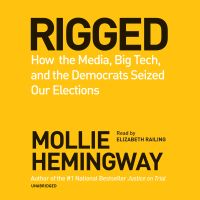
RiggedMollie Hemingway12h 48min4.6 (4.2K)$23 · $0.00

SledgehammerDavid Friedman8h 21min4.7 (589)$26 · $0.00

Citizenship in a Republic (Annotated)Theodore Roosevelt2h 44min4.6 (1.4K)$2 · $0.00

No EscapeNury Turkel9h 30min4.6 (809)$28 · $0.00

Always FaithfulThomas Schueman, Zainullah Zaki12h 12min4.6 (977)$29 · $0.00

UnthinkableJamie Raskin15h 8min4.5 (9.3K)$8 · $0.00

My Fourth Time, We DrownedSally Hayden13h 59min4.6 (2.9K)$23 · $0.00

A Revolution of Common SenseScott Jennings9h 29min4.6 (528)$29 · $0.00

Statement From the Dock at the Rivonia TrialNelson Mandela2h 18min4.6 (1.3K)$1 · $0.00

Lessons from the EdgeMarie Yovanovitch17h 11min4.5 (5.9K)$40 · $0.00

To Rescue the American SpiritBret Baier10h 12min4.5 (2.7K)$8 · $0.00
Você também pode gostar

Access Management Solutions A Complete Guide - 2020 EditionGerardus Blokdyk4h 40min$71

Portfolio Management A Complete Guide - 2021 EditionGerardus Blokdyk4h 39min$78

ITIL® 4 Create, Deliver and Support (CDS)Claire Agutter3h 36min4.6 (23)$40 · $0.00
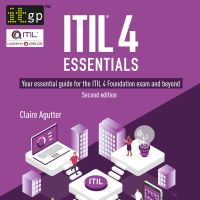
ITIL® 4 Essentials: Your essential guide for the ITIL 4 Foundation exam and beyond, second editionClaire Agutter4h4.2 (50)$40 · $0.00

Enhancing Deep Learning Performance Using Displaced Rectifier Linear UnitDavid Macêdo1h 49min$10 · $0.00
The Client Wants AI, but Doesn't Know What They're Responsible For - How to Agree on the Scope of AI Use in a Project, Rules for Handling Data, and Ways to Verify Results Without Promising That the Tool Will Take Responsibility for MistakesMax Paradox6h 24min$5.10

Monetize your content with NFTsUnknown Author1h 5min$17 · $0.00

CubismGuillaume Apollinaire, Dorothea Eimert3h 41min$15

Blockchain for Business: Complete Guide to AdoptionUnknown Author1h 4min$17 · $0.00

Who Owns What? The Definitive Legal Guide for Musicians, Writers, Film-Makers and Content CreatorsXerxes Ranina3h 33min$18 · $0.00

Managing AI RiskAndrew Pattison2h 15min$22 · $0.00

Art and architecture of the late 20th centuryDorothea Eimert7h 23min$16
IoT Security A Complete Guide - 2019 EditionGerardus Blokdyk4h 34min$71

Defensive Computing A Complete Guide - 2020 EditionGerardus Blokdyk4h 33min$78

Hybrid System A Complete Guide - 2020 EditionGerardus Blokdyk4h 29min$71
Network Mapping A Complete Guide - 2020 EditionGerardus Blokdyk4h 29min$78

Operational Database Management A Complete Guide - 2019 EditionGerardus Blokdyk4h 45min$71
Load User Interface Complete Self-Assessment GuideGerardus Blokdyk4h 7min$71

Media development A Complete GuideGerardus Blokdyk4h 7min$42

CDP A Complete Guide - 2021 EditionGerardus Blokdyk4h 23min$78