

Preserving Life, Transforming Power
Civil Commons, Living Coordination, and the Conditions of Corrigible TransitionDe Dr. Bichara Sahely


Duração1h 4m
Sobre este audiolivro
How can societies change harmful institutions without losing the essential services on which people depend? In this Listener’s Edition, Bichara Sahely explores how protection, political agency, and accountable institutions might develop together. Drawing on financial resolution, energy-supplier administration, Jackson’s drinking-water intervention, and the Montreal Protocol, the paper distinguishes preserving life-enabling functions from preserving the power of their current controllers. It proposes binding transition agreements, examines successor capture and ecological burden displacement, and asks what evidence would support or weaken the framework. A full spoken adaptation of the academic white paper, including its objections, safeguards, and proposed tests. The framework remains a hypothesis for inquiry, not an empirically validated transition formula.
Detalhes do audiolivro
GêneroEducation and Learning, Politics and Government
Duração1 h 4 min
Narrado porOuça com mais de 1.000 vozes
FormatoeBook com áudio
Data de publicação29 de fev. de 2020
IdiomaInglês
Sumário
1Introduction
2About this edition
3Series relationship
4Scope and method
5Listening roadmap
Mostrar todos os capítulosVer menos
61. The central problem: people depend on arrangements they may need to change
72. Preserve life-enabling functions, not every incumbent activity
83. The proposed mechanism: protection can change the conditions of power
94. Existing mechanisms show that function and control can be separated
104.1 Financial resolution
114.2 Energy-supplier administration
124.3 Jackson's drinking-water intervention
134.4 The Montreal Protocol
145. Overcoming the political circularity
156. A binding transition agreement
167. Govern loss without making vulnerable people finance the transition
178. Living coordination: the capacity to change together without compulsory agreement
189. Prevent the successor from becoming indispensable and unanswerable
1910. Bioregional responsibility: continuity cannot be purchased through displacement
2011. Constitutionalize the capacity for institutional correction
2112. Testing the proposal without claiming that it is already validated
2213. The limits of the proposed resolution
23Conclusion: preserve the conditions of life while changing the conditions of power
24Appendix A. Testable propositions and contrary findings
25Listener’s Guide in one pass
26Scholarly and production note
27About the author

Preserving Life, Transforming Power in GazaDr Bichara Sahely1h 42minGrátis

Putting the Missing Bridge to WorkDr. Bichara Sahely2h 12minGrátis

The Missing BridgeDr. Bichara Sahely1h 5minGrátis

Transformational Laboratories ProtocolDr. Bichara Sahely2h 33minGrátis
Artificial Intelligence and the Epistemic CommonsDr Bichara Sahely3h 12minGrátis

Conflict, Repair, and Non-DominationDr Bichara Sahely2h 21minGrátis

Institutions of Reflexive TransformationDr Bichara Sahely1h 51minGrátis

The Politics of Civilizational HealingDr. Bichara Sahely2h 13minGrátis

The Missing Grammar of Modern CivilizationDr. Bichara Sahely2h 8minGrátis

Civilizational Healing Research ArchitectureDr. Bichara Sahely1h 24minGrátis

How Does a Civilization Learn to Heal?Dr. Bichara Sahely1h 16minGrátis

From Competent Physicians to Healing SocietiesDr. Bichara Sahely2h 20minGrátis

Competence Is Necessary, but Not SufficientDr. Bichara Sahely1h 15minGrátis

Life-Grounding CanMEDSDr. Bichara Sahely1h 13minGrátis

The Dynamic Architecture of ViabilityDr Bichara Sahely2h 1minGrátis

Completing the Life-Value Onto-Axiology ProgramDr. Bichara Sahely1h 9min5.0 (1)Grátis

BEYOND GLOBAL JUSTICEDr. Bichara Sahely1h 25minGrátis

The Sweetness That Consumed the WorldBichara Sahely16h 14minGrátis
THE SOVEREIGNTY OF CREDITDr. Bichara Sahely3h 56minGrátis

A Brief History of IntelligenceMax S. Bennett12h 18min4.6 (6.6K)$29 · $0.00

HomeschooledStefan Merrill Block7h 10min3.6 (18.5K)$28 · $0.00

The Secret Door to SuccessFlorence Scovel Shinn2h 14min4.5 (3K)$3 · $0.00

The State Must ProvideAdam Harris7h 15min4.5 (775)$24 · $0.00

The Call of the Wild and FreeAinsley Arment9h 7min4.4 (21.2K)$29 · $0.00

The Freelance WayRobert Vlach19h 48min4.5 (528)$40 · $0.00

Race to the BottomLuke Rosiak9h 20min4.5 (600)$29 · $0.00

They Came for the SchoolsMike Hixenbaugh9h 5min4.5 (2.6K)$8 · $0.00

Find Me UnafraidKennedy Odede, Jessica Posner11h 11min4.5 (2.7K)$29 · $0.00
World's Best Inspirational Books to Change Your Life (3 Books)Napoleon Hill, Joseph Murphy, Dale Carnegie29h 38min4.5 (1.3K)$20 · $0.00

Asking for ItKate Harding8h 55min4.4 (5.3K)$20 · $0.00

MeditationsMarcus Aurelius4h 26min4.4 (456.8K)$1 · $0.00
Defining Moments in Black HistoryDick Gregory7h 37min4.4 (6K)$26 · $0.00

The Emerald Tablets of Thoth the AtlanteanMaurice Doreal3h 4min4.4 (6K)$6 · $0.00

Learning AmericaLuma Mufleh6h 37min4.4 (564)$24 · $0.00

Math-ishJo Boaler7h 21min4.4 (588)$24 · $0.00

Daddy-Long-LegsJean Webster12h 18min4.2 (91K)$1.99 · $0.00
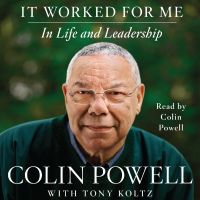
It Worked For MeColin Powell7h 42min4.3 (9.8K)$26 · $0.00

Grammar-land; Or, Grammar in Fun for the Children of Schoolroom-shireM. L. Nesbitt2h 36min4.4 (488)$1 · $0.00

Financial FeministTori Dunlap8h 3min4.2 (22.2K)$8 · $0.00
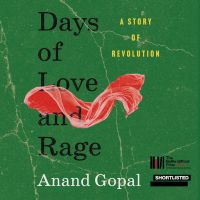
Days of Love and Rage: A Story of RevolutionAnand Gopal22h 36min4.7 (584)$34 · $0.00

KrantikariSanjeev Sanyal11h 44min4.6 (1.3K)$16 · $0.00

Unbroken Bonds of BattleJohnny Joey Jones8h 31min4.6 (2.6K)$8 · $0.00

On Democracies and Death CultsDouglas Murray10h 38min4.6 (6.5K)$29 · $0.00

Balcony Over Jerusalem: A Middle East Memoir - Israel, Palestine and BeyondJohn Lyons12h 37min4.6 (1.4K)$33 · $0.00

RiggedMollie Hemingway12h 48min4.6 (4.2K)$23 · $0.00

SledgehammerDavid Friedman8h 21min4.7 (589)$26 · $0.00

Citizenship in a Republic (Annotated)Theodore Roosevelt2h 44min4.6 (1.4K)$2 · $0.00

No EscapeNury Turkel9h 30min4.6 (809)$28 · $0.00

Always FaithfulThomas Schueman, Zainullah Zaki12h 12min4.6 (977)$29 · $0.00

UnthinkableJamie Raskin15h 8min4.5 (9.3K)$8 · $0.00

My Fourth Time, We DrownedSally Hayden13h 59min4.6 (2.9K)$23 · $0.00

A Revolution of Common SenseScott Jennings9h 29min4.6 (528)$29 · $0.00

Statement From the Dock at the Rivonia TrialNelson Mandela2h 18min4.6 (1.3K)$1 · $0.00

Lessons from the EdgeMarie Yovanovitch17h 11min4.5 (5.9K)$40 · $0.00

To Rescue the American SpiritBret Baier10h 12min4.5 (2.7K)$8 · $0.00

StonewalledSharyl Attkisson15h 19min4.5 (4.3K)$33 · $0.00
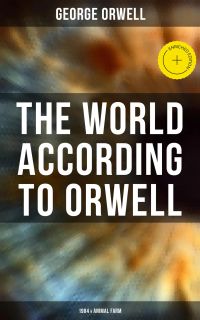
The World According to Orwell: 1984 & Animal FarmGeorge Orwell15h 38min4.6 (1.1K)$1.99 · $0.00
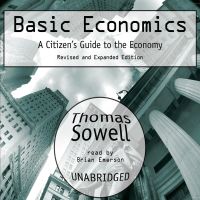
Basic EconomicsThomas Sowell18h 32min4.5 (29.3K)$28 · $0.00

To Rescue the RepublicBret Baier, Catherine Whitney11h 42min4.5 (8.6K)$29 · $0.00
Você também pode gostar
The Collected Works of Karl Marx (Annotated)Karl Marx134h 35min4.6 (321)$2 · $0.00
The Complete Works of Julius CaesarJulius Caesar61h 45min4.4 (2K)$1.99 · $0.00

Reflections on the Revolution in France (Annotated)Edmund Burke12h 32min4.2 (8.7K)$2 · $0.00

The Art of WarNiccolò Machiavelli7h 15min4.0 (11.9K)$21 · $0.00

The Politically Incorrect Guide to CapitalismDr. Robert P. Murphy5h 56min4.1 (1.8K)$14

The State and RevolutionVladimir lenin4h 10min4.3 (19.8K)$3 · $0.00
The Proletarian Revolution and the Renegade KautskyVladimir Lenin4h 34min4.3 (1K)$1.99 · $0.00
ReappraisalsTony Judt16h 53min4.3 (1.5K)$28

The Influence of Sea Power Upon History, 1660-1783Alfred Thayer Mahan22h 4min4.1 (1.5K)$2.30

The Politically Incorrect Guide to Western CivilizationAnthony M. Esolen PhD11h 7min4.0 (895)$21

Dark TerritoryFred Kaplan9h 2min4.1 (5.5K)$20
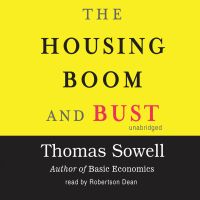
The Housing Boom and BustThomas Sowell4h 42min4.4 (3.3K)$12 · $0.00

The Greatest Works of Thomas PaineThomas Paine78h 22min4.4 (2.4K)$1.99 · $0.00

Vienna Convention on the Law of TreatiesVarious Authors1h 27min4.3 (55)$1.99 · $0.00

The Profits of ReligionUpton Sinclair9h 21min4.0 (643)$2.30

The Legacy of Barack ObamaBarack Obama, White House, U.S. Government7h 43min4.5 (28)$1.99 · $0.00

A General View of PositivismAuguste Comte16h 39min3.9 (192)$1 · $0.00
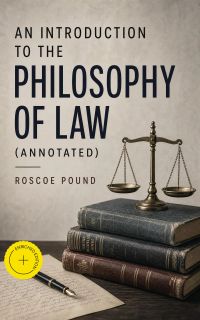
An Introduction to the Philosophy of Law (Annotated)Roscoe Pound5h 46min3.8 (121)$1.99 · $0.00

The Industrial History of EnglandHenry de Beltgens Gibbins8h 55min3.8 (42)$2 · $0.00

Donald Trump: How to Install Donald Trump's Belief System and Win in Business (The Ultimate Collection of the 45th President of the United States' Tweets, Speeches, Gags and Other Trumpisms)Owen Bowyer56min$3.50 · $0.00