
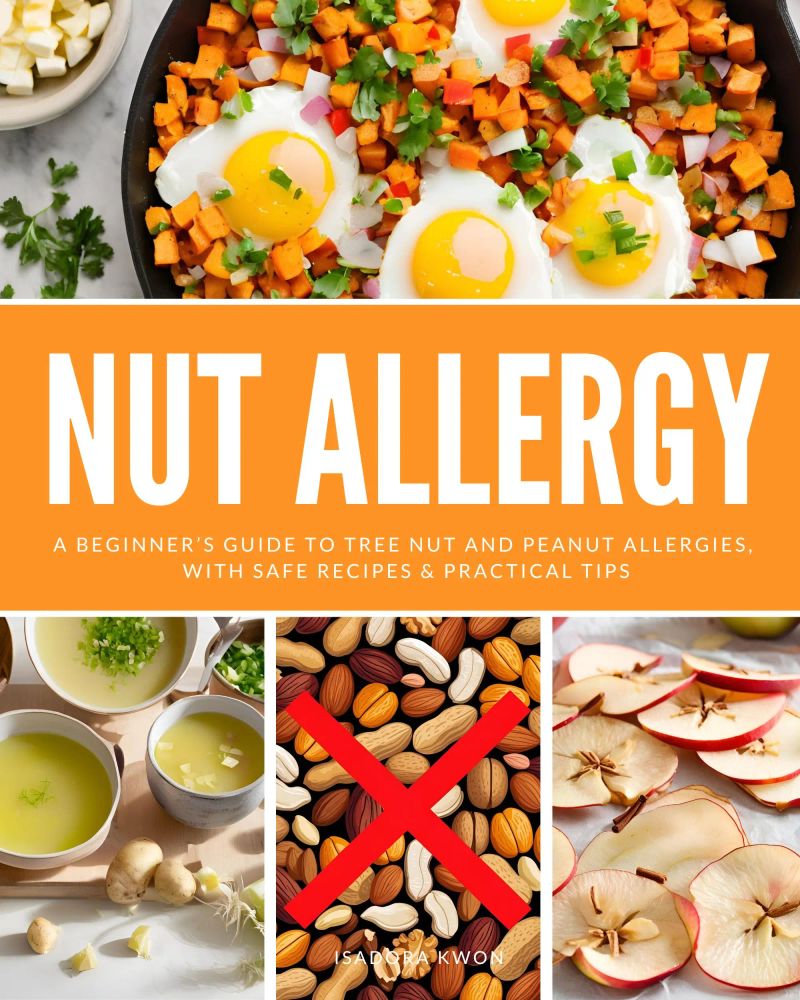
Nut Allergy
A Beginner’s Guide to Tree Nut and Peanut Allergies, with Safe Recipes & Practical TipsDe Isadora Kwon


Duração1h 38m
Sobre este audiolivro
Nut allergies are one of the most common food allergies, affecting millions of people around the world. These allergies occur when the immune system reacts to proteins found in certain nuts, such as peanuts or tree nuts like almonds, walnuts, and cashews. Even a small amount of these proteins can trigger allergic reactions in some individuals. These reactions vary in severity, ranging from mild symptoms like itching or hives to more serious effects, such as difficulty breathing or anaphylaxis.
The prevalence of nut allergies seems to have increased over the years, particularly among children. Research indicates that millions of people worldwide deal with these allergies, with cases often being diagnosed in early childhood. However, nut allergies can also develop later in life. Experts have studied this rise closely, though the exact reasons remain unclear. Changes in dietary habits, genetic factors, and environmental influences are some areas researchers examine.
Nut allergies require attention because they can have significant impacts on daily life. People with these allergies often need to carefully check food labels, avoid certain dishes, and stay prepared for potential allergic reactions.
Even trace amounts of nut proteins in food can pose risks for some individuals. Understanding nut allergies is not only important for those affected but also for others, including friends, family, and caregivers who prepare meals or share spaces with someone who has an allergy.
In this guide, we will talk about the following:
What is Nut Allergy?
Difference Between Food Intolerance and True Allergy
Hidden Sources of Nut Allergens
Who is at Risk?
Causes, Symptoms, and Diagnosis
Recognizing Anaphylaxis
Using an Epinephrine Auto-Injector (EpiPen)
Living Safely with a Nut Allergy
Nut-Free Diet & Alternatives
Nut-Free Sample Recipes
Nut Allergies in Children & Social Settings
Keep reading to learn more about nut allergies and how you can manage them for a safe, healthy lifestyle. By the end, you will have a better understanding of nut allergies and the tools to navigate them confidently.
Detalhes do audiolivro
GêneroHealth and Wellness, Self-Help
Duração1 h 38 min
Narrado porOuça com mais de 1.000 vozes
FormatoeBook com áudio
Data de publicação7 de mar. de 2025
IdiomaInglês
Sumário
1Disclaimer
2What Is Nut Allergy?
3How the Immune System Reacts to Nuts
4Difference Between Food Intolerance and True Allergy
5Types of Nut Allergies
Mostrar todos os capítulosVer menos
6Understanding Nut Allergies and Related Challenges
7Cross-Reactivity Between Nuts and Other Foods
8What Is Cross-Reactivity?
9Oral Allergy Syndrome (OAS) and Pollen-Food Syndrome
10Common Cross-Reactive Foods and Pollens
11Hidden Sources of Nut Allergens
12Who Is at Risk?
13Causes, Symptoms, and Diagnosis
14How Nut Allergies Develop
15Common Symptoms (Mild to Severe)
16Allergy Testing (Skin, Blood, Oral Challenge)
17Which Test Is Right for You?
18Emergency Preparedness & Treatment
19Recognizing Anaphylaxis
20Using an Epinephrine Auto-Injector (EpiPen)
21When to Seek Immediate Medical Help
22Living Safely with a Nut Allergy
23Reading Food Labels & Identifying Hidden Nuts
24Avoiding Cross-Contamination
25Dining Out & Traveling Tips
26Nut-Free Diet & Alternatives
27Safe Snack & Meal Options
28Cooking & Baking Without Nuts
29Nutrition Considerations & Substitutes
30Nut-Free Sample Recipes
31Breakfast
32Oat-Free Energy Bowl
33Nut-Free Granola
34Sweet Potato Hash with Eggs
35Nut-Free Smoothie
36Coconut Chia Pudding
37Lunch & Dinner
38Allergy-Friendly Stir-Fry
39Chicken & Veggie Wraps
40Lentil & Quinoa Salad
41Potato & Leek Soup
42Turkey Meatballs with Rice
43Snacks & Desserts
44Sunflower Seed Butter Cookies
45Coconut Rice Pudding
46Apple Chips
47Frozen Yogurt Bark
48Dairy-Free Chocolate Mousse
49Nut Allergies in Children & Social Settings
50Managing Allergies in Schools & Daycare
What I Talk about When I Talk about RunningHaruki Murakami4h 24min4.0 (245.4K)$12
Autoimmunity and the Good GirlsSara Hirsh Bordo7h 51min$26 · $0.00
Eat It!Jordan Syatt, Michael Vacanti4h 40min4.6 (1.5K)$20 · $0.00

Consent Laid BareChanel Contos7h 11min4.5 (1.7K)$24 · $0.00
How to Make Disease DisappearRangan Chatterjee5h 26min4.5 (3.5K)$24 · $0.00
The Complete Herbal (Annotated)Nicholas Culpeper29h 8min4.5 (1.4K)$2 · $0.00

A Plague Upon Our HouseScott W. Atlas MD10h 37min4.5 (3.4K)$20 · $0.00

The Gift of TherapyIrvin Yalom7h 39min4.5 (38.8K)$26 · $0.00

EarlySarah DiGregorio9h 47min4.5 (1.3K)$29 · $0.00
Bottle of LiesKatherine Eban14h 25min4.4 (12K)$33 · $0.00
The 36-Hour DayNancy L. Mace, Peter V. Rabins17h 13min4.4 (9.2K)$28 · $0.00

FlooredSara Reardon10h 36min4.5 (1K)$29 · $0.00
Radical RemissionKelly A. Turner9h 26min4.4 (8.1K)$29 · $0.00
The Sinatra SolutionStephen T. Sinatra MD9h4.5 (899)$20 · $0.00

The Songaminute ManSimon McDermott6h 12min4.5 (280)$24 · $0.00
Sometimes BrilliantLarry Brilliant12h 27min4.5 (954)$29 · $0.00

Live Your LifeAmanda Kloots, Anna Kloots10h 54min4.4 (13.7K)$29 · $0.00

All in Her HeadElizabeth Comen13h 25min4.4 (18.2K)$33 · $0.00
The Wisdom of Your BodyHillary McBride9h 14min4.4 (6.7K)$29 · $0.00
The Alzheimer's SolutionDean Sherzai, Ayesha Sherzai9h 47min4.4 (1.9K)$29 · $0.00
A Different WayChristopher A. Hall10h 45min4.5 (165)$29 · $0.00
The Hard Thing About Hard ThingsBen Horowitz7h 57min4.2 (134.3K)$26 · $0.00
10% Happier 10th AnniversaryDan Harris9h 28min4.1 (137.1K)$29 · $0.00
The Power of the OtherHenry Cloud5h 52min4.2 (3.5K)$24 · $0.00
What You Are Looking For Is in the LibraryMichiko Aoyama7h 19min4.1 (156.7K)$24 · $0.00
The Way of ExcellenceBrad Stulberg6h 46min4.2 (1.1K)$24 · $0.00
The AlchemistPaulo Coelho4h 1min4.1 (3.9M) · 1215$23 · $0.00

Change the RecipeJosé Andrés, Richard Wolffe4h 57min4.1 (2K)$20 · $0.00

The Lucky RideYasushi Kitagawa4h 26min4.1 (1.8K)$20 · $0.00
Be ExceptionalJoe Navarro, Toni Sciarra Poynter9h 11min4.0 (1.3K)$29 · $0.00
The Subtle Art of Not Giving a F*ckMark Manson5h 18min3.9 (1.7M)$24 · $0.00
HomeschooledStefan Merrill Block7h 10min3.6 (18.5K)$28 · $0.00
Autoimmunity and the Good GirlsSara Hirsh Bordo7h 51min$26 · $0.00
The Purpose Driven® Liferick warren9h 23min4.0 (896.8K) Só no Ultra
Your Desired FutureHenry Cloud6h 43min$24 · $0.00
Learning to PrayJames Martin13h 24min4.5 (3.4K)$33 · $0.00

The Happiest Man on EarthEddie Jaku3h 48min4.6 (178K)$7 · $0.00

Finding MeViola Davis9h 15min4.6 (256.4K)$29 · $0.00
Spiritual AnatomyDaaji Kamlesh D. Patel9h 47min4.7 (319)$29 · $0.00

The Dangerous Truth about Today’s MarijuanaLaura Stack CSP, MBA9h 57min4.7 (385)$20 · $0.00
Você também pode gostar

Modern Cookery For Private FamiliesEliza Acton31h 33min4.2 (299)$2.40
The Breastfeeding Book, Revised EditionMartha Sears RN, William Sears MD14h 4min4.3 (1.6K)$23 · $0.00

The American Frugal Housewife: EssaysLydia Maria Child5h 27min3.8 (1.9K)$1.99 · $0.00

How to Spot and Prevent Food Allergies in Your BabyAurora Brooks1h 4min$3.50 · $0.00

The Care and Feeding of ChildrenL. Emmett Holt4h 33min3.6 (124)$1 · $0.00

White Noise for Adults and Babies - Steady Sound Sleep AidWhite Noise Productions40h 40min4.4 (12)$18 · $0.00
The Art of Swaddling- Benefits and TechniquesAurora Brooks1h 2min$3.50 · $0.00

Must-Have Items for Your Baby's NurseryAurora Brooks1h 23min$3.50 · $0.00

How to Boost Your Baby's Immune System Through DietAurora Brooks57min$3.50 · $0.00

Pregnancy NutritionAnthony Ekanem1h 19min$5 · $0.00
The Physical Training of ChildrenPye Henry Chavasse11h 31min$2 · $0.00

Ways Baby Newborn Care Can Make Your Life EasierAurora Brooks1h 13min$3.50 · $0.00

The Power of White Noise- How to Use Sound to Help Your Baby SleepAurora Brooks57min$3.50 · $0.00

The Illustrated Horse DoctorEdward Mayhew22h 20min$2.30

Essential Items Every New Parent Needs in the NurseryAurora Brooks1h 40min$3.50 · $0.00

The Ultimate Guide to Bottle Feeding Your BabyAurora Brooks1h 4min4.4 (12)$3.50 · $0.00

The Suppression of TuberculosisEmil von Behring3h 21min$2 · $0.00

Step-by-Step Guide to Baby Newborn CareAurora Brooks1h 38min$3.50 · $0.00

Transform Your Parenting Journey with Effective Baby Newborn CareAurora Brooks1h 4min$3.50 · $0.00

Baby Safety TipsMaré Alta1h 4min$6 · $0.00