
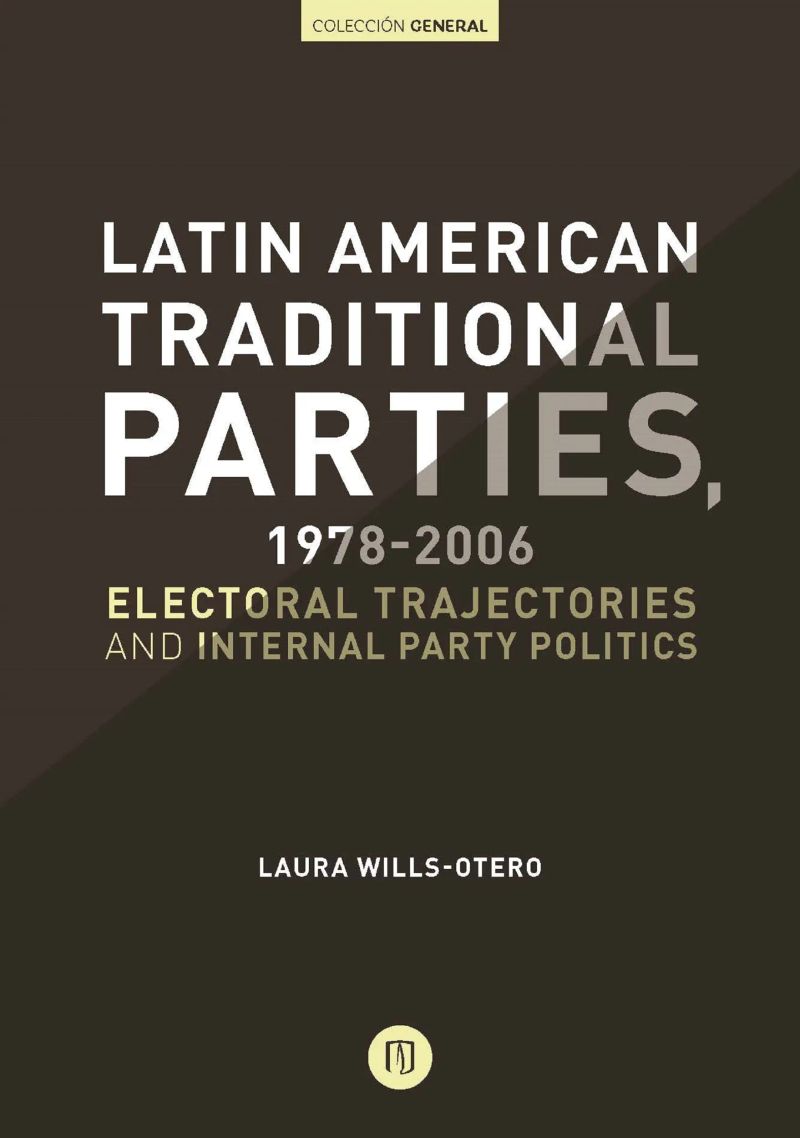
Latin American Traditional Parties, 1978-2006. Electoral Trajectories and Internal Party Politics
By Laura Wills Otero


Length9h 54m
About this audiobook
Parties are the major actors of political representation in democracies. They have been acknowledged repeatedly as the critical link between voters, representatives and guarantors of democratic governance. Without them, a democracy can hardly be said to exist because they are the principal links between government and society. However, parties can lose their representative capacity, and be challenged by disaffected electorates that pursue other alternatives for political involvement. This book focuses upon the electoral weakening of Latin America's traditional parties. These parties dominated the political arena in the region during the last decades of the twentieth century. They played a significant role in the legitimation of democratic politics in particular when countries transited from authoritarian regimes in the late 1950s (Colombia and Venezuela) and later on, in the late 1970s (e.g., Ecuador) and 1980s (e.g., Argentina, Uruguay, Chile). Latin American traditional parties structured post-authoritarian political and party systems; they defined the rules of the democratic game (i.e., electoral systems); they became consolidated as the principal agents of political representation and were the main actors in policy-making processes. However, by the beginning of the 21st century (2000-2005) many of them faded, and political outsiders with antiestablishment discourses as well as new parties and political movements flourished.
Audiobook details
GenrePolitics and Government
Length9 hrs 54 mins
Narrated byListen with 1,000+ voices
FormateBook with Audio
Publish dateOct 1, 2015
LanguageSpanish
Table of contents
1COLECCIÓN GENERAL
2ciencia política
3Latin American Traditional Parties, 1978-2006 Electoral Trajectories and Internal Party Politics
4© Laura Wills-Otero
5Preface
Mostrar todos os capítulosVer menos
6Acknowledgments
7Introduction
81 Determinants of Parties’ Electoral Performance: Traditional Explanations Reconsidered
92 The Internal Organization of Latin American Parties
103 Case Studies: Traditional Parties in Colombia and Venezuela (pt. 1)
113 Case Studies: Traditional Parties in Colombia and Venezuela (pt. 2)
124 The Effects of Parties Internal Organization on Their Electoral Performance, 1978-2006
13Conclusion
14Appendices
15Name (Name) Party/Country (Partido/País) Date (Fecha)
16Appendix B Descriptive Statistics for Parties’ Internal Features
170 Hierarchical
181 Semi-Hierarchical
192 Mixed
203 Semi-Horizontal
214 Horizontal
22Appendix C Classification of Latin American Regimes, 1978-2006
23Appendix D Multilevel Models of Change
24Appendix E
25Model 9B
26programmatic coherence, 58
More from Laura Wills Otero


La conjuraMónica González21h 6m4.7 (297)$18 · $0.00

Poderoso caballeroDaniel Matamala13h 5m4.6 (258)$13 · $0.00

Crónica RojaRodrigo Fluxá11h 44m4.5 (262)$15 · $0.00

Allende: Cómo la Casa Blanca provocó su muertePatricia Verdugo6h 1m4.5 (142)$8 · $0.00

Cazando a El ChapoAndrew Hogan, Douglas Century11h4.2 (6.8K)$29 · $0.00

Los archivos del cardenalDaniel Arrieta, Daniel Arrieta, Mónica González, Alejandra: Matus, Javiera Matus, Juan Cristóbal Peña, Ana María Sanhueza, Francisca. Editores: Insunza, Andrea Skoknic, Javier Ortega9h 30m4.5 (65)$14 · $0.00

En vez del optimismoJuan Pablo Luna5h 49m4.4 (37)$10 · $0.00

Empresarios zombis. La mayor elusión tributaria de la elite chilenaJuan Andrés Guzmán, Juan Andrés Guzmán, Jorge Rojas5h 56m4.0 (58)$13 · $0.00

Historias desconocidas de ChileFelipe Portales7h 21m3.9 (97)$12 · $0.00

La fronda. Cómo la elite secuestró la democraciaRenato Garin5h 22m4.0 (45)$9 · $0.00

Veinte años después, Neoliberalismo con rostro humanoFernando Atria11h 26m4.1 (19)$12 · $0.00

Autopsia. ¿De qué murió la elite?Alberto Mayol14h 30m3.6 (22)$14 · $0.00

Los archivos del cardenal 2. Casos realesAndrea Insunza, Andrea Insunza, Javier Ortega12h 49m$27 · $0.00

El Chile que se vieneRicardo Lagos, Ricardo Lagos, Oscar Landerretche18h 14m$18 · $0.00

Hijas de GeneralRocío Montes5h 33m$11 · $0.00
Yo, Presidente/aPaula Escobar Chavarría5h 51m$14 · $0.00

Lo mejor de CIPER 3CIPER14h 36m$17 · $0.00

La solución constitucional. Plebiscitos, asambleas, congresos, sorteos y mecanismos híbridosClaudio Fuentes, Claudio Fuentes, Alfredo Joignant12h 25m$18 · $0.00

1925Arturo Fontaine, Arturo Fontaine, Juan Luis Ossa, Aldo Mascareño, Renato Cristi, Hugo Herrera, Joaquín Trujillo9h 31m$16 · $0.00

El cardenal Raúl Silva Henríquez y los Derechos HumanosReinaldo Sapag5h 24m$5 · $0.00
You may also like

Bueno, Bonito y CaritoDavid Gómez10h 21m4.4 (639)$10 · $0.00

Heterogeneidad estructural en la ciudad latinoamericana : más allá del dualismoSamuel Jaramillo González10h 27m$11 · $0.00

Enfoque del trauma ortopédicoAlejandro Uribe15h 28m$21 · $0.00

Teoría de riesgo - 4ta ediciónEvaristo Diz11h 29m$12 · $0.00

Indicadores de gestiónGustavo García Cediel3h 17m$7 · $0.00

Riesgos biológicos y bioseguridadFernando Hernao Robledo9h 52m$12 · $0.00

Data centers hoyGermán Pacio10h 32m$12 · $0.00

Gestión integral de riesgos y segurosHernán Mejía30h 27m$15 · $0.00

Procedimiento concursal en la práctica tomo 2: concurso consecutivo de pymes y empresarios individualesHiginio Pérez Mateos33h 52m$41 · $0.00

El sistema integral de seguridad socialAlfredo Puyana Silva6h 54m$6 · $0.00
Green Book: Cuidado intensivoDaniel Godoy, Sebastián Ugarte90h 41m$45 · $0.00

Urgencias en la atención prehospitalariaMaría Jaramillo, Luis Conrado, Federico Velásquez24h 21m$16 · $0.00

Normas Legales en Seguridad y Salud en el Trabajo. 2ª EdiciónArnulfo Cifuentes Olarte, Olga Lorena Cifuentes Giraldo32h 7m$16 · $0.00

Gestión Integral de Activos Físicos y MantenimientoLeandro Torres15h 36m$21 · $0.00

La teoria del levantamiento del velo corporativo en los grupos societariosCamilo Enrique Cubillos Garzòn9h 51m$6 · $0.00

Trabajo en alturasFerney Valencia, Heber Murillo9h 27m$17 · $0.00

Variables críticas en la gestión de costosJuan Esteban Escalante, Ricardo Uribe6h 37m$12 · $0.00

Niveles de vida en un País en ciernesDaniel Santilli13h 31m$6 · $0.00

Marketing, una herramienta para el crecimiento 2ª EdiciónGustavo Prettel25h 17m$31 · $0.00

Riesgos físicos IIFernando Hernao Robledo2h 58m$3 · $0.00