
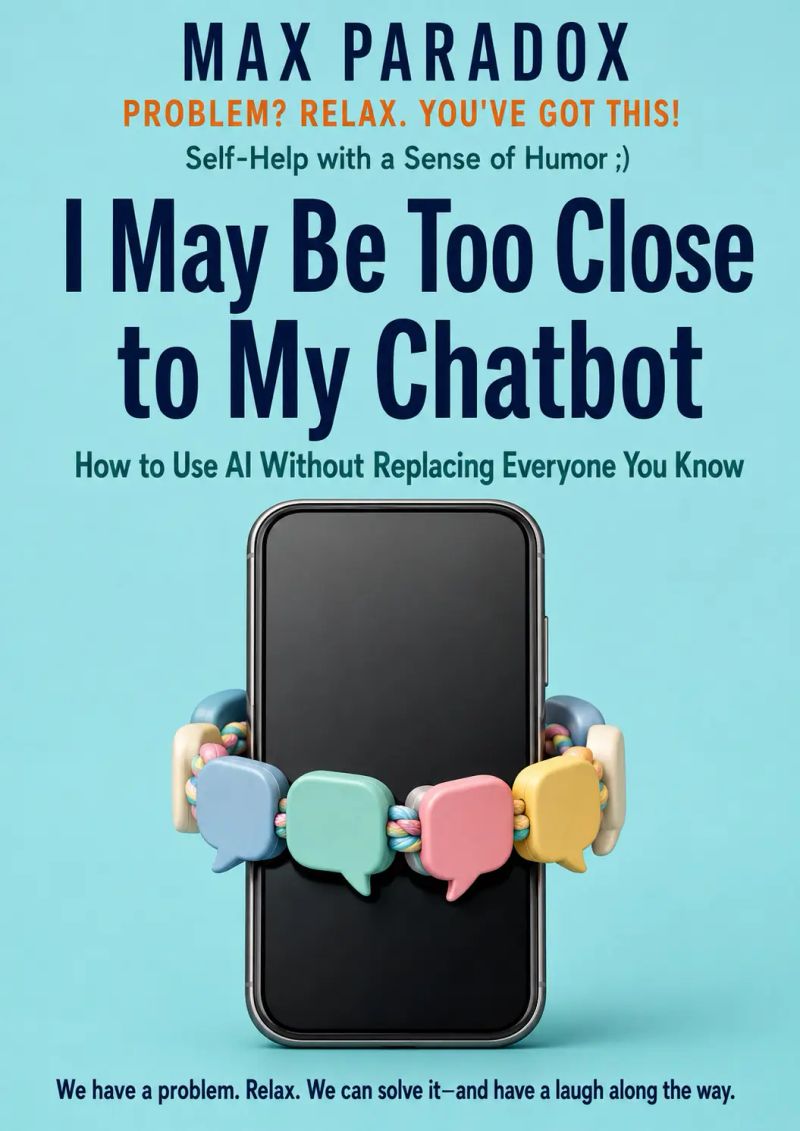
I May Be Too Close to My Chatbot - How to Use AI Without Replacing Everyone You Know
By Max Paradox


Length6h 29m
About this audiobook
AI can write your emails, plan your vacation, explain your spreadsheet, help you make decisions, and patiently discuss the suspicious emotional meaning of a two-word text message at 1:14 in the morning.
Very convenient.
Possibly too convenient.
I May Be Too Close to My Chatbot: How to Use AI Without Replacing Everyone You Know is a practical, funny guide to using conversational AI without accidentally outsourcing your judgment, relationships, confidence, social skills, and entire emotional support network.
Max Paradox explores the strange new problem created by a tool that is always available, never too busy, never needs to leave for dinner, and can provide a polished answer before your best friend has located their phone.
The solution is not to delete AI, fear it, or move to a cabin with no Wi-Fi.
The solution is to give it the right job.
Inside, you will learn how to:
recognize when useful AI assistance is becoming substitution;
stop reassurance loops and repeated “Are you sure?” checking;
make decisions without requiring digital approval;
use AI to prepare difficult conversations instead of avoiding them;
separate facts, patterns, assumptions, and stories about other people;
preserve your own opinions before AI supplies a beautifully formatted one;
create human-first categories for the parts of life that need real relationships;
build practical handoffs from AI analysis to real-world action;
handle loneliness without making a chatbot your entire social infrastructure;
recognize early signs that old habits are returning;
use AI to strengthen relationships rather than quietly replace them.
This is not an anti-technology book. AI is extraordinarily useful, and pretending otherwise would be like banning calculators because someone once used one to divide ten by two.
Instead, this book gives you practical boundaries for keeping the best parts of AI while protecting the parts of life that only you-and the people around you-can actually live.
Expect concrete rules, realistic examples, minimum-effort versions for low-energy days, Plan B when the sensible method collapses on Wednesday, and enough observational comedy to make an uncomfortable number of your own habits recognizable.
Because the goal is not to use AI less merely for the sake of using AI less.
The goal is to use it better.
Let the chatbot organize the problem.
Then make the decision.
Have the conversation.
Call the friend.
And occasionally allow another human being to give you an imperfect answer without requesting a regeneration.
This publication was prepared with the assistance of tools that support the creative process, including artificial intelligence-based solutions. The final concept, structure, and editing belong to the author.
Audiobook details
GenreTechnology
Length6 hrs 29 mins
Narrated byListen with 1,000+ voices
FormateBook with Audio
Publish dateAug 29, 2026
LanguageEnglish
Table of contents
1INTRO
2Chapter 1 - When a Tool Starts Feeling Like Someone
3Chapter 2 - Why the Bot Is So Easy to Talk To
4Chapter 3 - The Reassurance Machine
5Chapter 4 - You Still Need Your Own Opinion
Mostrar todos os capítulosVer menos
6Chapter 5 - Stop Asking the Same Question Better
7Chapter 6 - Do Not Outsource Every Awkward Conversation
8Chapter 7 - Your Chatbot Should Not Be Your Entire Support Network
9Chapter 8 - Be Careful When the Bot Always Has Time for You
10Chapter 9 - Use AI Before the Conversation, Not Instead of It
11Chapter 10 - Ask AI to Help You Think, Not Tell You What to Think
12Chapter 11 - Give AI a Job Description
13Chapter 12 - Build the Handoff
14Chapter 13 - Do Not Turn Your Relationships into Case Files
15Chapter 14 - Use AI to Make Your Relationships Better
16Chapter 15 - What to Do When You Already Know the Rules and Ignore Them Anyway
17Chapter 16 - When Real People Feel Too Difficult
18Chapter 17 - When You Cannot Stop Checking What the Bot Thinks
19Chapter 18 - Build a Life the Chatbot Does Not Need to Fill
20Chapter 19 - Notice When the Old Pattern Comes Back
21Chapter 20 - Keep the Tool. Keep the People. Keep Yourself.

Nienawidzę swojej pracy - Jak odzyskać kontrolę, zanim rzucisz identyfikatorem w ekspres do kawyMax Paradox5h 49m$7.70 · $0.00

I Haven't Replied Because Now It's Been Too Long - How to Get Out of Message Debt Without Changing Your NumberMax Paradox7h 45m$7.70 · $0.00

I'm Jealous of Everything - How to Stop Seeing an Affair in Every “Hi” and Every LikeMax Paradox7h 5m$7.70 · $0.00

The Absurd Empire - A Laughing Explanation of Why the USA Is the Biggest Power on EarthMax Paradox3h 36m$7.70 · $0.00

My Grown Child Doesn't Need Me Anymore - How to Rediscover Yourself When Parenting Stops Being a Full-Time JobMax Paradox6h 34m$7.70 · $0.00
I Feel Responsible for Everyone - How to Give People Back Their Own Lives Without Feeling Like a MonsterMax Paradox6h 20m$7.70 · $0.00
How to Stop Putting Everything OffMax Paradox6h 41m$7.70 · $0.00

The Anesthesia Years - How Surviving on Empty Became the Life You Didn't ChooseMax Paradox6h 1m$7.70 · $0.00

I Pay for the Gym So It Knows I Support It - How to Start Moving Without Launching a Whole New Life on MondayMax Paradox6h 17m$7.70 · $0.00

I Earn More and Still Feel Poorer - How to Navigate a World Where Everything Costs a Ridiculous AmountMax Paradox7h 29m$7.70 · $0.00

How to Stop Fearing RejectionMax Paradox6h 40m$7.70 · $0.00

I Have Friends, but We Always Meet “Someday” - How to Keep Friendships Alive When the Next Free Date Is in 2029Max Paradox6h 54m$7.70 · $0.00

Każde piknięcie rządzi moim dniem - Jak odzyskać uwagę od powiadomień, wiadomości i czerwonych kropekMax Paradox5h 23m$7.70 · $0.00

Kupuję zdrowe jedzenie, a potem zamawiam pizzę - Jak planować posiłki dla człowieka, którym naprawdę jesteśMax Paradox4h 58m$7.70 · $0.00

Nie wiem, czego chcę od życia - Jak znaleźć kierunek bez objawienia, coacha i wyjazdu do TybetuMax Paradox5h 9m$7.70 · $0.00

I'm Afraid to Spend Money Even When I Can Afford It - How to Stop Treating Every $20 Purchase Like the Beginning of BankruptcyMax Paradox6h 50m$7.70 · $0.00

Mam 8462 zdjęcia i boję się usunąć choć jedno - Jak posprzątać cyfrowe życie bez oglądania wakacji z 2014 rokuMax Paradox5h 41m$7.70 · $0.00
Nothing Makes Me Happy Anymore - How to Rediscover Everyday Joy Without Buying a Motorcycle or Moving to BaliMax Paradox7h 19m$7.70 · $0.00

Every Day I Have to Figure Out What to Eat - How to Stop Losing Your Life to “What's for Dinner?”Max Paradox6h 58m$7.70 · $0.00

Operation PedestalMax Hastings12h 29m4.4 (5.2K)$29 · $0.00

When the Heavens Went on SaleAshlee Vance18h 20m4.4 (3K)$40 · $0.00

Everybody Has a Podcast (Except You)Justin McElroy, Travis McElroy, Griffin McElroy5h 9m4.3 (2.3K)$24 · $0.00

Hands of TimeRebecca Struthers8h 8m4.4 (1.3K)$26 · $0.00

Never Lost AgainBill Kilday10h 1m4.4 (805)$29 · $0.00

How the Internet HappenedBrian McCullough13h 28m4.3 (2.7K)$23 · $0.00

Collected Writings of Nikola TeslaNikola Tesla, Thomas Commerford Martin21h 50m4.3 (1.7K)$1 · $0.00

Just AspireAjai Chowdhry9h 13m4.4 (260)$29 · $0.00

The Little Book of AliensAdam Frank8h 20m4.3 (1.3K)$26 · $0.00

The inventions, researches and writings of Nikola Tesla (Annotated)Thomas Commerford Martin16h 59m4.3 (1.3K)$2 · $0.00

KargilV.P. Malik15h 18m4.3 (2K)$24 · $0.00

Experiments with Alternating CurrentsNikola Tesla9h 16m4.3 (874)$1.99 · $0.00

Fire on the HorizonTom Shroder, John Konrad8h 23m4.3 (858)$26 · $0.00

The Smell of Kerosene (Annotated)National Aeronautics and Space Administration, Donald L. Mallick, Peter W. Merlin11h 32m4.3 (523)$2 · $0.00

The Boy Who Harnessed the WindWilliam Kamkwamba, Bryan Mealer10h 5m4.2 (78.9K)$29 · $0.00

Across the Airless WildsEarl Swift10h 8m4.3 (1.3K)$29 · $0.00

Console WarsBlake J. Harris20h 41m4.2 (13.7K)$46 · $0.00

Improvised Munitions HandbookU.S. Department of Defense4h 49m4.3 (1.6K)$1.99 · $0.00

Escaping GravityLori Garver10h 54m4.2 (2.2K)$20 · $0.00

Wireless WarsJonathan Pelson8h 2m4.3 (418)$20 · $0.00
You may also like
Attention SpanGloria Mark10h 52m3.7 (2.3K)$29 · $0.00
Eat Sleep Work RepeatBruce Daisley7h 31m3.8 (1.7K)$26 · $0.00
Change Your HabitsSara Melo2h 45m$1.80 · $0.00

The AI Culture BlueprintSagar Pandya1h 30m$2 · $0.00

Prompt Your LifeDorian Frinch29m$14 · $0.00

The Neuroscience of MindfulnessStan Rodski5h 28m3.7 (522)$24 · $0.00

Demystifying Secrets of WellnessDr. Deepika Shetty2h 22m$4

Hundreds of Applications, Zero InterviewsImad Muratspahic4h 9m$12 · $0.00
Forget That!Roger Flax PhD6h 44m$23

Immanuel Kant: The Master of ReasonSaraban K. K. 52m5.0 (8) Only with Ultra

The Quiet AdvantageZara Kanaan3h 46m$5.70 · $0.00
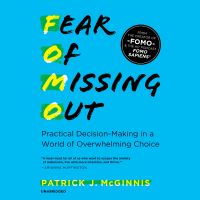
Fear of Missing OutPatrick J. McGinnis6h 50m3.6 (899)$17 · $0.00

Success Cybernetics (Unabridged edition)Uell S. Andersen9h 26m4.3 (38)$5.70 · $0.00

The Other ConnectionJose Marconi Teixeira1h 29m$10 · $0.00

The Nightlight with Melvin VallomparambilChristopher Glyn36m$4 · $0.00
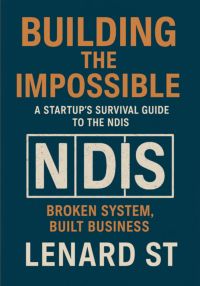
Building The Impossible Ndis GuideLenard St5h 6m$58 · $0.00

RelaxBrahma Khumaris1h 11m$4 · $0.00
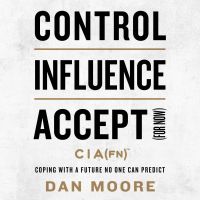
Control, Influence, Accept (For Now)Dan Moore3h 25m4.6 (20)$15
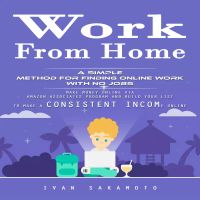
Work From Home: A Simple Method for Finding Online Work With No Jobs (Make Money Online via Amazon Associates Program and Build Your List to Make a Consistent Income Online)Mason g, Ivan Sakamoto1h 37m$6.40 · $0.00

Ego: The Inner Compass of Conscious Leadership (How Transactional Analysis Helps You Understand Yourself)Daniel Sexton1h 2m$3.50 · $0.00