
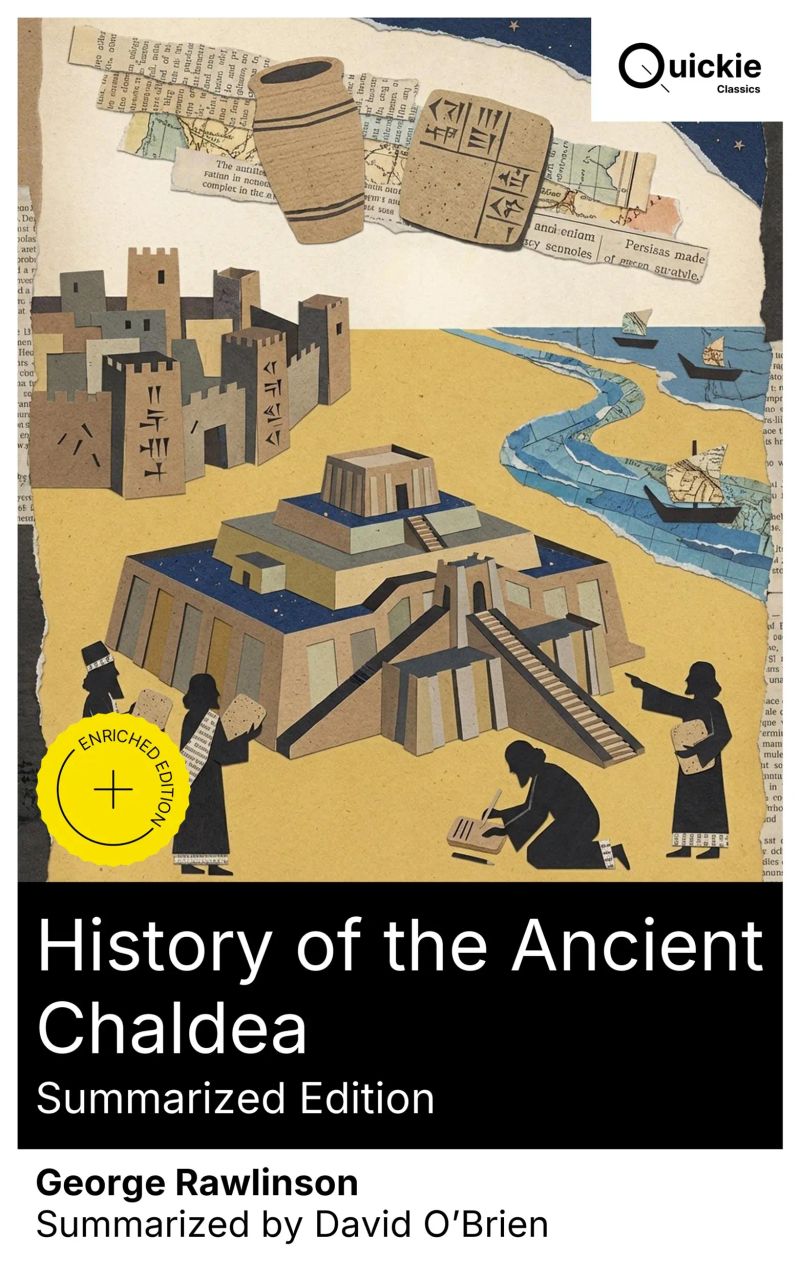
History of the Ancient Chaldea (Summarized Edition)
Enriched edition. From Sumerian roots to Babylonian chronicles: languages, rites, and Chaldean traditions of a Semitic Mesopotamian civilizationDe George Rawlinson


Duração2h 26m
Sobre este audiolivro
History of the Ancient Chaldea surveys southern Mesopotamia from Sumerian city-states to the Neo‑Babylonian age. Rawlinson blends cuneiform evidence—tablets, cylinder seals, brick inscriptions—with Herodotus and Berossus, charting Ur and Uruk, Sargon of Akkad, Hammurabi, and Nebuchadnezzar II, alongside religion, astronomy, law, and Gulf commerce. In measured Victorian prose with ample apparatus, it exemplifies early, synthetic Assyriology. George Rawlinson (1812–1902), Camden Professor of Ancient History at Oxford and an Anglican cleric, wrote amid the first wave of cuneiform decipherment. A collaborator and brother of Sir Henry Creswicke Rawlinson, he drew on British Museum holdings, his Herodotus scholarship, and The Five Great Monarchies to reconcile epigraphic, classical, and biblical testimonies in a coherent narrative. Scholars of the ancient Near East, classicists, and readers of biblical backgrounds will find this volume indispensable as both synthesis and historiographical landmark. Some Victorian categories now date it, yet its clarity, source-awareness, and breadth make it rewarding for coursework, research libraries, and anyone tracing how knowledge of Chaldea—and Babylonia broadly—was first assembled.
Quickie Classics summarizes timeless works with precision, preserving the author's voice and keeping the prose clear, fast, and readable—distilled, never diluted. Enriched Edition extras: Introduction · Synopsis · Historical Context · Brief Analysis · 4 Reflection Q&As · Editorial Footnotes.
Detalhes do audiolivro
GêneroHistory
Duração2 h 26 min
Narrado porOuça com mais de 1.000 vozes
FormatoeBook com áudio
Data de publicação10 de jan. de 2026
IdiomaInglês
Sumário
1Introduction
5History of the Ancient Chaldaea
2Introduction
6Analysis
3Synopsis
7Reflection
4Historical Context

Geschichte des antiken ChaldäaGeorge Rawlinson5h 49min$1 · $0.00

Die Könige von Israel und JudaGeorge Rawlinson9h 51min4.3 (160)$1 · $0.00

CHALDEA (Illustrated Edition)George Rawlinson6h 18min4.4 (12)$1.99 · $0.00
The Greatest Empires & Civilizations of the Ancient EastGeorge Rawlinson145h 34min4.3 (21)$1.99 · $0.00
The Essential Works of George RawlinsonGeorge Rawlinson145h 32min$1.99 · $0.00
Ancient Egypt: History, Mythology & LiteratureGeorge Rawlinson, Arthur Gilman, Gaston Maspero, Agnes Sophia Griffith Johns, E. A. Wallis Budge, Lewis Spence47h 17min4.4 (32)$1.99 · $0.00
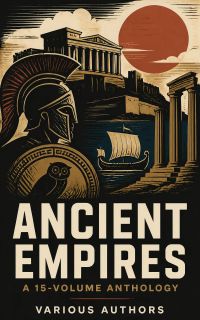
Ancient Empires: A 15-Volume AnthologyGeorge Rawlinson, L. W. King, John Bagnell Bury, Arrian, Theodor Mommsen, Edward Gibbon, Charles Oman455h 5min4.6 (12)$1.99
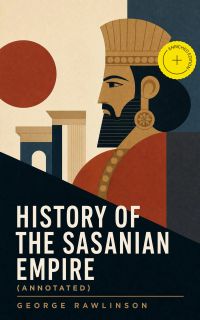
History of the Sasanian Empire (Annotated)George Rawlinson17h 20min3.9 (25)$2 · $0.00
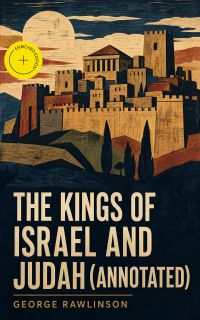
The Kings of Israel and Judah (Annotated)George Rawlinson10h 6min4.1 (729)$2 · $0.00
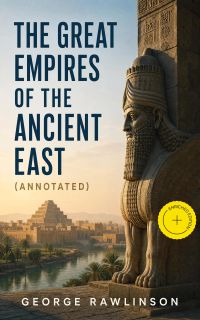
The Great Empires of the Ancient East (Annotated)George Rawlinson144h 35min$2 · $0.00
History of the Ancient Chaldea (Annotated)George Rawlinson6h 11min$2 · $0.00

The Essential Works of George Rawlinson (Annotated)George Rawlinson145h 34min$2 · $0.00

Ancient Media (Annotated)George Rawlinson6h 32min$2 · $0.00
The Great Civilizations of the Ancient East (Annotated)George Rawlinson145h 31min$2 · $0.00

The Greatest Empires & Civilizations of the Ancient EastGeorge Rawlinson145h 7min$2 · $0.00

The History of BabylonGeorge Rawlinson7h 24min3.2 (37)$1 · $0.00

The Seven Great Monarchies Of The Ancient Eastern World: BabylonGeorge Rawlinson7h 3min3.4 (16)$1 · $0.00
History of the Ancient ChaldeaGeorge Rawlinson6h 10min$2 · $0.00
History of the Phoenician CivilizationGeorge Rawlinson16h 50min3.8 (134)$1 · $0.00
The Great Empires of the Ancient EastGeorge Rawlinson145h 1min$1 · $0.00

A Brief History of IntelligenceMax S. Bennett12h 18min4.6 (6.6K)$29 · $0.00

Pearl of Great PriceJoseph Smith3h 8min4.7 (7.2K)$1.20 · $0.00

The Happiest Man on EarthEddie Jaku3h 48min4.6 (178K)$7 · $0.00

MotherlandJulia Ioffe17h 52min4.7 (2.5K)$40 · $0.00

Where Cowards Go to DieBenjamin Sledge8h 42min4.7 (351)$20 · $0.00

RevolutionariesSanjeev Sanyal11h 23min4.6 (2.6K)$29 · $0.00

Days of Love and Rage: A Story of RevolutionAnand Gopal22h 36min4.7 (584)$34 · $0.00

We Crossed a Bridge and It TrembledWendy Pearlman6h4.6 (5.2K)$24 · $0.00

Unbroken Bonds of BattleJohnny Joey Jones8h 31min4.6 (2.6K)$8 · $0.00

The Daughter of AuschwitzTova Friedman, Malcolm Brabant7h 54min4.6 (16.7K)$26 · $0.00

Lily's PromiseLily Ebert, Dov Forman8h 54min4.6 (16.1K)$29 · $0.00

On Democracies and Death CultsDouglas Murray10h 38min4.6 (6.5K)$29 · $0.00

Across the RiverKent Babb11h 40min4.6 (927)$29 · $0.00

Balcony Over Jerusalem: A Middle East Memoir - Israel, Palestine and BeyondJohn Lyons12h 37min4.6 (1.4K)$33 · $0.00

BeyondStephen Walker15h 39min4.6 (3.2K)$33 · $0.00

Kings and PawnsHoward Bryant10h 9min4.6 (678)$29 · $0.00

No EscapeNury Turkel9h 30min4.6 (809)$28 · $0.00

Jubal Stone: U.S. Marshal: Blood Trail To Hell: A Western Adventure NovelCasey Nash3h 42min4.6 (3.2K)$18 · $0.00

Fall and RiseMitchell Zuckoff17h 23min4.6 (9.8K)$40 · $0.00

The SurvivorJosef Lewkowicz, Michael Calvin9h 22min4.6 (2.5K)$29 · $0.00
Você também pode gostar
The Outline of History: Being a Plain History of Life and MankindH. G. Wells48h 36min4.0 (6.6K)$2.30
A History of Art in Ancient Egypt (1&2)Georges Perrot, Charles Chipiez24h 43min4.3 (23)$2 · $0.00
Ancient Media (Annotated)George Rawlinson6h 32min$2 · $0.00
The History of Ancient EgyptGeorge Rawlinson, Arthur Gilman10h 27min3.8 (180)$2 · $0.00

Foundations of Near Eastern and Classical Civilization – 3 Classic Antiquity TextsDonald A. Mackenzie, D. G. Hogarth, Herodotus53h 57min$2

ArcimboldoLiana De Girolami Cheney1h 30min$15
Mesopotamian ArchaeologyPercy S. P. Handcock10h 58min$1 · $0.00
The Rise and Fall of Ancient Empires: 15 History BooksTheodor Mommsen, Edward Gibbon, George Rawlinson, L. W. King, John Bagnell Bury, Arrian, Charles Oman455h 5min4.4 (14)$1.99
Plato and the Other Companions of Sokrates (Vol. 1-4) (Annotated)George Grote92h 57min4.3 (28)$2 · $0.00

Mark Twain’s Letters from HawaiiMark Twain3h 8min4.0 (896)$15

HooghlyRobert Ivermee11h 4min4.1 (45)$18 · $0.00
An Account of EgyptHerodotus3h 41min$2.30
History of the Phoenician CivilizationGeorge Rawlinson17h 29min3.6 (89)$1 · $0.00
The NileToby Wilkinson12h 20min4.0 (657)$23
Leonardo Da Vinci - Thinker and Man of ScienceEugène Müntz8h 43min3.9 (59)$18 · $0.00

Scarabs: An Introduction to the Study of Egyptian Seals and Signet RingsPercy E. Newberry5h 56min$1 · $0.00
The Life and Times of Akhenaton, Pharaoh of EgyptArthur E. P, Brome Weigall6h 1min3.5 (44)$2 · $0.00
Pictographs of the North American IndiansGarrick Mallery11h 24min$1 · $0.00
The Essential Works of George Rawlinson (Annotated)George Rawlinson145h 34min$2 · $0.00
Apollonius Of TyanaG. R.3h 21min4.0 (94)$3.50 · $0.00