
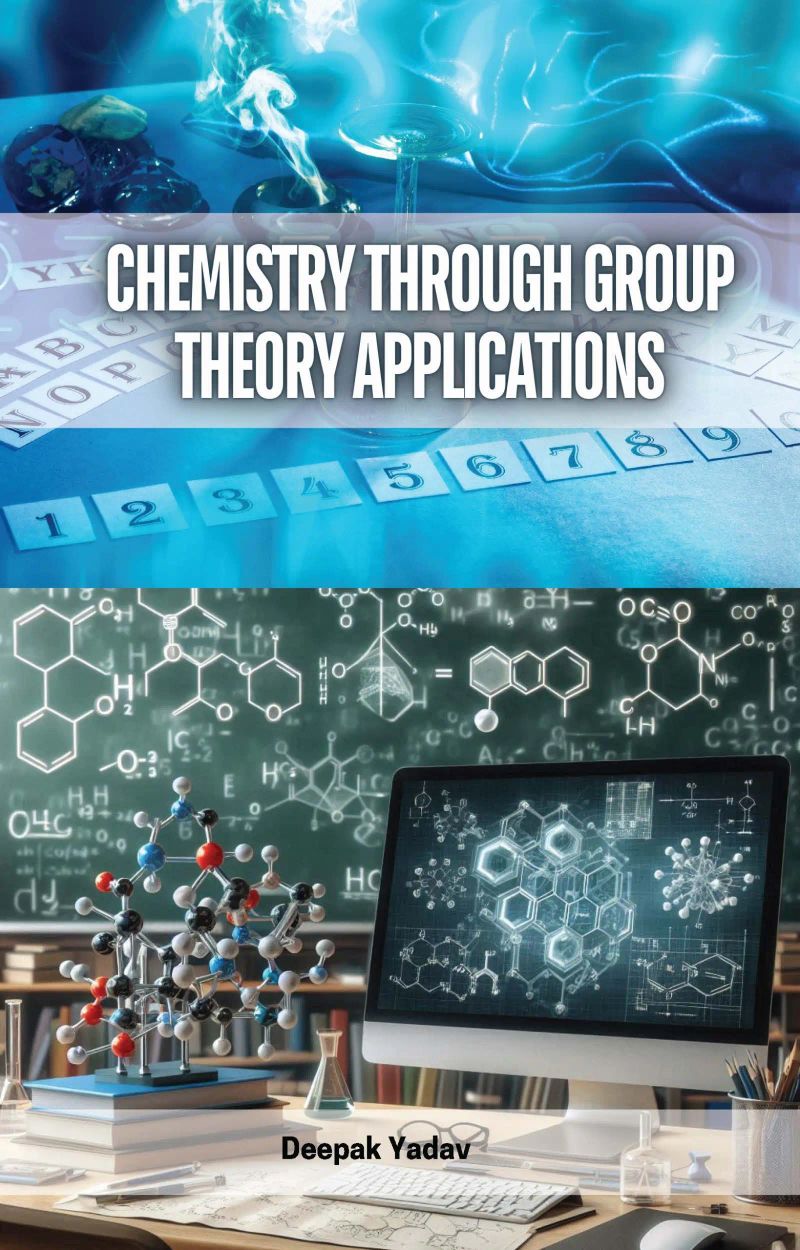
Chemistry Through Group Theory Applications
De Deepak Yadav


Duração8h 38m
Sobre este audiolivro
"Chemistry Through Group Theory Applications" is a comprehensive textbook that explores the application of Group Theory concepts in understanding molecular symmetries and structures. Essential for undergraduate chemistry students in the United States, this book provides a systematic framework for analyzing molecular systems, offering valuable insights into their properties and behaviors.
Starting with foundational principles, it introduces essential definitions, properties, and theorems of Group Theory. The book then seamlessly applies these concepts to various aspects of chemistry, including molecular symmetry, chemical bonding, spectroscopy, and reaction mechanisms. With clear explanations, illustrative examples, and practical exercises, students will learn to interpret experimental data, predict molecular properties, and rationalize chemical phenomena.
Designed for undergraduate students, "Chemistry Through Group Theory Applications" balances theoretical rigor with practical relevance. It equips students with the knowledge and skills to analyze and interpret molecular symmetries confidently, preparing them for success in their studies and future careers. Whether you're a chemistry major, a student interested in chemical research, or curious about the application of mathematics to chemistry, this book will be your indispensable guide to mastering Group Theory in chemistry.
Detalhes do audiolivro
GêneroScience and Nature, Education and Learning
Duração8 h 38 min
Narrado porOuça com mais de 1.000 vozes
FormatoeBook com áudio
Data de publicação28 de fev. de 2025
IdiomaInglês
Sumário
1Introduction to Group Theory
21.1 Definition and Importance of Group Theory
31.2 Basic Concepts: Groups, Subgroups, and Group Operations
4Subgroups:: Group Operations:
51.3 Historical Development of Group Theory: Example 1: The Group of Integers under Addition
Mostrar todos os capítulosVer menos
61.4 Applications of Group Theory in Chemistry
71. Molecular Symmetry and Point Groups:
82. Molecular Orbital Theory:
93. Spectroscopy:
104. Crystallography:
115. Reaction Mechanisms:
126. Vibrational Analysis:: 7. Quantum Chemistry:
131.5 Mathematical Prerequisites
141. Matrix Algebra:
152. Linear Algebra:
163. Calculus:
174. Complex Numbers:
185. Set Theory:
196. Combinatorics:: Example 2: Symmetry Operations and Point Groups
20Conclusion
21Symmetry Operations and Point Groups
222.1 Definition of Symmetry Operations
232.2 Proper and Improper Rotations
24Proper Rotations:
25Principal Axis (Cₙ):
26Dihedral Axis (Sₙ):
27Improper Rotations:
28Reflections (σ):
29Inversions (i):
30Improper Rotation Axes (Sₙ):
312.3 Reflection Operations
32Vertical Reflection Planes (σᵥ):
33Horizontal Reflection Planes (σₕ):: Dihedral Reflection Planes (σᵈ):
342.4 Inversion Operations
352.5 Determination of Point Groups
361. Visual Inspection:
372. Systematic Procedure:
383. Character Tables:: 4. Computational Methods:
392.6 Examples of Point Groups in Molecules
40Conclusion
41Matrix Representations of Groups
423.1 Introduction to Matrix Representations: Importance of Matrix Representations:
433.2 Reducible and Irreducible Representations
44Reducible Representations:
45Irreducible Representations:: Importance of Irreducible Representations:
463.3 Great Orthogonality Theorem
47Statement of the Great Orthogonality Theorem:
481. Column Orthogonality:
492. Row Orthogonality:: Importance of the Great Orthogonality Theorem:
503.4 Character Tables: Properties of Character Tables:
A Brief History of IntelligenceMax S. Bennett12h 18min4.6 (6.6K)$29 · $0.00
The Story of BirdsSteve Brusatte11h 49min4.6 (401)$29 · $0.00

LiftoffEric Berger9h 4min4.6 (9.5K)$29 · $0.00
Black Earth WisdomLeah Penniman11h 54min4.6 (577)$8 · $0.00

Total Cat MojoJackson Galaxy10h 13min4.5 (8.4K)$23 · $0.00

My Life Among the UnderdogsTia Torres5h 51min4.5 (4K)$24 · $0.00

What It Takes to Save a LifeKwane Stewart6h4.6 (556)$24 · $0.00

Pastoral SongJames Rebanks8h 35min4.5 (12K)$26 · $0.00
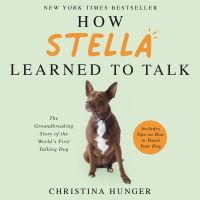
How Stella Learned to TalkChristina Hunger7h4.5 (10.9K)$24 · $0.00

Craig & FredCraig Grossi8h 6min4.5 (9.6K)$26 · $0.00

Celebrating BirdsNatalia Rojas, Ana Maria Martinez6h 47min4.6 (330)$24 · $0.00

Saving JemimaJulie Zickefoose4h 59min4.5 (749)$20 · $0.00

Will's Red CoatTom Ryan8h 23min4.5 (2.3K)$26 · $0.00

Of Time and TurtlesSy Montgomery10h 34min4.5 (5K)$29 · $0.00

THE WOLF TRILOGY: Call of the Wild, White Fang & The Son of the WolfJack London17h 31min4.5 (2.4K)$1.99 · $0.00

Zen and the Art of Saving the PlanetThich Nhat Hanh9h 20min4.5 (3.9K)$29 · $0.00

BLACK BEAUTY (With Original Illustrations)Anna Sewell7h 31min4.5 (1.3K)$1.99 · $0.00
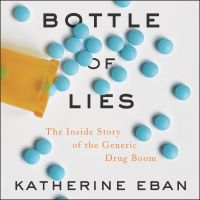
Bottle of LiesKatherine Eban14h 25min4.4 (12K)$33 · $0.00
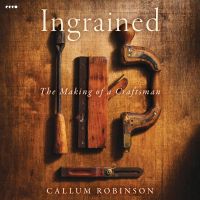
IngrainedCallum Robinson8h 10min4.5 (1.1K)$26 · $0.00

The Lion Tracker's Guide To LifeBoyd Varty3h 1min4.4 (4.8K)$18 · $0.00
A Brief History of IntelligenceMax S. Bennett12h 18min4.6 (6.6K)$29 · $0.00
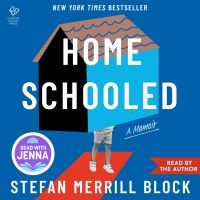
HomeschooledStefan Merrill Block7h 10min3.6 (18.5K)$28 · $0.00

WitnessAriel Burger8h 1min4.6 (1.3K)$20 · $0.00

EducationEllen G. White9h 41min4.6 (1.5K)$2 · $0.00

Parents and Children (Annotated)Charlotte Mason9h 23min4.6 (988)$2 · $0.00

Children Under FireJohn Woodrow Cox10h 17min4.5 (1.6K)$29 · $0.00

The Secret Door to SuccessFlorence Scovel Shinn2h 14min4.5 (3K)$3 · $0.00

The State Must ProvideAdam Harris7h 15min4.5 (775)$24 · $0.00

The Call of the Wild and FreeAinsley Arment9h 7min4.4 (21.2K)$29 · $0.00
The Freelance WayRobert Vlach19h 48min4.5 (528)$40 · $0.00

Race to the BottomLuke Rosiak9h 20min4.5 (600)$29 · $0.00

They Came for the SchoolsMike Hixenbaugh9h 5min4.5 (2.6K)$8 · $0.00

Find Me UnafraidKennedy Odede, Jessica Posner11h 11min4.5 (2.7K)$29 · $0.00
World's Best Inspirational Books to Change Your Life (3 Books)Napoleon Hill, Joseph Murphy, Dale Carnegie29h 38min4.5 (1.3K)$20 · $0.00

Asking for ItKate Harding8h 55min4.4 (5.3K)$20 · $0.00

MeditationsMarcus Aurelius4h 26min4.4 (456.8K)$1 · $0.00
Defining Moments in Black HistoryDick Gregory7h 37min4.4 (6K)$26 · $0.00
The Emerald Tablets of Thoth the AtlanteanMaurice Doreal3h 4min4.4 (6K)$6 · $0.00

Learning AmericaLuma Mufleh6h 37min4.4 (564)$24 · $0.00
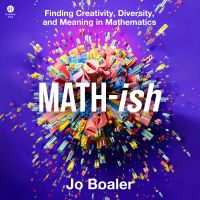
Math-ishJo Boaler7h 21min4.4 (588)$24 · $0.00
Você também pode gostar
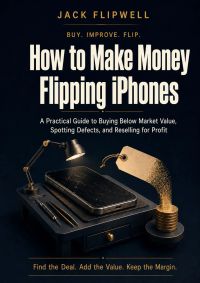
How to Make Money Flipping iPhones - A Practical Guide to Buying Below Market Value, Spotting Defects, and Reselling for ProfitJACK FLIPWELL5h 17min4.5 (60)$7.50

How to Make Money Flipping Watches - How to Spot Valuable Models, Avoid Fakes, and Resell with ConfidenceJACK FLIPWELL5h 45min4.7 (24)$7.50
I am learning GermanJM Gardner3h 57min4.4 (14)$18 · $0.00

1000 essential words in CzechJM Gardner2h 18min$10 · $0.00
I am learning TurkishJM Gardner3h 56min$18 · $0.00
I am learning HebrewJM Gardner3h 56min$18 · $0.00

How to Make Money Flipping Motorcycles and Scooters - How to Assess Mechanical Condition, Estimate Repair Costs, Manage Risk, and Resell for ProfitJACK FLIPWELL8h 9min$7.50
I am learning BulgarianJM Gardner3h 54min$18 · $0.00
How to Make Money Flipping Trading Cards - How to Research Sold Prices, Assess Condition, Decide When to Grade, and Manage Market RiskJACK FLIPWELL8h 33min$7.50
How to Make Money Flipping Golf Equipment - How to Identify In-Demand Clubs, Avoid Counterfeits, Improve Condition, and Resell for ProfitJACK FLIPWELL8h 39min$7.50
1000 essential words in DanishJM Gardner2h 16min$10 · $0.00
1000 essential words in HindiJM Gardner2h 18min$10 · $0.00
I am learning SwedishJM Gardner3h 56min$18 · $0.00
I am learning KoreanJM Gardner3h 56min$18 · $0.00
I am learning SlovakJM Gardner4h 16min$18 · $0.00

1000 essential words in VietnameseJM Gardner2h 19min$10 · $0.00

IEFM integrated e-form management Complete Self-Assessment GuideGerardus Blokdyk2h 2min$42

Stability testing The Ultimate Step-By-Step GuideGerardus Blokdyk3h 52min$42

Continuous Monitoring A Complete Guide - 2024 EditionGerardus Blokdyk4h 34min$78

Solutions Marketing A Complete Guide - 2020 EditionGerardus Blokdyk4h 31min$78