
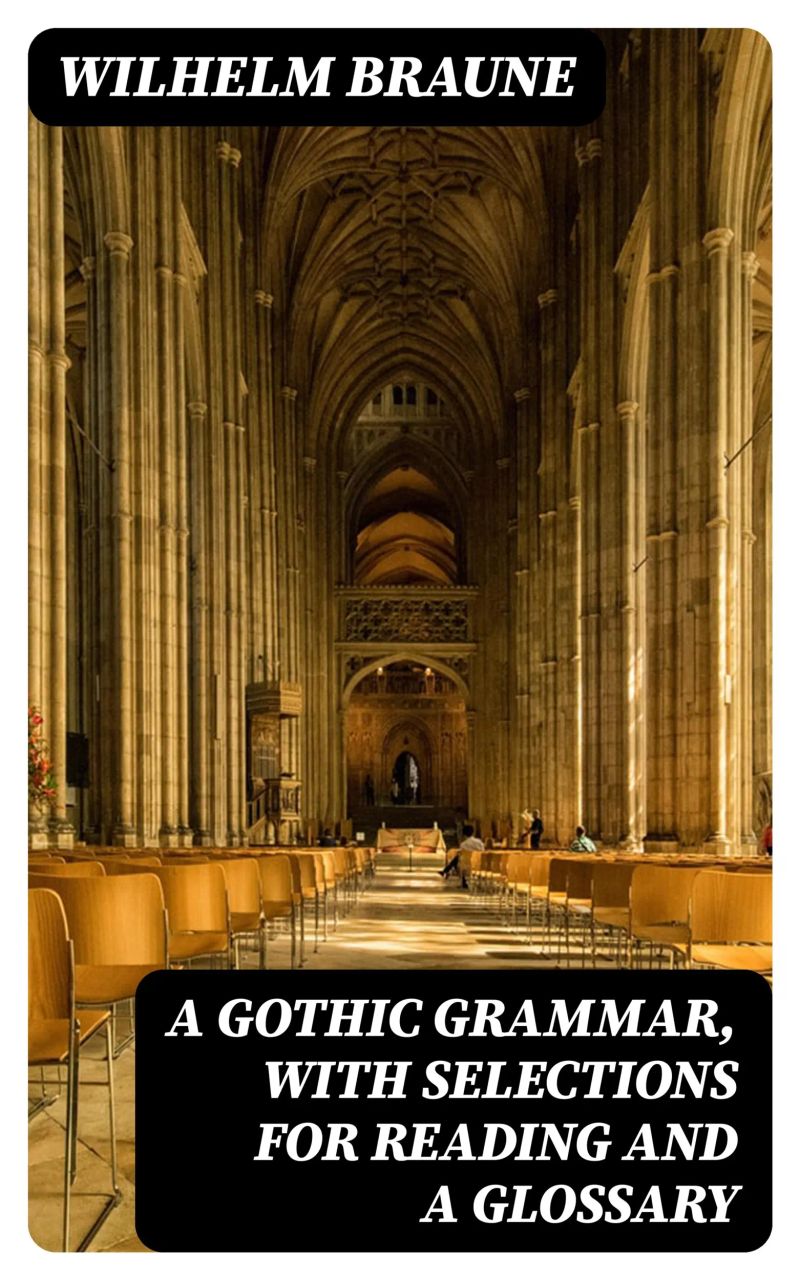
A Gothic Grammar, with selections for reading and a glossary
De Wilhelm Braune


Duração11h 34m
Sobre este audiolivro
Wilhelm Braune's "A Gothic Grammar, with Selections for Reading and a Glossary" serves as a foundational text in the study of the Gothic language, which is a critical component of Germanic philology. Braune's meticulous approach combines a systematic grammatical framework with carefully selected readings, reflecting both linguistic structures and the cultural contexts in which the Gothic language flourished. His use of accessible yet scholarly prose places this work within the broader literary tradition of 19th-century linguistics, characterized by a revival of interest in ancient languages and cultures, making it a vital resource for both students and researchers of Gothic studies. Wilhelm Braune (1840-1916) was a prominent German philologist, known for his dedication to historical linguistics and the study of ancient Germanic languages. His academic background and passion for etymology informed his commitment to preserving and illuminating the Gothic heritage, which had been largely overshadowed by more dominant forms of Germanic literature. This passion is palpable in his grammar, which not only elucidates the intricacies of the Gothic language but also reveals the rich cultural tapestry of the Gothic people. "A Gothic Grammar" is an essential read for linguists, students of Germanic languages, and enthusiasts of historical linguistics. It not only serves as a practical reference for mastering Gothic but also enriches the reader's understanding of a pivotal period in linguistic history. Braune's synthesis of grammar, reading selections, and glossary provides a holistic approach that will resonate with any scholar interested in the intersections of language, culture, and history.
Detalhes do audiolivro
GêneroOther
Duração11 h 34 min
Narrado porOuça com mais de 1.000 vozes
FormatoeBook com áudio
Data de publicação4 de set. de 2022
IdiomaInglês
Sumário
1Introduction
2ABBREVIATIONS.
3CHAP. I. THE ALFABET.
4a
5e
Mostrar todos os capítulosVer menos
6i
7o
8u
9ei
10iu
11ai
12au
13APPENDIX.
14FOOTNOTES:
15A. FONETIC SYSTEM.
16B. HISTORICAL SYSTEM (Ablaut-Series).
17A. SONOROUS CONSONANTS.
18B. NOIZD SOUNDS.
19APPENDIX. GENERAL REMARKS ON THE CONSONANTS.
20GENERAL PRELIMINARY REMARKS.
21A. VOCALIC (STRONG) DECLENSION.
22B. N-DECLENSION (WEAK DECLENSION).
23C. MINOR DECLENSIONS. (REMAINS OF CONSONANTAL DECLENSIONS.)
24APPENDIX. DECLENSION OF FOREN WORDS.
25A. STRONG ADJECTIVS.
26B. WEAK ADJECTIVS.
27C. DECLENSION OF THE PARTICIPLS.
28D. COMPARISON OF ADJECTIVS.
291. CARDINALS.
302. ORDINALS.
313. OTHER NUMERALS.
321. PERSONAL PRONOUNS WITHOUT GENDER (REFLEXIV).
332. PRONOUNS OF THE THIRD PERSON.
343. DEMONSTRATIV PRONOUNS.
354. RELATIV PRONOUNS.
365. INTERROGATIV PRONOUNS.
376. INDEFINIT PRONOUNS.
38GENERAL REMARKS.
39I. STRONG VERBS.
40II. WEAK VERBS.
41III. IRREGULAR VERBS.
421. ADVERBS.
432. PREPOSITIONS.
443. CONJUNCTIONS.
454. INTERJECTIONS.
46§ 220. THE GOTHS.
47§ 221. SOURCES OF THE GOTHIC LANGUAGE.
48§ 222. EDITIONS.
49§ 223. GRAMMATICAL AND LEXICAL HELPS.
50§ 224. LITERATURE OF THE GOTHIC SYNTAX.
Mais de Wilhelm Braune


Messi vs. RonaldoJonathan Clegg, Joshua Robinson10h 29min4.3 (1.1K)$29 · $0.00

Medium RawAnthony Bourdain9h4.1 (65.6K)$29 · $0.00

What I Talk about When I Talk about RunningHaruki Murakami4h 24min4.0 (245.4K)$12

We Are the World (Cup)Roger Bennett11h 13min4.9 (12)$29 · $0.00

How Soccer Explains the WorldFranklin Foer7h 22min3.9 (14.9K)$24 · $0.00

SeoulmatesSusan Lee8h 25min3.7 (7.8K)$25 · $0.00

Just KidsPatti Smith9h 51min4.8 (4)$4 · $0.00

No Dumb QuestionsJason Kelce, Travis Kelce4h 47min3.2 (64)$20 · $0.00

Jude the Obscure Thomas Hardy14h 56min5.0 (9) · 1174Grátis
The Holy Bible - 1 SamuelKing James2h 13min4.8 (1.6K)$3 · $0.00

The American Standard Bible — The Gospel of MatthewMatthew3h 56min4.7 (3K)$2 · $0.00

Bad Fat Black GirlSesali Bowen6h 32min4.7 (2.8K)$24 · $0.00

The King James Audio Bible New Testament CompleteChristopher Glyn20h 2min4.7 (2.6K)$10 · $0.00
Faiths CheckbookCharles Spurgeon12h 44min4.7 (3.2K)$11 · $0.00

Ten Things I Wish You Knew About Your Child's Mental HealthDr. Billy Garvey4h 53min4.7 (2.4K)$20 · $0.00

Designing Terry Pratchett’s DiscworldPaul Kidby3h 52min4.7 (343)$20 · $0.00

The Lives of BrianBrian Johnson9h 45min4.6 (3.5K)$29 · $0.00
Expository Thoughts on the Gospel of LukeJ.C. Ryle27h 13min4.7 (536)$18 · $0.00

CrossroadsKaleb Dahlgren7h 56min4.6 (4.9K)$26 · $0.00

Across the RiverKent Babb11h 40min4.6 (927)$29 · $0.00
Você também pode gostar

The Greek WayEdith Hamilton8h 27min4.0 (5.4K)$17

A World Lit Only by FireWilliam Manchester11h 37min4.0 (20.8K)$20
On the HeavensAristotle4h 5min4.0 (431)$1.80 · $0.00
A Short History Of ArchitectureArthur Lyman Tuckerman4h 34min$2
Language: Its Nature, Development and Origin (Annotated)Otto Jespersen22h 39min4.2 (174)$2 · $0.00

Andrea Mantegna and the Italian RenaissanceJoseph Manca6h 28min$18 · $0.00

MichelangeloEugène Müntz4h 20min3.8 (42)$13

English VerseRaymond MacDonald Alden10h 32min$2 · $0.00

LATIN FOR BEGINNERSBenjamin L. D'Ooge13h 39min3.9 (160)$1.99 · $0.00

History of the Ancient Chaldea (Annotated)George Rawlinson6h 11min$2 · $0.00

The Story Of The Universe Volume 1 (of 4) : The Starry SkiesEsther Singleton12h 40min$2
Erotic ArtHans-Jürgen Döpp5h 1min3.5 (10)$18 · $0.00

Egyptian artJean Capart, Elie Faure, Victoria Charles1h 25min4.1 (49)$13 · $0.00

ShakespeareSamuel Taylor Coleridge9h 45min4.1 (220)$1 · $0.00
TitianSir Claude Phillips6h 22min4.4 (12)$18

Art in EuropeVictoria Charles5h 24min$15 · $0.00

Cloud Based Services A Complete Guide - 2020 EditionGerardus Blokdyk4h 33min$71

Supplier Selection A Complete Guide - 2021 EditionGerardus Blokdyk4h 32min$78

A Guide to the Study of FishesDavid Starr Jordan36h 32min4.4 (11)$1.99 · $0.00

Art of IndiaVincent Arthur Smith7h 34min3.9 (26)$18