
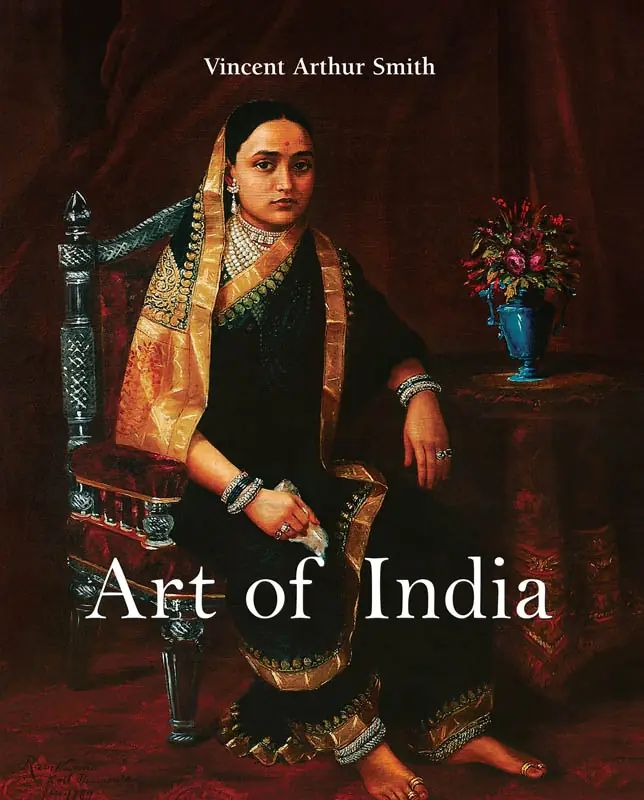
Art of India
Sacred traditions, temples, and timeless beautyDe Vincent Arthur Smith


Duração7h 34m
Sobre este audiolivro
If the ‘Palace of Love’, otherwise known as the Taj Mahal, is considered to be the emblem of Mughal Art, it is by no means the sole representative. Characterised by its elegance, splendor, and Persian and European influences, Mughal Art manifests itself equally well in architecture and painting as in decorative art.
Detalhes do audiolivro
Avaliação★★★★ 3,9 (26)
Inclui Goodreads, Amazon
GêneroOther
Duração7 h 34 min
Narrado porOuça com mais de 1.000 vozes
FormatoeBook com áudio
IdiomaInglês
Sumário
1Introduction
2India and its Art
3The Mauryan Period
4The Early Period
5Architecture
Mostrar todos os capítulosVer menos
6Sculpture
7The Kushan, Later Satavahna, and Ikshvaku Periods
8Mathura
9Amaravati
10The Gupta Period
11The Medieval Period in the North of India
12Architecture: Cave-Temples and Temples
13Sculpture: Medieval and Modern Objects
14Painting: The Early Schools (Ajanta Caves)
15The Medieval Period in the South of India
16Architecture
17Sculpture and Bronzes
18Foreign Influences: the Early and Medieval Periods
19The Islamic Period
20The Indo-Islamic Styles of Architecture
21The Indo-Islamic Decorative and Minor Arts
22Coins, Gems, and Seals
23Calligraphy and Decorative Reliefs
24Lattices
25Inlay and Mosaic
26Tiles
27The Indo-Islamic Styles of Painting
28Gujarati Painting
29Mughal Painting
30Rajput Painting
31Indian Paintings of the Twentieth Century
Séries
Mais de Vincent Arthur Smith

L’Art de l’IndeVincent Arthur Smith8h 35min4.6 (11)$18

Die Kunst IndiensVincent Arthur Smith1h 45min$15
Die Kunst IndiensVincent Arthur Smith8h 16min3.9 (26)$18
L’Art de l’IndeVincent Arthur Smith1h 44min$15
Art of IndiaVincent Arthur Smith1h 41min4.0 (44)$15
The Holy Bible - 1 SamuelKing James2h 13min4.8 (1.6K)$3 · $0.00
The American Standard Bible — The Gospel of MatthewMatthew3h 56min4.7 (3K)$2 · $0.00

Bad Fat Black GirlSesali Bowen6h 32min4.7 (2.8K)$24 · $0.00
The King James Audio Bible New Testament CompleteChristopher Glyn20h 2min4.7 (2.6K)$10 · $0.00
Faiths CheckbookCharles Spurgeon12h 44min4.7 (3.2K)$11 · $0.00

Ten Things I Wish You Knew About Your Child's Mental HealthDr. Billy Garvey4h 53min4.7 (2.4K)$20 · $0.00
Designing Terry Pratchett’s DiscworldPaul Kidby3h 52min4.7 (343)$20 · $0.00

The Lives of BrianBrian Johnson9h 45min4.6 (3.5K)$29 · $0.00
Expository Thoughts on the Gospel of LukeJ.C. Ryle27h 13min4.7 (536)$18 · $0.00

CrossroadsKaleb Dahlgren7h 56min4.6 (4.9K)$26 · $0.00

Across the RiverKent Babb11h 40min4.6 (927)$29 · $0.00

Brain Training for RidersAndrea Monsarrat Waldo5h 56min4.7 (550)$19 · $0.00

My Effin' LifeGeddy Lee17h 11min4.6 (13.1K)$40 · $0.00
Kings and PawnsHoward Bryant10h 9min4.6 (678)$29 · $0.00

The Elementia Chronicles #2: The New OrderSean Fay Wolfe11h 17min4.6 (841)$29 · $0.00
The ActsLuke2h 55min4.6 (19.7K)$12 · $0.00

New Testament - Easy NavigationWorld English Bible19h 35min4.6 (1.3K)$1.30 · $0.00

Woodcraft and Camping (Annotated)George Washington Sears3h 30min4.6 (1.2K)$1.99 · $0.00

The Hate U GiveAngie Thomas11h 50min4.5 (1.1M)$8 · $0.00
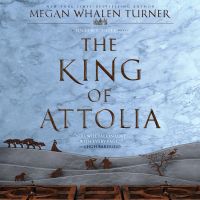
The King of AttoliaMegan Whalen Turner10h 23min4.5 (61.3K)$29 · $0.00
Você também pode gostar
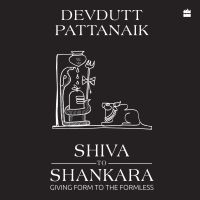
Shiva to ShankaraDevdutt Pattanaik3h 41min4.2 (628)$18 · $0.00
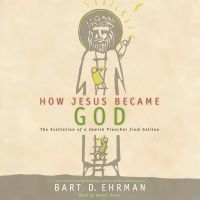
How Jesus Became GodBart D. Ehrman10h 35min4.4 (28.9K)$29 · $0.00
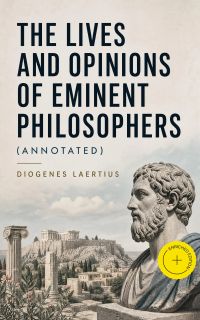
The Lives and Opinions of Eminent Philosophers (Annotated)Diogenes Laertius21h 28min4.1 (801)$2 · $0.00
The ExodusRichard Elliott Friedman5h 51min4.2 (2K)$17
The Builders: History of FreemasonsJoseph Fort Newton8h 18min4.1 (965)$1.99 · $0.00
The Bible With and Without JesusAmy-Jill Levine, Marc Zvi Brettler14h 32min4.3 (1.3K)$33 · $0.00
The Great Empires of the Ancient East (Annotated)George Rawlinson145h 1min$0.99 · $0.00

Books and Habits, from Lectures of Lafcadio HearnLafcadio Hearn8h 45min$2.30
Ancient FragmentsIsaac Preston Cory4h 8min4.4 (28)$1.20 · $0.00
Mesopotamian ArchaeologyPercy S. P. Handcock10h 58min$1 · $0.00

A Manual of the Malay languageWilliam Edward Sir Maxwell8h 42min$2 · $0.00
Persian ArtVladimir Lukonin, Anatoly Ivanov10h 31min3.8 (14)$18 · $0.00

Sixth annual report of the Bureau of ethnology. (1888 N 06 / 1884-1885)Various2h 49min$2 · $0.00

The Myths of the North American IndiansLewis Spence11h 53min3.8 (923)$2.30
Book of I JohnMade for Success18min4.5 (12)$8
The Gundungurra Language (Annotated)R. H. Mathews32min$1.99 · $0.00

Traditions of the North American Indians (Vol. 1-3) (Annotated)James Athearn Jones23h 26min$2 · $0.00
Arguments of Celsus, Porphyry, and the Emperor Julian, Against the ChristiansCornelius Tacitus, Flavius Josephus, Emperor of Rome Julian, Siculus Diodorus, Porphyry, active 180 Celsus3h 40min3.7 (52)$2 · $0.00
Studies on Homer and the Homeric Age (Annotated)W. E. Gladstone61h 26min$2 · $0.00
Celtic Mythology (Illustrated Edition) (Annotated)John Arnott MacCulloch9h 29min3.3 (82)$1.99 · $0.00