
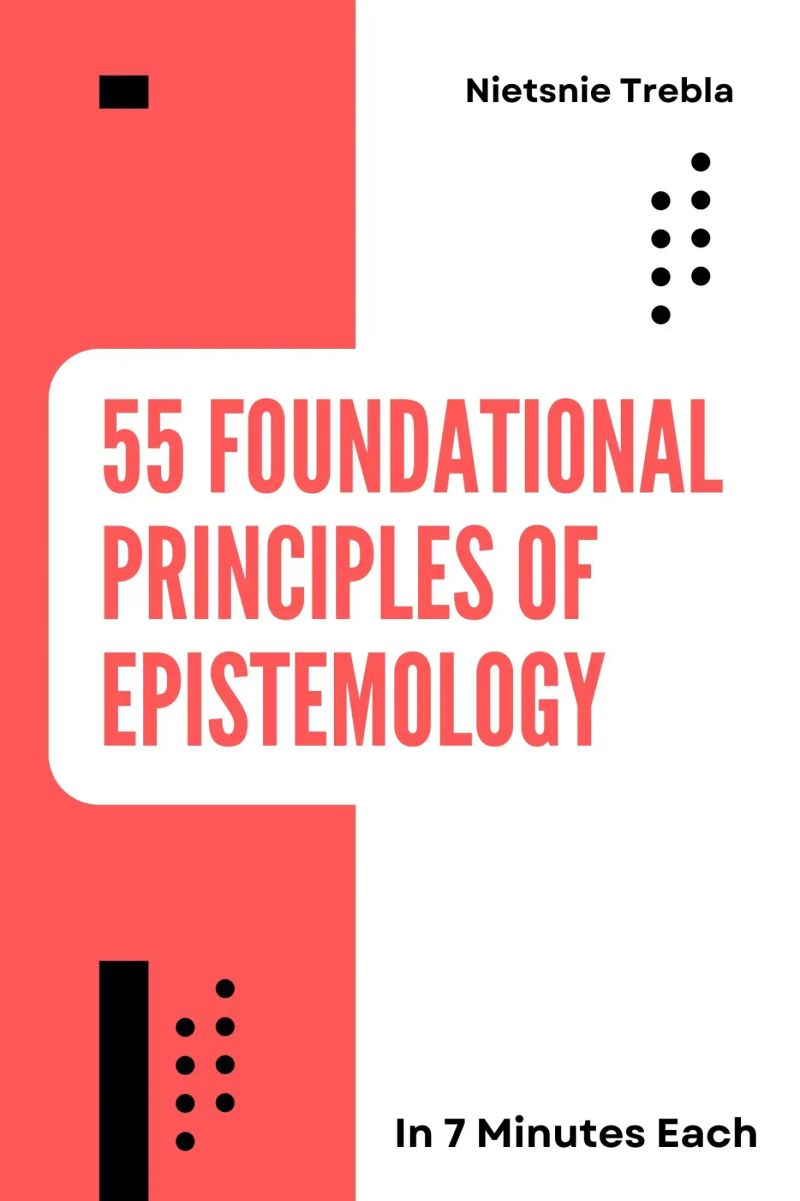
55 Foundational Principles of Epistemology in 7 Minutes Each
Unlocking the Core Ideas of Knowledge and Belief for Quick UnderstandingDe Nietsnie Trebla

Duração7h 53m
Sobre este audiolivro
Unlock the mysteries of knowledge with '55 Foundational Principles of Epistemology in 7 Minutes Each', a concise and accessible guide designed for both novices and seasoned thinkers. This book distills complex epistemological concepts into digestible chapters, each crafted to be read in just seven minutes. Whether you're a philosophy student, a curious mind, or a lifelong learner, this work offers a roadmap through the intricate landscape of epistemology.
In '55 Foundational Principles of Epistemology in 7 Minutes Each', readers will embark on a journey through the essential elements of knowledge—its nature, acquisition, and justification.
Detalhes do audiolivro
GêneroScience and Nature
Duração7 h 53 min
Narrado porOuça com mais de 1.000 vozes
FormatoeBook com áudio
Data de publicação30 de mar. de 2025
IdiomaInglês
Sumário
1Introduction
2Foreword
3Introduction
4The Definition of Epistemology
5The Branches of Epistemology
Mostrar todos os capítulosVer menos
6The Nature of Knowledge
7Justified True Belief
8The Gettier Problem
9Coherentism vs. Foundationalism
10Reliabilism: A Modern Approach
11Contextualism in Epistemology
12Internalism vs. Externalism
13The Role of Perception in Knowledge
14The Impact of Testimony
15The Importance of Memory
16Skepticism: The Challenge to Knowledge
17The Limits of Empirical Knowledge
18Rationalism vs. Empiricism
19The Problem of Induction
20The Role of Intuition
21Theories of Truth: Correspondence, Coherence, and Pragmatic
22The Social Nature of Knowledge
23The Reliability of Introspection
24Cognitive Bias and Knowledge
25The Role of Evidence in Justification
26A Priori vs. A Posteriori Knowledge
27Naturalized Epistemology
28The Importance of Conceptual Analysis
29Foundational Beliefs and Their Justification
30The Significance of Virtue Epistemology
31Epistemic Responsibility
32The Relationship Between Belief and Action
33The Role of Language in Epistemology
34Feminist Epistemology
35The Knowledge-Action Gap
36Epistemology and Ethics
37The Impact of Cultural Perspectives
38Epistemological Pluralism
39The Relevance of Social Epistemology
40The Function of Scientific Method
41Knowledge and Power Dynamics
42Epistemological Fallibilism
43The Constructivist Turn in Epistemology
44The Role of Narrative in Knowledge
45The Problem of Inter-Subjectivity
46The Epistemic Foundations of Democracy
47The Role of Emotion in Knowledge Acquisition
48The Influence of Technology on Knowledge
49The Intersection of Epistemology and Metaphysics
50Epistemology in the Digital Age
Séries


45 Wesentliche Fähigkeiten in der Konfliktlösung in je 7 MinutenNietsnie Trebla7h 47min Só no Ultra

50 Fortschritte in der Regenerativen Medizin in je 7 MinutenNietsnie Trebla8h 36min Só no Ultra

65 Mächtige Führungslektionen zur persönlichen Entwicklung in je 7 MinutenNietsnie Trebla10h 43min Só no Ultra

30 Wesentliche Erkenntnisse in der Entwicklungspsychologie in jeweils 7 MinutenNietsnie Trebla5h 7min Só no Ultra

15 Wesentliche Konzepte der Verhaltensökonomie in je 7 MinutenNietsnie Trebla2h 29min Só no Ultra
30 Bahnbrechende astronomische Entdeckungen in je 7 MinutenNietsnie Trebla5h 28min Só no Ultra

20 Wichtige Wirtschaftliche Indikatoren in Jeweils 7 MinutenNietsnie Trebla3h 15min Só no Ultra

25 Grundlegende Strategien in Überzeugung und Einfluss in Jeweils 7 MinutenNietsnie Trebla4h 8min Só no Ultra

50 Konfliktlösungsmethoden für effektive Kommunikation in jeweils 7 MinutenNietsnie Trebla7h 30min Só no Ultra

20 Wesentliche Psychologische Erkenntnisse in Jeweils 7 MinutenNietsnie Trebla3h 24min Só no Ultra

55 Wesentliche Einblicke in Risikokapital in je 7 MinutenNietsnie Trebla9h 20min Só no Ultra

50 Wesentliche Poetische Formen in Jeweils 7 MinutenNietsnie Trebla7h 18min Só no Ultra

15 Leistungsstarke Studientechniken für Effektives Lernen in je 7 MinutenNietsnie Trebla2h 30min Só no Ultra

25 Landmark-Rechtsfälle in jeweils 7 Minuten ErklärtNietsnie Trebla4h 4min Só no Ultra

30 Wesentliche Politikwissenschaftliche Konzepte in jeweils 7 Minuten ErklärtNietsnie Trebla5h 16min Só no Ultra

25 Grundlegende Konzepte der Sozialpsychologie in jeweils 7 MinutenNietsnie Trebla4h 13min Só no Ultra

20 Leistungsstarke Lernstrategien für Schnelles Meisterschaft in Jeweils 7 MinutenNietsnie Trebla3h 20min Só no Ultra
35 evolutionäre Konzepte in jeweils 7 Minuten erklärtNietsnie Trebla5h 50min Só no Ultra

65 Transformative Einsichten in den Pragmatismus in jeweils 7 MinutenNietsnie Trebla11h 1min Só no Ultra

65 Wesentliche Essays zur Globalisierung in jeweils 7 MinutenNietsnie Trebla11h 14min Só no Ultra
A Brief History of IntelligenceMax S. Bennett12h 18min4.6 (6.6K)$29 · $0.00
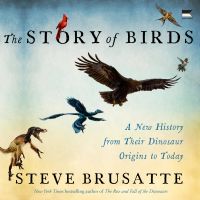
The Story of BirdsSteve Brusatte11h 49min4.6 (401)$29 · $0.00

Craig & FredCraig Grossi8h 6min4.5 (9.6K)$26 · $0.00

Celebrating BirdsNatalia Rojas, Ana Maria Martinez6h 47min4.6 (330)$24 · $0.00

Saving JemimaJulie Zickefoose4h 59min4.5 (749)$20 · $0.00

Will's Red CoatTom Ryan8h 23min4.5 (2.3K)$26 · $0.00

Of Time and TurtlesSy Montgomery10h 34min4.5 (5K)$29 · $0.00

THE WOLF TRILOGY: Call of the Wild, White Fang & The Son of the WolfJack London17h 31min4.5 (2.4K)$1.99 · $0.00

Zen and the Art of Saving the PlanetThich Nhat Hanh9h 20min4.5 (3.9K)$29 · $0.00

BLACK BEAUTY (With Original Illustrations)Anna Sewell7h 31min4.5 (1.3K)$1.99 · $0.00

Bottle of LiesKatherine Eban14h 25min4.4 (12K)$33 · $0.00
IngrainedCallum Robinson8h 10min4.5 (1.1K)$26 · $0.00

The Lion Tracker's Guide To LifeBoyd Varty3h 1min4.4 (4.8K)$18 · $0.00

Born for LoveBruce D. Perry, Maia Szalavitz11h 42min4.4 (4K)$29 · $0.00

The Mountains of California (With Original Drawings & Photographs) (Annotated)John Muir11h 35min4.5 (1.1K)$2 · $0.00

The New GuysMeredith Bagby16h 50min4.4 (1.2K)$40 · $0.00

Blue PasturesMary Oliver3h 23min4.4 (3.8K)$18 · $0.00
The Rise and Reign of the MammalsSteve Brusatte13h 26min4.4 (11.1K)$33 · $0.00

VaccinatedPaul A. Offit8h 30min4.4 (3.7K)$26 · $0.00

The Light EatersZoë Schlanger10h 57min4.4 (22.8K)$29 · $0.00
Você também pode gostar

The Analysis of MindBertrand Russell9h 38min4.0 (1K)Grátis

David Hume: The Collected WorksDavid Hume37h 13min4.5 (261)$1 · $0.00

Matter & MemoryHenri Bergson10h 46min4.2 (3.9K)$1.99 · $0.00

The Seven Sins Of MemoryDaniel L. Schacter13h 14min4.0 (5.7K)$33 · $0.00
A Question of TimeScientific American6h 42min4.1 (689)$17
The Predictably IrrationalDan Ariely7h 24min4.2 (370.5K)$24 · $0.00
An Essay Concerning Human UnderstandingJohn Locke30h 12min4.0 (18K)$1.20 · $0.00

On the Improvement of the UnderstandingBenedictus de Spinoza1min4.0 (1.1K)$2.30
To Read Stuff You Have to Know StuffKelly Gallagher6h 2min4.4 (165)$23
ListenMichel Faber12h 49min3.5 (534)$33 · $0.00

The Essence of Hume's PhilosophyDavid Hume37h 30min$2 · $0.00
Illusions - A Psychological StudyJames Sully10h3.8 (14)$3.50 · $0.00
Phenomenology: Understanding ExperienceSaraban K. K. 1h 39min5.0 (8) Só no Ultra

Your Mind and How to Use ItWilliam Walker5h 10min4.0 (246)$3.50 · $0.00
The Curiosity MuscleMark Adamar5h 34min$6 · $0.00

For the Love of History - A Conversation with Margaret MacMillanHoward Burton1h 32min$3
The Foundations of Normal and Abnormal Psychology (Annotated)Boris Sidis12h 47min$1.99 · $0.00
Mysteries of the MindScientific American6h 42min4.1 (22)$17
Improve Your Memory NowMark Cosmo53min$16 · $0.00
Matter and Memory (Annotated)Henri Bergson10h 58min4.5 (112)$1.99 · $0.00