
Audio only
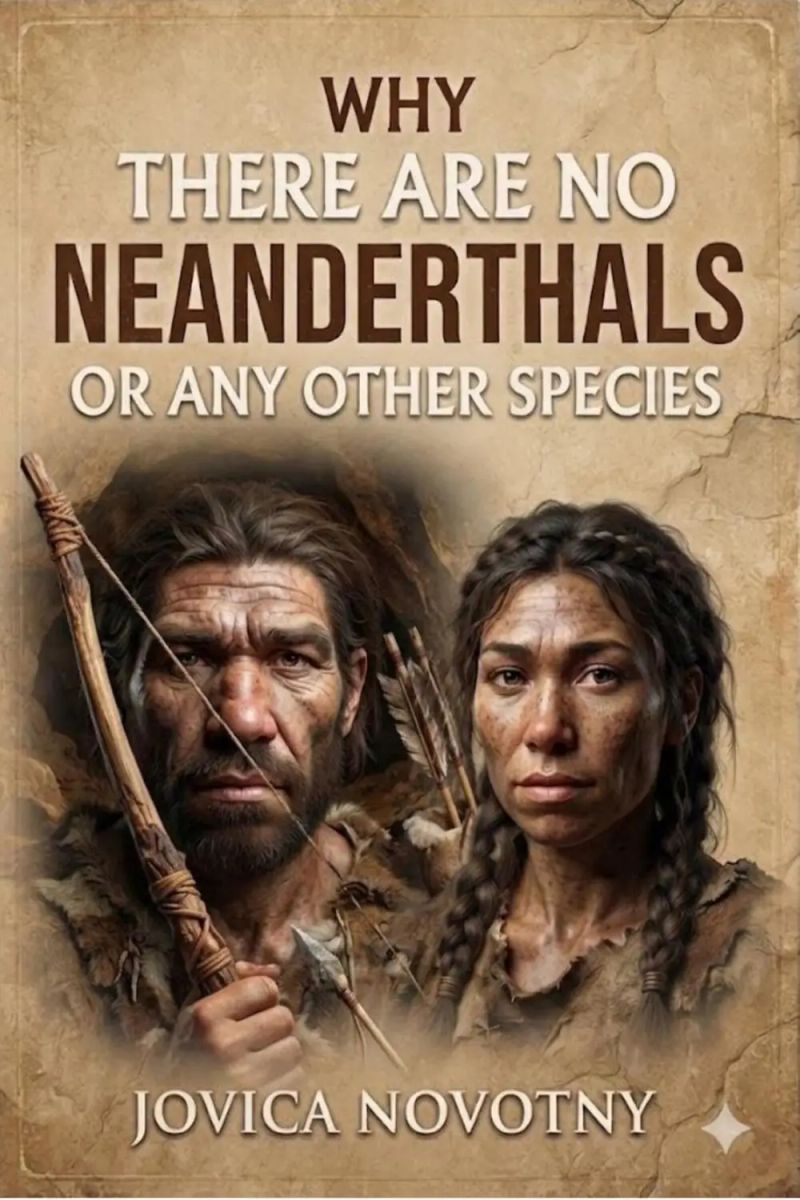
Why There Are No Neanderthals or Any Other Species
By Jovica Novotny


Length3h 7m
About this audiobook
The Earth was not always inhabited by a single human species. For hundreds of thousands of years, our ancestors shared the planet with several close relatives, each possessing unique physical characteristics, behaviors, and survival strategies. Among these were the Neanderthals, Denisovans, Homo erectus, Homo floresiensis, Homo naledi, and other ancient members of the human family. Today, however, only one species remains—Homo sapiens. The disappearance of every other human species is one of the most fascinating mysteries in science and has inspired decades of research across archaeology, genetics, anthropology, and evolutionary biology.
For much of modern history, Neanderthals were misunderstood. They were often portrayed as unintelligent, brutish cavemen who were incapable of matching the abilities of modern humans. Scientific discoveries over the past several decades have completely transformed that outdated image. Evidence now shows that Neanderthals were skilled hunters, expert toolmakers, masters of fire, and caring members of tightly connected communities. They survived repeated Ice Age climate shifts, adapted to harsh environments, and thrived across Europe and western Asia for more than 300,000 years. Their intelligence and resilience make one question unavoidable: if they were so capable, why are they no longer here?
The answer is far more complex than scientists once believed. Rather than disappearing because of a single catastrophic event, Neanderthals likely faced a combination of environmental change, shrinking populations, disease, competition for resources, and interbreeding with expanding populations of Homo sapiens. Modern genetic research has revealed that Neanderthals did not vanish completely. Instead, many living people carry small portions of Neanderthal DNA, demonstrating that our species and theirs were closely connected through shared ancestry and occasional interbreeding.
This book explores the remarkable journey of our extinct relatives, beginning with who the Neanderthals were and where they fit within the human family tree. It examines the Ice Age world they inhabited, how they hunted, lived, communicated, and raised their families, and what happened when they encountered modern humans. It also investigates the leading scientific explanations for their disappearance, showing why most researchers now agree that no single cause can fully explain their extinction.
Beyond the Neanderthals, this book introduces other fascinating human species that once walked the Earth. Some lived on isolated islands, others spread across continents, and each contributed valuable clues about the diversity of human evolution. Their discoveries remind us that the history of humanity was never a straight line but a branching tree filled with many experiments in adaptation and survival.
You will also discover why Homo sapiens ultimately became the only surviving human species. By examining the roles of innovation, cooperation, cultural learning, genetic diversity, and adaptability, we gain a deeper understanding of the qualities that enabled our ancestors to thrive while others gradually disappeared. Advances in ancient DNA analysis and genome sequencing have revolutionized this field, revealing relationships that fossils alone could never explain and opening exciting new directions for future research.
The story of the Neanderthals is not simply about extinction—it is about connection. Their lives, achievements, and genetic legacy remain part of our own history. By understanding why there are no Neanderthals or any other human species alive today, we gain valuable insight into evolution, resilience, and the shared heritage that unites all people.
Audiobook details
GenreHistory
Length3 hrs 7 mins
Narrated byListen with 1,000+ voices
FormateBook with Audio
Publish dateJul 29, 2026
LanguageEnglish
More from Jovica Novotny

Warum es keine Neandertaler oder andere Spezies gibtJovica Novotny3h 37m$3.50 · $0.00
Pourquoi il n'y a pas de Néandertaliens ni d'autres espècesJovica Novotny3h 44m$3.50 · $0.00
Perché non esistono i Neanderthal o altre specieJovica Novotny3h 32m$3.50 · $0.00

Por que não existem neandertais nem nenhuma outra espécie?Jovica Novotny3h 27m$3.50 · $0.00
Why There Are No Denisovans or Any Other SpeciesJovica Novotny4h$3.50 · $0.00
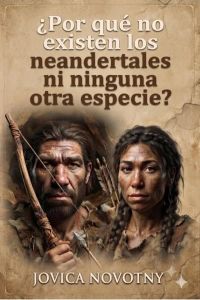
¿Por qué no existen los neandertales ni ninguna otra especie?Jovica Novotny3h 34m$3.50 · $0.00

A Brief History of IntelligenceMax S. Bennett12h 18m4.6 (6.6K)$29 · $0.00

The Happiest Man on EarthEddie Jaku3h 48m4.6 (178K)$7 · $0.00

MotherlandJulia Ioffe17h 52m4.7 (2.5K)$40 · $0.00

Where Cowards Go to DieBenjamin Sledge8h 42m4.7 (351)$20 · $0.00

RevolutionariesSanjeev Sanyal11h 23m4.6 (2.6K)$29 · $0.00

We Crossed a Bridge and It TrembledWendy Pearlman6h4.6 (5.2K)$24 · $0.00

Unbroken Bonds of BattleJohnny Joey Jones8h 31m4.6 (2.6K)$8 · $0.00

The Daughter of AuschwitzTova Friedman, Malcolm Brabant7h 54m4.6 (16.7K)$26 · $0.00

Lily's PromiseLily Ebert, Dov Forman8h 54m4.6 (16.1K)$29 · $0.00

On Democracies and Death CultsDouglas Murray10h 38m4.6 (6.5K)$29 · $0.00

Across the RiverKent Babb11h 40m4.6 (927)$29 · $0.00

Balcony Over Jerusalem: A Middle East Memoir - Israel, Palestine and BeyondJohn Lyons12h 37m4.6 (1.4K)$33 · $0.00

BeyondStephen Walker15h 39m4.6 (3.2K)$33 · $0.00
Kings and PawnsHoward Bryant10h 9m4.6 (678)$29 · $0.00

No EscapeNury Turkel9h 30m4.6 (809)$28 · $0.00

Jubal Stone: U.S. Marshal: Blood Trail To Hell: A Western Adventure NovelCasey Nash3h 42m4.6 (3.2K)$18 · $0.00

Fall and RiseMitchell Zuckoff17h 23m4.6 (9.8K)$40 · $0.00
The SurvivorJosef Lewkowicz, Michael Calvin9h 22m4.6 (2.5K)$29 · $0.00

Always FaithfulThomas Schueman, Zainullah Zaki12h 12m4.6 (977)$29 · $0.00

The State of Society in France Before the Revolution of 1789 (Annotated)Alexis de Tocqueville17h 25m4.6 (1.2K)$2 · $0.00
You may also like
First StepsJeremy DeSilva9h 17m4.4 (1.8K)$29 · $0.00
The PioneersJames Fenimore Cooper18h 50m3.6 (4.9K)$1.20 · $0.00
On the Origin of SpeciesCharles Darwin21h 28m4.2 (303K)$21 · $0.00
On the origin of speciesCharles Darwin16h 50m4.2 (154.5K)$4 · $0.00

Evidence as to Man's Place in NatureThomas Henry Huxley2h 36m3.9 (1.4K)$1 · $0.00

Survival of the SickestSharon Moalem, Jonathan Prince6h 39m4.2 (12.9K)$24 · $0.00
The Trapper's BibleLivingston, Eustace H18h 52m4.4 (1.2K)Free
OriginsFrank Harold Trevor Rhodes10h 6m4.0 (709)$20
Why There Are No Denisovans or Any Other SpeciesJovica Novotny4h$3.50 · $0.00
Man and His MigrationsR. G. Latham5h 11m$2 · $0.00

The Birth of IberiaSantiago Machain4h 11m$19 · $0.00
EvolutionScientific American7h 23m3.7 (32)$17

The Power of Movement in PlantsSir Francis Darwin, Charles Darwin19h 20m3.4 (84)$1 · $0.00
Charles Darwin: On the Origin of Species & On the Tendency of Species to Form VarietiesCharles Darwin23h 33m$2 · $0.00

White FeathersBernd Heinrich7h 9m4.0 (171)$24 · $0.00
Natural CuriositiesAlfred Russel Wallace1h 57m4.3 (18)$15 · $0.00
Ecological Studies of the Timber Wolf in Northeastern MinnesotaRobert R. Ream, P. D. Karns, John W. Winship, L. David Mech, Louis Daniel Frenzel2h 42m$1 · $0.00

The Dinner Year-BookMarion Harland25h 44m4.3 (11)$1 · $0.00

The Secret World of DenisovansSilvana Condemi, François Savatier6h 41m4.0 (166)$23

A Matter of Energy: Biology From First Principles - A Conversation with Nick LaneHoward Burton2h 24m4.3 (15)$3 · $0.00