
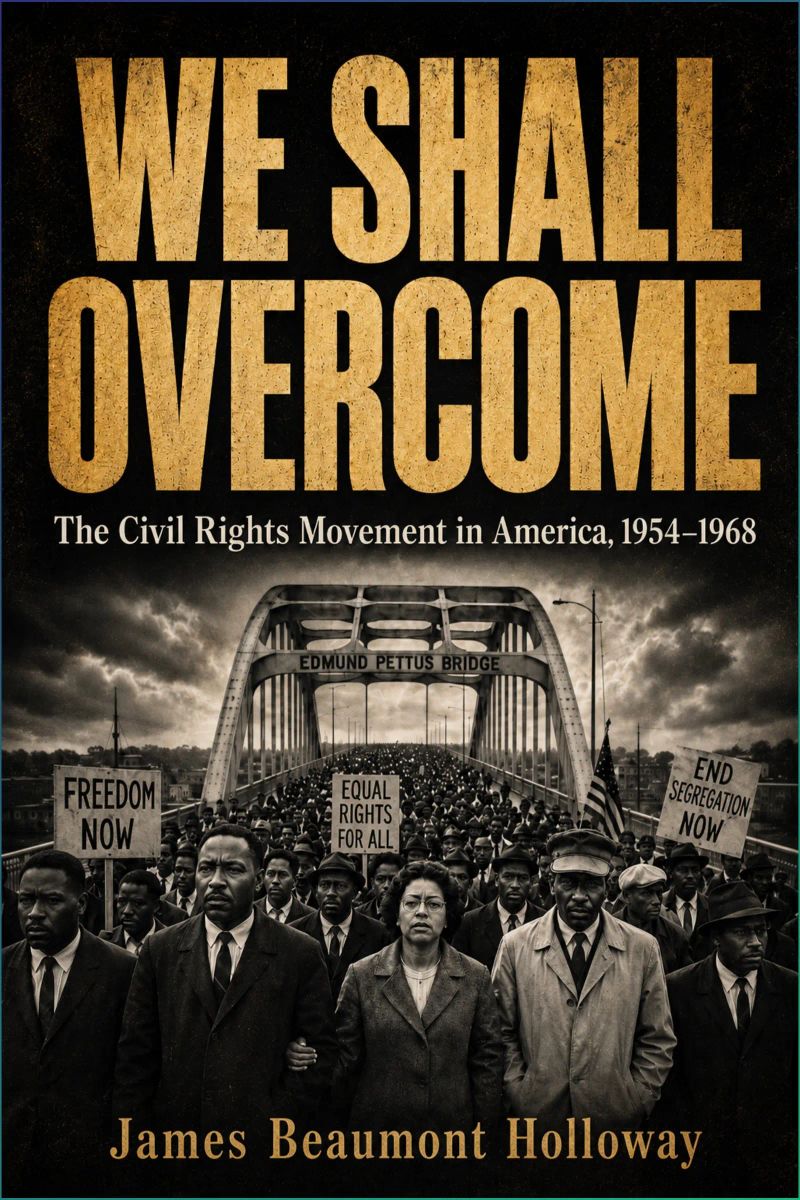
WE SHALL OVERCOME
The Civil Rights Movement in America, 1954–1968By James Beaumont Holloway


Length6h 3m
About this audiobook
The complete civil rights movement history — Brown v. Board of Education, Rosa Parks, Martin Luther King Jr., the Civil Rights Act of 1964, Bloody Sunday, and the Voting Rights Act of 1965, across 24 chapters from 1865 to 1968.
On December 5, 1955, Jo Ann Robinson — president of Montgomery's Women's Political Council — had already printed 52,000 overnight leaflets announcing a bus boycott. By evening, Black Montgomery had stayed off the buses almost entirely, a twenty-six-year-old minister named Martin Luther King Jr. had been voted the boycott's leader, and the Montgomery Improvement Association had voted to continue. The boycott lasted 381 days.
This is the story of how a century of resistance dismantled legal segregation. Historian James Beaumont Holloway traces the full arc of the civil rights movement across six parts: Jim Crow's legal construction; the NAACP strategy that took Thurgood Marshall from Sweatt v. Painter to the unanimous Brown ruling of May 1954; the direct-action campaigns of Montgomery and Greensboro; Birmingham, the March on Washington, and the Civil Rights Act; the fractures of Black Power and King's murder in Memphis; and the unfinished reckoning the Kerner Commission named in 1968.
Inside this civil rights history:
• Jim Crow's architecture — poll taxes, literacy tests, and 4,000 documented lynchings between 1877 and 1950, building a racial caste system designed to last (Chapters 1-4)
• The NAACP legal campaign — Charles Hamilton Houston's strategy from Gaines to Sweatt to McLaurin, and Kenneth Clark's doll studies that grounded the Brown v. Board ruling (Chapters 2-4)
• Montgomery — Rosa Parks as trained activist, 52,000 overnight leaflets, and 381 days of boycott establishing nonviolent mass action as the movement's method (Chapter 5)
• Birmingham and the Children's Crusade — Bull Connor's fire hoses and the photographs that forced Kennedy toward the Civil Rights Act of 1964 (Chapter 9)
• Bloody Sunday — John Lewis and 600 marchers beaten at the Edmund Pettus Bridge on March 7, 1965, and the weeks that produced the Voting Rights Act (Chapter 12)
• The unfinished revolution — the Kerner Commission's 1968 warning, persistent wealth gaps, mass incarceration, and the thread to George Floyd and 2020 (Chapters 21-24)
The civil rights movement won the Civil Rights Act of 1964, the Voting Rights Act of 1965, and the Fair Housing Act of 1968 — and left work undone that continues today. Holloway's narrative African American history makes plain what was achieved, what it cost, and what the Kerner Commission knew would still need answering.
For readers of Isabel Wilkerson's THE WARMTH OF OTHER SUNS and Taylor Branch's PARTING THE WATERS.
Audiobook details
GenreHistory
Length6 hrs 3 mins
Narrated byListen with 1,000+ voices
FormateBook with Audio
Publish dateJun 1, 2026
LanguageEnglish
Table of contents
1Introduction
2Prologue: The Long Road to Freedom
3PART ONE: THE LONG ROOTS (1865–1954)
4Chapter 1: Jim Crow's Architecture — The Making of Segregation
5Chapter 2: The NAACP and Early Resistance — From Ida B. Wells to Thurgood Marshall
Show all chaptersShow less
6Chapter 3: Challenging Plessy — The Legal Strategy for Equality
7Chapter 4: Brown v. Board of Education — The Decision That Changed Everything
8PART TWO: THE FIRST WAVE (1955–1960)
9Chapter 5: Montgomery — Rosa Parks and the Bus Boycott
10Chapter 6: Little Rock — Eisenhower, the 101st Airborne, and Central High
11Chapter 7: The Sit-Ins — Greensboro and the Birth of SNCC
12Chapter 8: The Freedom Riders — Testing the Terminals
13PART THREE: CONFRONTATION AND LEGISLATION (1961–1965)
14Chapter 9: Birmingham — Bull Connor, Fire Hoses, and the Children's Crusade
15Chapter 10: The March on Washington — I Have a Dream
16Chapter 11: The Civil Rights Act of 1964 — The Legislative Battle
17Chapter 12: Selma — Bloody Sunday and the Voting Rights Act
18PART FOUR: THE MOVEMENT'S LEADERS
19Chapter 13: Martin Luther King Jr. — The Preacher and His Strategy
20Chapter 14: Malcolm X — The Radical Alternative
21Chapter 15: Fannie Lou Hamer and SNCC — Grassroots Organizing in Mississippi
22Chapter 16: The White Moderates — Support, Opposition, and Hesitation
23PART FIVE: THE MOVEMENT FRACTURES (1966–1968)
24Chapter 17: Black Power — Stokely Carmichael and the New Militancy
25Chapter 18: The Northern Cities — Housing, Employment, and the Urban Rebellions
26Chapter 19: King's Final Years — Chicago, Memphis, and the Poor People's Campaign
27Chapter 20: April 4, 1968 — The Assassination and Its Aftermath
28PART SIX: LEGACIES
29Chapter 21: The Voting Rights Act's Impact — Black Political Power
30Chapter 22: Affirmative Action — Policy and Its Discontents
31Chapter 23: What the Movement Achieved — The Transformation of Law and Society
32Chapter 24: The Unfinished Revolution — Persistent Inequality and the Movement's Limits
33Epilogue: The Unfinished Revolution
34Acknowledgments
35Selected Bibliography
36About the Author
More from James Beaumont Holloway

A Brief History of IntelligenceMax S. Bennett12h 18m4.6 (6.6K)$29 · $0.00
Black AF HistoryMichael Harriot15h 43m4.7 (14.6K)$33 · $0.00

The Gulag Archipelago Volume 3Aleksandr I. Solzhenitsyn21h 56m4.7 (8.9K)$46 · $0.00
Pearl of Great PriceJoseph Smith3h 8m4.7 (7.2K)$1.20 · $0.00

The Happiest Man on EarthEddie Jaku3h 48m4.6 (178K)$7 · $0.00

MotherlandJulia Ioffe17h 52m4.7 (2.5K)$40 · $0.00

Where Cowards Go to DieBenjamin Sledge8h 42m4.7 (351)$20 · $0.00
RevolutionariesSanjeev Sanyal11h 23m4.6 (2.6K)$29 · $0.00

We Crossed a Bridge and It TrembledWendy Pearlman6h4.6 (5.2K)$24 · $0.00

Unbroken Bonds of BattleJohnny Joey Jones8h 31m4.6 (2.6K)$8 · $0.00

The Daughter of AuschwitzTova Friedman, Malcolm Brabant7h 54m4.6 (16.7K)$26 · $0.00
Lily's PromiseLily Ebert, Dov Forman8h 54m4.6 (16.1K)$29 · $0.00
On Democracies and Death CultsDouglas Murray10h 38m4.6 (6.5K)$29 · $0.00

Across the RiverKent Babb11h 40m4.6 (927)$29 · $0.00

Balcony Over Jerusalem: A Middle East Memoir - Israel, Palestine and BeyondJohn Lyons12h 37m4.6 (1.4K)$33 · $0.00
BeyondStephen Walker15h 39m4.6 (3.2K)$33 · $0.00
Kings and PawnsHoward Bryant10h 9m4.6 (678)$29 · $0.00

No EscapeNury Turkel9h 30m4.6 (809)$28 · $0.00
Jubal Stone: U.S. Marshal: Blood Trail To Hell: A Western Adventure NovelCasey Nash3h 42m4.6 (3.2K)$18 · $0.00
Fall and RiseMitchell Zuckoff17h 23m4.6 (9.8K)$40 · $0.00
You may also like
My Own Story (Illustrated Edition)Emmeline Pankhurst12h 1m4.3 (4.7K)$1.99 · $0.00
Statement From the Dock at the Rivonia TrialNelson Mandela2h 18m4.6 (1.3K)$1 · $0.00
Revolution 2.0Wael Ghonim11h 54m4.1 (2.6K)$23 · $0.00
Common SenseThomas Paine2h 24m4.1 (297.3K)$1.20 · $0.00
Notorious RBG Young Readers' EditionIrin Carmon, Shana Knizhnik2h 59m4.4 (2.6K)$18 · $0.00
Freedom's Battle - Hind Swaraj or Indian Home RuleMohandas K. Gandhi3h 55m4.2 (14.4K)$2 · $0.00
Areopagitica John Milton1h 53m4.0 (4.1K)Free
The Life of George Washington (Summarized Edition)John Marshall13h 26m4.1 (309)$2
Alabama v. KingDavid Fisher, Dan Abrams12h 26m4.4 (1K)$4 · $0.00
Voice for the VoicelessDalai Lama5h 47m4.4 (441)$24 · $0.00
AntifaMark Bray7h 37m4.1 (5.6K)$20
Bound for CanaanFergus Bordewich5h 30m4.3 (1.8K)$24 · $0.00

Manifesto of the Communist PartyFriedrich Engels, Karl Marx2h 34m3.8 (255.7K)$1 · $0.00

Sketches of the CovenantersJ. C. McFeeters9h 21m4.4 (10)$1 · $0.00
La bandera puertorriquenaAnika Aldamuy Denise36m$9 · $0.00

Jackie RobinsonJoseph Schuster1h 7m$14.10 · $0.00
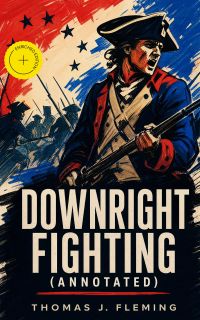
"Downright Fighting" (Annotated)Thomas J. Fleming3h 2m$0.99 · $0.00
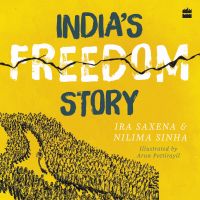
India's Freedom Story SHORTLISTED FOR THE ATTA GALATTA CHILDREN'S NON-FICTION BOOK PRIZE 2022Ira Saxena, Nilima Sinha6h 58m4.2 (20)$24 · $0.00
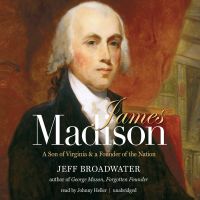
James MadisonJeff Broadwater9h 22m3.6 (220)$20 · $0.00
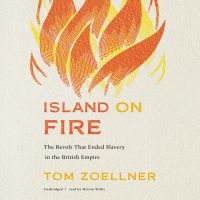
Island on FireTom Zoellner10h 20m$20