
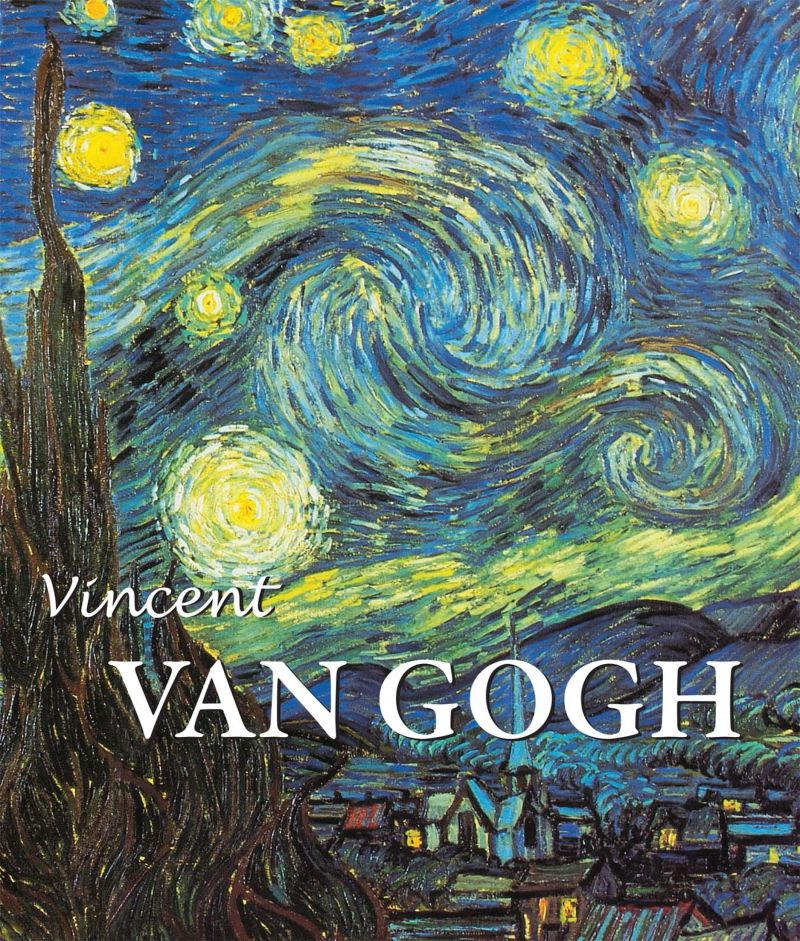


Length3h 34m
About this audiobook
Vincent van Gogh's life and work are so intertwined that it is hardly possible to observe one without thinking of the other. Van Gogh has indeed become the incarnation of the suffering, misunderstood martyr of modern art, the emblem of the artist as an outsider. An article, published in 1890, gave details about van Gogh's illness. The author of the article saw the painter as "a terrible and demented genius, often sublime, sometimes grotesque, always at the brink of the pathological." Very little is known about Vincent's childhood. At the age of eleven he had to leave "the human nest", as he called it himself, for various boarding schools. The first portrait shows us van Gogh as an earnest nineteen year old. At that time he had already been at work for three years in The Hague and, later, in London in the gallery Goupil & Co. In 1874 his love for Ursula Loyer ended in disaster and a year later he was transferred to Paris, against his will. After a particularly heated argument during Christmas holidays in 1881, his father, a pastor, ordered Vincent to leave. With this final break, he abandoned his family name and signed his canvases simply "Vincent". He left for Paris and never returned to Holland. In Paris he came to know Paul Gauguin, whose paintings he greatly admired. The self-portrait was the main subject of Vincent's work from 1886c88. In February 1888 Vincent left Paris for Arles and tried to persuade Gauguin to join him. The months of waiting for Gauguin were the most productive time in van Gogh's life. He wanted to show his friend as many pictures as possible and decorate the Yellow House. But Gauguin did not share his views on art and finally returned to Paris. On 7 January, 1889, fourteen days after his famous self-mutilation, Vincent left the hospital where he was convalescing. Although he hoped to recover from and to forget his madness, but he actually came back twice more in the same year. During his last stay in hospital, Vincent painted landscapes in which he recreated the world of his childhood. It is said that Vincent van Gogh shot himself in the side in a field but decided to return to the inn and went to bed. The landlord informed Dr Gachet and his brother Theo, who described the last moments of his life which ended on 29 July, 1890: "I wanted to die. While I was sitting next to him promising that we would try to heal him. [...], he answered, 'La tristesse durera toujours (The sadness will last forever).'"
Audiobook details
Rating★★★★ 3.9 (180)
Includes Goodreads
GenreOther
Length3 hrs 34 mins
Narrated byListen with 1,000+ voices
FormateBook with Audio
Publish dateJan 17, 2012
LanguageEnglish
Table of contents
1Vincent Vincent
2permission of the copyright holder, throughout the world. Unless otherwise
3Index
4Forward
5of modern art and the emblem of the artist as an outsider.
Show all chaptersShow less
6Mlle Gachet in the Garden at
7Gogh from then on.
8Dr. Paul Gachet’s Garden
9Holland, England and Belgium 1853-1886
10his close relation to nature:
11Nuenen, September 1884.
12Kröller-Müller Museum, Otterlo.
13with the arrival of four more children.
14Nuenen, March-April 1885.
15Kröller-Müller Museum, Otterlo.
16Goupil’s in London:
17van Gogh immediately after his return to Paris.
18Nuenen, 1885.
19Congregation Leaving the Reformed
20Nuenen, February 1884.
21(Opposite)
22Nuenen, 1885.
23Van Gogh Museum, Amsterdam.
24passions to good use:
25Van Gogh Museum, Amsterdam.
26his employer rather than his patron.
27(Opposite)
28the relationship.
29(Opposite)
30Theo to his sister Willemien.
31Paris, autumn 1886.
32Van Gogh Museum, Amsterdam.
33Japonaiserie: Flowering Plum Tree
34Oil on canvas.
35Baltimore Museum of Art, Baltimore.
36Letter from Vincent van Gogh to Mr. Levens Paris, Aug-Oct. 1886
37Street Scene in Montmartre: Le Moulin
38Paris.
39Fishing in Spring, the Pont de Clichy
40Paris, autumn 1888.
41Kröller-Müller Museum, Otterlo.
42Paris, summer 1887.
43Letter from Vincent van Gogh to Theo van Gogh Paris, Summer 1887
44terribly you.
45With a hearty handshake, Vincent
46artist in society:
47Oil on canvas, 92.1 x 73 cm.
48Van Gogh Museum, Amsterdam.
49short of funds.
50solid furniture, the bed, chairs and table all in white deal. Downstairs
1000 Meisterwerke der Angewandten KunstVictoria Charles9h 41m$15.50 · $0.00
1000 Portraits de génieVictoria Charles, Klaus H. Carl12h 6m4.0 (10)$18 · $0.00
Art Deco. The world of Art Deco unveiledVictoria Charles1h 28m3.4 (65)$13 · $0.00
El RenacimientoVictoria Charles3h 32m3.8 (44)$15 · $0.00
El libro definitivo sobre PicassoVictoria Charles, Anatoli Podoksik7h 13m4.8 (10)$19 · $0.00
Caspar David Friedrich. Mystique et NatureVictoria Charles3h 2m4.4 (25)$16 · $0.00
1000 Retratos de los Grandes MaestrosVictoria Charles, Klaus H. Carl10h 6m4.1 (18)$18 · $0.00
Salvador DalíVictoria Charles2h 41m$13 · $0.00
Salvador DalíVictoria Charles2h 38m4.3 (35)$13 · $0.00

Albrecht Dürer 1471-1528Victoria Charles2h 36m3.3 (25)$16 · $0.00
Pablo Picasso - El minotauro de la pinturaVictoria Charles, Anatoli Podoksik4h 52m$16 · $0.00
Salvador Dalí «Yo soy el surrealismo»Victoria Charles, Eric Shanes4h 41m4.6 (11)$16 · $0.00
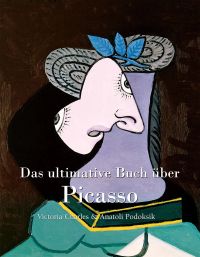
Das ultimative Buch über PicassoVictoria Charles, Anatoli Podoksik7h 20m4.2 (163)$19 · $0.00
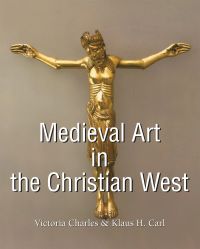
Medieval Art in the Christian WestVictoria Charles, Klaus H. Carl7h 57m$19 · $0.00
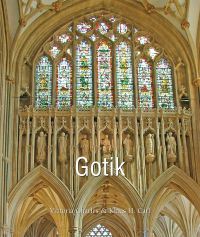
GotikVictoria Charles, Klaus H. Carl4h 43m4.0 (34)$15 · $0.00
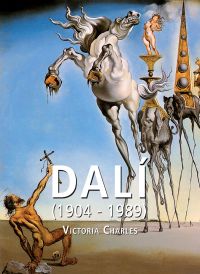
Dalí 1904-1989Victoria Charles46m3.6 (54)$15 · $0.00
Francisco Goya: Uma vida na arteVictoria Charles1h 20m4.1 (19)$8 · $0.00
Sandro BotticelliVictoria Charles1h 24m4.2 (36)$8 · $0.00
Sandro BotticelliVictoria Charles1h 38m4.2 (26)$8 · $0.00
BotticelliVictoria Charles1h 34m4.2 (26)$8 · $0.00
Mere ChristianityC. S. Lewis7h 7m4.4 (519.7K)$24 · $0.00

Her Daily BreadKate Wood12h 57m4.6 (153)$33 · $0.00
The Holy Bible - 1 SamuelKing James2h 13m4.8 (1.6K)$3 · $0.00
The American Standard Bible — The Gospel of MatthewMatthew3h 56m4.7 (3K)$2 · $0.00

Bad Fat Black GirlSesali Bowen6h 32m4.7 (2.8K)$24 · $0.00
The King James Audio Bible New Testament CompleteChristopher Glyn20h 2m4.7 (2.6K)$12 · $0.00
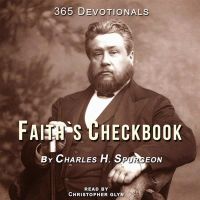
Faiths CheckbookCharles Spurgeon12h 44m4.7 (3.2K)$11 · $0.00
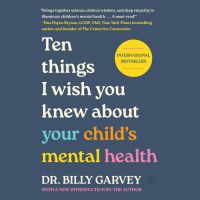
Ten Things I Wish You Knew About Your Child's Mental HealthDr. Billy Garvey4h 53m4.7 (2.4K)$20 · $0.00

Designing Terry Pratchett’s DiscworldPaul Kidby3h 52m4.7 (343)$20 · $0.00
The Chosen Book OneAmanda Jenkins, Kristen Hendricks, Dallas Jenkins3h 8m4.6 (4.9K)$10 · $0.00
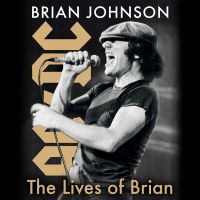
The Lives of BrianBrian Johnson9h 45m4.6 (3.5K)$29 · $0.00
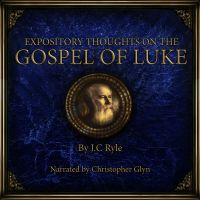
Expository Thoughts on the Gospel of LukeJ.C. Ryle27h 13m4.7 (536)$18 · $0.00

CrossroadsKaleb Dahlgren7h 56m4.6 (4.9K)$26 · $0.00

Across the RiverKent Babb11h 40m4.6 (927)$29 · $0.00

Brain Training for RidersAndrea Monsarrat Waldo5h 56m4.7 (550)$19 · $0.00
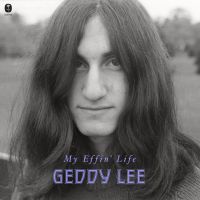
My Effin' LifeGeddy Lee17h 11m4.6 (13.1K)$40 · $0.00
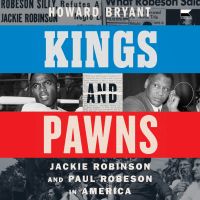
Kings and PawnsHoward Bryant10h 9m4.6 (678)$29 · $0.00

The Elementia Chronicles #2: The New OrderSean Fay Wolfe11h 17m4.6 (841)$29 · $0.00
The ActsLuke2h 55m4.6 (19.7K)$12 · $0.00
New Testament - Easy NavigationWorld English Bible19h 35m4.6 (1.3K)$1.30 · $0.00
You may also like
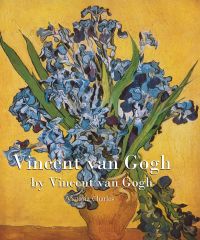
Vincent van GoghVincent van Gogh, Victoria Charles9h 52m4.2 (290)$19 · $0.00
BoyhoodLeo Tolstoy3h 8m3.9 (2.8K)$4.10 · $0.00

The RainbowD. H. Lawrence20h 45m3.8 (23K)$2.30 · $0.00

North and SouthElizabeth Gaskell19h 35m4.3 (239.7K)$21 · $0.00
The RainbowD. H. Lawrence21h 5m3.9 (27.1K)$2.30
BoyhoodLeo Tolstoy3h 8m3.9 (1.5K)$2.30
Of Human BondageWilliam Somerset Maugham28h 24m4.2 (76K)$2 · $0.00
Vincent van GoghVictoria Charles3h 16m4.1 (334)$16 · $0.00

The Lost GirlDavid Herbert Lawrence15h 41m3.6 (1.8K)$1.20 · $0.00
The Getting of WisdomHenry Handel Richardson7h 19m3.6 (2.3K)$17
The ProfessorCharlotte Bronte10h3.7 (36.1K)$2.30 · $0.00
The Rainbow (Annotated)D. H. Lawrence22h 25m3.9 (39.9K)$2 · $0.00

Heavier Than HeavenCharles R. Cross14h 51m4.4 (37.2K)$25

The Mill on the FlossGeorge Eliot19h 38m4.0 (78K)$32
The Story of an African FarmOlive Schreiner11h 36m3.6 (4.6K)$2 · $0.00
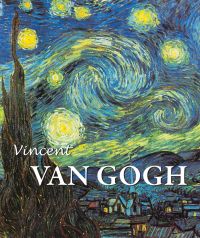
Vincent van GoghVictoria Charles3h 22m4.2 (292)$16 · $0.00

Emily of New MoonL. M. Montgomery12h 23m4.3 (56.5K)$2.30 · $0.00

Baby, Let’s Play HouseAlanna Nash27h 15m4.2 (1.4K)$40

Karl LagerfeldAlfons Kaiser14h 59m4.2 (317)$23 · $0.00

Savage BeautyNancy Milford24h 39m4.1 (10.7K)$30