


Length1h 36m
About this audiobook
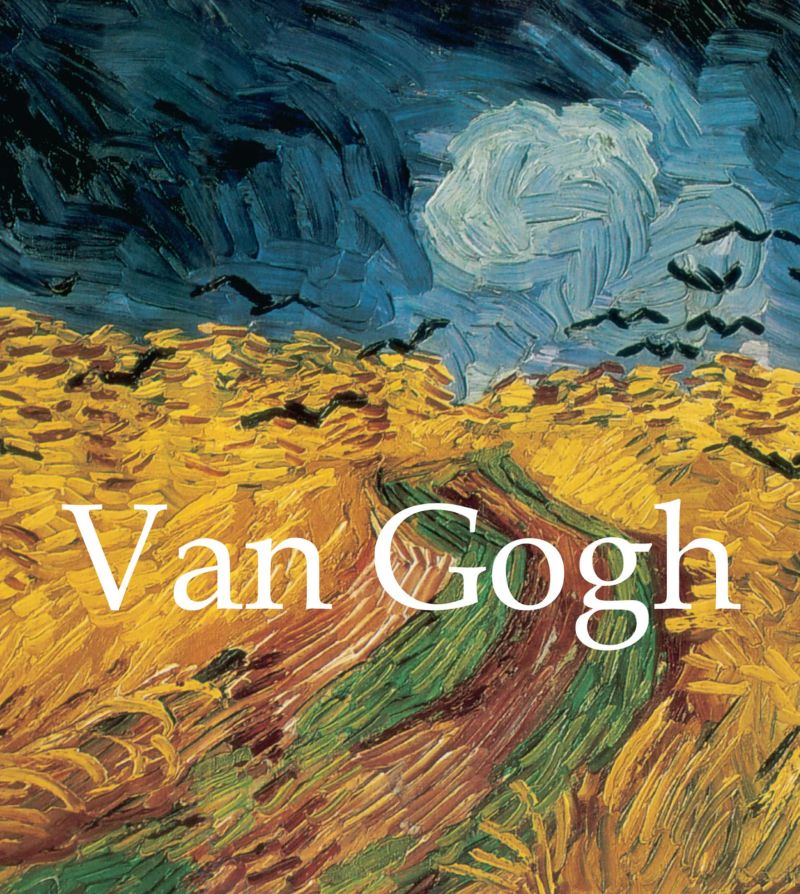
Vincent van Gogh's life and work are so intertwined that it is hardly possible to observe one without thinking of the other. Van Gogh has indeed become the incarnation of the suffering, misunderstood martyr of modern art, the emblem of the artist as an outsider. An article, published in 1890, gave details about van Gogh's illness. The author of the article saw the painter as "a terrible and demented genius, often sublime, sometimes grotesque, always at the brink of the pathological." Very little is known about Vincent's childhood. At the age of eleven he had to leave "the human nest", as he called it himself, for various boarding schools. The first portrait shows us van Gogh as an earnest nineteen year old. At that time he had already been at work for three years in The Hague and, later, in London in the gallery Goupil & Co. In 1874 his love for Ursula Loyer ended in disaster and a year later he was transferred to Paris, against his will. After a particularly heated argument during Christmas holidays in 1881, his father, a pastor, ordered Vincent to leave. With this final break, he abandoned his family name and signed his canvases simply "Vincent". He left for Paris and never returned to Holland. In Paris he came to know Paul Gauguin, whose paintings he greatly admired. The self-portrait was the main subject of Vincent's work from 1886c88. In February 1888 Vincent left Paris for Arles and tried to persuade Gauguin to join him. The months of waiting for Gauguin were the most productive time in van Gogh's life. He wanted to show his friend as many pictures as possible and decorate the Yellow House. But Gauguin did not share his views on art and finally returned to Paris. On 7 January, 1889, fourteen days after his famous self-mutilation, Vincent left the hospital where he was convalescing. Although he hoped to recover from and to forget his madness, but he actually came back twice more in the same year. During his last stay in hospital, Vincent painted landscapes in which he recreated the world of his childhood. It is said that Vincent van Gogh shot himself in the side in a field but decided to return to the inn and went to bed. The landlord informed Dr Gachet and his brother Theo, who described the last moments of his life which ended on 29 July, 1890: "I wanted to die. While I was sitting next to him promising that we would try to heal him. [...], he answered, 'La tristesse durera toujours (The sadness will last forever).'"
Audiobook details
Rating★★★★ 4.2 (2.3K)
Includes Amazon, Goodreads, LibraryThing, StoryGraph
GenreOther
Length1 hr 36 mins
Narrated byListen with 1,000+ voices
FormateBook with Audio
Publish dateJul 1, 2011
LanguageEnglish
Table of contents
1Van Gogh
2© Parkstone Press International, New York, USA © Confidential Concepts, worldwide, USA
3Biography
4The Nuenen period 1883-1885:
5The Arles period 1888-1890:
Show all chaptersShow less
6Beach at Scheveningen
7Head of a Peasant
8With this characterization of the artist as
9“This sovereign contempt
10In his letters, nearly seven hundred of
11His cousin Kee, already a mother and
12women, but also that of his family and
13from “The excellencies of love” in the first
14In the last months of his life, Van Gogh
15Similar
16A Pair of Shoes
17Agostina Segatori Sitting in the Cafe Tambourin
18Elisabeth Huberta and by Van Gogh himself
19Flowerpot with Chives
20with the arrival of four more children.
21three years in The Hague, at the gallery of
22During his apprenticeship, Van Gogh
23Japonaiserie: Oiran (after Keisai Eisen)
24“land of pictures.”
25Japonaiserie: Bridge in the Rain (after Hiroshige)
26letters in 18 years to his brother, who
27Still Life with Decanter and Lemons on a Plate
28Embankment, on my way home from
29L’amour by Jules Michelet: “To me the book
30the same time [...] And that man and wife
31But his love for Ursula Loyer, the daughter
321888 Oil on canvas, 73.5 x 92.5 cm St Petersburg, Hermitage
33public gallery. And the solitary and eccentric
34Arles: 1888 Oil on canvas, 51 x 71 cm Private Collection
35member of the family with whom Van Gogh
36Self-Portrait in front of Easel
37his visits to the Louvre, and in particular, of
38An Old Woman from Arles
39Langlois Bridge at Arles
40Three White Cottages in Saintes-Maries
41and in his attitudes about religion or art. The
42The mercantile affairs of an art dealer or
43Haystacks in Provence
44The Zouave (half-length)
45Jansenist church.
46whether a Protestant pastor or a Roman
47After his failure as a businessman, Van
48Portrait of Postman Joseph Roulin
49English and French.
50The Pit, the Mills at Montmartre
More from Vincent van Gogh
Vincent van GoghVincent van Gogh, Victoria Charles9h 52m3.9 (180)$19 · $0.00
Vincent Van Gogh y obras de arteVincent van Gogh1h 32m$15 · $0.00
Van Gogh 1853-1890Vincent van Gogh45m4.4 (124)$15 · $0.00
Vincent van GoghVincent van Gogh, Victoria Charles10h 28m4.1 (319)$19 · $0.00
Vincent Van Gogh and artworksVincent van Gogh1h 28m4.1 (114.4K)$15 · $0.00
Van GoghVincent van Gogh1h 43m$13.50 · $0.00
Vincent van GoghVincent van Gogh, Victoria Charles9h 59m4.1 (323)$19 · $0.00
Vincent van GoghVincent van Gogh, Victoria Charles9h 52m4.2 (290)$19 · $0.00
Van GoghVincent van Gogh1h 42m4.4 (19)$13.50 · $0.00
Vincent Van Gogh et œuvres d'artVincent van Gogh1h 21m$15 · $0.00
Mere ChristianityC. S. Lewis7h 7m4.4 (519.7K)$24 · $0.00

Her Daily BreadKate Wood12h 57m4.6 (153)$33 · $0.00
The Holy Bible - 1 SamuelKing James2h 13m4.8 (1.6K)$3 · $0.00
The American Standard Bible — The Gospel of MatthewMatthew3h 56m4.7 (3K)$2 · $0.00

Bad Fat Black GirlSesali Bowen6h 32m4.7 (2.8K)$24 · $0.00
The King James Audio Bible New Testament CompleteChristopher Glyn20h 2m4.7 (2.6K)$12 · $0.00
Faiths CheckbookCharles Spurgeon12h 44m4.7 (3.2K)$11 · $0.00
Ten Things I Wish You Knew About Your Child's Mental HealthDr. Billy Garvey4h 53m4.7 (2.4K)$20 · $0.00
Designing Terry Pratchett’s DiscworldPaul Kidby3h 52m4.7 (343)$20 · $0.00
The Chosen Book OneAmanda Jenkins, Kristen Hendricks, Dallas Jenkins3h 8m4.6 (4.9K)$10 · $0.00
The Lives of BrianBrian Johnson9h 45m4.6 (3.5K)$29 · $0.00
Expository Thoughts on the Gospel of LukeJ.C. Ryle27h 13m4.7 (536)$18 · $0.00

CrossroadsKaleb Dahlgren7h 56m4.6 (4.9K)$26 · $0.00

Across the RiverKent Babb11h 40m4.6 (927)$29 · $0.00

Brain Training for RidersAndrea Monsarrat Waldo5h 56m4.7 (550)$19 · $0.00
My Effin' LifeGeddy Lee17h 11m4.6 (13.1K)$40 · $0.00
Kings and PawnsHoward Bryant10h 9m4.6 (678)$29 · $0.00

The Elementia Chronicles #2: The New OrderSean Fay Wolfe11h 17m4.6 (841)$29 · $0.00
The ActsLuke2h 55m4.6 (19.7K)$12 · $0.00
New Testament - Easy NavigationWorld English Bible19h 35m4.6 (1.3K)$1.30 · $0.00
You may also like
Vincent van GoghVincent van Gogh, Victoria Charles9h 52m4.2 (290)$19 · $0.00
Vincent van GoghVictoria Charles3h 16m4.1 (334)$16 · $0.00
Georgia O'KeeffeRoxana Robinson29h 13m4.2 (2K)$30
The Man Who Loved ChildrenChristina Stead19h 24m3.7 (7.2K)$28
Vincent Van Gogh and artworksVincent van Gogh1h 28m4.1 (114.4K)$15 · $0.00
Managing ExpectationsMinnie Driver6h 49m4.2 (8K)$24 · $0.00
The RainbowD. H. Lawrence21h 5m3.9 (27.1K)$2.30

SiddharthaHermann Hesse4h 12m4.2 (980.6K)$1.20 · $0.00
MeditationsMarcus Aurelius4h 59m4.4 (417.9K)$8 · $0.00
SiddharthaHermann Hesse5h 21m4.2 (968.6K)$20
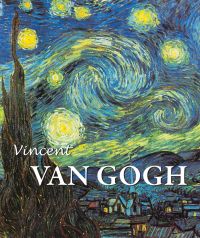
Vincent van GoghVictoria Charles3h 22m4.2 (292)$16 · $0.00
FosseSam Wasson21h 23m4.2 (2.6K)$46 · $0.00
The Essays of Arthur SchopenhauerArthur Schopenhauer3h 3m4.3 (2.4K)Free
The Decomposition of JackKristin O'Donnell Tubb3h 57m4.2 (322)$20 · $0.00
Van GoghJp. A. Calosse1h 5m$8 · $0.00

Over the Hills and Far AwayMatthew Dennison5h 59m3.6 (560)$20 · $0.00
Vincent van GoghVictoria Charles2h 38m4.0 (197)$10 · $0.00
ConstableVictoria Charles4h 8m$15.50 · $0.00
Memoirs of a Midget (Annotated)Walter de la Mare17h 4m$2 · $0.00

Under the IvyGraeme Thomson18h 27m$30