
Audio only
Length3h 17m
About this audiobook
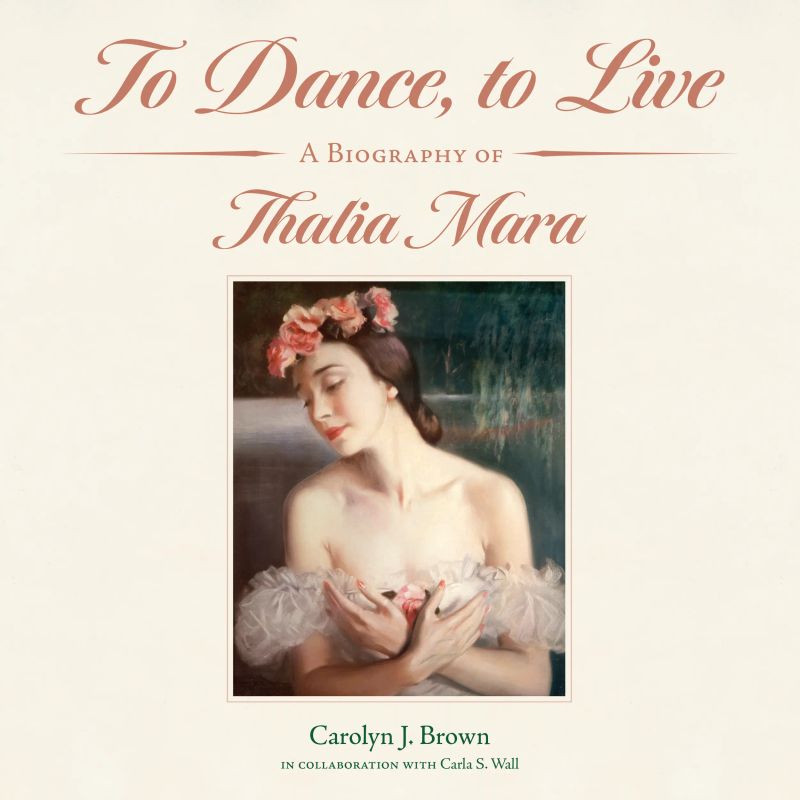
Thalia Mara's story spans the history of dance in the twentieth century and the rise of the arts in her adopted city of Jackson, Mississippi. As an adolescent Mara (1911–2003) studied with renowned Russian teacher Adolph Bolm, who recommended she go at age sixteen to Paris for further study. During a tour in Europe and South America, she met her partner in dance and life, Arthur Mahoney, and they dazzled the world with their breathtaking performances during the 1930s and '40s. The two were named codirectors of Jacob's Pillow in 1947, gracing the cover of
Life magazine that year. Later they started two schools of dance in New York City, but despite much success, they closed due to lack of funding. That misfortune, however, was Jackson's boon as it led Mara to the second phase of her career: reviving the Jackson Ballet Company and bringing the USA International Ballet Competition (IBC) to the state.
Thalia Mara was recognized at the end of her life not only for the USA IBC's decision to locate in Jackson, but also for her efforts as a patron of the arts. Her extraordinary fundraising and planning attracted international performers to the city in the 1980s and '90s.
To Dance, to Live: A Biography of Thalia Mara gives the first full account of a life devoted to the arts.
Audiobook details
GenreBiography and Memoir
Length3 hrs 17 mins
Narrated byRebecca Avery
FormatAudiobook
Publish dateSep 5, 2023
LanguageEnglish
Table of contents
1Opening Credits
2Dedication
3Author's Note
4Reflections on Thalia Mara by Carla S. Wall
5Foreword by Leanne Mahoney
Show all chaptersShow less
6Thalia Mara . . . In Her Own Words
7Chapter 1: Early Life (1911–1929)
8Chapter 2: New York (1929–1940)
9Chapter 3: Teachers of Dance (1940–1973)
10Chapter 4: Building Ballet in Mississippi (1973–1979)
11Chapter 5: The USA IBC and Other Projects (1979–1991)
12Chapter 6: The Thalia Mara Arts International Foundation (1991–1998)
13Chapter 7: Thalia Mara's Death and Legacy
14Additional Tributes to Thalia Mara
15Afterword: The USA IBC Today by Mona Nicholas
16Acknowledgments
17Closing Credits
Series

How to Test Negative for StupidJohn Kennedy8h 13m4.7 (9.7K)$28 · $0.00

Bad Fat Black GirlSesali Bowen6h 32m4.7 (2.8K)$24 · $0.00

Send MeMarty Skovlund, Joe Kent8h 10m4.7 (1.6K)$26 · $0.00
John Muir: The Story of My Boyhood and Youth & Letters to a Friend (Annotated)John Muir10h 13m4.7 (1.1K)$1.99 · $0.00

Invisible StormJason Kander6h 48m4.7 (3.2K)$24 · $0.00
Forever BoyKate Swenson9h 27m4.7 (5K)$29 · $0.00
You Are Worth ItKyle Carpenter, Don Yaeger8h 53m4.7 (4.8K)$29 · $0.00

The Happiest Man on EarthEddie Jaku3h 48m4.6 (178K)$7 · $0.00

MotherlandJulia Ioffe17h 52m4.7 (2.5K)$40 · $0.00
Evidence Not SeenDarlene Deibler Rose11h 11m4.6 (11.9K)$29 · $0.00

Where Cowards Go to DieBenjamin Sledge8h 42m4.7 (351)$20 · $0.00
Will You Love Me?Cathy Glass9h 5m4.6 (9.3K)$29 · $0.00
Designing Terry Pratchett’s DiscworldPaul Kidby3h 52m4.7 (343)$20 · $0.00

HostageEli Sharabi5h 25m4.6 (10.8K)$24 · $0.00
Finding MeViola Davis9h 15m4.6 (256.4K)$29 · $0.00

The Dangerous Truth about Today’s MarijuanaLaura Stack CSP, MBA9h 57m4.7 (385)$20 · $0.00

Birdie & HarlowTaylor Wolfe7h 50m4.6 (6.5K)$26 · $0.00
The Lives of BrianBrian Johnson9h 45m4.6 (3.5K)$29 · $0.00

I Am The StormJanice Dean9h4.6 (1.5K)$8 · $0.00
Black History CollectionFrederick Douglass, Harriet Ann Jacobs, Booker T. Washington, W.E.B. Du Bois27h 9m4.6 (2.6K)$18 · $0.00
You may also like
Pete the Cat Screams for Ice Cream!James Dean, Kimberly Dean5m4.3 (1.4K)$4 · $0.00

The Good Egg Presents: The Great Eggscape!Jory John9m4.2 (11.6K)$4 · $0.00
Emily's Runaway ImaginationBeverly Cleary4h 39m4.1 (4.2K)$20 · $0.00
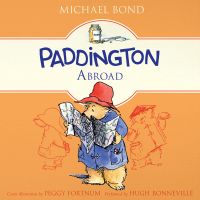
Paddington AbroadMichael Bond2h 17m4.2 (2.6K)$16 · $0.00
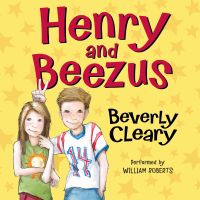
Henry and BeezusBeverly Cleary2h 31m4.2 (13.6K)$18 · $0.00
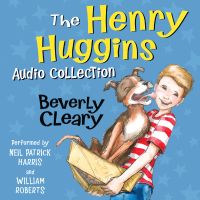
The Henry Huggins Audio CollectionBeverly Cleary15h 26m4.4 (3.2K)$33 · $0.00
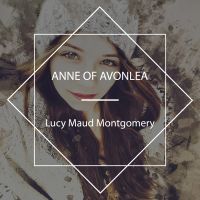
Anne of AvonleaLucy Maud Montgomery7h 15m4.3 (269.6K)$12 · $0.00
Edison: His Life and InventionsFrank Lewis Dyer21h 34m4.1 (378)Free
The Ralph S. Mouse Audio CollectionBeverly Cleary6h 41m4.4 (1.9K)$24 · $0.00

They Call Me SupermenschShep Gordon9h 4m4.3 (1.4K)$29 · $0.00
Ralph S. MouseBeverly Cleary1h 56m4.1 (21.6K)$16 · $0.00

Trustee from the ToolroomNevil Shute Norway11h 42m4.4 (10.5K)$1 · $0.00

The Little Shepherd of Kingdom ComeJohn Jr. Fox7h 27m4.1 (387)$1.99 · $0.00
Paddington Marches OnMichael Bond2h 22m4.3 (1.5K)$16 · $0.00
LoserJerry Spinelli3h 53m4.1 (22.8K)$20 · $0.00

Superstar (Tennis Camp Diaries, #2)Ash Barty, Jasmin McGaughey1h 36m$16 · $0.00
Benton's VentureRalph Henry Barbour7h 25m$1 · $0.00

Jy Goes for Gold (Kimberley Kickers, #1) : a CBCA Notable Book 2025 adventure series about mates, growing up in the Kimberley and footy (Aussie Rules!)Carl Merrison, Hakea Hustler, Jy Farrar1h 22m$16 · $0.00

Pinewood PalsPatrick Ohm31m5.0 (3)Free
The Battery and the Boiler Adventures in Laying of Submarine Electric CablesR. M. Ballantyne10h3.7 (19)$2.30