
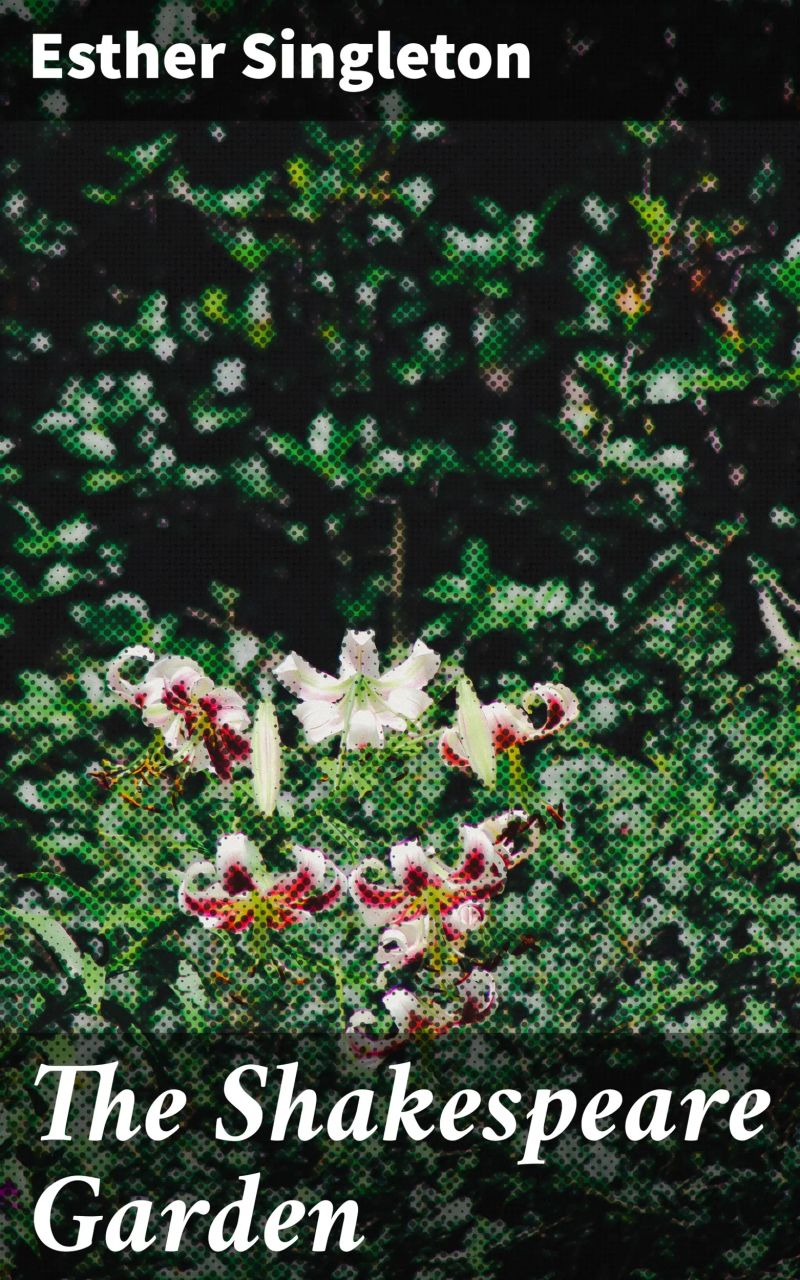
The Shakespeare Garden
Exploring Shakespearean Botany: Symbolism and Nature in Literary LandscapesBy Esther Singleton

Length8h 36m
About this audiobook
In "The Shakespeare Garden," Esther Singleton intricately weaves together a rich tapestry of botanical history and literary appreciation, exploring the plants and herbs that pervade William Shakespeare's works. With a lyrical prose style characteristic of the early 20th century, Singleton not only examines the role of flora in Shakespeare's texts but also provides practical gardening tips and insights into the seasonal rhythms that inspired the Bard. This book serves as both an intimate guide to creating a garden inspired by Shakespearean imagery and a profound commentary on the natural world's influence on literature, beautifully reflecting the intertwining of life and art during the Elizabethan era. Esther Singleton was a notable writer and expert in the field of garden literature, whose profound love for nature propelled her to explore the intersections between gardening and the arts. Singleton's background in literature and horticulture gave her the unique perspective needed to articulate the delicate relationship between Shakespeare's verses and the natural world. As an advocate for the significance of gardens in cultural narrative, she encourages readers to appreciate not just the aesthetic beauty but the emotional resonance of the gardens inspired by Shakespeare. Readers who desire a deeper understanding of Shakespeare's use of nature in his writing will find Singleton's "The Shakespeare Garden" an essential companion. This book invites both literature enthusiasts and gardening aficionados to cultivate their appreciation for the beauty of words and flowers alike, fostering a profound connection between the garden and the written word.
Audiobook details
GenreLiterary Classics
Length8 hrs 36 mins
Narrated byListen with 1,000+ voices
FormateBook with Audio
Publish dateNov 5, 2021
LanguageEnglish
Table of contents
1Introduction
2I The Medieval Pleasance
3II The Garden of Delight
4III The Italian Renaissance Garden
5IV Bagh-i-vafa
Show all chaptersShow less
6V New Fad for Flowers
7VI Tudor Gardens
8VII Garden Pleasures
9I Flower Lovers and Herbalists
10II The Elizabethan Garden
11III Old Garden Authors
12IV "Outlandish" and English Flowers
13I Primroses, Cowslips, and Oxlips
14II "Daffodils that Come Before the Swallow Dares"
15III "Daisies Pied and Violets Blue"
16IV "Lady-smocks all Silver White" and "Cuckoo Buds of Yellow Hue"
17V Anemones and "Azured Harebells"
18VI Columbine and Broom-flower
19I "Morning Roses Newly Washed with Dew"
20II "Lilies of All Kinds"
21III Crown-Imperial and Flower-de-luce
22IV Fern and Honeysuckle
23V Carnations and Gilliflowers
24VI Marigold and Larkspur
25VII Pansies for Thoughts and Poppies for Dreams
26VIII Crow-flowers and Long Purples
27IX Saffron Crocus and Cuckoo-flowers
28X Pomegranate and Myrtle
29I Rosemary and Rue
30II Lavender, Mints, and Fennel
31III Sweet Marjoram, Thyme, and Savory
32IV Sweet Balm and Camomile
33V Dian's Bud and Monk's-hood Blue
34I Holly and Ivy
35II Mistletoe and Box
36I The Stately Garden
37II The Small Garden
38III Soil and Seed
39IV The Gateway
40V The Garden-House
41VI The Mount
42VII Rustic Arches
43VIII Seats
44IX Vases, Jars, and Tubs
45X Fountains
46XI The Dove-cote
47XII The Sun-dial
48XIII The Terrace
49XIV The Pleached Alley
50XV Hedges
More from Esther Singleton




To Kill a MockingbirdHarper Lee12h 18m4.5 (7.4M)$29 · $0.00

These Precious DaysAnn Patchett11h 14m4.5 (45.2K)$29 · $0.00

Braving the TruthRachel Held Evans11h 31m4.7 (359)$29 · $0.00

The Old Man and the Sea (Annotated)Ernest Hemingway4h 27m4.6 (1.4K)$2 · $0.00

Henry V (The Play, Historical Background and Analysis of the Character in the Play)William Shakespeare, William Hazlitt8h 50m4.6 (1.3K)$1.99 · $0.00

H. P. LOVECRAFT Ultimate Collection: Novellas, Short Stories, Poetry & Essays (Annotated)H. P. Lovecraft12h 28m4.6 (2.3K)$2 · $0.00
Time RegainedMarcel Proust16h 8m4.5 (10.6K)$1.99 · $0.00

The Mis-Education of the NegroCarter Goodwin Woodson4h 32m4.5 (28.4K)$10 · $0.00
Lessons in TruthH. Emilie3h 50m4.6 (1.4K)$4.70 · $0.00

TORAH - Bilingual Edition: English/Hebrew (Annotated)Max Margolis, JPS28h 26m4.6 (1K)$2 · $0.00

Betty Crocker picture cooky bookBetty Crocker, Inc. General Mills2h 13m4.5 (6.5K)$1 · $0.00

The Complete Tales of Beatrix PotterBeatrix Potter3h 36m4.5 (75K)$3 · $0.00
Anne of Green GablesL. M. Montgomery11h 1m4.5 (1.2M)$2.30 · $0.00

Crime and Punishment (The Unabridged Garnett Translation) (Annotated)Fyodor Dostoevsky24h 25m4.5 (15.4K)$1.99 · $0.00

The North American IndianEdward S. Curtis, Frederick Webb Hodge6h4.5 (1.2K)$2 · $0.00

The Picture of Dorian Gray: The Uncensored 13 Chapter Version + The Revised 20 Chapter Version (Annotated)Oscar Wilde16h 12m4.5 (2.8K)$1.99 · $0.00

Grimoire Of The Everyday WitchIsadora Lys / Virginia Santos5h 35m4.5 (3.9K)$9 · $0.00

Winnie-the-PoohAlan Alexander Milne2h 52m4.5 (401.1K)$3 · $0.00

Sitting PrettyRebekah Taussig7h 33m4.5 (18.9K)$26 · $0.00

The Poetic Edda & The Prose EddaSnorri Sturluson, Saemund Sigfusson9h 34m4.5 (4K)$1 · $0.00
You may also like

The Natural History of Pliny (Vol. 1-6)Pliny the Elder156h 38m4.3 (436)$1 · $0.00

Sadhana, The Realisation of LifeRabindranath Tagore3h 51m4.3 (2.5K)$3.50 · $0.00

Sacred Earth, Sacred SoulJohn Philip Newell7h 18m4.4 (2.1K)$24 · $0.00

Among the Trees at ElmridgeElla Rodman Church7h 11m$2 · $0.00

Leaves from our Tuscan kitchen; or, How to cook vegetablesJanet Ross4h 11m4.0 (171)$1 · $0.00

Colin Clout's Calendar: The Record of a Summer, April-OctoberGrant Allen7h 30m$2 · $0.00

HawaiianMade for Success7h 52m$23
The Meaning Of TreesRobert Vennell6h 10m4.6 (151)$24 · $0.00

Mediaeval Lore from Bartholomew AnglicusAnglicus active 13th century Bartholomaeus5h 13m$2 · $0.00

HooghlyRobert Ivermee11h 4m4.1 (45)$18 · $0.00

Chocolate: or, An Indian DrinkeAntonio Colmenero de Ledesma53m$2 · $0.00

Stories of BirdsLenore Elizabeth Mulets2h 57m$2 · $0.00

The Life of the MoselleOctavius Rooke7h 10m$2 · $0.00

Egyptian BirdsCharles Whymper5h 1m4.3 (25)$1 · $0.00

Rug Craftsmanship: 4 Classic Books on Oriental and Antique RugsG. Griffin Lewis, W. A. Hawley, Rosa Belle Holt, Candace Wheeler27h 34m$1.99 · $0.00

Notes in JapanAlfred Parsons1h 49m3.9 (27)$2 · $0.00

The Life TreeCarlos Araujo Carujo2h 10m$11 · $0.00

EtnaG. F. Rodwell3h 34m$2 · $0.00

Nether LochaberAlexander Rev. Stewart14h 41m$2 · $0.00

Trees, Shown to the ChildrenC. E. Smith3h 38m$2 · $0.00