
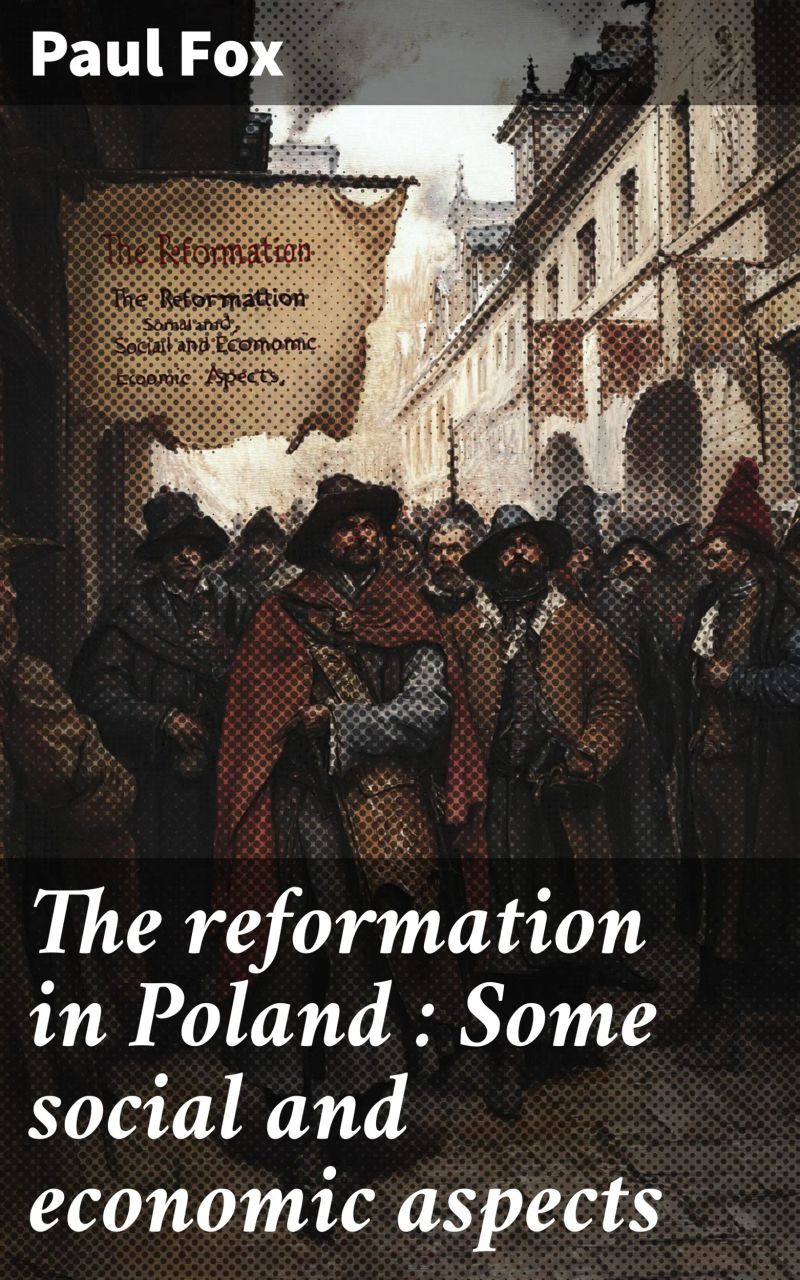
The reformation in Poland : Some social and economic aspects
By Paul Fox


Length6h 34m
About this audiobook
In "The Reformation in Poland: Some Social and Economic Aspects," Paul Fox meticulously examines the multifaceted dimensions of the Reformation's impact on Polish society, particularly during the sixteenth and seventeenth centuries. Synthesizing a wealth of historical sources, Fox employs a clear and engaging literary style that balances scholarly rigor with accessibility. He delves into economic transformations and social structures, scrutinizing how the Reformation spurred changes in land tenure, trade, and socio-religious dynamics, thereby situating Poland's experience within the broader European Reformation narrative. Paul Fox is an esteemed historian whose research interests encompass Eastern European history, religious transformations, and their socio-economic consequences. His immersion in Polish history, alongside a profound understanding of the Reformation's broader European implications, informs his exploration of these themes in this book. This work not only reflects Fox's academic expertise but also his commitment to uncovering the historical intricacies of underrepresented regions in Reformation studies. This enlightening book is a vital resource for scholars, students, and history enthusiasts seeking a comprehensive understanding of the Reformation's intricate social and economic dimensions in Poland. By illuminating these aspects, Fox invites readers to appreciate the complexities of this critical period and fosters a deeper engagement with the broader historical currents of European history.
Audiobook details
GenreHistory
Length6 hrs 34 mins
Narrated byListen with 1,000+ voices
FormateBook with Audio
Publish dateMar 2, 2025
LanguageEnglish
Table of contents
1Introduction
2Development of the Reformation in Poland
3Social Causes of the Polish Reformation
4The Wealth of the Polish Church in the XVIth Century: Its Effect on the Nobility
5The Conflict Between the Polish Nobility and the Clergy: its Economic Aspects
Show all chaptersShow less
6APPENDIX
7Advertisements
8Transcriber’s Note:

A Brief History of IntelligenceMax S. Bennett12h 18m4.6 (6.6K)$29 · $0.00

Ghosts of HiroshimaCharles Pellegrino8h 59m4.5 (877)$23

RevolutionariesSanjeev Sanyal11h 23m4.6 (2.6K)$29 · $0.00

We Crossed a Bridge and It TrembledWendy Pearlman6h4.6 (5.2K)$24 · $0.00

Unbroken Bonds of BattleJohnny Joey Jones8h 31m4.6 (2.6K)$8 · $0.00

The Daughter of AuschwitzTova Friedman, Malcolm Brabant7h 54m4.6 (16.7K)$26 · $0.00

Lily's PromiseLily Ebert, Dov Forman8h 54m4.6 (16.1K)$29 · $0.00

On Democracies and Death CultsDouglas Murray10h 38m4.6 (6.5K)$29 · $0.00

Across the RiverKent Babb11h 40m4.6 (927)$29 · $0.00

Balcony Over Jerusalem: A Middle East Memoir - Israel, Palestine and BeyondJohn Lyons12h 37m4.6 (1.4K)$33 · $0.00

BeyondStephen Walker15h 39m4.6 (3.2K)$33 · $0.00

Kings and PawnsHoward Bryant10h 9m4.6 (678)$29 · $0.00

No EscapeNury Turkel9h 30m4.6 (809)$28 · $0.00

Jubal Stone: U.S. Marshal: Blood Trail To Hell: A Western Adventure NovelCasey Nash3h 42m4.6 (3.2K)$18 · $0.00

Fall and RiseMitchell Zuckoff17h 23m4.6 (9.8K)$40 · $0.00

The SurvivorJosef Lewkowicz, Michael Calvin9h 22m4.6 (2.5K)$29 · $0.00

Always FaithfulThomas Schueman, Zainullah Zaki12h 12m4.6 (977)$29 · $0.00

The State of Society in France Before the Revolution of 1789 (Annotated)Alexis de Tocqueville17h 25m4.6 (1.2K)$2 · $0.00

All the Gallant MenDonald Stratton, Ken Gire5h 55m4.6 (11.8K)$24 · $0.00

Medgar and MyrlieJoy-Ann Reid10h 52m4.5 (27.8K)$29 · $0.00
You may also like

Rock Me on the WaterRonald Brownstein16h 15m4.0 (2.4K)$33 · $0.00

Rebel in the RanksBrad S. Gregory9h 46m4.1 (502)$29 · $0.00

Now & AfterAlexander Berkman11h 28m3.9 (1.7K)$2 · $0.00

The Communist ManifestoKarl Marx, Friedrich Engels2h 13m3.9 (252.7K)$2 · $0.00

The American Heritage History of the Civil WarBruce Catton8h4.4 (1.7K)$20

The French Revolution and NapoleonJean-Jacques Rousseau, Alexis de Tocqueville, Montesquieu, Charles Downer Hazen62h 54m4.1 (574)$2 · $0.00

Socialism: Utopian and Scientific (Annotated)Frederick Engels3h 35m4.3 (29.7K)$1.99 · $0.00

The Suppression of the African Slave Trade to America (1638–1870)W.E.B. Du Bois15h 31m4.2 (1.5K)$2 · $0.00

The City-State of BostonMark Peterson26h 16m4.2 (359)$30

Look Away!William C. Davis23h 39m4.0 (662)$30

Capital and IdeologyThomas Piketty48h 57m4.4 (7.2K)$40

Constitution of the State of FloridaThe State of Florida1h 54m4.1 (26)$1 · $0.00

Freedom! Equality!! Justice!!! These Three; but the Greatest of These Is JusticeVictoria C. Woodhull2h 18m$2 · $0.00

Are Legislatures Parliament? A Study and ReviewFennings Taylor5h 42m$2 · $0.00

Our Changing ConstitutionCharles W. Pierson4h 36m$2 · $0.00
Constitution of the Socialist Republic of VietnamNational Assembly of the Socialist Republic of Vietnam1h 28m$2 · $0.00

Constitution of the Islamic Republic of IranIranian provisional government of Mehdi Bazargan2h 47m3.8 (129)$1 · $0.00

HONORING OBAMAU.S. Government7h 44m$1.99 · $0.00

The Story of Dutch PaintingCharles H. Caffin5h 19m3.8 (30)$1 · $0.00

The Republican PartyWillis Fletcher Johnson, Ray Burdick Smith3h 57m$2 · $0.00