
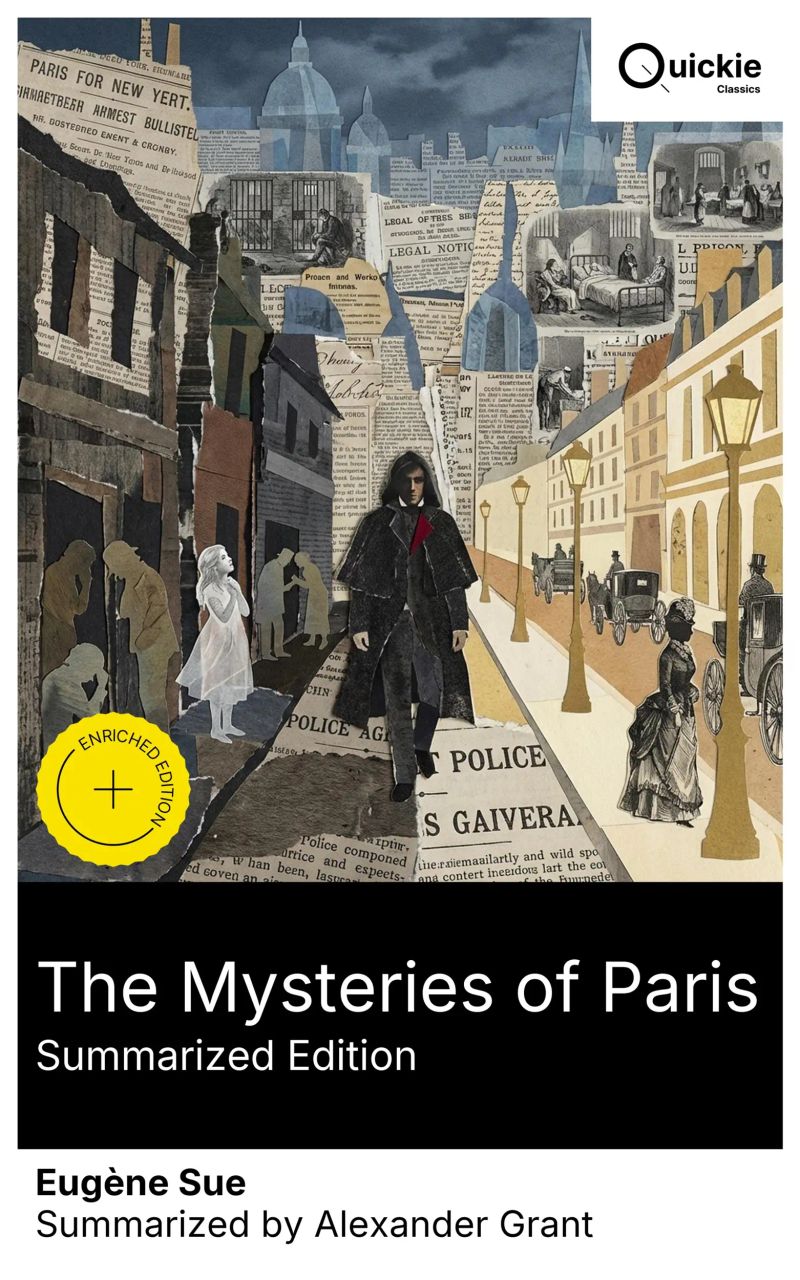
The Mysteries of Paris (Summarized Edition)
Enriched edition. An incognito duke's crusade through Paris's slums and boulevards—a labyrinth of class, crime, and redemptionBy Eugène Sue


Length11h 54m
About this audiobook
Serialized in 1842–43 in the Journal des Débats, The Mysteries of Paris conducts readers through slums, prisons, and boulevards as Rodolphe, the incognito Grand Duke of Gerolstein, aids and judges the poor—above all Fleur-de-Marie. Sue fuses cliffhanging melodrama with documentary detail—argot, legal routines, charities—creating a sensational yet sociological panorama. The novel launched the urban‑mysteries vogue and, with its paternalist reformism, mapped Paris as a modern labyrinth of class and crime. Eugène Sue, son of a distinguished Napoleonic surgeon and a former naval physician, shifted from fashionable sea tales to social critique under the 1840s' Saint‑Simonian and reformist currents. He mined slum visits, journalistic inquiries, and judicial dossiers to convert reportage into narrative. His political turn—later an 1848 deputy—inflects the book's zeal to expose misery while imagining philanthropic, if paternal, remedies. Readers of Hugo, Balzac, or Gaboriau will find in Sue a precursor whose pages combine urgency with sweep. Recommended for scholars of serial culture and urban history as well as general audiences, this edition offers a gripping, influential experiment in mass literature that still interrogates charity, justice, and power.
Quickie Classics summarizes timeless works with precision, preserving the author's voice and keeping the prose clear, fast, and readable—distilled, never diluted. Enriched Edition extras: Introduction · Synopsis · Historical Context · Brief Analysis · 4 Reflection Q&As · Editorial Footnotes.
Audiobook details
GenreLiterary Classics, Mystery and Thriller
Length11 hrs 54 mins
Narrated byListen with 1,000+ voices
FormateBook with Audio
Publish dateJan 10, 2026
LanguageEnglish
Table of contents
1Introduction
7The Mysteries of Paris (pt. 3)
2Introduction
8The Mysteries of Paris (pt. 4)
3Synopsis
9The Mysteries of Paris (pt. 5)
4Historical Context
10Analysis
5The Mysteries of Paris (pt. 1)
11Reflection
Show all chaptersShow less
6The Mysteries of Paris (pt. 2)
More from Eugène Sue

The Wandering Jew (Vol.1-11)Eugène Sue60h 33m3.8 (321)$1.99 · $0.00
The Mysteries of ParisEugène Sue63h 50m4.1 (2K)$1.99 · $0.00

The Wandering Jew (Annotated)Eugène Sue60h 33m4.0 (586)$2 · $0.00
The Mysteries of Paris (Vol. 1-6) (Annotated)Eugène Sue63h 56m4.2 (3.5K)$2 · $0.00

The Pilgrim's Shell; Or, Fergan the Quarryman: A Tale from the Feudal TimesEugène Sue9h 10m$2 · $0.00

The Iron Arrow Head or The Buckler Maiden: A Tale of the Northman InvasionEugène Sue2h 39m$2 · $0.00

The Poniard's Hilt; Or, Karadeucq and Ronan. A Tale of Bagauders and VagresEugène Sue8h 23m$2 · $0.00

Avarice--Anger: Two of the Seven Cardinal SinsEugène Sue10h 11m$2 · $0.00

The Infant's Skull; Or, The End of the World. A Tale of the MillenniumEugène Sue58m$1 · $0.00

Le morne au diableEugène Sue12h 19m3.0 (55)$2 · $0.00

The Abbatial Crosier; or, Bonaik and Septimine. A Tale of a Medieval AbbessEugène Sue5h 21m$2 · $0.00
The Sword of Honor; or, The Foundation of the French RepublicEugène Sue17h 28m$2 · $0.00
Luxury--Gluttony: Two of the Seven Cardinal SinsEugène Sue9h 14m$2 · $0.00
The Casque's Lark; or, Victoria, the Mother of the CampsEugène Sue6h 41m$2 · $0.00

A Romance of the West IndiesEugène Sue12h 21m$2 · $0.00
ArthurEugène Sue12h 52m$1 · $0.00

Alayunna JoothanEugène Sue5h 5m$8

To Kill a MockingbirdHarper Lee12h 18m4.5 (7.4M)$29 · $0.00

These Precious DaysAnn Patchett11h 14m4.5 (45.2K)$29 · $0.00

This Side of Paradise - The Original 1920 Edition (Annotated)F. Scott Fitzgerald11h 30m4.6 (1.6K)$2 · $0.00
The Great Gatsby: Original 1925 Edition (An F. Scott Fitzgerald Classic NovelFrancis Scott Fitzgerald4h 45m4.6 (9.3K)$18 · $0.00
TWELFTH NIGHTWilliam Shakespeare, Sidney Lee16h 38m4.6 (2.8K)$1.99 · $0.00
The Complete Histories / History Plays of William Shakespeare (Annotated)William Shakespeare29h 42m4.6 (2.3K)$0.99 · $0.00

Braving the TruthRachel Held Evans11h 31m4.7 (359)$29 · $0.00

The Old Man and the Sea (Annotated)Ernest Hemingway4h 27m4.6 (1.4K)$2 · $0.00

Henry V (The Play, Historical Background and Analysis of the Character in the Play)William Shakespeare, William Hazlitt8h 50m4.6 (1.3K)$1.99 · $0.00
H. P. LOVECRAFT Ultimate Collection: Novellas, Short Stories, Poetry & Essays (Annotated)H. P. Lovecraft12h 28m4.6 (2.3K)$2 · $0.00
Time RegainedMarcel Proust16h 8m4.5 (10.6K)$1.99 · $0.00
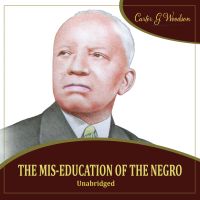
The Mis-Education of the NegroCarter Goodwin Woodson4h 32m4.5 (28.4K)$10 · $0.00

TORAH - Bilingual Edition: English/Hebrew (Annotated)Max Margolis, JPS28h 26m4.6 (1K)$2 · $0.00

Betty Crocker picture cooky bookBetty Crocker, Inc. General Mills2h 13m4.5 (6.5K)$1 · $0.00

The Complete Tales of Beatrix PotterBeatrix Potter3h 36m4.5 (75K)$3 · $0.00

Anne of Green GablesL. M. Montgomery11h 1m4.5 (1.2M)$2.30 · $0.00
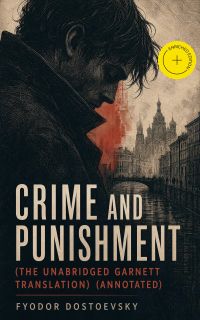
Crime and Punishment (The Unabridged Garnett Translation) (Annotated)Fyodor Dostoevsky24h 25m4.5 (15.4K)$0.99 · $0.00

The North American IndianEdward S. Curtis, Frederick Webb Hodge6h4.5 (1.2K)$2 · $0.00

The Picture of Dorian Gray: The Uncensored 13 Chapter Version + The Revised 20 Chapter Version (Annotated)Oscar Wilde16h 12m4.5 (2.8K)$0.99 · $0.00

Grimoire Of The Everyday WitchIsadora Lys / Virginia Santos5h 35m4.5 (3.9K)$9 · $0.00
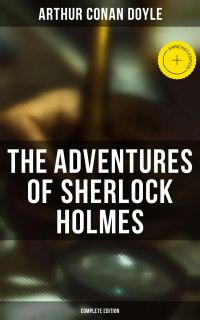
The Adventures of Sherlock Holmes (Complete Edition)Arthur Conan Doyle12h 41m4.6 (286.7K)$1.99 · $0.00
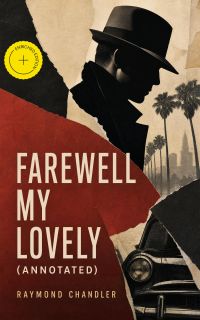
Farewell My Lovely (Annotated)Raymond Chandler10h 37m4.6 (1.2K)$2 · $0.00

The Labyrinth of the SpiritsCarlos Ruiz Zafon27h 55m4.5 (77.2K)$53 · $0.00

Olympic Mountain PursuitJodie Bailey5h 55m4.6 (638)$12 · $0.00

Glen AffricKarine Giebel22h 51m4.5 (3.2K)$46 · $0.00

Deadly Badlands PursuitSharee Stover5h 53m4.6 (361)$12 · $0.00
Crime and Punishment (The Unabridged Garnett Translation) (Annotated)Fyodor Dostoevsky24h 25m4.5 (15.4K)$0.99 · $0.00
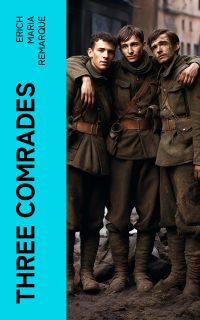
Three ComradesErich Maria Remarque15h 50m4.5 (47.3K)$2 · $0.00

AngelAnita Waller10h 30m4.6 (672)$30 · $0.00

The BorderDon Winslow29h 8m4.5 (35.7K)$53 · $0.00
FlashpointCatherine Coulter11h 38m4.5 (11.6K)$29 · $0.00
The Gothic Works of Edgar Allan Poe (Illustrated Edition)Edgar Allan Poe21h 5m4.5 (2.9K)$1.99 · $0.00
The Man in the Brown Suit & They Came to BaghdadAgatha Christie15h 43m4.6 (495)$33 · $0.00

Fang Si-Chi's First Love ParadiseYi-Han Lin8h 25m4.5 (4K)$26 · $0.00
The Rose CodeKate Quinn16h 2m4.4 (493.7K)$33 · $0.00
No Woman Left BehindJulie Moffett8h 49m4.5 (3K)$25 · $0.00

CovertJanie Crouch6h 15m4.5 (2K)$12 · $0.00
Cold Case InvestigationNicole Helm5h 30m4.6 (321)$5 · $0.00

The Lost Weekend (Annotated)Charles Jackson9h 46m4.5 (1K)$0.99 · $0.00

The ReunionJana DeLeon6h 31m4.5 (1.6K)$12 · $0.00
You may also like
Crime and punishment Fyodor Dostoevsky20h 56m4.4 (1.3M)Free
The Good BossScott Hildreth5h 53m4.2 (426)$24 · $0.00
Crime and PunishmentFyodor Dostoevsky21h 47m4.4 (1.2M)$13 · $0.00
Quarry's BloodMax Allan Collins5h 51m4.0 (655)$17
Crime and PunishmentFyodor Dostoyevsky20h 57m4.4 (1.2M)$18 · $0.00
Phineas ReduxAnthony Trollope27h 46m4.2 (4.8K)$2.30
Crime and Punishment (The Unabridged Garnett Translation) (Annotated)Fyodor Dostoevsky24h 25m4.5 (15.4K)$0.99 · $0.00
Crime and punishmentFyodor Dostoevsky22h 34m4.4 (1.3M)$3 · $0.00
Crime and PunishmentFyodor Dostoevsky21h 51m4.4 (1.3M)$3 · $0.00

Crime and PunishmentFyodor Dostoyevsky24h 4m4.4 (1.2M)$1.99 · $0.00

True CrimeAndrew Klavan11h 4m4.0 (2.6K)$20 · $0.00

Oliver TwistCharles Dickens17h 48m4.0 (472.1K)$2.30 · $0.00
The Mysteries of Paris, Volume I-VIEugène Sue63h 10m4.1 (1.2K)$2.30

Grand Opening 2Carl Weber9h 16m4.7 (2.4K)$20

The EnchantedRene Denfeld7h 4m4.1 (26.5K)$24 · $0.00
Fields Where They LayTimothy Hallinan10h 41m4.0 (1.6K)$20

The Sniper’s WifeArcher Mayor8h 58m4.0 (2K)$20

Dead BoyfriendsDavid Housewright7h 44m4.0 (1.2K)$17

The Man with the Golden ArmNelson Algren14h 26m4.0 (4K)$25

The Trail Of The SerpentM. E. Braddon37m3.7 (1K)$3