
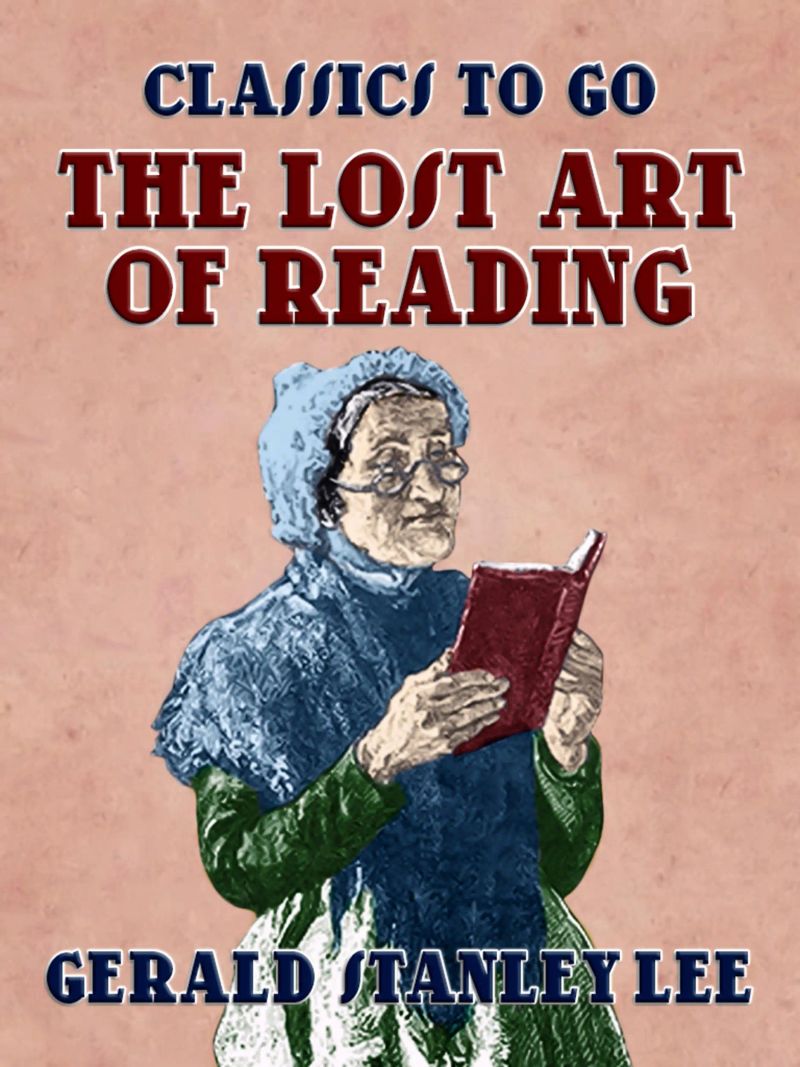


Length10h 46m
About this audiobook
Excerpt: "The population of the civilised world to-day may be divided into two classes,—millionaires and those who would like to be millionaires. The rest are artists, poets, tramps, and babies—and do not count. Poets and artists do not count until after they are dead. Tramps are put in prison. Babies are expected to get over it. A few more summers, a few more winters—with short skirts or with down on their chins—they shall be seen burrowing with the rest of us. One almost wonders sometimes, why it is that the sun keeps on year after year and day after day turning the globe around and around, heating it and lighting it and keeping things growing on it, when after all, when all is said and done (crowded with wonder and with things to live with, as it is), it is a comparatively empty globe. No one seems to be using it very much, or paying very much attention to it, or getting very much out of it. There are never more than a very few men on it at a time, who can be said to be really living on it. They are engaged in getting a living and in hoping that they are going to live sometime. They are also going to read sometime. When one thinks of the wasted sunrises and sunsets—the great free show of heaven—the door open every night—of the little groups of people straggling into it—of the swarms of people hurrying back and forth before it, jostling their getting-a-living lives up and down before it, not knowing it is there,—one wonders why it is there. Why does it not fall upon us, or its lights go suddenly out upon us? We stand in the days and the nights like stalls—suns flying over our heads, stars singing through space beneath our feet. But we do not see. Every man's head in a pocket,—boring for his living in a pocket—or being bored for his living in a pocket,—why should he see? True we are not without a philosophy for this—to look over the edge of our stalls with. "Getting a living is living," we say. We whisper it to ourselves—in our pockets. Then we try to get it. When we get it, we try to believe it—and when we get it we do not believe anything. Let every man under the walled-in heaven, the iron heaven, speak for his own soul. No one else shall speak for him. We only know what we know—each of us in our own pockets. The great books tell us it has not always been an iron heaven or a walled-in heaven. But into the faces of the flocks of the children that come to us, year after year, we look, wondering. They shall not do anything but burrowing—most of them. Our very ideals are borrowings. So are our books. Religion burrows. It barely so much as looks at heaven. Why should a civilised man—a man who has a pocket in civilisation—a man who can burrow—look at heaven? It is the glimmering boundary line where burrowing leaves off. Time enough. In the meantime the shovel. Let the stars wheel. Do men look at stars with shovels?"
Audiobook details
Rating★★★★ 3.5 (10)
Includes Goodreads
GenreGeneral Fiction, Literary Classics
Length10 hrs 46 mins
Narrated byListen with 1,000+ voices
FormateBook with Audio
Publish dateNov 22, 2019
LanguageEnglish
Table of contents
1Book I Interferences with the Reading Habit
2The First Interference: Civilisation
3The Second Interference: The Disgrace of the Imagination
4The Third Interference: The Unpopularity of the First Person Singular
5The Fourth Interference: The Habit of Not Letting One’s Self Go
Show all chaptersShow less
6The Fifth Interference: The Habit of Analysis
7The Sixth Interference: Literary Drill in College
8The Seventh Interference: Libraries. Wanted: An Old-Fashioned Librarian
9Book II Possibilities
10Book III Details. The Confessions of an Unscientific Mind
11I—Unscientific
12II—On Reading for Principles
13III—Reading Down Through
14IV—Reading for Facts
15V—Reading for Results
16VI—Reading for Feelings
17VII—Reading the World Together
18Book IV What to Do Next
Series
More from Gerald Stanley Lee



WhistlerAnn Patchett10h 45m4.6 (4.6K)$29 · $0.00
Demon CopperheadBarbara Kingsolver21h 3m4.5 (949.4K)$46 · $0.00

To Kill a MockingbirdHarper Lee12h 18m4.5 (7.4M)$29 · $0.00
Remarkably Bright CreaturesShelby Van Pelt11h 17m4.4 (1.7M)$29 · $0.00

White HotIlona Andrews13h 18m4.5 (136.9K)$5 · $0.00

The Ghost by the Billabong (The Matilda Saga, #5)Jackie French14h 58m4.6 (773)$33 · $0.00

Cast in BloodMichelle Sagara16h 35m4.6 (607)$33 · $0.00

The Captain Blood Trilogy (Annotated)Rafael Sabatini29h 20m4.6 (1K)$3 · $0.00
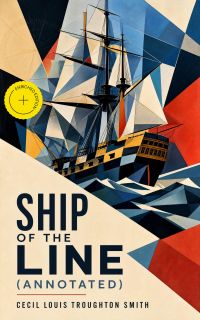
Ship of the Line (Annotated)Cecil Louis Troughton Smith11h 13m4.6 (1K)$2 · $0.00

The George Orwell CollectionGeorge Orwell24h 46m4.5 (14.4K)$12 · $0.00
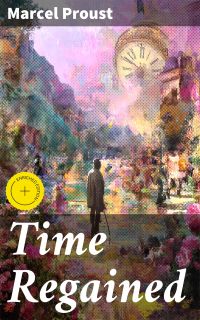
Time RegainedMarcel Proust15h 38m4.5 (9.2K)$2 · $0.00

Driving ForceElle James4h 58m4.6 (407)$20 · $0.00

When God Calls the HeartBrian Bird, Michelle Cox3h 24m4.6 (439)$10 · $0.00

Five Little IndiansMichelle Good10h 34m4.5 (64.5K)$29 · $0.00

Lolth's WarriorR. A. Salvatore13h 20m4.6 (2.4K)$33 · $0.00

The Things We Cannot SayKelly Rimmer13h 48m4.5 (359.1K)$33 · $0.00

The Love Songs of W.E.B. Du BoisHonoree Fanonne Jeffers29h 49m4.5 (58K)$8 · $0.00
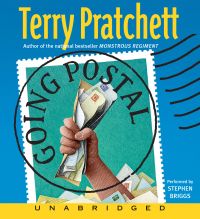
Going PostalTerry Pratchett11h 23m4.5 (189.9K)$29 · $0.00

Glen AffricKarine Giebel22h 51m4.5 (3.2K)$46 · $0.00
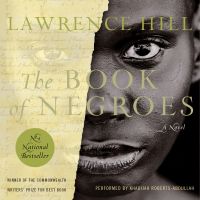
The Book Of NegroesLawrence Hill15h 45m4.5 (107.3K)$33 · $0.00
To Kill a MockingbirdHarper Lee12h 18m4.5 (7.4M)$29 · $0.00

These Precious DaysAnn Patchett11h 14m4.5 (45.2K)$29 · $0.00

Braving the TruthRachel Held Evans11h 31m4.7 (359)$29 · $0.00

The Old Man and the Sea (Annotated)Ernest Hemingway4h 27m4.6 (1.4K)$2 · $0.00

Henry V (The Play, Historical Background and Analysis of the Character in the Play)William Shakespeare, William Hazlitt8h 50m4.6 (1.3K)$1.99 · $0.00
H. P. LOVECRAFT Ultimate Collection: Novellas, Short Stories, Poetry & Essays (Annotated)H. P. Lovecraft12h 28m4.6 (2.3K)$2 · $0.00
Time RegainedMarcel Proust16h 8m4.5 (10.6K)$1.99 · $0.00

The Mis-Education of the NegroCarter Goodwin Woodson4h 32m4.5 (28.4K)$10 · $0.00
Lessons in TruthH. Emilie3h 50m4.6 (1.4K)$4.70 · $0.00

TORAH - Bilingual Edition: English/Hebrew (Annotated)Max Margolis, JPS28h 26m4.6 (1K)$2 · $0.00

Betty Crocker picture cooky bookBetty Crocker, Inc. General Mills2h 13m4.5 (6.5K)$1 · $0.00

The Complete Tales of Beatrix PotterBeatrix Potter3h 36m4.5 (75K)$3 · $0.00

Anne of Green GablesL. M. Montgomery11h 1m4.5 (1.2M)$2.30 · $0.00

Crime and Punishment (The Unabridged Garnett Translation) (Annotated)Fyodor Dostoevsky24h 25m4.5 (15.4K)$1.99 · $0.00

The North American IndianEdward S. Curtis, Frederick Webb Hodge6h4.5 (1.2K)$2 · $0.00

The Picture of Dorian Gray: The Uncensored 13 Chapter Version + The Revised 20 Chapter Version (Annotated)Oscar Wilde16h 12m4.5 (2.8K)$1.99 · $0.00

Grimoire Of The Everyday WitchIsadora Lys / Virginia Santos5h 35m4.5 (3.9K)$9 · $0.00
Winnie-the-PoohAlan Alexander Milne2h 52m4.5 (401.1K)$3 · $0.00

Sitting PrettyRebekah Taussig7h 33m4.5 (18.9K)$26 · $0.00

The Poetic Edda & The Prose EddaSnorri Sturluson, Saemund Sigfusson9h 34m4.5 (4K)$1 · $0.00
You may also like
HereticsG. K. Chesterton6h 48m4.2 (9.5K)$2.30
NonconformityNelson Algren2h 54m4.4 (275)$20 · $0.00
Nationalism & LettersRabindranath Tagore3h 18m4.2 (10.9K)$2.30
On the Duty of Civil DisobedienceHenry David Thoreau2h 19m4.0 (122.8K)$2 · $0.00

The Soul of ManOscar Wilde2h4.1 (14.3K)$1 · $0.00

A Room of One's Own & Three GuineasVirginia Woolf12h 51m4.3 (8.5K)$1 · $0.00

UnravelingBrandon Leake1h 44m4.2 (257)$15

Flatland: A Romance of Many Dimensions (Illustrated)Edwin Abbott Abbott3h 43m4.1 (116K)$2.30

Thus Spoke ZarathustraFriedrich Nietzsche12h 47m4.2 (210.2K)$2 · $0.00
On the Duty of Civil DisobedienceHenry David Thoreau58m4.1 (24.7K)$0.60 · $0.00

Darkwater (Annotated)W. E. B. Du Bois9h 13m4.4 (1.7K)$1.99 · $0.00
Up the Down StaircaseBel Kaufman8h 56m4.2 (21.1K)$23

Patriarchy BluesFrederick Joseph6h 16m4.2 (1.4K)$24 · $0.00

Bohemian SocietyLydia Leavitt1h 43m$1 · $0.00

The Blight of RespectabilityGeoffrey Mortimer2h 51m$2 · $0.00

Poems (Annotated)Iris Tree2h 27m$2 · $0.00

Lectures of Col. R. G. Ingersoll - LatestRobert Green Ingersoll9h 36m4.6 (119)$2 · $0.00

Little Mexican & Other StoriesAldous Huxley8h$1 · $0.00

Raising VictimsLeonydus Johnson6h 33m4.8 (33)$17 · $0.00

Studies and Essays: Censorship and ArtJohn Galsworthy1h 2m$2 · $0.00