
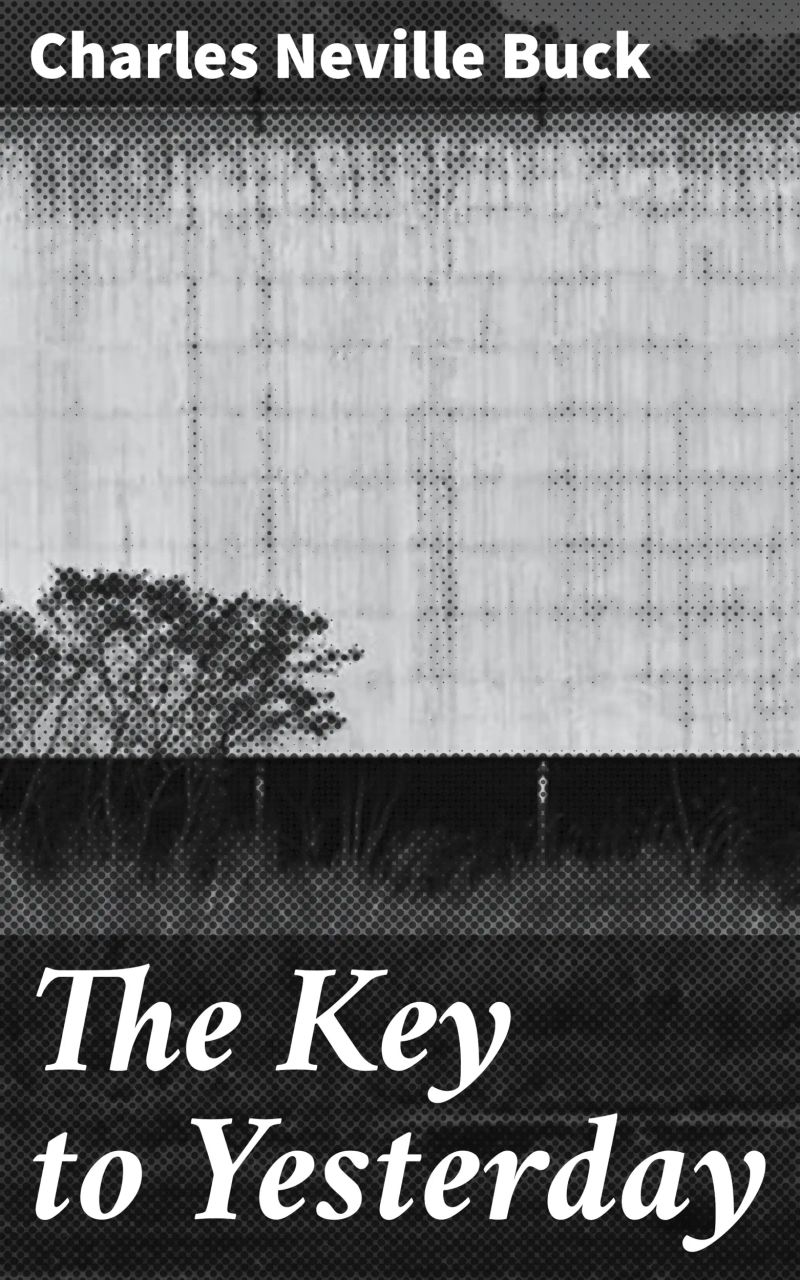
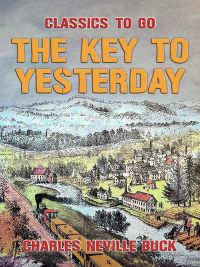
The Key to Yesterday
A Timeless Tale of Love and Regret in 20th Century New YorkBy Charles Neville Buck


Length5h 33m
About this audiobook
In "The Key to Yesterday," Charles Neville Buck intricately weaves a narrative that explores the intricate dance between memory and identity. Set against the backdrop of early 20th-century America, Buck employs a rich, descriptive prose style that evokes the ethos of his time while delving into the psychological complexities of his characters. The novel, punctuated with vivid imagery and reflective passages, highlights the universal struggle against the inexorable passage of time and the longing for lost moments, encapsulating the themes of nostalgia and personal transformation with a masterful touch. Charles Neville Buck, an American novelist known for his keen insights into human psychology, drew from his diverse experiences in journalism and theatre, which provided him with a nuanced understanding of character development and narrative structure. His own journeys through the contrasts of modern life inform the philosophical undercurrents of the story, as Buck grapples with the notion of how the past shapes one's present, a motif prevalent in his broader body of work. "The Key to Yesterday" is a profound exploration of temporality and self-discovery that resonates deeply with readers. It invites reflection on how our past informs our identities. This rich tapestry of emotional experiences will appeal to anyone interested in the complexities of human relationships and the timeless quest for understanding oneself against the backdrop of time.
Audiobook details
GenreRomance, Historical Fiction
Length5 hrs 33 mins
Narrated byListen with 1,000+ voices
FormateBook with Audio
Publish dateDec 17, 2019
LanguageEnglish
Table of contents
1CHAPTER IV
10CHAPTER XIII
2CHAPTER V
11CHAPTER XIV
3CHAPTER VI
12CHAPTER XV
4CHAPTER VII
13CHAPTER XVI
5CHAPTER VIII
14CHAPTER XVII
Show all chaptersShow less
6CHAPTER IX
15CHAPTER XVIII
7CHAPTER X
16CHAPTER XIX
8CHAPTER XI
17CHAPTER XX
9CHAPTER XII
18CHAPTER XXI
More from Charles Neville Buck

The Portal of DreamsCharles Neville Buck5h 52m3.6 (18)$2 · $0.00

A Pagan of the HillsCharles Neville Buck4h 53m$2 · $0.00

A Pagan of the HillsCharles Neville Buck4h 53m$2 · $0.00

The Roof TreeCharles Neville Buck9h 29m$2 · $0.00
The Tyranny of WeaknessCharles Neville Buck11h 30m$7.50 · $0.00

Pride & Prejudice (Annotated)Jane Austen15h 10m4.7 (13.3K)$2 · $0.00

The Search (Annotated)Grace Livingston Hill7h 29m4.7 (1.1K)$0.99 · $0.00

The ReunionJana Deleon6h 31m4.6 (1.6K)$26 · $0.00
Something Like LoveBeverly Jenkins10h 21m4.6 (2.7K)$29 · $0.00

Wishes from the HeartSophie Mays4h 9m4.7 (344)$15 · $0.00

Blizzard ShowdownShirlee McCoy5h 16m4.6 (1.1K)$12 · $0.00

To Hold and ProtectSandra Owens7h 59m4.6 (1.1K)$8 · $0.00

Arctic WitnessHeather Woodhaven5h 46m4.6 (985)$12 · $0.00

Following the TrailLynette Eason6h 35m4.6 (2.3K)$12 · $0.00

Defending from DangerJodie Bailey5h 46m4.6 (588)$24 · $0.00

White HotIlona Andrews13h 18m4.5 (136.9K)$5 · $0.00

Explosive RevengeMaggie K. Black6h 18m4.6 (545)$12 · $0.00

Her Brand of JusticeB.J. Daniels6h 48m4.6 (1.3K)$12 · $0.00

Search And DetectTerri Reed5h 51m4.6 (706)$24 · $0.00

Driving ForceElle James4h 58m4.6 (407)$20 · $0.00

Danger in the WildernessDarlene L. Turner6h 54m4.7 (299)$12 · $0.00

Yukon JusticeDana Mentink6h 15m4.6 (751)$12 · $0.00

The Rogue WarriorCindy Roland Anderson5h 44m4.6 (410)$17 · $0.00

Her Duty Bound DefenderSharee Stover6h 30m4.6 (1.1K)$24 · $0.00

Trail Of ThreatsJessica R. Patch5h 47m4.6 (425)$24 · $0.00
Scaramouche (Annotated)Rafael Sabatini15h 24m4.6 (1.8K)$2 · $0.00

The Ghost by the Billabong (The Matilda Saga, #5)Jackie French14h 58m4.6 (773)$33 · $0.00

The Labyrinth of the SpiritsCarlos Ruiz Zafon27h 55m4.5 (77.2K)$53 · $0.00

ShivajiRanjit Desai25h 13m4.6 (3.1K)$24 · $0.00

The Things We Cannot SayKelly Rimmer13h 48m4.5 (359.1K)$33 · $0.00

Lieutenant Hornblower (Annotated)C. S. Forester11h 41m4.5 (2.9K)$2 · $0.00

A Christmas Carol (Illustrated Edition)Charles Dickens3h 23m4.5 (21.2K)$1.99 · $0.00

Rilla of InglesideLucy Maud Montgomery11h 44m4.5 (48.2K)$2 · $0.00

The Viennese DressmakerKathryn Gauci11h 46m4.5 (2.1K)$23 · $0.00

The Man in the Brown Suit & They Came to BaghdadAgatha Christie15h 43m4.6 (495)$33 · $0.00

Under the Light of the Italian MoonJennifer Anton12h 28m4.5 (5.3K)$23 · $0.00

Jubilee, 50th Anniversary EditionMargaret Walker15h 43m4.5 (9.5K)$25 · $0.00

Pride and PrejudiceJane Austen14h 44m4.4 (4.7M)$2 · $0.00

Flying Colours (Annotated)Cecil Louis Troughton Smith9h 26m4.4 (10.1K)$2 · $0.00

With Love from HarlemReShonda Tate13h 48m4.5 (2K)$6 · $0.00

Sweet Home Highland ChristmasMay McGoldrick, Jan Coffey2h 54m4.5 (1.4K)$7 · $0.00

Rilla of InglesideL. M. Montgomery12h 25m4.4 (67.5K)$2 · $0.00

Death Comes for the Archbishop (Annotated)Willa Cather9h 13m4.4 (4.7K)$2 · $0.00

The Alice NetworkKate Quinn15h 7m4.4 (887.1K)$33 · $0.00

The Goddess of WarsawLisa Barr13h 4m4.4 (36.4K)$33 · $0.00
You may also like

The Phantom of the OperaGaston Leroux8h 33m4.0 (305.5K) · 1611Free

The Aspern PapersHenry James4h 20m4.0 (33.2K)$12

The MonkM. G. Lewis10h 37m4.0 (46.6K)$2 · $0.00

Lost HeartsLexi Blake12h 42m4.4 (4.6K)$23

The Woman in White (Illustrated Edition) (Annotated)Wilkie Collins28h 54m4.1 (207.5K)$0.99 · $0.00

The Forgetting PlaceJohn Burley10h 19m3.8 (2K)$29 · $0.00

The Woman in White (Illustrated) (Annotated)Wilkie Collins28h 55m4.1 (200.7K)$0.99 · $0.00

The Lying Game #2: Never Have I EverSara Shepard7h 25m4.1 (25K)$24 · $0.00

Perfect FlingCarly Phillips8h 38m4.1 (4.4K)$20

Fade to BlackWendy Corsi Staub10h 32m3.8 (1K)$29 · $0.00

The Love TalkerElizabeth Peters7h 47m3.8 (2.8K)$17

CarmillaJ. Sheridan LeFanu2h 41m4.0 (269.7K)$12 · $0.00

A Daughter of the VineGertrude Franklin Horn Atherton4h 45m2.5 (11)$2 · $0.00

Guarded HeartsJason Pound3h 15m4.4 (22) Only with Ultra

NightshiftKiare Ladner6h 53m3.3 (3.4K)$24 · $0.00

THE MAN WHO FORGOT (Psychological Thriller)James Hay7h 41m$0.99 · $0.00
The Key to YesterdayCharles Neville Buck6h 48m$2.30

(Just Like) Starting OverPepper Espinoza3h 39m3.7 (139)$4 · $0.00

The darkness from the booksTobias Prediger24m$6 · $0.00
Marked by the Blood BrokerSéverine Oyelaran11h 2m$5