
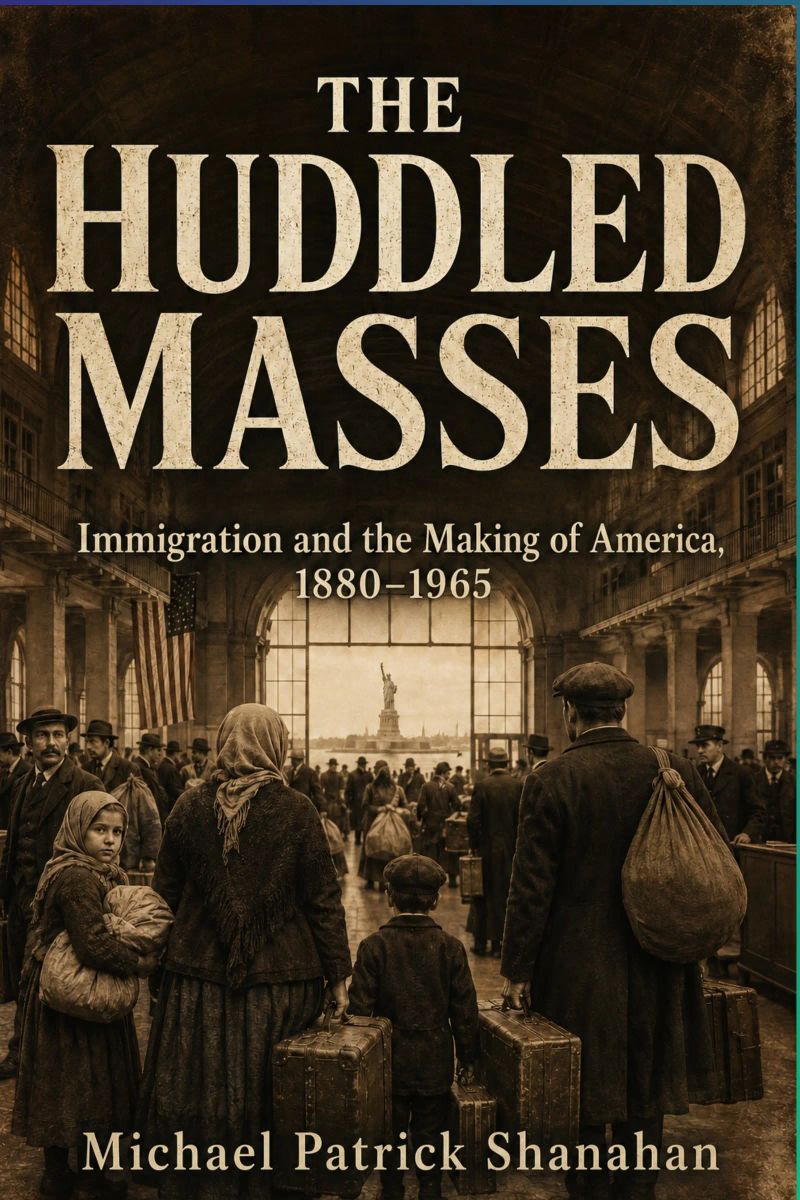
THE HUDDLED MASSES
Immigration and the Making of America, 1880-1965By Michael Patrick Shanahan


Length5h 54m
About this audiobook
The definitive narrative history of American immigration — Ellis Island, the great wave, Chinese exclusion, the 1924 quota law, and the Hart-Celler Act that remade the nation, 1880-1965.
On April 17, 1907, 11,747 immigrants passed through Ellis Island in a single day — one person every few seconds, doctors scanning for trachoma with a metal hook, inspectors asking fourteen questions before waving each family through. More than twelve million people had followed Annie Moore, a fifteen-year-old Irish girl given a ten-dollar gold coin as the first arrival in 1892. They came from Italy, Poland, Russia, Hungary, China, Japan — speaking dozens of languages, carrying the customs of dozens of civilizations — because what lay behind the golden door seemed worth almost any sacrifice to reach.
This is the story of how Emma Lazarus, Albert Johnson, David Reed, Ted Kennedy, and César Chávez — reformers, restrictionists, and the immigrants themselves — shaped the most contested question in American history. Across twenty-four chapters, historian Michael Patrick Shanahan traces the full arc from the great wave of the 1880s through the Hart-Celler Act of 1965, which abolished the racial quota system and set in motion the demographic transformation still unfolding today.
Inside this immigration history book:
• Ellis Island's processing machine — the six-second medical inspection, chalk letters on coats, and why only 2 percent were turned away despite the station's fearsome reputation (Chapter 1)
• Chinese Exclusion and Angel Island — the 1882 Act and the diplomatic crisis when Congress barred Japanese immigration over the State Department's objections (Chapters 5, 7)
• The Immigration Act of 1924 — Albert Johnson and David Reed's formula cutting Italy's quota from 42,000 to under 4,000, closing the door on the Jewish refugees who would later face the Holocaust (Chapter 11)
• The Palmer Raids and Mexican repatriation — J. Edgar Hoover's 3,000 arrests in one January night; 400,000 to one million people of Mexican descent removed in the 1930s, many American citizens (Chapter 12)
• Hart-Celler Act of 1965 — Ted Kennedy's assurance the law would not change the country's composition; family-reunification chains that proved him wrong; top source countries shifting to Mexico, China, India, the Philippines, El Salvador (Chapter 21)
• The undocumented and DACA — how ending the Bracero Program in 1964 turned circular Mexican migration unauthorized, leaving 800,000 childhood arrivals in legal limbo (Chapter 22)
The question has never been whether to be a nation of immigrants but what kind — how many, from where, on what terms. Those questions were answered badly in 1924, reconsidered in 1965, and are being debated again today with the same urgency. This is the history of how they were first asked.
For readers of Oscar Handlin's THE UPROOTED and Jill Lepore's THESE TRUTHS.
Audiobook details
GenreHistory
Length5 hrs 54 mins
Narrated byListen with 1,000+ voices
FormateBook with Audio
Publish dateJun 2, 2026
LanguageEnglish
Table of contents
1Introduction
2Prologue: The Golden Door
3PART ONE: THE GREAT WAVE (1880-1914)
4Chapter 1: Ellis Island — The Gateway and What Immigrants Found There
5Chapter 2: Southern and Eastern Europe — Italians, Jews, Poles, and the New Immigrants
Show all chaptersShow less
6Chapter 3: The Journey — Steerage, the Atlantic Crossing, and Arrival
7Chapter 4: The Ethnic Neighborhood — Little Italy, the Lower East Side, and Immigrant Communities
8PART TWO: THE ASIAN IMMIGRATION
9Chapter 5: Chinese Exclusion — The 1882 Act and Its Consequences
10Chapter 6: The Japanese Experience — Issei, Nisei, and the California Question
11Chapter 7: Angel Island — The Pacific Gateway and the Chinese-American Story
12Chapter 8: Filipino and Korean Immigrants — The Pacific Migration Beyond Japan and China
13PART THREE: THE ANTI-IMMIGRATION MOVEMENT
14Chapter 9: Nativism — The Know-Nothings and the Anglo-Saxon Myth
15Chapter 10: The Immigration Restriction League — Scientific Racism and the Quota Movement
16Chapter 11: The Emergency Quota Act of 1921 and the Immigration Act of 1924
17Chapter 12: The Deportations — Palmer Raids, Mexicans, and Forced Removals
18PART FOUR: BECOMING AMERICAN
19Chapter 13: The Second Generation — American-Born Children of Immigrants
20Chapter 14: Language — English Acquisition, Bilingualism, and the Schools
21Chapter 15: Religion — Catholic, Jewish, Orthodox, and the American Spiritual Landscape
22Chapter 16: The Melting Pot vs. Cultural Pluralism — Two Visions of American Identity
23PART FIVE: IMMIGRATION'S IMPACT ON AMERICAN LIFE
24Chapter 17: Food, Music, and Culture — What Immigrants Gave America
25Chapter 18: Labor — Immigrants in the Factory, the Mine, and the Construction Site
26Chapter 19: Immigrant Politics — Tammany Hall, the Ethnic Vote, and Urban Machines
27Chapter 20: The Intellectual Immigration — Einstein, Fermi, and the European Refugee Wave
28PART SIX: LEGACIES
29Chapter 21: The Hart-Celler Act of 1965 — The Immigration Revolution
30Chapter 22: The Undocumented — Illegal Immigration and the Post-1965 Reality
31Chapter 23: The Latino Immigration — Mexico, Central America, and the New Great Wave
32Chapter 24: Immigration and American Identity — The Continuing Debate
33Epilogue: A Nation of Immigrants
34Acknowledgments
35Selected Bibliography
36About the Author
More from Michael Patrick Shanahan
A Brief History of IntelligenceMax S. Bennett12h 18m4.6 (6.6K)$29 · $0.00

Black AF HistoryMichael Harriot15h 43m4.7 (14.6K)$33 · $0.00

The Gulag Archipelago Volume 3Aleksandr I. Solzhenitsyn21h 56m4.7 (8.9K)$46 · $0.00
Pearl of Great PriceJoseph Smith3h 8m4.7 (7.2K)$1.20 · $0.00

The Happiest Man on EarthEddie Jaku3h 48m4.6 (178K)$7 · $0.00

MotherlandJulia Ioffe17h 52m4.7 (2.5K)$40 · $0.00

Where Cowards Go to DieBenjamin Sledge8h 42m4.7 (351)$20 · $0.00

RevolutionariesSanjeev Sanyal11h 23m4.6 (2.6K)$29 · $0.00

We Crossed a Bridge and It TrembledWendy Pearlman6h4.6 (5.2K)$24 · $0.00

Unbroken Bonds of BattleJohnny Joey Jones8h 31m4.6 (2.6K)$8 · $0.00

The Daughter of AuschwitzTova Friedman, Malcolm Brabant7h 54m4.6 (16.7K)$26 · $0.00
Lily's PromiseLily Ebert, Dov Forman8h 54m4.6 (16.1K)$29 · $0.00

On Democracies and Death CultsDouglas Murray10h 38m4.6 (6.5K)$29 · $0.00

Across the RiverKent Babb11h 40m4.6 (927)$29 · $0.00

Balcony Over Jerusalem: A Middle East Memoir - Israel, Palestine and BeyondJohn Lyons12h 37m4.6 (1.4K)$33 · $0.00
BeyondStephen Walker15h 39m4.6 (3.2K)$33 · $0.00
Kings and PawnsHoward Bryant10h 9m4.6 (678)$29 · $0.00

No EscapeNury Turkel9h 30m4.6 (809)$28 · $0.00

Jubal Stone: U.S. Marshal: Blood Trail To Hell: A Western Adventure NovelCasey Nash3h 42m4.6 (3.2K)$18 · $0.00

Fall and RiseMitchell Zuckoff17h 23m4.6 (9.8K)$40 · $0.00
You may also like

Frederick Douglass: All 3 Memoirs in One VolumeFrederick Douglass42h 36m4.7 (1.3K)$1 · $0.00
Father Henson's Story of His Own LifeJosiah Henson4h 35m4.4 (588)$2 · $0.00

Father Henson's Story of His Own Life (Annotated)Josiah Henson4h 43m4.4 (732)$2 · $0.00
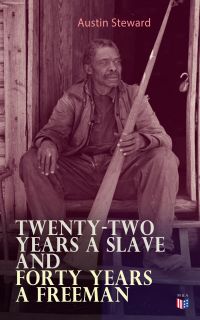
Twenty-Two Years a Slave and Forty Years a FreemanAustin Steward8h 53m4.2 (255)$1 · $0.00
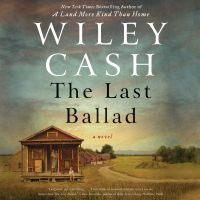
The Last BalladWiley Cash14h 7m4.1 (14.4K)$33 · $0.00

The Underground Railroad (Illustrated Edition)William Still43h 52m4.4 (2.1K)$1.99 · $0.00
Impossible Takes LongerDaniel Gordis11h 59m4.2 (488)$29 · $0.00
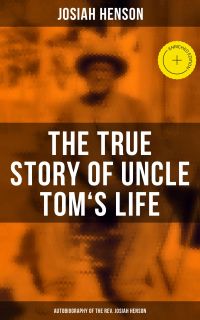
The True Story of Uncle Tom's Life: Autobiography of the Rev. Josiah HensonJosiah Henson4h 50m4.4 (1.7K)$1.99 · $0.00

Uncle Tom’s Cabin or Life Among The LowlyHarriet Beecher Stowe18h 44m4.0 (287K) · 1537Free

Miss BurmaCharmaine Craig13h 20m3.9 (4.5K)$23
A God in RuinsLeon Uris6h 6m3.7 (4K)$24 · $0.00

Stalin's DaughterRosemary Sullivan19h 43m4.2 (7.2K)$40 · $0.00
My Bondage and My FreedomFrederick Douglass12h 14m4.5 (16.4K)$8 · $0.00

UnassimilableBianca Mabute-Louie6h 33m4.1 (413)$24 · $0.00
The Known WorldEdward P. Jones14h 18m4.0 (56.9K)$33 · $0.00

A HAZARD OF NEW FORTUNESWilliam Dean Howells19h 24m3.7 (1.6K)$1.99 · $0.00

The History of Thomas Ellwood Written By HimselfThomas Ellwood7h 31m$2 · $0.00
A Journey To The End Of The MillenniumA.B. Yehoshua15h 6m$33 · $0.00
Twenty-Two Years a Slave and Forty Years a Freeman (Autobiography)Austin Steward9h 43m4.1 (231)$1.99 · $0.00
The Great StainNoel Rae24h 46m4.4 (188)$30