
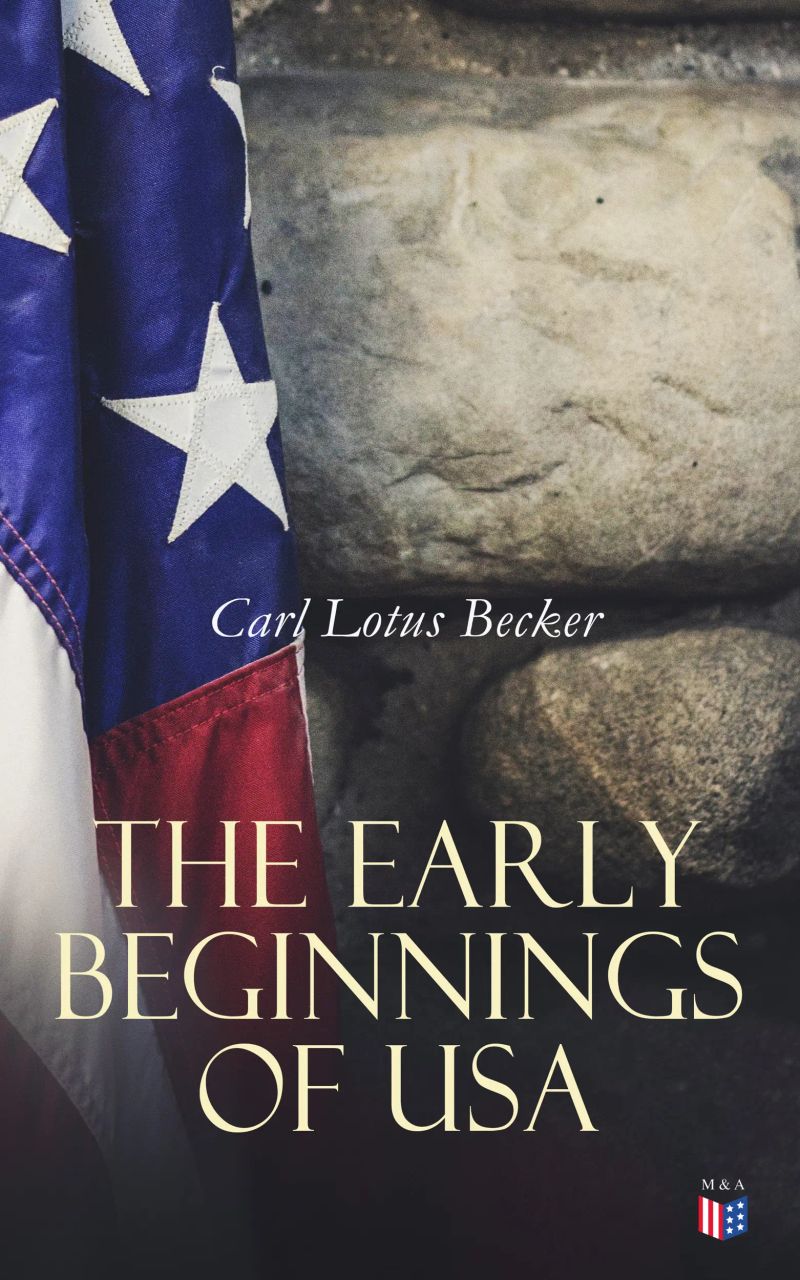
The Early Beginnings of USA
The Beginnings of the American People, The Eve of the Revolution, The Declaration of Independence—A Study in the History of Political IdeasBy Carl Lotus Becker


Length21h
About this audiobook
This meticulously edited collection is dedicated to the raw and at the same time visionary foundations on which present day United States stands on.
Contents:
The Beginnings of the American People
The Discovery of the Old World and the New
The Partition of the New World
The English Migration in the Seventeenth Century
England and her Colonies in the Seventeenth and Eighteenth Centuries
The American People in the Eighteenth Century
The Winning of Independence
The Eve of the Revolution
A Patriot Of 1763
The Burden Of Empire
The Rights Of A Nation
Defining The Issue
A Little Discreet Conduct
Testing The Issue
The Declaration of Independence: A Study in the History of Political Ideas
Historical Antecedents of the Declaration: The Natural Rights Philosophy
Historical Antecedents of the Declaration: Theory of the British Empire
Drafting the Declaration
The Literary Qualities of the Declaration
The Philosophy of the Declaration in the Nineteenth Century
Audiobook details
Rating★★★★ 3.8 (66)
Includes Goodreads, LibraryThing, Amazon
GenreHistory, Politics and Government
Length21 hrs
Narrated byListen with 1,000+ voices
FormateBook with Audio
Publish dateApr 12, 2019
LanguageEnglish
Table of contents
1The Early Beginnings of USA
2The Riverside History of the United States: Editor's Introduction
3Preface
4Chapter I. The Discovery of the Old World and the New
5I
Show all chaptersShow less
6II
7III
8IV
9Chapter II. The Partition of the New World
10I
11II
12III
13IV
14Chapter III. The English Migration in the Seventeenth Century
15I
16II
17III
18IV
19Chapter IV. England and Her Colonies in the Seventeenth and Eighteenth Centuries
20I
21II
22III
23Chapter V. The American People in the Eighteenth Century
24I
25II
26III
27Chapter VI. The Winning of Independence
28I
29II
30III
31IV
32V
33The Eve of the Revolution
34Preface
35Chapter I. A Patriot of 1763
36Chapter II. The Burden of Empire
37Chapter III. The Rights of a Nation
38Chapter IV. Defining the Issue
39Chapter V. A Little Discreet Conduct
40Chapter VI. Testing the Issue
41The Declaration of Independence—A Study in the History of Political Ideas
42Chapter I. The Declaration of Independence
43Chapter II. Historical Antecedents of the Declaration: The Natural Rights Philosophy
44Chapter III. Historical Antecedents of the Declaration: Theory of the British Empire
45Chapter IV. Drafting the Declaration
46THE ROUGH DRAFT (as it probably read when Jefferson first submitted it to Franklin.)1
47THE ROUGH DRAFT as it probably read when Jefferson made the ‘fair copy’ which was presented to Congress as the report of the Committee of Five.
48THE DECLARATION OF INDEPENDENCE (as it reads in the Lee copy, which is probably the same as the report of the Committee of Five, with parts omitted by Congress crossed out and the parts added interlined in italics.)
49THE DECLARATION OF INDEPENDENCE (as it reads in the parchment copy.)
50Chapter V. The Literary Qualities of the Declaration
More from Carl Lotus Becker




A Brief History of IntelligenceMax S. Bennett12h 18m4.6 (6.6K)$29 · $0.00

The Gulag Archipelago Volume 3Aleksandr I. Solzhenitsyn21h 56m4.7 (8.9K)$46 · $0.00

Pearl of Great PriceJoseph Smith3h 8m4.7 (7.2K)$1.20 · $0.00

The Happiest Man on EarthEddie Jaku3h 48m4.6 (178K)$7 · $0.00

MotherlandJulia Ioffe17h 52m4.7 (2.5K)$40 · $0.00

Where Cowards Go to DieBenjamin Sledge8h 42m4.7 (351)$20 · $0.00

RevolutionariesSanjeev Sanyal11h 23m4.6 (2.6K)$29 · $0.00

We Crossed a Bridge and It TrembledWendy Pearlman6h4.6 (5.2K)$24 · $0.00

Unbroken Bonds of BattleJohnny Joey Jones8h 31m4.6 (2.6K)$8 · $0.00

The Daughter of AuschwitzTova Friedman, Malcolm Brabant7h 54m4.6 (16.7K)$26 · $0.00

Lily's PromiseLily Ebert, Dov Forman8h 54m4.6 (16.1K)$29 · $0.00

On Democracies and Death CultsDouglas Murray10h 38m4.6 (6.5K)$29 · $0.00

Across the RiverKent Babb11h 40m4.6 (927)$29 · $0.00

Balcony Over Jerusalem: A Middle East Memoir - Israel, Palestine and BeyondJohn Lyons12h 37m4.6 (1.4K)$33 · $0.00

BeyondStephen Walker15h 39m4.6 (3.2K)$33 · $0.00
Kings and PawnsHoward Bryant10h 9m4.6 (678)$29 · $0.00

No EscapeNury Turkel9h 30m4.6 (809)$28 · $0.00

Jubal Stone: U.S. Marshal: Blood Trail To Hell: A Western Adventure NovelCasey Nash3h 42m4.6 (3.2K)$18 · $0.00

Fall and RiseMitchell Zuckoff17h 23m4.6 (9.8K)$40 · $0.00

The SurvivorJosef Lewkowicz, Michael Calvin9h 22m4.6 (2.5K)$29 · $0.00

How to Test Negative for StupidJohn Kennedy8h 13m4.7 (9.7K)$28 · $0.00

Black AF HistoryMichael Harriot15h 43m4.7 (14.6K)$33 · $0.00
The Gulag Archipelago Volume 3Aleksandr I. Solzhenitsyn21h 56m4.7 (8.9K)$46 · $0.00
MotherlandJulia Ioffe17h 52m4.7 (2.5K)$40 · $0.00

HostageEli Sharabi5h 25m4.6 (10.8K)$24 · $0.00

KrantikariSanjeev Sanyal11h 44m4.6 (1.3K)$16 · $0.00
Unbroken Bonds of BattleJohnny Joey Jones8h 31m4.6 (2.6K)$8 · $0.00
On Democracies and Death CultsDouglas Murray10h 38m4.6 (6.5K)$29 · $0.00
Balcony Over Jerusalem: A Middle East Memoir - Israel, Palestine and BeyondJohn Lyons12h 37m4.6 (1.4K)$33 · $0.00
RiggedMollie Hemingway12h 48m4.6 (4.2K)$23 · $0.00

SledgehammerDavid Friedman8h 21m4.7 (589)$26 · $0.00
Citizenship in a Republic (Annotated)Theodore Roosevelt2h 44m4.6 (1.4K)$2 · $0.00
No EscapeNury Turkel9h 30m4.6 (809)$28 · $0.00

Always FaithfulThomas Schueman, Zainullah Zaki12h 12m4.6 (977)$29 · $0.00

UnthinkableJamie Raskin15h 8m4.5 (9.3K)$8 · $0.00
My Fourth Time, We DrownedSally Hayden13h 59m4.6 (2.9K)$23 · $0.00

A Revolution of Common SenseScott Jennings9h 29m4.6 (528)$29 · $0.00

Statement From the Dock at the Rivonia TrialNelson Mandela2h 18m4.6 (1.3K)$1 · $0.00

Lessons from the EdgeMarie Yovanovitch17h 11m4.5 (5.9K)$40 · $0.00

To Rescue the American SpiritBret Baier10h 12m4.5 (2.7K)$8 · $0.00
You may also like

In the Reign of TerrorG. A. Henty9h 36m4.0 (3.5K)$2.30

Memoirs of a revolutionistPeter Alexeyevich Kropotkin16h 46m4.3 (1K)$2 · $0.00

What Hath God WroughtDaniel Walker Howe32h 50m4.3 (12.5K)$42
A Short History of the United StatesRobert V. Remini10h 17m3.8 (1.1K)$29 · $0.00

Wee Willie Winkie, and Other Stories Volume 2Rudyard Kipling4h 49m3.8 (1.3K)$2.30

The History of Rome - All 5 Volumes in One EditionTheodor Mommsen100h 46m4.5 (3.1K)$1.99 · $0.00
The New World (Complete Edition)Winston Churchill14h 25m4.4 (2.5K)$1 · $0.00
The Winning of the West, Vol. 1Theodore Roosevelt8h 15m4.1 (491)$20

Discovery of the Yosemite, and the Indian War of 1851, Which Led to That EventLafayette Houghton Bunnell10h 33m4.0 (257)$2 · $0.00

Waverly (Unabridged)Walter Scott21h 56m3.6 (9.3K)$1.99 · $0.00

The Story of the Nations: PortugalH. Morse Stephens10h 42m3.9 (101)$2 · $0.00

PARTHIA (Illustrated)George Rawlinson11h 59m4.3 (11)$1.99 · $0.00

The Heart of ScotlandA. R. Hope Moncrieff5h 1m$2 · $0.00

A History of the English PeoplePaul Johnson19h 12m3.9 (226)$32

Roumania Past and PresentJames Samuelson10h 36m$1 · $0.00

The New World (Annotated)Winston Churchill14h 34m$2 · $0.00

Faces of Cuba: 3 Insightful Classic Books on Its Life and LegacyMaturin M. Ballou, C. H. Forbes-Lindsay, James Meade Adams21h 26m$0.99 · $0.00

A Short History of RussiaMary Platt Parmele7h 19m3.6 (639)$2 · $0.00

A Gringo in Mañana-LandHarry L. Foster9h 4m$2.30

The Awakening of ChinaW. A. P. Martin9h 34m3.9 (20)$1 · $0.00