
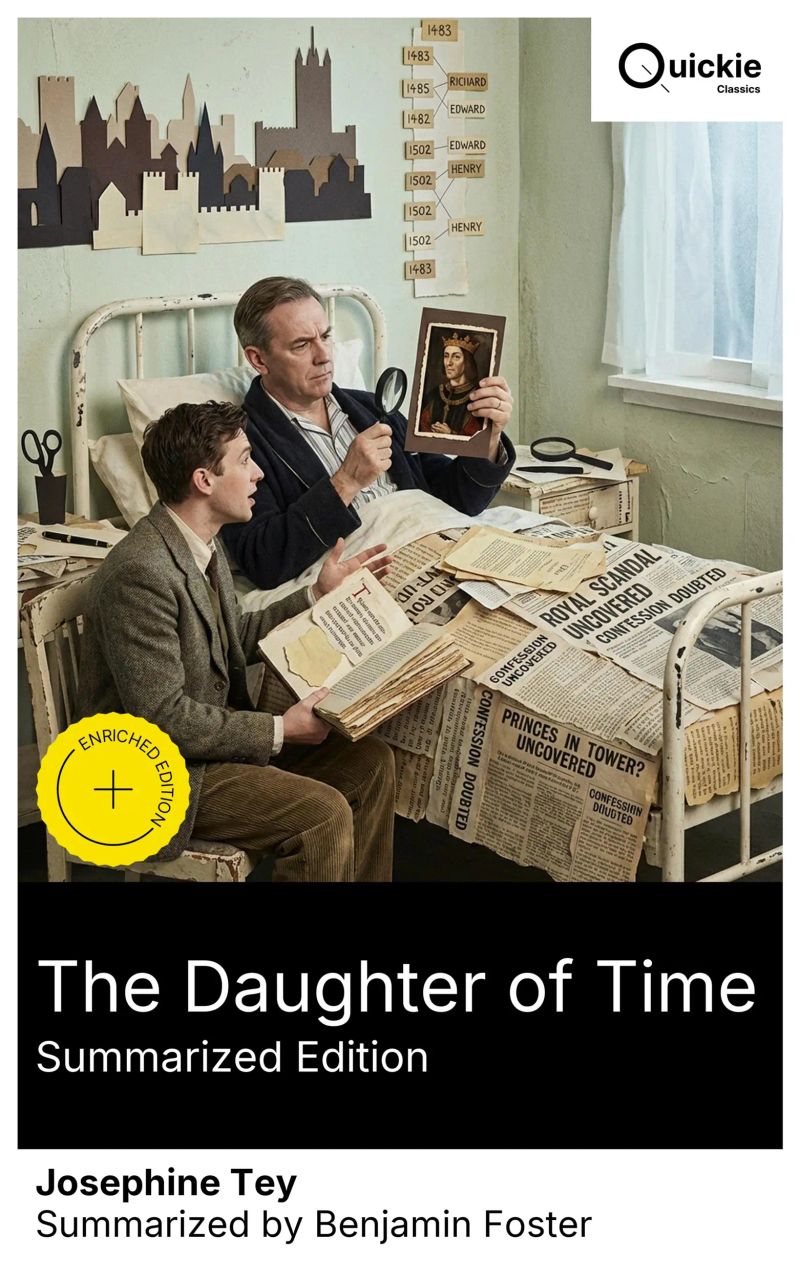
The Daughter of Time (Summarized Edition)
Enriched edition. An armchair inquiry into Richard III and the Princes in the Tower, as a bedridden inspector tests Tudor myths with cool, exacting detection.By Josephine Tey

Length2h 35m
About this audiobook
Bedridden Inspector Alan Grant turns from contemporary crime to the enigma of Richard III, testing a policeman's instincts against biased chronicles and the seductions of portraiture. With a young researcher, he sifts Thomas More, Mancini, and Tudor propaganda, assembling a case that marries armchair detection to historiography. Published in 1951 at a moment of postwar reassessment, The Daughter of Time—its title from Bacon's maxim that truth is time's daughter—uses lucid prose, dry wit, and exacting source-criticism to challenge the myth of the murdered princes. Josephine Tey, pen name of Scottish novelist and dramatist Elizabeth MacKintosh (also Gordon Daviot), brought a playwright's economy and contrarian eye to crime fiction. Her stage triumph Richard of Bordeaux honed her feel for contested kings and the politics of reputation; distrust of formula and fascination with character made her an ideal skeptic of received history. Here she channels wide reading and stagecraft into a cool, anti-sensational inquiry rather than a chase. Scholars of Tudor history, Golden Age aficionados, and readers who relish intellectual detection will find a bracing corrective to lazy legend here. Read it for its method as much as its verdict: a graceful lesson in how patiently weighed evidence outlasts rumor.
Quickie Classics summarizes timeless works with precision, preserving the author's voice and keeping the prose clear, fast, and readable—distilled, never diluted. Enriched Edition extras: Introduction · Synopsis · Historical Context · Brief Analysis · 4 Reflection Q&As · Editorial Footnotes.
Audiobook details
GenreMystery and Thriller
Length2 hrs 35 mins
Narrated byListen with 1,000+ voices
FormateBook with Audio
Publish dateJan 10, 2026
LanguageEnglish
Table of contents
1Introduction
5The Daughter of Time (Inspector Alan Grant Mystery)
2Introduction
6Analysis
3Synopsis
7Reflection
4Historical Context
The Greatest Murder Mysteries - Josephine Tey EditionJosephine Tey66h 58m$2.99 · $0.00
The Collected WorksJosephine Tey66h 56m4.6 (180)$2.99 · $0.00
Miss Pym Disposes (Musaicum Vintage Mysteries)Josephine Tey9h 12m3.9 (15.1K)$2.99 · $0.00
The Daughter of Time (Inspector Alan Grant Mystery)Josephine Tey7h 14m4.1 (58.8K)$1.99 · $0.00
Brat Farrar (Musaicum Vintage Mysteries)Josephine Tey10h 28m4.2 (32.9K)$2.99 · $0.00
Inspector Alan Grant's CasesJosephine Tey48h 58m4.4 (262)$3.99 · $0.00
The Man in the Queue (Musaicum Vintage Mysteries)Josephine Tey9h 36m3.9 (16.8K)$1.99 · $0.00
100 Mystery Classics of World LiteratureJosephine Tey, Arthur Conan Doyle, John Buchan, Edgar Allan Poe, G. K. Chesterton, Wilkie Collins, Charles Dickens, Charlotte Brontë, Emily Brontë, Anne Brontë, Frances Hodgson Burnett, Thomas Hardy, Joseph Conrad, Robert Louis Stevenson, Jules Verne, Mark Twain, Henry James, Fyodor Dostoyevsky, Anton Chekhov, Nikolai Gogol, Walter Scott, Daniel Defoe, F. Scott Fitzgerald, Sinclair Lewis, D. H. Lawrence, Oscar Wilde, H. G. Wells, George Orwell, Edgar Wallace, R. Austin Freeman, Anna Katharine Green, Ethel Lina White, Sapper, Arthur Morrison, Marie Belloc Lowndes, Robert William Chambers, E. Phillips Oppenheim, J. S. Fletcher, Richard Marsh, Annie Haynes, Alexandre Dumas, Maurice Leblanc, Gaston Leroux, Émile Gaboriau, Bram Stoker, Sheridan Le Fanu, H. P. Lovecraft, William Hope Hodgson, Algernon Blackwood, Guy de Maupassant, Frances Noyes Hart, Theodore Dreiser, Armitage Trail, E. W. Hornung, Earl Derr Biggers, S. S. Van Dine, Jeffery Farnol1055h 29m4.2 (28)$1.99 · $0.00

Historische Ermittlungen: Spannende Krimis aus vergangenen ZeitenJosephine Tey, E. T. A. Hoffmann, Jodocus Temme, Friedrich Schiller, Alexandre Dumas, Wilkie Collins, Max Eyth, Clara Viebig, Selma Lagerlöf, Arthur Conan Doyle, Karl von Holtei, Eufemia von Adlersfeld-Ballestrem, Jakob Wassermann, Robert Louis Stevenson, Levin Schücking, Walther Kabel, Hugo Bettauer, Arthur Achleitner, Ricarda Huch, Artur Landsberger278h 29m$2 · $0.00

The Franchise Affair (Annotated)Josephine Tey10h 56m$2 · $0.00
A Shilling for Candles (Annotated)Josephine Tey8h 37m$2 · $0.00
Brat Farrar (Annotated)Josephine Tey10h 32m$2 · $0.00
Miss Pym Disposes (Annotated)Josephine Tey9h 11m4.4 (1K)$2 · $0.00
BRITISH MURDER MYSTERIES: The Greatest Thrillers of Josephine Tey (Annotated)Josephine Tey66h 56m$2 · $0.00
The Greatest Murder Mysteries - Josephine Tey Edition (Annotated)Josephine Tey66h 55m$2 · $0.00
The Man in the Queue (Musaicum Vintage Mysteries)Josephine Tey9h 26m3.8 (18.1K)$1 · $0.00
The Daughter of Time (Inspector Alan Grant Mystery)Josephine Tey7h 5m3.9 (85.7K)$1 · $0.00
A Shilling for CandlesJosephine Tey8h 28m4.0 (13.7K)$1 · $0.00
Miss Pym DisposesJosephine Tey9h 2m4.0 (12.9K)$1 · $0.00
Inspector Alan Grant Mysteries - Complete SeriesJosephine Tey48h 49m4.3 (1.4K)$1.50 · $0.00

To Hold and ProtectSandra Owens7h 59m4.6 (1.1K)$8 · $0.00
The Adventures of Sherlock Holmes (Complete Edition)Arthur Conan Doyle12h 41m4.6 (286.7K)$1.99 · $0.00
Farewell My Lovely (Annotated)Raymond Chandler10h 37m4.6 (1.2K)$2 · $0.00
The Labyrinth of the SpiritsCarlos Ruiz Zafon27h 55m4.5 (77.2K)$53 · $0.00

Olympic Mountain PursuitJodie Bailey5h 55m4.6 (638)$12 · $0.00

Glen AffricKarine Giebel22h 51m4.5 (3.2K)$46 · $0.00

Deadly Badlands PursuitSharee Stover5h 53m4.6 (361)$12 · $0.00
Crime and Punishment (The Unabridged Garnett Translation) (Annotated)Fyodor Dostoevsky24h 25m4.5 (15.4K)$0.99 · $0.00
Three ComradesErich Maria Remarque15h 50m4.5 (47.3K)$2 · $0.00

AngelAnita Waller10h 30m4.6 (672)$30 · $0.00

The BorderDon Winslow29h 8m4.5 (35.7K)$53 · $0.00
FlashpointCatherine Coulter11h 38m4.5 (11.6K)$29 · $0.00
The Gothic Works of Edgar Allan Poe (Illustrated Edition)Edgar Allan Poe21h 5m4.5 (2.9K)$1.99 · $0.00
The Man in the Brown Suit & They Came to BaghdadAgatha Christie15h 43m4.6 (495)$33 · $0.00
Fang Si-Chi's First Love ParadiseYi-Han Lin8h 25m4.5 (4K)$26 · $0.00
The Rose CodeKate Quinn16h 2m4.4 (493.7K)$33 · $0.00
No Woman Left BehindJulie Moffett8h 49m4.5 (3K)$25 · $0.00

CovertJanie Crouch6h 15m4.5 (2K)$12 · $0.00
Cold Case InvestigationNicole Helm5h 30m4.6 (321)$5 · $0.00
The Lost Weekend (Annotated)Charles Jackson9h 46m4.5 (1K)$0.99 · $0.00
You may also like
The Daughter of TimeJosephine Tey7h 7m4.2 (45.8K)$1 · $0.00
The Daughter of Time (Inspector Alan Grant Mystery)Josephine Tey7h 5m3.9 (85.7K)$1 · $0.00
The Daughter of Time (Inspector Alan Grant Mystery)Josephine Tey7h 14m4.1 (58.8K)$1.99 · $0.00

The Daughter of TimeJosephine Tey7h 3m4.2 (114.2K)$2 · $0.00
The Art of Cross-ExaminationFrancis L. Wellman7h 14m4.1 (942)$1 · $0.00
All the Queen's MenSJ Bennett10h 17m4.0 (15.7K)$29 · $0.00
The Daughter of Time (Annotated)Josephine Tey7h 16m4.2 (112.6K)$0.99 · $0.00
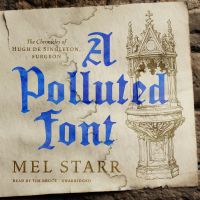
A Polluted FontMel Starr4h 57m4.4 (543)$20
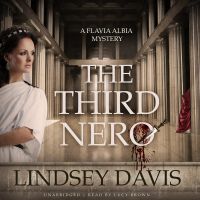
The Third NeroLindsey Davis12h 16m4.0 (1.8K)$20
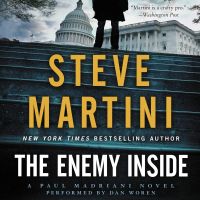
The Enemy InsideSteve Martini12h 26m4.0 (6K)$29 · $0.00
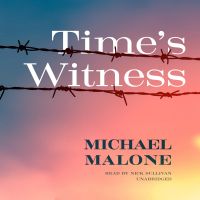
Time's WitnessMichael Malone22h 14m4.1 (1.1K)$30
ChappaquiddickLeo Damore16h 50m4.2 (2.8K)$23 · $0.00

Clinton CashPeter Schweizer5h 26m4.2 (4.8K)$24 · $0.00
Death in VallettaLynn Marie Taylor9h 47m4.3 (335)$15 · $0.00
Prince Edward’s WarrantMel Starr6h 59m4.3 (1.2K)$17

Montalbano’s First Case, and Other StoriesAndrea Camilleri17h 19m4.1 (5.4K)$30
The Triumph of CaesarSteven Saylor8h 2m4.0 (2.9K)$17
The Abbot’s AgreementMel Starr8h 20m4.2 (1.5K)$20
Sheer FollyCarola Dunn11h 18m4.0 (3.2K)$23
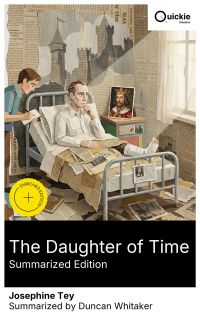
The Daughter of Time (Summarized Edition)Josephine Tey2h 35m$2