

The Crime of Caste in Our Country
Unveiling the Hidden Truths of Caste Oppression in AmericaBy Benjamin Rush Davenport


Length8h 36m
About this audiobook
In "The Crime of Caste in Our Country," Benjamin Rush Davenport delves into the insidious nature of caste systems that have traditionally plagued societies, particularly in the American context. Through a rigorous examination of social hierarchies, Davenport employs a blend of empirical analysis and impassioned rhetoric, capturing the moral imperatives of his time. His literary style is characterized by a clear, persuasive tone coupled with a scholarly approach, ensuring that complex themes of race and class are accessible to a broad audience. The work resonates within the 19th-century abolitionist discourse, challenging readers to confront the injustices wrought by systemic inequalities. Benjamin Rush Davenport was a prominent figure in educational reform and social justice in the United States. His experiences as a teacher and his work promoting human rights may have informed his perspective on the damaging effects of caste and prejudice, particularly on marginalized communities. Davenport's scholarly background, coupled with his fervent advocacy for equality, roots his insights deeply within a historical context that seeks to dismantle discriminatory practices. This book is essential reading for anyone seeking to understand the historical dimensions of caste systems in America and their contemporary repercussions. Davenport'Äôs eloquent arguments serve not only as a critique of the status quo but also as a call to action, inviting readers to reflect on their own societal roles. By engaging with this text, one joins an ongoing conversation about justice, equity, and the moral obligations we hold toward one another in a diverse society.
Audiobook details
GenrePsychology
Length8 hrs 36 mins
Narrated byListen with 1,000+ voices
FormateBook with Audio
Publish dateNov 5, 2021
LanguageEnglish
Table of contents
1INTRODUCTION.: FOOTNOTE:
2CHAPTER I. VOX POPULI, VOX DEI.
3CHAPTER II. THE ALLEGED GENERAL DISCONTENT.
4CHAPTER III. NOVEMBER 8, 1892.
5CHAPTER IV. SOCIETY AS THE PEOPLE FOUND IT, NOVEMBER 8, 1892.
Show all chaptersShow less
6CHAPTER V. SOME REASONS FOR WRATH.
7CHAPTER VI. THE ARISTOCRATIC “CHAPPIE” vs. ABRAHAM LINCOLN.
8CHAPTER VII. HON. JOHN BRISBEN WALKER, ON HOMESTEAD.
9CHAPTER VIII. SURRENDER AT HOMESTEAD.—ORGANIZED LABOR DEFEATED.
10CHAPTER IX. POSSIBLE FRUITS OF VICTORY.
11CHAPTER X. THE CAUSE OF BULLETS, ’61; BALLOTS, ’92.—ABRAHAM LINCOLN, THE PEOPLE’S CHOICE IN ’60.: FOOTNOTE:
12CHAPTER XI. ANDREW JACKSON, 1828.
13CHAPTER XII. THOMAS JEFFERSON, 1800.
14CHAPTER XIII. THE REVOLUTION IN 1776.
15CHAPTER XIV. THE FRENCH REVOLUTION.
16CHAPTER XV. ENGLAND, 1645.
17CHAPTER XVI. THE GERMAN EMPIRE, 1520-1525.
18CHAPTER XVII. SWITZERLAND, 1424.
19CHAPTER XVIII. RUSSIA.
20CHAPTER XIX. PATRICIANS AND PLEBEIANS IN ROME.: FOOTNOTE:
21CHAPTER XX. GREECE—VENICE—THE RULE OF “CASTE.”: FOOTNOTES:
22CHAPTER XXI. EGYPT, 4235 B. C.
23CHAPTER XXII. CHRISTIANITY.
24CHAPTER XXIII. NOT A DEMOCRATIC PARTY VICTORY.—DEMOCRACY IS NOT THE NAME OF A PARTY, BUT OF A PRINCIPLE.
25CHAPTER XXIV. NOT A DEFEAT OF ABRAHAM LINCOLN’S REPUBLICAN PARTY.
26CHAPTER XXV. THE POPULIST: THE “ALLIES.”—ELECTED BY THE PEOPLE; THEREFORE, WITH THE “COMMON PEOPLE.”
27CHAPTER XXVI. “FLABBYISM” AND THE INCOME TAX.
28CHAPTER XXVII. CONCLUSION.
More from Benjamin Rush Davenport


What to Make of a LifeJim Collins13h 31m4.4 (794)$33 · $0.00

Invisible StormJason Kander6h 48m4.7 (3.2K)$24 · $0.00

I Am The StormJanice Dean9h4.6 (1.5K)$8 · $0.00

On Democracies and Death CultsDouglas Murray10h 38m4.6 (6.5K)$29 · $0.00

TerraformPropaganda5h 39m4.7 (594)$24 · $0.00

Southern Horrors: Lynch Law in All Its Phases (Annotated)Ida B. Wells-Barnett2h 44m4.6 (1.3K)$2 · $0.00

Hour of the HeartIrvin D. Yalom, Benjamin Yalom8h 19m4.6 (2.3K)$26 · $0.00

Braving the TruthRachel Held Evans11h 31m4.7 (359)$29 · $0.00
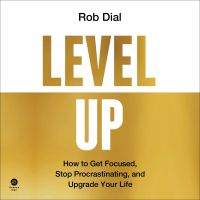
Level UpRob Dial7h 42m4.6 (3.3K)$26 · $0.00

As a JewSarah Hurwitz8h 36m4.6 (1.2K)$26 · $0.00
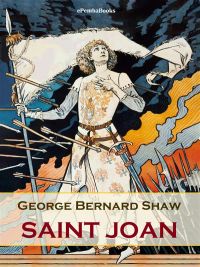
Saint Joan (Annotated)George Bernard Shaw6h 20m4.6 (1.2K)$1.20 · $0.00

Burn the HaystackJennie Young, PhD9h 30m4.6 (543)$29 · $0.00

Woman and the New Race (Annotated)Margaret Sanger6h 30m4.6 (1K)$1.99 · $0.00

Good InsideBecky Kennedy9h 55m4.5 (59.3K)$29 · $0.00

The Mis-Education of the NegroCarter Godwin Woodson5h 4m4.5 (29.4K)$1.20 · $0.00

Du Bois: EssaysW.E.B. Du Bois6h 22m4.6 (1.5K)$1 · $0.00

The North American Indian (Illustrated Edition)Edward S. Curtis, Frederick Webb Hodge5h 59m4.6 (1.4K)$2 · $0.00

Valley of the BirdtailAndrew Stobo Sniderman, Douglas Sanderson10h 1m4.6 (2.4K)$29 · $0.00

Lies My Therapist Told MeGreg E. Gifford9h 3m4.6 (503)$29 · $0.00

Disturbed in Their NestsAlephonsion Deng, Judy A. Bernstein11h 22m4.6 (595)$23 · $0.00
You may also like

FDR’s FollyJim Powell9h 27m4.0 (1.1K)$20

The Three Sources and Three Component Parts of MarxismVladimir Lenin17m4.2 (1.2K)$2 · $0.00

It’s Even Worse Than It LooksThomas E. Mann, Norman J. Ornstein6h 43m4.0 (4.6K)$18 · $0.00

Crimes against LibertyDavid Limbaugh14h 22m4.3 (1.2K)$25 · $0.00

Trickle Up PovertyMichael Savage12h 23m4.0 (1.6K)$29 · $0.00

The Trillion-Dollar ConspiracyJim Marrs15h 56m3.9 (1.6K)$33 · $0.00

The Politically Incorrect Guide to Climate ChangeMarc Morano11h 38m4.1 (1.1K)$23

The Politically Incorrect Guide to CommunismPaul Kengor PhD11h 44m4.4 (498)$20

No TreasonLysander Spooner3h 5m4.4 (1.2K)$1 · $0.00
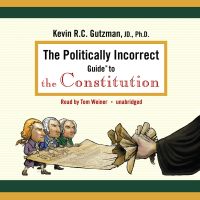
The Politically Incorrect Guide to the ConstitutionKevin R. C. Gutzman6h 35m4.4 (1.5K)$17

Outrage, Inc.Derek Hunter7h 51m4.3 (1.3K)$26 · $0.00

Noli me tangereJosé Rizal19h 35m4.3 (29.4K)$4 · $0.00

Ten Days That Shook the WorldKarl Marx16h 16m4.1 (12.6K)$2 · $0.00

The Great DeformationDavid A. Stockman36h 40m4.0 (1.4K)$30

The Goose-step: A Study of American Education (Annotated)Upton Sinclair23h 18m$2 · $0.00

Federalist vs. Anti-Federalist: ALL Essays and Articles in One EditionAlexander Hamilton, James Madison, John Jay, Patrick Henry, Samuel Bryan20h 40m$1 · $0.00
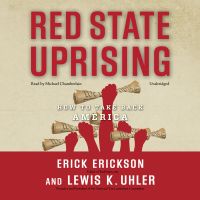
Red State UprisingErick Erickson, Lewis K. Uhler6h 37m3.6 (23)$14 · $0.00

The Mail Pay on the Burlington RailroadVarious1h 22m$2 · $0.00

The History of American Strikes: 3 Classic BooksWilliam Z. Foster, John A. Hall, James C. Beeks18h 13m$1.99 · $0.00

Bolshevism: The Enemy of Political and Industrial DemocracyJohn Spargo11h 8m$1 · $0.00